
WarBrief Live | October 12, 2026 | Indo-Pacific
China’s People’s Liberation Army began six days of live-fire drills across five coastal zones on October 12, 2026, in a show of force that began days after Taiwan’s National Day address. Taiwan’s defense minister said on October 12 that the military is monitoring the exercises closely and has assessed them as coastal artillery firing drills held off China’s own coastline — but added that Taipei is preparing for various scenarios.
Key Takeaways
- China’s Maritime Safety Administration issued no-sail notices for five marine areas — in the Yellow Sea, East China Sea, South China Sea and Bohai Sea — ahead of PLA live-fire drills scheduled for October 12–17.
- Taiwan’s Defence Minister Wellington Koo said on October 12 that Taipei assesses the drills as coastal artillery exercises held near China’s coastline, and that the military continues to monitor them closely.
- None of the exercise zones is around Taiwan itself; the closest is off China’s eastern province of Zhejiang, and Taiwan’s port authority says the drills are unlikely to affect vessels operating near Taiwan.
- Beijing has not explicitly linked the exercises to President Lai Ching-te’s October 10 National Day speech, but says they deter moves toward Taiwan “independence.”
What happened in China’s October 12–17 live-fire drills?
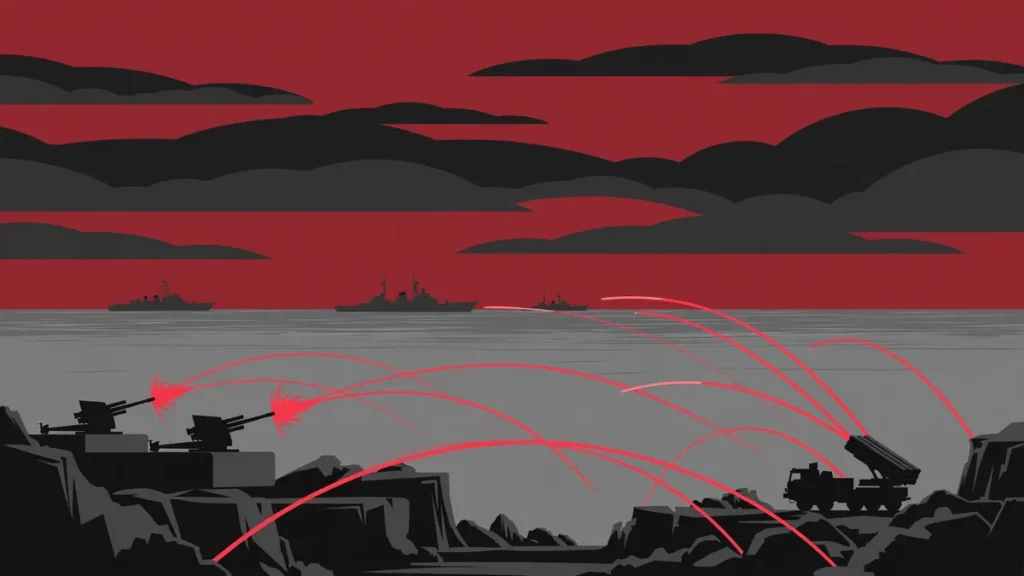
Starting on October 8, China’s Maritime Safety Administration announced no-sail notices for five marine areas stretching from the South China Sea up to the northeastern province of Liaoning, according to Reuters. The notices warned shipping to stay clear of zones in the Yellow Sea, East China Sea, South China Sea and Bohai Sea, where Chinese authorities said the People’s Liberation Army would carry out live-fire drills.
The exercises are scheduled to run for six days, from Monday, October 12 through Saturday, October 17. Speaking to reporters on October 12, Taiwan’s Defence Minister Wellington Koo said the military is monitoring the drills closely. His preliminary assessment, delivered in parliament, is that the activities are firing drills by PLA coastal artillery and related units — routine exercises rather than the full war games China has staged around Taiwan in the past.
How close are the drills to Taiwan?
Crucially, none of the five no-sail zones is around Taiwan itself. Reuters reported that the closest exercise area to Taiwan is off China’s eastern province of Zhejiang, while the notices span waters from the South China Sea to Liaoning in the northeast.
Taiwan’s Maritime and Port Bureau gave reporters more detail on October 12. It said three of the designated exercise areas in the Bohai and Yellow seas were outside Taiwan’s waters entirely, while the other two — in the East and South China seas — sit in China’s coastal waters, at 159 nautical miles (294 kilometers) and 588 nautical miles from Taiwan respectively. On that basis, the bureau said the six-day exercises are unlikely to have any impact on vessels operating near Taiwan.
Minister Koo reinforced that assessment but stopped short of dismissing the exercises. “However, we adhere to the principle of ‘anticipating the enemy as broadly as possible’, so we will continue to closely monitor their activities, whether firing or military training,” he said, adding that the Ministry of National Defense is preparing for various scenarios.
By the numbers
| Metric | Figure | Source |
|---|---|---|
| No-sail zones declared | 5 | CONFIRMED — Reuters, Taipei Times, Focus Taiwan |
| Scheduled drill duration | 6 days (October 12–17) | CONFIRMED — Reuters, Taipei Times |
| Exercise zones around Taiwan itself | 0 | CONFIRMED — Reuters, Focus Taiwan |
| Closest zone to Taiwan | 159 nautical miles (294 km), off Zhejiang | REPORTED — Taipei Times (single source) |
| China’s last full war games around Taiwan | Late December 2025 | REPORTED — Reuters (single source) |
Figures marked CONFIRMED are corroborated by two or more sources; figures marked REPORTED come from a single source and are attributed in the text.
Background and timeline
- October 8, 2026: China’s Maritime Safety Administration begins issuing no-sail notices for five marine areas ahead of scheduled military exercises.
- October 10, 2026: President Lai Ching-te delivers his Double Ten National Day address, saying Taiwan cherishes peace but will not give up its freedom, and that there must be respect for the right of Taiwan’s people to exist.
- October 11, 2026: Chinese defense ministry spokesperson Chen Xi accuses Lai’s Democratic Progressive Party on social media of “aggressively pursuing a ‘Taiwan independence’ agenda,” and accuses Lai of exaggerating the threat from China and “seeking independence through force.”
- October 12, 2026: The six-day PLA live-fire drills begin; Taiwan’s Defence Minister Wellington Koo tells reporters the military is monitoring closely and assesses the drills as coastal artillery exercises off China’s coast.
- Late December 2025: China’s last full-scale war games around Taiwan, staged in response to an $11 billion arms sale to Taiwan announced by Washington — the largest such sale on record, according to Reuters.
The exercises fit a well-established pattern of Chinese military pressure on Taiwan. Beijing’s military operates around the island on an almost daily basis, using naval and air patrols, median-line crossings and “gray zone” tactics to keep Taiwan’s forces stretched. WarBrief’s earlier reporting on China’s gray-zone campaign against Taiwan’s coast guard examined how those lower-threshold operations have steadily intensified over the past two years.
Is this a response to Lai Ching-te’s National Day speech?
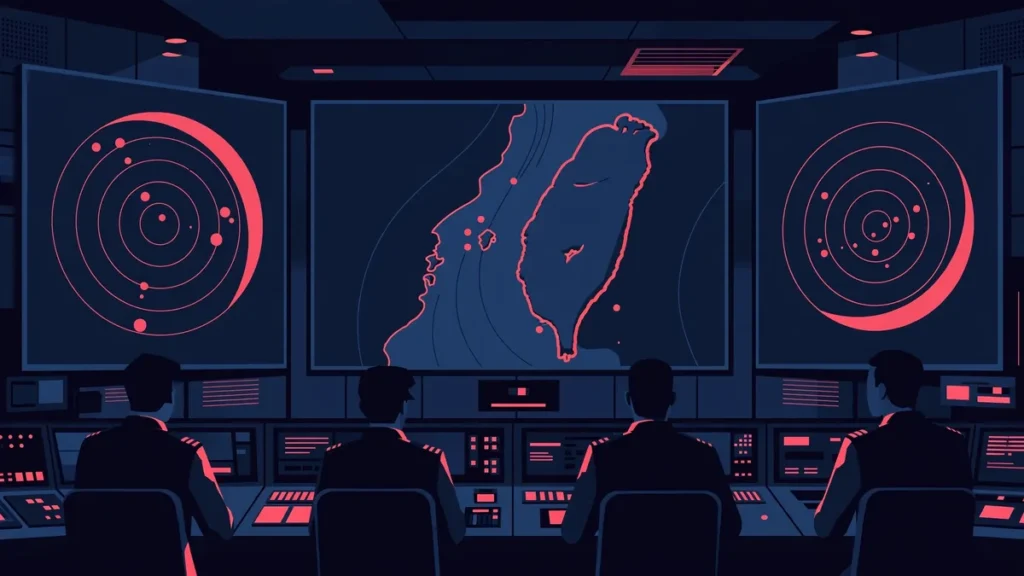
Beijing has not explicitly said the exercises were ordered in response to Lai’s Double Ten address — but the timing and the official messaging point in that direction. In his October 10 speech, Lai said Taiwan cherishes peace but will not surrender its freedom, and insisted on respect for “the right of Taiwan’s people to exist.” China, which views Taiwan as its own territory, condemned the remarks, as it routinely does.
The day after the speech, defense ministry spokesperson Chen Xi wrote that Lai’s Democratic Progressive Party was “aggressively pursuing a ‘Taiwan independence’ agenda” and accused Lai of “seeking independence through force.” A formal ministry statement on October 11 then declared:
“The People’s Liberation Army’s regular training and exercises around Taiwan are meant to deter reckless ‘Taiwan independence’ moves and outside interference, and to safeguard the security and well-being of the Taiwanese people. This is entirely justified.”
China views Lai as a “separatist” and has rebuffed his repeated offers of talks, Reuters noted. The framing is familiar: Beijing presents even routine exercises as deterrence, while Taipei reads them as coercion. What distinguishes this round is the geographic spread — five zones spanning four sea areas — combined with Taipei’s unusually quick public assessment that the drills are limited to coastal artillery.
Why it matters
For cross-strait watchers, the drills land in the sensitive zone between routine training and deliberate signaling. Five simultaneous live-fire zones is a broad footprint, and the timing — days after a National Day speech Beijing condemned — gives the exercises an unmistakable political message even if the hardware involved is ordinary coastal artillery. Taipei’s decision to publicly characterize the drills as limited, rather than sounding the alarm, is itself a signal: it shows confidence in Taiwan’s intelligence picture while keeping the military on alert.
The episode also fits the wider escalation cycle. China’s last full war games came in late December 2025 after Washington announced the $11 billion Taiwan arms package. With US-Japan Keen Sword 27 exercises on the horizon, the coming weeks will show whether Beijing uses those allied drills as a pretext for another round of larger-scale exercises. Track the region’s flashpoints on our conflict zones page.
What this means for US/UK/EU readers
Shipping and supply chains: the Taiwan Strait is one of the world’s busiest trade arteries, and any exercise that touches it moves freight and insurance markets. These drills, however, are deliberately sited away from the strait — Taiwan’s own port authority says vessels near Taiwan should be unaffected. Expect no meaningful disruption to container routes this week.
Markets and semiconductors: Taiwan’s centrality to global chip production means any genuine escalation hits technology stocks and supply forecasts. A six-day coastal artillery exercise far from Taiwan does not qualify — markets have so far treated it as signaling noise. The risk to watch is whether the October 17 end-date passes quietly.
Travel: there are no advisories suggesting travelers avoid Taiwan because of these drills, and no zones have been declared around the island. The situation remains fluid; check your government’s latest travel guidance before flying.
US policy: Washington will be watching closely. The December 2025 $11 billion arms sale — the largest ever announced for Taiwan — remains the benchmark for the deterrence cycle, and any US statement on this week’s drills will shape Beijing’s next move.
What to watch next
Three things will determine whether this week’s exercises stay routine or turn into something bigger. First, whether the PLA sticks to coastal artillery firing drills or layers in naval, air or amphibious components as the week progresses — Taiwan’s “anticipate the enemy broadly” posture suggests Taipei is watching for exactly that. Second, whether Beijing schedules follow-on exercises around the US-Japan Keen Sword 27 drills near Yonaguni, which China has criticized in the past. Third, the end of the exercise window on October 17: a quiet close would confirm Taipei’s assessment; an extension or expansion would signal escalation.
Frequently asked questions
Are China’s October 2026 live-fire drills near Taiwan?
No. Taiwan’s defense minister said on October 12 that the five exercise zones are off China’s coast, not near Taiwan, and the closest is off China’s eastern province of Zhejiang. Taiwan’s port authority says the drills are unlikely to affect vessels near Taiwan.
Why is China holding military exercises in October 2026?
China has not given an explicit reason, but its defense ministry said the exercises deter moves toward Taiwan “independence” and foreign interference. The drills began two days after President Lai Ching-te’s National Day speech, which Beijing condemned.
What did Taiwan say about the PLA drills?
Defence Minister Wellington Koo said on October 12 that Taiwan is monitoring the exercises closely, assesses them as coastal artillery firing drills held near China’s coastline, and is preparing for various scenarios.
Will the drills affect flights or shipping to Taiwan?
Probably not. Taiwan’s Maritime and Port Bureau said on October 12 that the six-day exercises are unlikely to impact vessels operating near Taiwan, since all five zones are in China’s coastal waters or northern seas.
Has China done exercises like this before?
Yes — China’s military operates around Taiwan almost daily. But it has not held full-scale war games since late December 2025, when it responded to Washington’s $11 billion arms sale to Taiwan, the largest on record.
Sources
- Reuters: Taiwan says it is closely monitoring series of Chinese live-fire drills
- Taipei Times: PLA drills this week far from Taiwan: Koo
- Focus Taiwan: PLA drills not close to Taiwan: Defense Minister Koo
Discussion 0
Share analysis, corrections, or context. Be civil — comments are moderated.