
WarBrief Live | October 11, 2026 | Event Preview
On October 19, 2026, the United States and Japan will begin Keen Sword 27, the largest bilateral military exercise the two countries conduct, running through October 29 across Japan’s southern island chain. If you want to know what to expect from Keen Sword 27, the short version is this: roughly 45,000 Japanese troops, thousands of U.S. personnel, and contingents from seven other nations will rehearse island defense and sea-denial operations — including the first-ever deployment of a U.S. anti-ship missile system to an island only about 110 kilometers (68 miles) from Taiwan.
Key Takeaways
- Keen Sword 27 runs October 19–29, 2026 — the 18th iteration of the U.S.-Japan biennial field exercise, and the largest to date by Japanese personnel commitment.
- Japan’s Joint Staff announced about 45,000 personnel, 6,100 vehicles, 40 ships, and 260 aircraft will take part; about 12,000 U.S. troops are reportedly expected, alongside Australia, Canada, France, Germany, the Netherlands, New Zealand, and the Philippines.
- The U.S. Marine Corps will deploy its NMESIS anti-ship missile system and MADIS air-defense system to Yonaguni Island — the first time either system has operated from Japan’s westernmost inhabited island, roughly 110 km from Taiwan.
- None of the new missile systems will be fired during the exercise; analysts say the real point is testing how quickly mobile missile and sensor networks can be pushed onto vulnerable islands in a Taiwan or East China Sea crisis.
What is Exercise Keen Sword?
Keen Sword is the field-training phase of the U.S.-Japan bilateral exercise series, held every two years since the 1980s and now in its 18th iteration. It is designed to build interoperability between the Japan Self-Defense Forces (JSDF) and U.S. forces — the ability to plan, communicate, and fight as one combined force — and to demonstrate the alliance’s commitment to regional stability in the Indo-Pacific.
Each iteration has grown larger and more geographically ambitious. The 2024 exercise involved about 33,000 Japanese personnel, 30 ships, and 250 aircraft. This year’s edition, per the South China Morning Post’s reporting on Japan’s Joint Staff announcement, expands to roughly 45,000 personnel, 6,100 vehicles, 40 vessels, and 260 aircraft. Japan’s Joint Staff describes the official purpose as maintaining and strengthening the capabilities the two forces need to “actively contribute to regional peace and stability.”
Unlike in 2024, five countries that previously attended only as observers — France, Germany, the Netherlands, New Zealand, and the Philippines — are now listed as full participants alongside Australia and Canada. The exercise will be commanded by Admiral Tateki Tawara of Japan’s Joint Operations Command and Admiral Stephen Koehler, commander of the U.S. Pacific Fleet.
What will happen during Keen Sword 27?
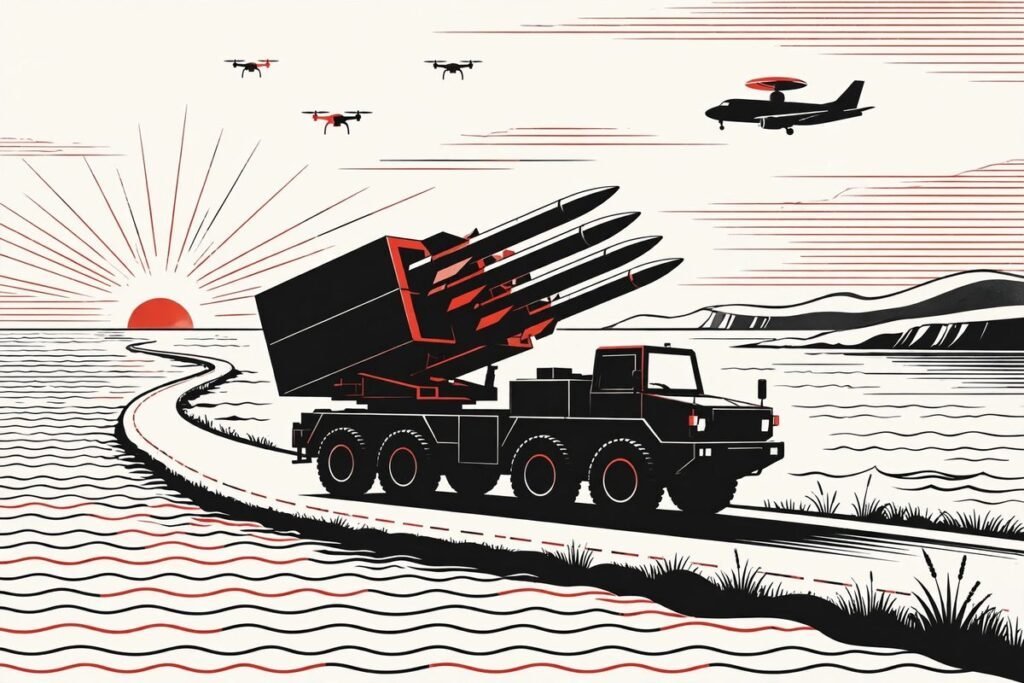
Training will concentrate on Japan’s southwestern islands — Yonaguni, Ishigaki, and Miyako — along with U.S. bases, surrounding seas, and airspace. According to Defense News, the exercise shifts emphasis this year toward ground-based, multi-island sea-denial operations: instead of massing forces at a few bases, U.S. and Japanese units will scatter mobile missile launchers, radars, and air defenses across islands to see how effectively they can coordinate dispersed operations.
Planned training events include integrated air and missile defense, bilateral anti-ship operations, amphibious landings, airborne operations, island reinforcement, and live-fire events elsewhere in the exercise area. The new missile systems themselves, however, will not be fired. Japanese Defense Ministry planning documents, published through the Okinawa Defense Bureau, state that the NMESIS and MADIS launchers heading to Yonaguni will deploy, move, and coordinate with Japanese forces as training objectives — but will not conduct live missile launches during the exercise. The same applies to Japan’s new Type-25 missile, which will leave its home base for the first time but will not be fired.
Why is Yonaguni Island so important?
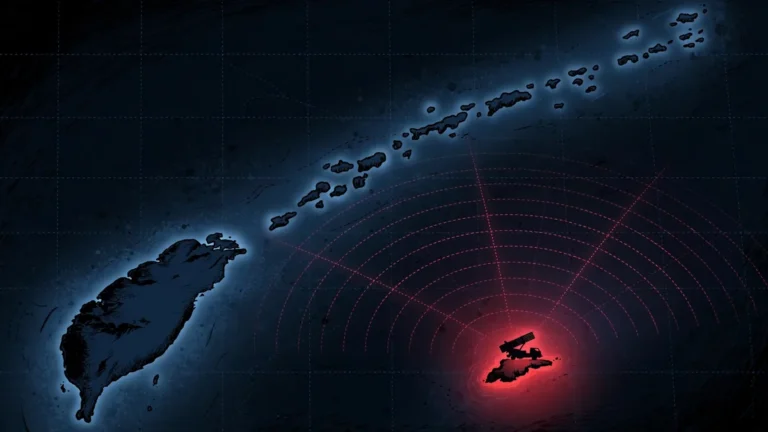
Yonaguni is Japan’s westernmost inhabited island, sitting at the end of the Ryukyu chain about 110 kilometers (68 miles) from Taiwan — closer to Taiwan than to Japan’s main islands. Japan has stationed a Ground Self-Defense Force coastal surveillance unit and radar there since 2016, and Tokyo plans to place surface-to-air missiles on the island by the early 2030s.
During Keen Sword 27, Yonaguni becomes the centerpiece. The Japan Times reports that the U.S. Navy-Marine Expeditionary Ship Interdiction System (NMESIS) — an unmanned launcher carrying two Naval Strike Missiles with a range of about 115 miles — will be moved to the island for the first time, operated by troops of the Okinawa-based 12th Marine Littoral Regiment. Alongside it, the Marines will deploy the Marine Air Defense Integrated System (MADIS), which pairs Stinger missiles with a 30 mm cannon to protect expeditionary units against drones and low-flying aircraft.
Japan is adding its own systems: 60 personnel with Type 88 anti-ship missiles and the upgraded Type 03 surface-to-air missile on Yonaguni, plus CH-47 helicopters. Trade outlets report the Ground Self-Defense Force will also train with its new Type-25 surface-to-ship missile — an upgraded Type-12 with a reported range of about 1,000 kilometers — for the first time outside its home base, while U.S. Army HIMARS rocket artillery deploys to nearby Ishigaki and the Typhon mid-range launcher is expected to move to Okinawa. These reported Army deployments are single-source; treat them as expected, not confirmed.
Analysts say this is the point of the exercise. Christopher Hughes, professor of international politics and Japanese studies at the University of Warwick, told the South China Morning Post that Japan and the U.S. are “building out their ‘wall’ strategy in the East China Sea” — fortifying the southwest islands and practicing the rapid movement of anti-ship weapons there to complicate Chinese military movement through nearby straits in a Taiwan contingency. Masashi Murano of the Hudson Institute described the operational problem as holding the southwest islands, defending them against missile and air attack, and keeping Chinese surface ships at risk along the first island chain.
Background and timeline
- 1980s: Keen Sword begins as the biennial field-training exercise of the U.S.-Japan alliance; it is now in its 18th iteration.
- July 2025: The NMESIS anti-ship system first arrives in Japan; during the Resolute Dragon exercise that September, Marines move a launcher to Ishigaki, about 240 km from Taiwan.
- 2016–2026: Japan progressively reinforces its southwestern islands; a coastal surveillance unit and radar have operated on Yonaguni since 2016.
- September 29, 2026: Japan’s Joint Staff announces the Keen Sword 27 force commitment — about 45,000 personnel, 6,100 vehicles, 40 vessels, 260 aircraft — and the exercise controllers.
- October 1–2, 2026: The Okinawa Defense Bureau relays deployment plans to Yonaguni’s town government; Japanese media report the first-ever NMESIS deployment to the island.
- October 19–29, 2026: Keen Sword 27 takes place across JSDF facilities, U.S. bases, and surrounding sea and airspace.
Keen Sword 27 by the numbers
| Metric | Figure | Source |
|---|---|---|
| Exercise dates | October 19–29, 2026 | CONFIRMED — SCMP, Defense News, Japan Times |
| JSDF personnel | ~45,000 | CONFIRMED — Japan Joint Staff via SCMP |
| Vehicles / ships / aircraft (JSDF) | 6,100 / 40 / 260 | CONFIRMED — Japan Joint Staff via SCMP |
| U.S. troops | ~12,000 (expected) | REPORTED — SCMP, Defense War Room |
| Participating nations | 9 (US, Japan, Australia, Canada, France, Germany, Netherlands, NZ, Philippines) | CONFIRMED — SCMP, Defense War Room |
| Yonaguni–Taiwan distance | ~110 km (68 miles) | CONFIRMED — Japan Times, Army Recognition |
| NMESIS range | ~115 miles (~185 km), two Naval Strike Missiles | CONFIRMED — Defense News |
| Type-25 missile range | ~1,000 km (reported) | CONFIRMED — hiwars, Russian MFA via RIA Novosti |
| Live missile launches by new systems | None planned | CONFIRMED — Japan Defense Ministry planning docs |
| U.S. Army HIMARS to Ishigaki / Typhon to Okinawa | Planned | REPORTED — hiwars (single source) |
Caveat: figures labeled CONFIRMED are supported by two or more independent sources; figures labeled REPORTED rest on a single outlet or “expected” official language and may change before October 19.
Why it matters
Keen Sword 27 is the clearest public signal yet of how the United States and Japan intend to fight — or deter — a war over Taiwan or the East China Sea: not with a carrier battle group sailing in, but with small, mobile, hard-to-find missile units scattered across islands inside the range of Chinese forces. For a deeper look at the missile hardware involved, see our earlier explainer, Keen Sword 27: US-Japan Missiles 110 km From Taiwan (2026).
The exercise is unfolding against active friction. China’s navy and coast guard vessels have increased activity around Taiwan even as the drill was being planned, and Chinese military commentators have criticized the missile deployments. Russia has also weighed in: its Foreign Ministry told state outlet RIA Novosti it would take “compensatory measures” in response to Japan’s expanding missile capabilities, pointing to the Type-25 deployments — a reminder that Tokyo’s buildup is watched from Moscow as well as Beijing.
There is domestic friction too. Taiwan Defence reported this week, citing Stars and Stripes, that Japan’s top uniformed officer says Keen Sword 27 will proceed unchanged despite a criminal case involving a U.S. Marine in Okinawa — Okinawa Governor Genta Koja has delivered protest letters to Prime Minister Sanae Takaichi and Defense Minister Shinjiro Koizumi calling for a review of the status-of-forces agreement. The alliance is treating the case as a discipline question and the exercise as business as usual.
Different perspectives
Tokyo and Washington present Keen Sword as routine alliance readiness. Japan’s Joint Staff frames it around responses to “various contingencies” and regional peace and stability; the 2026 defense white paper, however, names China’s military activities as Japan’s “greatest strategic challenge,” leaving little doubt about the scenario being rehearsed.
Beijing has criticized the trajectory. A Chinese foreign ministry spokeswoman previously said plans to permanently station surface-to-air missiles on Yonaguni would “create regional tension and provoke military confrontation,” and Chinese state media criticized the earlier NMESIS deployment to the Philippines. Moscow, meanwhile, reads the buildup as Japan moving beyond a “strictly defensive” posture.
Local officials on Yonaguni have expressed concern about exercises exceeding the small island’s capacity, according to defense trade coverage — a reminder that the “wall” strategy is built on communities of a few thousand residents who will live next to whatever is deployed.
What this means for US/UK/EU readers
Keen Sword 27 will not directly move fuel prices or shipping rates — it is a scheduled, announced exercise, and markets price in scheduled events rather than surprises. But it matters for Western readers on three fronts. First, Taiwan contingency planning is the single largest driver of U.S. and allied defense spending in the Pacific; the systems being tested on Yonaguni are the same ones Congress and European partners will be asked to fund and host variants of. Second, the exercise sharpens the risk picture for supply chains: the sea lanes around Taiwan and the East China Sea carry a large share of Europe’s and America’s semiconductor and manufactured-goods imports, and every escalation step in the region feeds into long-term shipping insurance and sourcing decisions. Third, for travelers, there is no advisory attached to the exercise — commercial air and sea traffic around Japan’s southwest islands will operate normally — but the October 19–29 window is worth knowing about if you are tracking regional tension headlines that can move markets.
What to watch next
Three things to monitor when the exercise begins on October 19. First, China’s response: whether Beijing stages naval or air activity near Yonaguni or Taiwan during the exercise window, as it has during past U.S.-Japan drills. Second, the live-fire and island-movement windows — how visibly the alliance demonstrates the rapid missile movements analysts are focused on. Third, the political aftermath: whether the exercise strengthens or complicates the status-of-forces debate in Okinawa, where local opposition to the U.S. military presence remains the alliance’s most persistent domestic problem. WarBrief will track the exercise through our Conflict Zones hub, and readers following the naval dimension can also read our report on the USS Abraham Lincoln’s return after 322 days at sea.
Frequently asked questions
What is Exercise Keen Sword?
Keen Sword is the biennial field-training exercise of the U.S.-Japan military alliance, held every two years since the 1980s. It tests how the Japan Self-Defense Forces and U.S. forces plan, communicate, and operate together in realistic scenarios — primarily island defense, air and missile defense, and anti-ship operations in the Indo-Pacific.
Why is the US deploying missiles to Yonaguni, 110 km from Taiwan?
The U.S. Marine Corps is deploying its NMESIS anti-ship missile system and MADIS air-defense system to Yonaguni for the first time during Keen Sword 27 to rehearse sea-denial operations — using small, mobile missile units scattered across islands to threaten hostile ships. Analysts say the deployment is meant to complicate Chinese military planning for any Taiwan or East China Sea contingency by demonstrating that the alliance can rapidly push missile firepower onto islands inside the range of Chinese forces.
Will missiles be fired during Keen Sword 27?
The new missile systems — NMESIS, MADIS, and Japan’s Type-25 — will not conduct live missile launches during the exercise, according to Japanese Defense Ministry planning documents. They will deploy, move between positions, and coordinate with Japanese forces as training objectives. The broader exercise does include other live-fire training events elsewhere in the exercise area.
How many countries are taking part in Keen Sword 27?
Nine: the United States and Japan plus Australia, Canada, France, Germany, the Netherlands, New Zealand, and the Philippines. France, Germany, the Netherlands, New Zealand, and the Philippines were only observers in the 2024 exercise and are participating fully this year.
Sources
- South China Morning Post: How expanded Japan-US military drills could complicate PLA planning over Taiwan
- The Japan Times: U.S. to put missile system on island near Taiwan for drills
- Defense News: US Marine Corps anti-ship weaponry to see exercise action on remote Japan island near Taiwan
- Army Recognition: US Marines Deploy NMESIS Anti-Ship Missile System on Japan Island Closest to Taiwan for First Time
- hiwars: US NMESIS and Japan Type-25 Missiles Turn Yonaguni Into 2026 Taiwan Tripwire

Discussion 0
Share analysis, corrections, or context. Be civil — comments are moderated.