
WarBrief Live | November 5, 2026 | Breaking Analysis
1,930 km
New operating radius — roughly double the current area
395
Total personnel after 75 are added to the unit
650 km
From Duqm, Oman, to the Strait of Hormuz
2009
The year the Cheonghae anti-piracy unit was formed
South Korea will expand its Cheonghae anti-piracy mission from the Gulf of Aden to waters south of Oman, about 650 kilometres from the Strait of Hormuz, adding a P-8A patrol aircraft, a bomb-disposal team and unmanned mine-clearing vessels. The move is non-combat, still needs parliament’s approval, and positions Seoul for post-war mine clearance in the strait.
Below, the South Korea Cheonghae Hormuz deployment explained: what Seoul announced on November 5, 2026, what the unit will — and will not — do, and what has to happen before any ship moves.
Key Takeaways
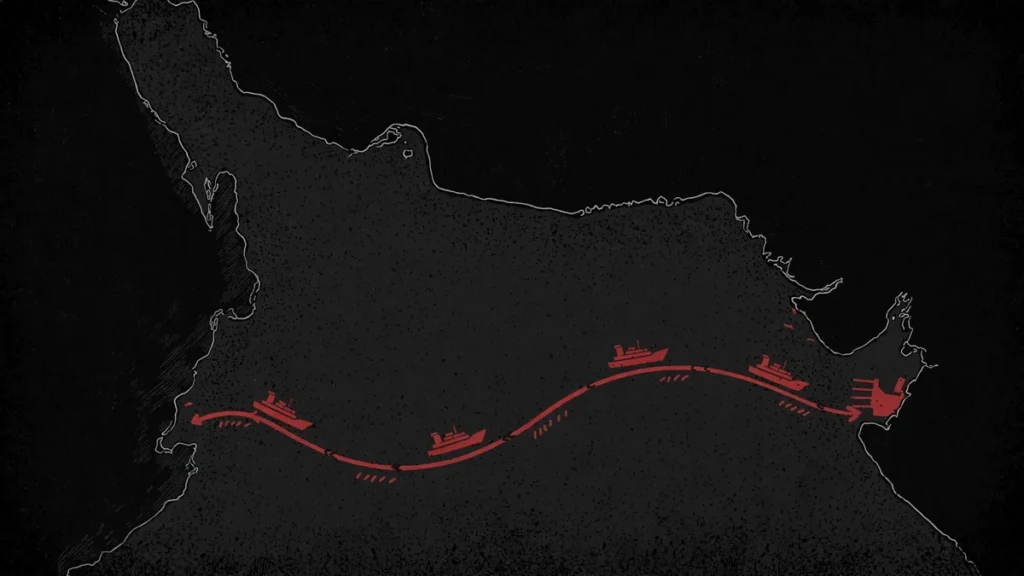
- Seoul plans to extend the Cheonghae unit’s operating area northeast to waters south of Oman, near the port of Duqm, roughly doubling its radius to about 1,930 kilometres.
- New assets include a P-8A Poseidon patrol aircraft, an explosive ordnance disposal team and unmanned mine-countermeasure vessels; 75 more personnel will take the unit to 395.
- Operations stay in open waters south of Oman. The P-8A is barred from targeting or monitoring Iranian territory, its territorial waters or the interior of the Strait of Hormuz.
- The expansion needs Cabinet endorsement and National Assembly consent, and any future mine-clearing inside the strait itself would need separate parliamentary approval.
What did South Korea announce on November 5?
South Korea’s defence ministry said on November 5, 2026, that it would expand the operational area of its Cheonghae anti-piracy naval unit from the Gulf of Aden to waters south of Oman in the Arabian Sea. Yonhap News Agency first reported the decision, reached at a vice-ministerial meeting, and Reuters confirmed it, reporting that the move followed pressure from US President Donald Trump for Seoul to provide support for the war in Iran.
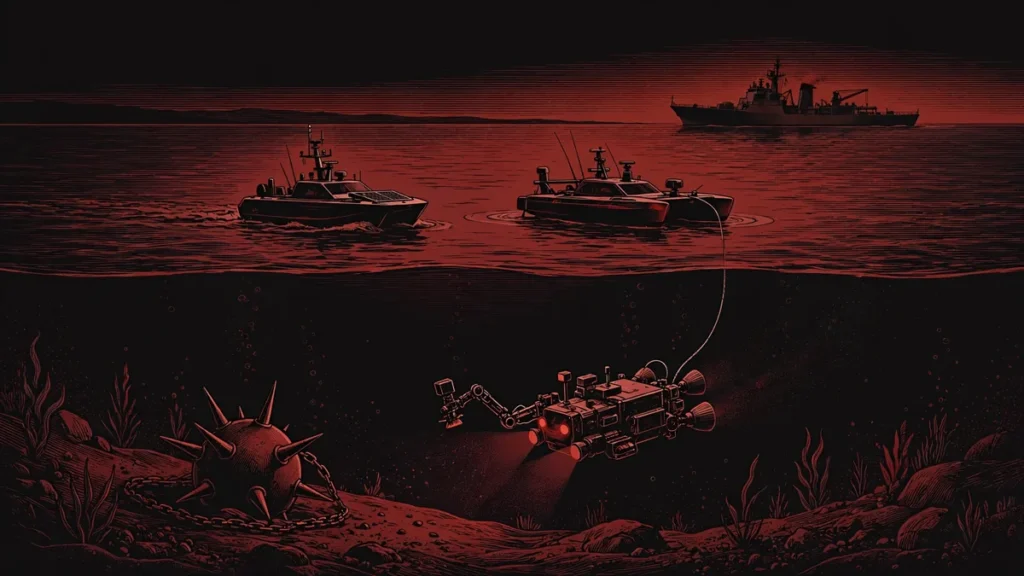
The revised mandate would extend the unit’s area to waters near Duqm, a port on Oman’s coast about 650 kilometres (403 miles) from the strait. Seoul will deploy a P-8A Poseidon maritime patrol aircraft to support the destroyer on its rotational escort mission, alongside an explosive ordnance disposal (EOD) team and unmanned mine-countermeasure assets — unmanned surface vessels, unmanned underwater vehicles and remotely operated vehicles for underwater exploration.
A defence ministry official, speaking on condition of anonymity, said the reinforcement was strictly for non-combat purposes and that the unit would operate independently of allied forces. The motion for the revised mandate will add a new task: to “support efforts to restore freedom of navigation in international shipping routes.”
“The enhancement of the Cheonghae unit’s mission is to protect our citizens and safeguard our economic interests.”
— South Korean defence ministry official, quoted by Korea JoongAng Daily
The government plans to submit the motion to the National Assembly after Cabinet endorsement next week. Under South Korean law, an overseas military deployment — or any expansion of an existing mission — requires parliamentary consent. The unit’s current mandate expires on December 31, 2026. Aju Press reported that the revised mandate would remain valid through December 31, 2027, although that end date has not been confirmed by the ministry.
What is the Cheonghae unit?
The Cheonghae unit was formed in 2009 to support the United Nations mission launched by a UN Security Council resolution to combat piracy and secure maritime trade in the Gulf of Aden. Its mandate is renewed annually through parliamentary approval, and it has become South Korea’s standing naval contribution to protecting commercial shipping off the Horn of Africa.
The unit currently consists of a 4,400-ton destroyer, a naval helicopter, high-speed boats and other assets. Its 49th contingent, aboard the Chungmugong Yi Sun-sin destroyer, left the southeastern port of Busan on October 2, 2026, to rotate with the previous crew operating in the Gulf of Aden.
The expansion is also a response to a sharp rise in piracy off Somalia. Aju Press reported that reported incidents have more than tripled, from 11 throughout 2025 to 36 so far in 2026 — a figure that has not been independently confirmed by the ministry, but which officials cited as part of the case for a wider patrol area. The P-8A’s long-range sensors would let the unit monitor a far larger area and detect threats to commercial vessels earlier.
By the numbers: the expanded Cheonghae mission
| Metric | Figure | Source | Status |
|---|---|---|---|
| New operating radius | ~1,930 km (1,199 miles), roughly double | Yonhap; Korea JoongAng Daily; Korea Herald | CONFIRMED |
| Distance from Duqm to the Strait of Hormuz | ~650 km (403 miles) | Reuters; AFP | CONFIRMED |
| Additional personnel | 75, taking the unit to 395 | Yonhap; Korea JoongAng Daily; Korea Herald | CONFIRMED |
| Current mandate expiry | December 31, 2026 | Yonhap; Korea Herald | CONFIRMED |
| Proposed mandate end date | December 31, 2027 | Aju Press | REPORTED |
| Somali piracy incidents, 2025 vs 2026 to date | 11 vs 36 | Aju Press | REPORTED |
| Share of world oil normally carried through the strait | About a fifth | AFP | CONFIRMED |
Caveat: figures marked REPORTED come from a single outlet and have not been confirmed by the South Korean defence ministry; figures marked CONFIRMED appear in two or more independent sources.
Why the Hormuz deployment matters for oil and shipping
The Strait of Hormuz is the world’s most important oil chokepoint, normally carrying about a fifth of global oil supply, according to AFP. The US-Iran war that began on February 28, 2026, has disrupted shipping through the waterway, and the threat of sea mines has become one of the conflict’s most persistent dangers to commercial traffic. WarBrief has reported on mines suspected in tanker fires in the strait and on denied sea-drone claims off Lavan Island, as well as on US strikes on Qeshm Island in the strait’s eastern approaches.
That is where the EOD team and unmanned mine-clearing systems matter most. Defence officials told Yonhap that the new capabilities aim to prepare Seoul for potential participation in post-war joint operations to restore the strait, and that clearing sea mines is expected to be a primary task requiring international coordination once the war ends. The operation would involve remotely operated submersible robots deployed from uncrewed surface or underwater vessels to locate mines, attach explosive charges and detonate them.
Officials were candid that South Korea has limited experience with unmanned mine-countermeasure systems, and that the deployment is partly a chance to test their performance and operational adaptability in real conditions. Seoul has aligned with Britain, France and other partner nations on the need for a “permissive environment” — either the end of the war or a formal agreement between the sides — before any recovery operations begin inside the strait. As one official put it: “We have promised to join upon request under those conditions. As a member of the international community, we must participate. We cannot go unprepared when called upon.”
For energy markets, the announcement cuts both ways. Any credible path to reopening the strait eases the war premium that has kept oil prices volatile — WarBrief recently examined why oil bounced back after its sharpest falls. But the deployment is deliberately limited: it does not put South Korean forces inside the strait, and it does not change the military balance while fighting continues.
What this means for US/UK/EU readers
For drivers and households, the strait’s status is the single biggest variable in fuel prices. A credible, internationally coordinated mine-clearance plan — even one that only begins after the war — is the kind of signal that can trim the risk premium built into Brent crude, and with it petrol and diesel prices in the US, UK and EU. The effect will be gradual, not immediate: nothing in Seoul’s announcement reopens the waterway today.
For businesses, the deployment matters through shipping and insurance. Tanker and container rates through the Gulf have carried a war surcharge for months, and insurers price the mine threat into every transit. A wider naval presence south of Oman, plus a standing mine-clearance capability, should over time lower the cost of moving goods through the region — but only if the “permissive environment” Seoul and its partners insist on actually materialises.
For security watchers, the move is a case study in allied burden-sharing under pressure. Washington has pressed allies for contributions to the Iran war effort; Seoul’s answer is a carefully fenced one — non-combat, independent command, no operations inside the strait, and no involvement in the war itself. How that balance holds once parliament votes will be watched closely in Washington, London and Brussels.
Different perspectives: Seoul, Washington and Tehran
Seoul frames the expansion as protection of its own citizens and economic interests, not as joining a war. President Lee Jae Myung said in September that South Korea would not deploy troops in a way that could lead to military intervention, and the defence ministry stressed four principles for the expanded mission: no involvement in the war, protection of South Korean nationals and vessels, operations limited to waters south of Oman, and independent command under South Korea’s Joint Chiefs of Staff.
Washington’s view is different. Reuters reported that the expansion followed pressure from President Trump for Seoul to support the war in Iran, and the Korea JoongAng Daily noted that Seoul has effectively turned down requests from its ally for military support against Tehran. The Cheonghae expansion gives Washington a visible allied contribution while giving Seoul a way to say no to combat involvement.
Tehran has already warned Seoul against any deployment. Iran’s foreign ministry spokesperson Esmaeil Baqaei warned on Monday, November 2, that any military deployment or participation in operations in the Persian Gulf or the Strait of Hormuz “can only be regarded as direct support for the party responsible for that aggression and will have serious consequences,” according to AFP reporting carried by The Asian Age. The warning came after Seoul said on Friday that it was considering contributions to security efforts in the waterway.
Seoul also plans to base the newly added assets in Djibouti, the strategic chokepoint linking the Red Sea and the Gulf of Aden, and will open consultations with the East African country once the parliamentary process begins. Djibouti already hosts a US military base where allies and partners including Japan, Spain and France deploy maritime patrol units.
What to watch next in the Hormuz deployment debate
The first test is procedural: Cabinet endorsement next week, followed by the motion to the National Assembly. The unit’s current mandate expires on December 31, 2026, so parliament must act before the year ends or the Cheonghae deployment itself lapses. Watch for the exact wording of the revised mandate and whether the December 31, 2027 end date reported by Aju Press is confirmed.
The second test is whether a separate approval for operations inside the strait ever becomes necessary. Defence officials say the government is prepared to seek it, but only in a “permissive environment” — the end of the war or a formal agreement. Until then, the P-8A and the mine-clearing team will operate south of Oman, gathering experience rather than clearing the strait.
The third test is Tehran’s response. The November 2 warning was issued before the formal announcement; whether Iran escalates its rhetoric — or takes any practical step — after parliament votes will show how much risk Seoul’s careful fencing actually carries. And the fourth is the piracy picture itself: if reported incidents off Somalia keep climbing, the case for the wider patrol area strengthens regardless of what happens in the Gulf. Readers tracking the wider war should also follow the WarBrief conflict-zones hub and the explainer on the US War Powers Resolution, which governs how Washington can sustain its own military operations in the region.
Frequently asked questions
What is the Cheonghae unit?
The Cheonghae unit is South Korea’s naval anti-piracy mission, formed in 2009 under a UN Security Council resolution to protect commercial shipping in the Gulf of Aden. It currently consists of a 4,400-ton destroyer, a naval helicopter and high-speed boats, with its mandate renewed annually by parliament.
How close will South Korean forces get to the Strait of Hormuz?
The expanded operating area reaches waters south of Oman, near the port of Duqm, about 650 kilometres (403 miles) from the strait. Operations are restricted to open waters there, and the P-8A patrol aircraft is barred from targeting or monitoring Iranian territory or the interior of the strait.
Is South Korea joining the war against Iran?
No. Seoul has stressed the expansion is strictly non-combat, that the unit will operate independently under South Korea’s Joint Chiefs of Staff, and that President Lee Jae Myung ruled out deploying troops in a way that could lead to military intervention. Any mine-clearing inside the strait would also need separate parliamentary approval.
Does the expansion need parliamentary approval?
Yes. Under South Korean law, an overseas deployment or expansion of an existing mission requires National Assembly consent. The government plans to submit the motion after Cabinet endorsement next week, and the current mandate expires on December 31, 2026.
What is the P-8A Poseidon?
The P-8A Poseidon is a long-range maritime patrol aircraft used to monitor large areas of ocean, detect surface threats and support naval escort missions. In the Cheonghae role it will support the destroyer’s escort of commercial ships and help detect threats to vessels in the wider patrol area.
Sources
- Yonhap News Agency: (LEAD) S. Korea to expand anti-piracy mission closer to Hormuz, send more naval assets
- Korea JoongAng Daily: Korea to expand antipiracy mission closer to Hormuz, send more naval assets
- The Korea Herald: S. Korea to expand anti-piracy mission closer to Hormuz, send more naval assets
- Reuters: South Korea to expand anti-piracy unit operations closer to Strait of Hormuz
- Channel News Asia: South Korea to deploy mission to Strait of Hormuz
- AFP via Gulf News: South Korea deploys military mission to protect Hormuz Strait amid US-Iran tensions
- AFP via The Asian Age: Iran warns South Korea
- Aju Press: S. Korea expands Cheonghae for future Hormuz operations

Discussion 0
Share analysis, corrections, or context. Be civil — comments are moderated.