
WarBrief Live | November 11, 2026 | Defense Technology
Nov 10, 2026
Ban reported by Der Spiegel
2024
Year of the white-list drone strategy
0
Central records of unit drone purchases
3
Chinese car brands named: BYD, Geely, NIO
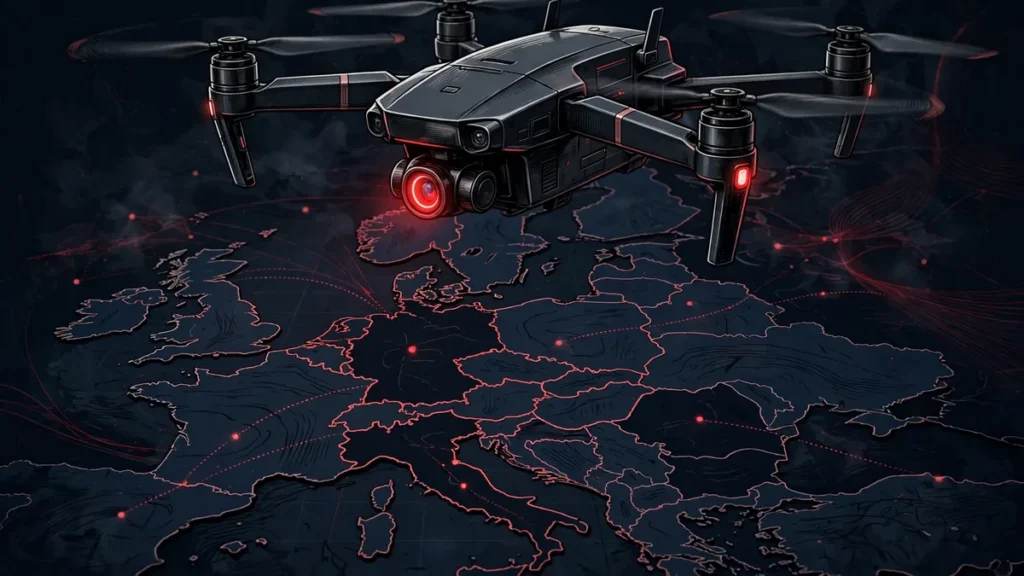
Germany’s military has banned commercially available Chinese-made drones from its barracks and training grounds, effective immediately, because it fears the aircraft could pass sensitive data to Chinese intelligence. Reuters reported on November 10, 2026 that the order, first reported by Der Spiegel, covers the small off-the-shelf drones that Bundeswehr units bought themselves under a 2024 strategy — and because the military kept no central record of what was purchased, the ban has to be a blanket one.
Key Takeaways
- Germany’s military has banned commercially available Chinese-made drones from its barracks and training grounds, effective immediately.
- The ban follows a 2024 strategy that let local commanders buy drones — including models made by DJI, the world’s largest drone maker — with little oversight and no central record.
- Chinese-made cars, including BYD, Geely and NIO models, are also restricted from entering secure military areas.
- The move follows similar steps by Poland in February 2026 and by the US military at Kadena Air Base in October 2026.
What did Germany ban, and when does it take effect?
Der Spiegel reported on Tuesday, November 10, 2026 that an order had been issued across the entire German Armed Forces directing the immediate cessation of all use of commercially available drones previously acquired from major Chinese manufacturers, including DJI. Reuters carried the report worldwide the same day. The drones, acquired by military units in recent years with limited bureaucratic oversight, are being withdrawn from service as quickly as possible.
The German Defence Ministry confirmed the decision. A spokesperson said the Bundeswehr will no longer use Chinese-made models and that existing systems will be replaced by products from Germany or other European nations. The ministry declined to disclose how many Chinese-made drones the Bundeswehr had purchased for training purposes since 2024, citing military security concerns.
The ban is not limited to drones. According to Der Spiegel, the Bundeswehr has also imposed extensive restrictions on Chinese-made vehicles entering military barracks and other facilities. Command units circulated lists of models from manufacturers such as BYD, Geely and NIO that are prohibited from entering secure zones, and soldiers who own such cars must now leave them outside the security zones of barracks and walk the rest of the way to their posts. Chinese aircraft were already absent from drone exercises in the city of Husum in early November.
What the ban does not cover matters too. It applies to the small, off-the-shelf aircraft that units had been buying for training, not the large military systems bought centrally through formal procurement. The distinction is important: Berlin is not grounding its formal drone fleet, it is clearing the unrecorded commercial aircraft out of its own bases.
Why did the Bundeswehr buy Chinese drones in the first place?
The answer lies in a 2024 drone strategy that was meant to get cheap, capable aircraft into soldiers’ hands quickly. Under that strategy, the Bundeswehr compiled a “white list” of suitable models that local commanders could purchase at hardware and electronics stores, including several from the manufacturer DJI. The idea was practical: commercial drones are inexpensive, widely available and good enough for training, reconnaissance practice and familiarisation.
The problem was oversight. Local commanders were allowed to buy the drones with little paperwork, and no central record was kept of what individual units purchased. That is why the ban now has to be a blanket one: the Defence Ministry cannot simply recall a known inventory, because no complete inventory exists. As Der Spiegel put it, the military has to impose a blanket ban precisely because it does not know what it owns.
DJI is the world’s largest drone maker, and its aircraft dominate the commercial market in Europe as they do elsewhere. For a military trying to train quickly and cheaply, buying off the shelf was the path of least resistance — until the security assessment caught up with the procurement habit.
By the numbers: the Bundeswehr drone ban
| Metric | Figure | Source | Status |
|---|---|---|---|
| Ban reported | November 10, 2026 | Reuters / Der Spiegel | CONFIRMED |
| Strategy that allowed purchases | 2024 white list | Reuters / Der Spiegel | CONFIRMED |
| Central record of purchases | None exists | Der Spiegel via Reuters | CONFIRMED |
| Chinese car brands named | 3 — BYD, Geely, NIO | Der Spiegel via United24 | CONFIRMED |
| Poland vehicle ban | February 17–18, 2026 | AP / The Hindu | CONFIRMED |
| Kadena BYD ban effective | October 26, 2026 | Reuters / Yonhap | CONFIRMED |
| Evidence of data transmission | Indications reported, not confirmed | Der Spiegel (secondary account) | REPORTED |
Caveat: figures marked REPORTED rest on a single secondary account. The German Defence Ministry has not confirmed that any data was transmitted, and has declined to discuss the matter.
Why the Bundeswehr fears its own drones
The core concern is what a modern commercial drone can see and send. These aircraft carry cameras, microphones, GPS and always-on connectivity, and the fear is that they could transmit sensitive data — details of military exercises, imagery of barracks and training grounds, or information about German weapons systems — to Chinese intelligence services. Reuters noted that Western military forces have grown increasingly concerned that Chinese-made technology could pose a security risk and may be used to transmit sensitive security information to Beijing.
Der Spiegel reported that it had found concrete indications of such transmissions, but the Defence Ministry has not confirmed that any data was sent and declined to discuss the reports. That distinction matters: what is confirmed is the security concern and the ban; what remains unverified is whether any sensitive data actually left a German base. WarBrief is treating the transmission claim as reported, not confirmed, until the ministry or another authoritative source substantiates it.
The drone ban also fits a wider German reassessment of Chinese technology. Berlin is preparing sweeping restrictions on Chinese-made equipment in its mobile networks, business daily Handelsblatt reported on November 4, 2026, potentially excluding suppliers such as Huawei and ZTE. The Federal Network Agency plans to classify 5G base stations as highly sensitive components for the first time. An earlier 2024 decision already requires Huawei and ZTE components to be removed from the core of Germany’s 5G networks by the end of 2026. The drone ban is the military wing of the same policy turn.
What the Bundeswehr ban means for US/UK/EU readers
For readers in the US, Britain and the rest of Europe, the direct impact is limited but the signal is significant. NATO’s largest European army has now formally treated off-the-shelf Chinese technology as a security risk inside its own bases. That creates immediate demand for German and European drone makers, who are now the named replacements for the withdrawn aircraft, and it sets a precedent other allies are likely to follow.
For British readers specifically, the UK is among the countries already recognising the same risk: the Foundation for Defense of Democracies noted that Britain and Israel are among the nations treating the integrated digital technology in Chinese vehicles as a national security concern. The ban itself changes nothing for civilians — it applies to Bundeswehr premises and training grounds, not to private drone ownership or civilian sales of DJI products in Germany.
For travellers and businesses, there is no change to civilian drone rules in Germany and no new restriction on driving a Chinese-made car on German roads. The restrictions apply only inside military security zones. For markets, the military ban does not touch DJI’s civilian business, but it adds to a growing Western pattern of excluding Chinese technology from sensitive settings — a trend that now spans drones, cars and telecoms equipment.
Germany is not alone: the allied pattern
Germany is the latest, not the first, NATO ally to act. Poland’s armed forces banned Chinese-made vehicles from entering sensitive military facilities on February 17, 2026, after a risk assessment of the digital systems in modern cars. The Polish General Staff said the vehicles were capable of “uncontrolled acquisition and use of data” and also barred personnel from connecting official phones to the infotainment systems of Chinese-made cars.
On October 26, 2026, the US Air Force barred all BYD vehicles from Kadena Air Base in Okinawa, Japan, including privately owned cars, taxis and contractor vehicles. Lieutenant Colonel Alli Stormer, spokesperson for the 18th Wing, said the vehicles presented “an unacceptable and unmitigable risk to our personnel and our mission.” The Pentagon had added BYD to its list of Chinese military companies in June 2026.
Israel has also sharply reduced its use of Chinese-made drones, briefing NATO partners on suspected vulnerabilities, and Lithuania and the Netherlands have restricted the use of Chinese drones in defence and public-security missions. In Norway, Chinese electric vehicles rented for military exercises were reported to have recorded military personnel and access codes to secure facilities. Czechia has restricted Chinese-made vehicles from military facilities and surrounding security zones. The pattern is consistent: the concern is not the vehicle or the drone itself, but the sensors and connectivity inside it.
What to watch next in the Bundeswehr drone ban
Several questions will determine how far this ban reaches. First, the replacement: which German and European suppliers win the contracts to replace the withdrawn aircraft, and how quickly, and at what cost. Second, the scope: whether the ban extends to other Chinese technology in the Bundeswehr, and how the pending decision on Chinese telecoms equipment in Germany’s mobile networks interacts with the military’s own communications.
Third, the politics: the Bundestag is likely to ask how a 2024 white list was approved without any central record of purchases, and whether other unrecorded commercial technology is still in use across the armed forces. Fourth, the response: whether DJI or Beijing comments publicly, and whether other NATO allies formalise their own restrictions. The Ukraine Defence Contact Group meets at Ramstein on November 17, 2026, where drone and counter-drone policy is a live issue for the alliance — see our Ramstein preview and our explainer on how NATO would move troops across Europe.
For background on Germany’s military posture, see our Germany country profile and the country hub, and for the wider allied picture, the United Kingdom country profile. The Conflict Zones hub tracks the active conflicts shaping these decisions, and our AI arms race explainer covers the technology competition behind them.
Frequently asked questions
Why did Germany ban Chinese drones?
Germany’s military banned commercially available Chinese-made drones from its barracks and training grounds over security concerns: the fear that the aircraft could transmit sensitive data, such as exercise details and images of secure sites, to Chinese intelligence. The Defence Ministry confirmed the ban. No data transmission has been confirmed by the ministry.
Which drones are affected by the Bundeswehr ban?
The ban covers commercially available Chinese-made drones that Bundeswehr units bought themselves, including models made by DJI, the world’s largest drone maker. It does not cover large military systems bought centrally through formal procurement.
Did Germany also ban Chinese cars from military bases?
Yes. The Bundeswehr imposed extensive restrictions on Chinese-made vehicles entering barracks and secure zones, with lists of models from BYD, Geely and NIO circulated to command units. Soldiers who own such cars must leave them outside the security zones and walk to their posts.
Can civilians still fly DJI drones in Germany?
Yes. The ban applies to the Bundeswehr’s barracks and training grounds, not to civilians. No restriction on private drone ownership or civilian sales of DJI products in Germany has been announced.
Which other countries have banned Chinese military technology?
Poland banned Chinese-made vehicles from sensitive military facilities in February 2026, and the US Air Force barred BYD vehicles from Kadena Air Base in Okinawa in October 2026. Israel has sharply reduced its use of Chinese drones, and Lithuania and the Netherlands have restricted them in defence roles.
Sources
- Reuters: German military bans commercially available Chinese drones, Spiegel reports
- Daily Maverick: German military bans commercially available Chinese drones, Spiegel reports
- United24 Media: Germany Bans Chinese Drones and Cars From Military Bases Over Spying Fears
- The Hindu: Polish army bans Chinese vehicles from military premises
- Military.com: US Air Force Base in Japan Bans Vehicles Made by Chinese Company
- Foundation for Defense of Democracies: Poland Bans Chinese Cars From Military Sites Over Spying Fears


Discussion 0
Share analysis, corrections, or context. Be civil — comments are moderated.