WarBrief Live | November 10, 2026 | Country Profile
Germany is Europe’s biggest defence spender in 2026, with about €108 billion budgeted and the continent’s second-largest armed force — yet it cannot spare another Patriot air-defence system for Ukraine. Defence Minister Boris Pistorius said on November 7 that Berlin’s stocks are exhausted for now, and anything handed over could not be replaced quickly enough to avoid gaps in Germany’s own defences.
Key Takeaways
- Germany’s 2026 defence spending totals about €108 billion — roughly 2.5% of GDP — making it the world’s fourth-largest military spender.
- The Bundeswehr has about 186,000 active-duty troops, with a NATO-agreed target of 260,000 by 2035.
- Pistorius said on November 7 that Germany cannot give Ukraine more Patriot systems “for now”; Kyiv says it receives about 12 Patriot missiles a month against far higher need.
- Germany and the United Kingdom will co-chair the 37th Ukraine Defence Contact Group meeting at NATO headquarters on November 17, where the air-defence gap tops the agenda.
- Berlin has set aside €11.5 billion for Ukraine in 2026, the largest European contribution.
Overview
Germany’s armed forces, the Bundeswehr, are in the middle of the largest rearmament in the country’s post-war history. The shift began in February 2022, when then-Chancellor Olaf Scholz announced the Zeitenwende — a turning point in German security policy — and a €100 billion special fund to rebuild the military after decades of underinvestment. In 2025, the constitution was amended to exempt defence spending above 1% of GDP from the debt brake. Chancellor Friedrich Merz has told parliament the Bundeswehr “needs to become Europe’s strongest conventional army”.
The money now matches the ambition, but the Patriot episode shows its limits: spending has risen faster than stocks, production lines and trained personnel.
Military capabilities
The Bundeswehr has four service branches — the Army, Air Force, Navy, and the Cyber and Information Domain Service. As of January 31, 2026, it had 186,221 active-duty military personnel and about 81,000 civilians, making it the second-largest armed force in the European Union behind France. A new military service law in force since January 2026 keeps service voluntary but requires 18-year-old men to complete a fitness questionnaire, part of the drive toward the NATO-agreed target of 260,000 active personnel by 2035.
| Metric | Figure | Source |
|---|---|---|
| Total defence spending, 2026 | About €108 billion (regular budget €82.7bn + €25.5bn Zeitenwende tranche) | German federal budget; SIPRI |
| Share of GDP, 2026 | Roughly 2.5% | German federal budget |
| Active-duty personnel | 186,221 (January 31, 2026) | Federal Defence Ministry |
| Ukraine support, 2026 | €11.5 billion allocated | German government; Reuters |
All figures above are confirmed by at least two sources. Spending totals combine the regular defence budget with the Zeitenwende special fund; the precise GDP share varies slightly by accounting method.
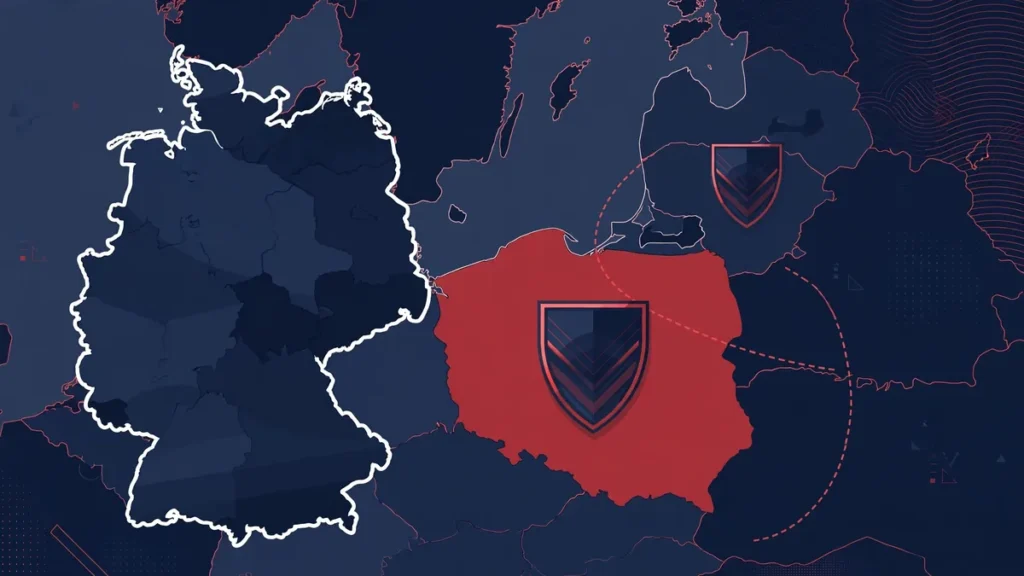
The €100 billion special fund is financing the big-ticket purchases: F-35A fighter jets, CH-47F Chinook heavy-lift helicopters, and the Arrow 3 missile-defence system bought from Israel. Germany is also the home of the IRIS-T air-defence system, built by Diehl Defence, which Ukraine now operates alongside Patriot batteries. On NATO’s eastern flank, Germany permanently stations the 45th Panzer Brigade “Litauen” in Lithuania — the first time since the Second World War that Berlin has based a full combat brigade abroad — with about 2,000 personnel expected in place by 2026. Our Lithuania profile covers the brigade.
Alliances & posture
Germany has been a NATO member since 1955 and is now the alliance’s largest European spender. Since the United States stepped back from chairing the Ukraine Defence Contact Group in early 2025, Germany and the United Kingdom have co-chaired the Ramstein-format meetings — a role confirmed in a joint statement on November 2. The partnership rests on the Trinity House Agreement signed in October 2024 and the Kensington Treaty, and both countries are members of the Coalition of the Willing working on post-war security guarantees for Ukraine.
Berlin is also a core member of the E5 — Germany, the United Kingdom, France, Poland and Italy — the group of Europe’s five largest military powers that now coordinates much of the continent’s Ukraine policy. Germany is Europe’s largest provider of military aid to Kyiv, having delivered about €55 billion since Russia’s full-scale invasion in 2022, according to Reuters. See our United Kingdom profile and France profile; the full set of country profiles is on the Country hub.
Current developments: the Patriot gap and the Ramstein test
The immediate story is air defence. In an interview published on November 7 by the Funke newspapers, including the Berliner Morgenpost, Pistorius said Germany had already delivered several Patriot systems and a large number of missiles to Ukraine, but that further transfers would leave gaps in Germany’s own defences that Berlin “cannot responsibly accept”. “We cannot do more right now,” he said, urging other allies to contribute more. The issue will be discussed “very seriously” at the next Ukraine Defence Contact Group meeting on November 17.
Kyiv’s need is acute. President Volodymyr Zelenskyy has said Ukraine receives an average of only about 12 Patriot missiles a month this year, against a requirement he has put at roughly 100 a month. Euromaidan Press reported that Ukraine intercepted only about 7% of Russian ballistic missiles in October. On October 26, Ukrainian Defence Minister Yevhenii Khmara asked the E5 group to consider transferring 10% of their existing Patriot and IRIS-T interceptor stocks to Kyiv, offering repayment from deliveries Ukraine has already contracted via a European Union loan.
Longer-term supply is coming, but slowly. On October 30, the US State Department approved a possible sale of 500 PAC-3 MSE interceptors to Ukraine at an estimated $2.1 billion — funded by Canada, Germany and Norway through the JUMPSTART programme plus EU-loan-backed Ukrainian funds, with no US money involved. It is an approval, not a contract: no delivery schedule was published, and Zelenskyy warned deliveries could begin only in a few years. Our explainer on the $2.1 billion Patriot sale sets out the funding and the timeline. Two more Patriot systems did reach Ukraine on November 2, and Germany is financing a €3.2 billion Raytheon deal for several hundred Patriot missiles plus IRIS-T launchers, according to Ukraine’s defence ministry. But Pistorius has noted that German production of PAC-2 GEM-T missiles has only just begun. For background on the system itself, see how the Patriot battery detects, tracks and intercepts missiles.
For readers in the US, the UK and the EU, the stakes are direct. The Patriot gap is now the sharpest test of Europe’s ability to defend Ukraine’s cities through the winter without American stocks, and the November 17 Ramstein meeting is where allies must either find interceptors from their own reserves or accept that Kyiv will keep absorbing ballistic-missile strikes it cannot stop.
Frequently asked questions
Why can’t Germany send Ukraine more Patriot systems?
Defence Minister Boris Pistorius said on November 7 that Germany has exhausted its capacity to spare further systems for now. Anything handed over could not be replaced quickly, leaving gaps in Germany’s own defences that Berlin says it cannot responsibly accept. He urged other allies to contribute more instead.
How many Patriot missiles does Ukraine receive each month?
President Volodymyr Zelenskyy has said Ukraine receives an average of about 12 Patriot missiles a month this year, against a requirement of roughly 100 a month. The shortfall is why Kyiv asked the E5 allies on October 26 to transfer 10% of their existing interceptor stocks.
What is Germany’s defence budget in 2026?
About €108 billion in total — a regular defence budget of about €82.7 billion plus €25.5 billion from the Zeitenwende special fund — roughly 2.5% of GDP. It is the largest defence budget in Europe and the fourth-largest in the world.
When is the next Ramstein meeting?
The 37th meeting of the Ukraine Defence Contact Group takes place on Tuesday, November 17, 2026, at NATO headquarters in Brussels. The United Kingdom and Germany will convene and co-chair it, and air defence is expected to dominate the agenda.
How big is the Bundeswehr?
As of January 31, 2026, the Bundeswehr had 186,221 active-duty military personnel and about 81,000 civilians. Germany has committed to NATO to expand to 260,000 active troops by 2035, with a new voluntary service model introduced in January 2026 to support recruitment.
Sources
- Kyiv Independent: Germany cannot provide Ukraine with more Patriot systems for now, defense minister says
- Ukrainska Pravda: Germany halts Patriot deliveries: Pistorius says capacity exhausted
- NATO: The Ukraine Defence Contact Group to meet at NATO Headquarters
- Interfax-Ukraine: Khmara calls on E5 nations to transfer 10% of their air defense missile stocks to Ukraine
- Reuters: Merz and Zelenskiy sign drone and defence cooperation accords
- Militarnyi: Germany to Provide Ukraine with €1 Billion in Military Aid
- GOV.UK: UK Germany Defence Ministerial Council Joint Statement