WarBrief Live | November 7, 2026 | Country Profile
Papua New Guinea fields one of the smallest militaries in the Pacific — about 3,600 active personnel — yet in 2026 it became the region’s most closely watched defence story. The Pukpuk Treaty with Australia, in force since July 8, has turned a long partnership into a formal alliance, and its first practical steps are landing now.
Key Takeaways
- The Pukpuk Treaty (signed Oct 6, 2025; in force July 8, 2026) is PNG’s first alliance — and Australia’s first in 70+ years.
- ADF recruitment opens to Papua New Guineans on November 16, 2026, in a pilot of about 100 recruits over two years.
- The Magani Rotation brings about 130 Australian troops to PNG for rotations of about 100 days, backed by A$110 million in infrastructure.
- Lombrum Naval Base reopened Nov 6, 2026 after a redevelopment of more than A$500 million.
By the numbers
| Metric | Figure | Source |
|---|---|---|
| Active personnel | About 3,600 | Public estimates |
| Defence spending, 2024 | About US$95 million (0.3% of GDP) | SIPRI |
| Guardian-class patrol boats | 4 | Pacific Patrol Boat Program |
| Magani Rotation | About 130 ADF personnel | Australian Defence Minister |
| Lombrum redevelopment | More than A$500 million | PNG Government |
Overview
Papua New Guinea occupies the eastern half of the island of New Guinea and more than 600 smaller islands, bordering Indonesia by land and Australia across the Torres Strait. Home to more than 10 million people, it marked 50 years of independence in 2025. Its security challenges sit close to home: tribal violence in the Highlands, illegal fishing and drug trafficking across a vast maritime zone, and natural disasters — an El Nino drought was declared a national emergency in October 2026. The PNG Defence Force exists for those demands, not conventional warfighting.
Military capabilities
The PNGDF is a unified force of about 3,600 active personnel, based at Murray Barracks, Port Moresby, under Rear Admiral Philip Polewara. Its Land Element is built around two infantry battalions of the Royal Pacific Islands Regiment, plus engineers, signals and bomb disposal. The Maritime Element operates four Guardian-class patrol boats — HMPNGS Ted Diro, Rochus Lokinap, Francis Agwi and Gilbert Toropo — delivered by Australia in 2018–2023, plus two landing craft. The Air Element is a small wing of three light transport aircraft and two leased helicopters. Defence spending was about US$95 million in 2024, roughly 0.3% of GDP, according to SIPRI data. It has no combat aircraft, tanks or heavy weapons, and depends heavily on Australian training and logistics. Marape aims for 10,000 personnel by 2035.
Alliances & posture
The Pukpuk Treaty — “pukpuk” is Tok Pisin for crocodile — is the centrepiece. Signed in Canberra on October 6, 2025 and in force from July 8, 2026, it commits both countries to consult and act together against shared threats — an armed attack on either is a threat to both. Marape calls it an alliance of peace, not war: “It is not an alliance of war, rather it’s an alliance of peace here in Papua New Guinea and Australia, and in our shared blue Pacific continent.” Albanese calls it only Australia’s third alliance, its first in 70+ years. Underpinning it: a 1978 status-of-forces agreement, a bilateral security agreement backed by $200 million in Australian support since 2023, and a US defence cooperation agreement signed in May 2023. In 2024, Foreign Minister Justin Tkatchenko ruled out a security pact with China — which stays one of PNG’s biggest trading partners. See our Australia and Japan profiles.
Current developments
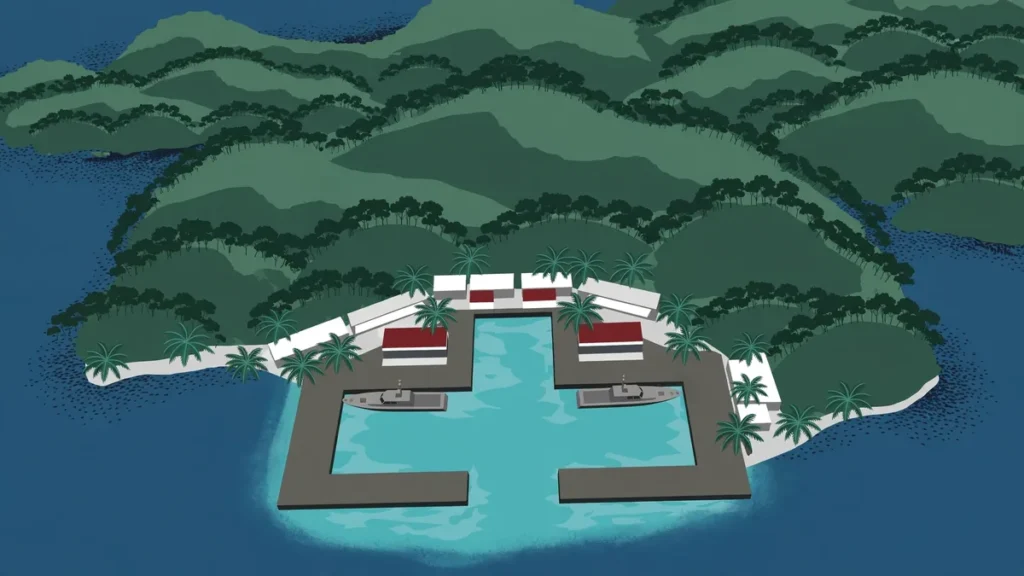
The alliance moved from paper to practice at the 32nd Australia–PNG Ministerial Forum in Port Moresby on October 20, 2026. ADF applications open November 16, 2026, drawing students and graduates from PNG’s three main universities and applicants from all 22 provinces. Two cohorts of about 50 will take a 16-week course in PNG from May 2027, and recruits must apply for Australian citizenship once eligible. The Magani Rotation stations about 130 ADF personnel from Townsville’s 3rd Brigade in PNG for about 100 days at a time, backed by A$110 million in PNGDF infrastructure. The restored Lombrum Naval Base (HMPNGS Tarangau, Manus Island) opened November 6, 2026 after a redevelopment funded by Australia at more than A$500 million. Treaty implementation arrangements are progressing; a senior officials’ dialogue is due by March 2027. After the El Nino drought was declared a national emergency on October 7, an ADF C-27J flew food supplies to Tabubil at PNG’s request.
What to watch next
November 16, when ADF applications open; the first Magani Rotation’s start date, not yet confirmed; how quickly Lombrum takes on joint exercises; and PNG’s 2027 election. More in our country profiles.
Frequently asked questions
What is the Pukpuk Treaty?
A mutual defence treaty between Papua New Guinea and Australia, signed October 6, 2025 and in force since July 8, 2026. It is PNG’s first alliance, and Australia’s first new one in 70+ years.
Can Papua New Guineans join the Australian Defence Force?
Yes. Applications open November 16, 2026, in a pilot for about 100 recruits over two years. The first cohort starts a 16-week course in PNG in May 2027; recruits must apply for Australian citizenship once eligible.
How large is the Papua New Guinea Defence Force?
About 3,600 active personnel across land, maritime and air elements, with four Guardian-class patrol boats and a small transport air wing. The government target is 10,000 personnel by 2035.
Sources
- Australian Minister for Defence: Australia and Papua New Guinea advance Pukpuk Treaty
- Australian Minister for Defence: Joint Press Conference, Papua New Guinea (October 21, 2026)
- Australian Minister for Foreign Affairs: 32nd Papua New Guinea-Australia Ministerial Forum Joint Communiqué
- Prime Minister of Australia: Australia-Papua New Guinea Leaders’ Meeting 2026
- The PNG Bulletin: ADF Recruitment Applications to Open in November, Targeting University Students
- The PNG Bulletin: A$503m Lombrum Naval Base investment strengthens PNG’s maritime security
- PNG Department of Prime Minister and NEC: Prime Minister Marape Hails $500 Million Lombrum Naval Base Restoration
- The National: Pukpuk Treaty an alliance of peace and security, says PM
- Wikipedia: Papua New Guinea Defence Force
- TheGlobalEconomy (SIPRI data): Papua New Guinea Military spending