
WarBrief Live | November 14, 2026 | Breaking Analysis
| Almost 1,200 drones fired at Russia overnight (AP) | 1,198 drones Moscow says it downed | 7 killed in Russia, incl. a 12-year-old | 30 wounded in a Zaporizhzhia apartment strike |
Ukraine fired almost 1,200 drones at Russia overnight on November 12-13, 2026, in one of the war’s largest aerial attacks, as US-led peace talks widened to Europe’s security. Here is what is confirmed.
The barrage came at a delicate moment. After two days of talks with Russian and Ukrainian delegations in Abu Dhabi, US envoys had briefed President Vladimir Putin in the Kremlin and President Volodymyr Zelenskyy, who was in Dublin meeting European leaders. Within hours, the night sky over Russia filled with drones — and a European team was named to join the next round of talks.
Key Takeaways
- Ukraine fired almost 1,200 drones at Russian targets overnight on November 12-13; Russia says its air defences downed 1,198.
- Strikes that got through killed seven people in three Russian regions, including a 12-year-old, and wounded 17, according to local officials.
- Ukraine’s General Staff says its drones set a Volgograd oil refinery on fire; Russia answered with 117 drones and a strike on Zaporizhzhia that wounded 30 people.
- The attack came as US envoys widened the peace talks to European security, with a European team now set to join the next round — a move the Kremlin has not yet confirmed.
What happened in Ukraine’s 1,200-drone attack on Russia?
Ukraine fired almost 1,200 drones at Russian targets overnight between late Thursday, November 12, and early Friday, November 13, in one of its biggest aerial attacks since Moscow launched its full-scale invasion in February 2022, the Associated Press reported.
Russia’s Defence Ministry said its air defences downed 1,198 Ukrainian long-range drones between late Thursday and early Friday. That figure is Moscow’s own claim and has not been independently verified; Kyiv has not confirmed a total. Strikes that got through killed seven people, including a 12-year-old, and wounded 17 others across three Russian regions, according to local officials cited by the Associated Press.
The scale is striking, but it is not the record. On October 28-29, Russia said its defences intercepted 1,214 Ukrainian drones across 20 regions — more than the previous high of 1,110 reported on September 20. The November 12-13 barrage is the second-largest of the war by Moscow’s own figures, and the second time in a month that Ukraine has sent more than 1,100 drones in a single night.
The massive Ukrainian drone barrage appeared designed to show that Kyiv is holding its own in the war, countering Moscow’s insistence that a Russian victory is inevitable, the Associated Press reported. Along a front line of about 1,200 kilometres (750 miles), Ukrainian forces are using drones and ground robots to help defend against the Russian army.
By the numbers — confirmed vs reported.
| Metric | Figure | Source | Status |
|---|---|---|---|
| Ukrainian drones fired overnight | Almost 1,200 | Associated Press | Confirmed |
| Drones Russia says it downed | 1,198 | Russian Defence Ministry via AP | Reported — Moscow’s figure |
| People killed in Russia | 7, incl. a 12-year-old | Local officials via AP | Reported |
| People wounded in Russia | 17 | Local officials via AP | Reported |
| Russian drones fired at Ukraine | 117 | Ukrainian authorities via AP | Reported |
| People killed in Ukraine overnight | At least 2, incl. a 17-year-old | Ukrainian authorities via AP | Reported |
| People wounded in Zaporizhzhia strike | 30, incl. 6 children | Officials via AP | Reported |
| Ukrainian regions with power outages | 12 | Associated Press | Confirmed |
| Volgograd refinery capacity | About 110 million barrels a year | Ukrainian General Staff via AP | Reported |
| Previous largest barrage (Oct 28-29) | 1,214 claimed downed | Russian Defence Ministry via TRT World | Reported |
Figures marked Reported come from one side’s officials and have not been independently verified. Figures marked Confirmed are reported by the Associated Press.
How did Russia answer — and what did its strikes hit in Ukraine?
Russia launched 117 drones against Ukraine overnight, killing at least two people, including a 17-year-old, Ukrainian authorities said. A single Russian attack on Friday on the southern city of Zaporizhzhia hit two five-storey apartment blocks and wounded 30 people, including six children, officials said.
The strikes brought power outages in 12 Ukrainian regions, the Associated Press reported, and Russian attacks on Ukraine’s energy infrastructure caused widespread outages across about half of the country’s regions on Friday, according to First Deputy Energy Minister Artem Nekrasov. Moscow has battered Ukraine’s power grid each winter of the war, hoping to weaken public morale.
The war has killed hundreds of thousands of soldiers and thousands of civilians, analysts and humanitarian organisations say, according to the Associated Press.
What is the Volgograd refinery strike, and why does the oil war matter?
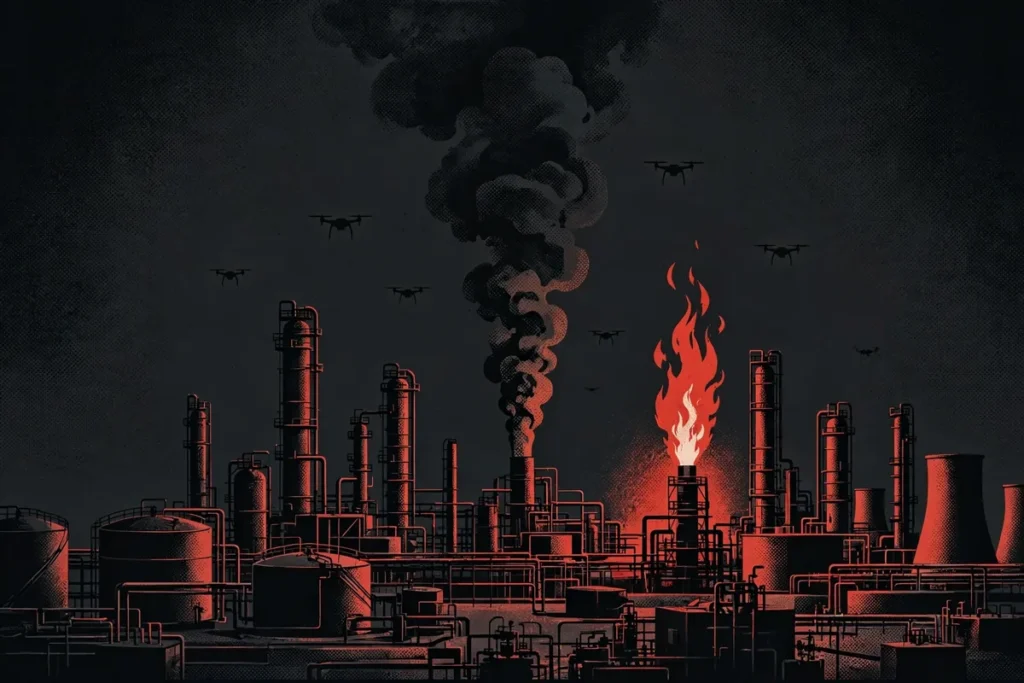
Ukraine’s General Staff said its forces struck an oil refinery in the Russian city of Volgograd, starting a fire. The refinery has a capacity of about 110 million barrels a year, it said. The claim comes from Kyiv and has not been independently confirmed.
The strike fits a deliberate campaign. Just days earlier, Ukraine struck Russia’s five largest refineries in two weeks, and Kyiv claimed last month that it had neutralised more than half of Russia’s refining capacity — a claim the Associated Press notes as Kyiv’s, not an independently verified figure.
The refinery campaign is also an economic weapon. Every refinery taken offline tightens Russia’s fuel supply and export earnings, and the effects feed through to global fuel markets. Ukraine’s drone war on Russian refineries is already reshaping the global diesel market, and each new strike adds pressure on prices that US and European drivers and businesses eventually feel.
Why is Zelenskyy complaining about Starlink speed limits?
President Volodymyr Zelenskyy on Friday repeated his complaints about drone speed limits on the US Starshield system — SpaceX’s military-grade version of the Starlink satellite internet service — that Ukraine needs for its defence. The speed restrictions are limiting Ukrainian drones to 161 kph (100 mph) on the entire front line and in Russian-occupied territory, he said, making it impossible for Kyiv to deploy its interceptors effectively against Moscow’s fast-moving jet-powered drones.
“We still have no clear explanations,” he said of the unannounced restrictions, after first raising the issue on Thursday.
Ukrainian officials are asking the US State Department, the Pentagon and SpaceX to clarify and resolve the situation, the Associated Press reported. Last month, similar SpaceX limits on Ukrainian drone speeds severely disrupted operations, alarming officials in Kyiv who fear a drop in US support. Elon Musk acknowledged in October that his company SpaceX had throttled the Starlink internet service in Ukraine for about a week, saying the system could not be used for offensive strikes against Russia.
The row has now reached Washington. Democratic senators Jeanne Shaheen and Chris Coons have asked Musk to preserve all records related to SpaceX’s restrictions on Ukraine’s Starlink and Starshield access, the Wall Street Journal reported, warning that the October and November restrictions raise concerns about vulnerabilities in systems relied on by the US government.
The dispute is not new: President Donald Trump has said Starshield is back in Ukraine, while Zelenskyy disagrees. The renewed complaint, made on the same day as the record-scale barrage, underlines how much of Ukraine’s drone war now depends on a private company’s satellite network — and how little control Kyiv has over it.
What does the barrage mean for the Dublin peace talks?
The barrage landed in the middle of a delicate diplomatic moment. After two days of talks with Russian and Ukrainian delegations in Abu Dhabi, US envoys briefed President Putin in the Kremlin and President Zelenskyy, who was in Dublin meeting European leaders. The Abu Dhabi talks ended with a prisoner-swap deal, and more talks are planned as negotiators seek a breakthrough, according to US envoys Steve Witkoff and Jared Kushner.
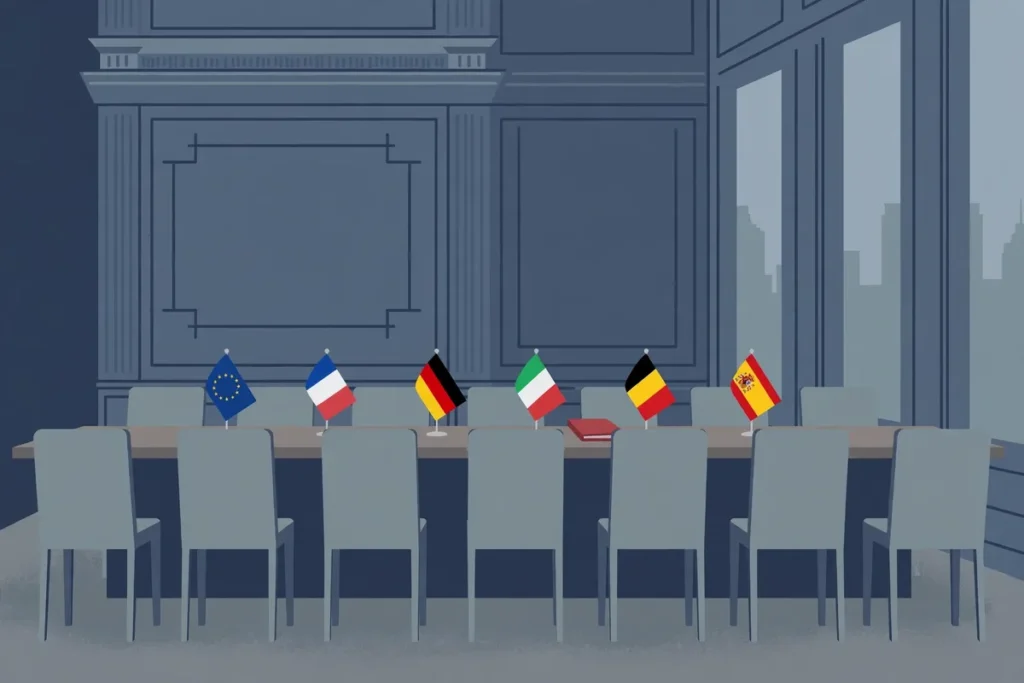
A team of diplomats from the UK, France, Germany, Italy, Poland and the European Union will be sent to the talks, European Council President Antonio Costa said after a meeting in Dublin. The session was dominated by European efforts to avoid being sidelined in the US-led negotiations. Kushner said Russia had agreed to include Europe in upcoming talks — but Kremlin spokesman Dmitry Peskov said Moscow must first understand the Europeans’ intentions before deciding on an expanded format.
European leaders remain wary of Russian moves. German Chancellor Friedrich Merz said: “Russia wants to talk about questions of European security architecture. We don’t need to talk about that. There is one,” referring to NATO. The EU’s top diplomat, Kaja Kallas, said Europe must insist on a ceasefire before taking the negotiations further — the opposite of what Putin demands. Luxembourg Prime Minister Luc Frieden said: “We cannot let neither the Americans nor the Russians decide about our future.”
The Institute for the Study of War said in an assessment on Thursday that Moscow is aiming “to dismantle NATO and the post-Cold War European security architecture”. The timing of the drone barrage — hours before the European team was named — reads as Kyiv’s signal that it will not be sidelined, or pressed into concessions, while the fighting continues. That is WarBrief’s assessment, not a claim by either side.
What the 1,200-drone barrage means for US/UK/EU readers
For readers in the US, UK and EU, the night’s events touch three things directly: energy prices, European security, and the reliability of the technology Ukraine’s defence depends on.
On energy, Ukraine’s refinery campaign has already pushed global diesel markets higher, and each new strike keeps upward pressure on fuel costs. If the campaign continues at this pace, drivers and businesses in the US and Europe will feel it at the pump and in heating and freight bills this winter.
On security, the talks now explicitly cover the post-Cold War European security architecture — the framework that underpins NATO and EU defence planning. Any deal that trades Ukrainian territory for security guarantees will shape European defence budgets and deployments for years, and it is being negotiated while Europe fights for a seat at the table.
On technology, the Starshield row is a warning for any Western government that leans on a private company’s satellite network for military operations: access can be throttled without notice, and Congress is now asking questions. The answers will matter far beyond Ukraine.
What to watch next in the Russia-Ukraine drone war
First, whether Moscow accepts the European team at the next round of talks, or stalls behind Peskov’s condition that it must first understand the Europeans’ intentions. Second, whether Ukraine sustains the refinery campaign — and whether Russia’s air defences adapt after two 1,100-plus drone nights in a single month. Third, whether SpaceX, the Pentagon or the US State Department clarifies the Starshield speed limits that Zelenskyy says are grounding his interceptors. Fourth, the winter grid campaign: Russia’s bombardment of Ukraine’s energy infrastructure as temperatures fall. And fifth, the Special European Council on November 26-27, where EU leaders will have to turn the Dublin discussion into a common position.
Frequently asked questions
How many drones did Ukraine launch at Russia on November 12-13, 2026?
Ukraine fired almost 1,200 drones at Russian targets overnight, the Associated Press reported. Russia’s Defence Ministry said its air defences downed 1,198 of them — a figure from Moscow that has not been independently verified, and Kyiv has not confirmed a total.
Did Ukraine hit the Volgograd oil refinery?
Ukraine’s General Staff said its drones struck the refinery in Volgograd and started a fire. The claim comes from Kyiv and has not been independently confirmed; the refinery has a capacity of about 110 million barrels a year, according to the General Staff.
How many people were killed in the overnight drone attacks?
Seven people, including a 12-year-old, were killed in three Russian regions and 17 were wounded, according to local officials. In Ukraine, Russia’s overnight drone attack killed at least two people, including a 17-year-old, and a separate strike on Zaporizhzhia wounded 30 people, including six children.
Why is Zelenskyy complaining about Starlink and Starshield speed limits?
Zelenskyy says unannounced speed limits on the Starshield system cap Ukrainian drones at 161 kph (100 mph) across the front line, making it impossible to intercept Russia’s fast jet-powered drones. He first raised the issue on November 12 and repeated the complaint on November 13; Musk acknowledged in October that SpaceX had throttled Starlink in Ukraine for about a week.
What does the drone barrage mean for the Ukraine peace talks?
The barrage came as US envoys widened the talks to European security and a European team — the UK, France, Germany, Italy, Poland and the EU — was named to join the next round. Kushner said Russia agreed to include Europe; the Kremlin has not confirmed that, and European leaders remain wary of Moscow’s aims.
Sources
- Associated Press (via The Manila Times): Ukraine launches nearly 1,200 drones at Russia ahead of US-led European security talks
- Associated Press (via 1News): Ukraine launches nearly 1200 drones at Russia amid US security talks
- Firstpost: Ukraine war talks turn to Europe’s security as Kyiv launches nearly 1,200 drones at Russia
- TRT World: Moscow says 1,214 Ukrainian drones targeted Russia overnight
- The Times of India: Breaking News Live Updates, November 14 (Wall Street Journal report on senators’ letter to Musk)
Read next: Conflict Zones hub — WarBrief Live’s rolling coverage of the world’s active conflicts.


Discussion 0
Share analysis, corrections, or context. Be civil — comments are moderated.