
WarBrief Live | November 12, 2026 | Breaking Analysis
1,000–1,500
Prisoners per side discussed for the swap
2 days
Of talks in Abu Dhabi, November 10–11
9 months
Since the last direct talks with US mediators
2–3 weeks
Reported timing for the exchange (TASS)
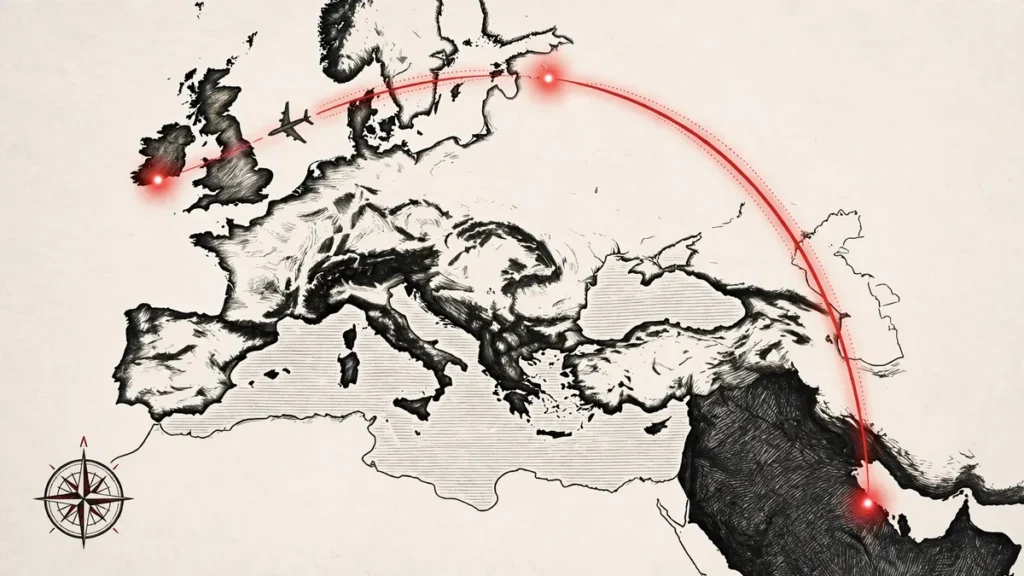
Two days of US-mediated talks in Abu Dhabi ended on November 11, 2026, with Russia and Ukraine agreeing a large-scale prisoner exchange — the first concrete outcome of direct negotiations in nine months — but with no ceasefire, no territorial deal and no security guarantees. The final prisoner numbers are to be settled on November 12, when US envoys Steve Witkoff and Jared Kushner fly to Moscow to brief President Vladimir Putin, then on to Dublin to meet President Volodymyr Zelenskyy.
Key Takeaways
- Russia and Ukraine agreed in principle to a large-scale prisoner exchange; US envoy Jared Kushner called it the biggest humanitarian release of prisoners of the war, with numbers to be finalised on November 12.
- President Zelenskyy said the sides discussed exchanging 1,000 prisoners per side, possibly 1,500 — which would match or beat the largest swap of the war, the 1,000-for-1,000 exchange of May 2025.
- No breakthrough was reached on territory, a ceasefire or security guarantees. Kushner said plainly that there is no trust between the sides right now.
- Progress was reported on practical issues, including how to monitor a future ceasefire and deconflict forces — the groundwork for de-escalation rather than a deal itself.
- Witkoff and Kushner travel to Moscow on November 12, then Dublin, and will push to add European partners to the format — a step Russia has so far resisted.
What did the Abu Dhabi talks agree?
The one firm outcome of the two-day session in Abu Dhabi was the prisoner exchange. Russian negotiator Vladimir Medinsky confirmed on November 11 that a large-scale prisoner exchange had been agreed, saying details would be announced soon and more negotiations would follow. Ukrainian lead negotiator Rustem Umerov called the swap the main result of the talks, and Ukrainian negotiator David Arakhamia said it could be the largest exchange since the war began.
Kushner, who co-led the US delegation with Witkoff, put it in the strongest terms of the day. “One of the positives is we agreed that we’re going to have the biggest humanitarian release of prisoners, which we’re going to finalise the numbers tomorrow,” he told reporters after the talks closed. The talks were the first direct meeting of Russian and Ukrainian officials with US mediators present since February, and the third round hosted in the Emirati capital this year, according to The National.
The format itself mattered. The US delegation also included General Alexus Grynkewich, commander of US European Command. Before the trilateral sessions, US, EU and Ukrainian officials met to discuss the peace process, and the day-one session ran for more than four hours. Day two, by contrast, lasted less than two hours, according to Russia’s state news agency TASS — a sign that the heavy lifting had already been done, or that the remaining gaps were too wide to bridge in the room.
How many prisoners will be exchanged?
The number is not yet final — and that is the question November 12 must answer. President Zelenskyy, speaking to reporters in Denmark on November 10, said the negotiators had discussed exchanging 1,000 prisoners per side, possibly 1,500. “They want to do 1,000 for 1,000, maybe 1,500 for 1,500. Some kind of large-scale exchange. The Americans will go to Russia with this agenda,” he said, according to Ukrainska Pravda.
Either figure would be significant. The largest prisoner swap of the war so far was the 1,000-for-1,000 exchange agreed in Istanbul in May 2025, carried out in three stages between May 23 and 25. A 1,500-for-1,500 exchange would exceed it by half. Russia’s state-run TASS news agency reported that the new exchange could take place within two to three weeks, and the Russian General Staff has spoken of more than 1,000 prisoners from each side — but neither the timing nor the final figure has been confirmed by both sides, so both remain REPORTED, not confirmed.
| Metric | Figure | Source |
|---|---|---|
| Prisoner-exchange range discussed | 1,000–1,500 per side | Zelenskyy, via Ukrainska Pravda (CONFIRMED) |
| Final number | Not yet agreed — to be finalised November 12 | Kushner, via Reuters (CONFIRMED) |
| Timing of the exchange | Within 2–3 weeks | TASS (REPORTED) |
| Largest swap so far | 1,000 for 1,000, May 23–25, 2025 | Russian Defence Ministry; Zelenskyy (CONFIRMED) |
| Talks duration | Day one: 4+ hours; day two: under 2 hours | WarBrief Live; TASS (CONFIRMED) |
| Gap since last direct talks | 9 months (since February 2026) | Reuters (CONFIRMED) |
Figures marked CONFIRMED are backed by two or more reputable sources. Figures marked REPORTED come from a single or secondary source and have not been independently confirmed.

What was not agreed in Abu Dhabi?
Almost everything else. The talks produced no ceasefire, no agreement on territory and no security guarantees for Ukraine — the three issues that would actually end the war. Kushner was blunt about the atmosphere. “The reality is there is no trust right now between the sides and that is to be expected after a conflict like this,” he said, adding that territorial questions would be the hardest to resolve. Medinsky said the sides had reached a common understanding on some points, “whilst on others we did not”, and dismissed the idea of territorial exchanges.
What did move, according to Kushner, was the practical groundwork. The talks “made good progress on understanding how to deconflict… and how to monitor the ceasefire and making sure we have the right agreements and the right understandings in place to do some major de-escalation postwar”, he said. That is the language of preparation, not of a deal: mechanisms for monitoring a ceasefire and avoiding accidental clashes are the infrastructure a future agreement would need, and they can be built before the political questions are settled.
Medinsky was more upbeat than the substance suggests, telling reporters that a peace settlement seemed closer after the two days. But the Russian side also made clear its limits. Moscow opposes any EU role in the process, and Medinsky dismissed European involvement outright. “We haven’t spoken with them. We don’t really understand their status here,” pro-Kremlin media quoted him as saying. That sets up the central tension of the next phase: Washington wants to widen the table; Moscow wants to keep it narrow.
Background and timeline
The Abu Dhabi round was the fourth round of US-led trilateral negotiations since the process was launched in January, and it came after two months of separate US discussions with the Russian and Ukrainian leadership. US, Ukrainian and EU officials held talks in Oslo on October 20 to discuss proposals to end the war; the following day, US and Russian officials met in St Petersburg to discuss resuming the trilateral format.
- January–February 2026: Three earlier rounds of US-led trilateral talks — two in Abu Dhabi, one in Geneva — produce no lasting ceasefire. Direct talks then lapse.
- October 20, 2026: US, Ukrainian and EU officials meet in Oslo to discuss peace proposals.
- October 21, 2026: US and Russian officials meet in St Petersburg on resuming trilateral negotiations.
- November 10, 2026: Day one in Abu Dhabi runs for more than four hours. Security guarantees dominate; a large prisoner exchange is discussed. Zelenskyy floats the 1,000-for-1,000 or 1,500-for-1,500 formula.
- November 11, 2026: Day two lasts under two hours. The prisoner exchange is agreed in principle. No ceasefire or territorial deal. Russia strikes six large electricity substations in four central Ukrainian regions, Prime Minister Sergii Koretskyi says.
- November 12, 2026: Witkoff and Kushner fly to Moscow to meet Putin, then to Dublin to meet Zelenskyy. Final prisoner numbers are due to be settled.
The war itself is nearing its fifth year since Russia’s full-scale invasion in February 2022. Prisoner exchanges have been one of the few channels that kept working through the fighting — dozens of swaps have taken place, many mediated by the UAE — but they have never yet produced a political breakthrough.
What happens next in Moscow and Dublin?
November 12 is the day the Abu Dhabi agreement gets tested. Witkoff and Kushner travel to Moscow to meet Putin “to go over what was discussed in Abu Dhabi and try to make more progress on some of the issues we discussed, because we see some openings and opportunities there”, Kushner said. The prisoner numbers are expected to be finalised in that meeting. From Moscow, the two envoys fly to Dublin, where Zelenskyy is attending a meeting of European leaders, to brief him and “explore some of the ideas” raised in Abu Dhabi.
The second item on the Moscow agenda may matter more in the long run. “One of the goals of the meeting in Moscow, in addition to finalising the humanitarian relief and release of prisoners and other humanitarian issues we’re working on together, is going to be to try and see if we can get Europeans added to the format to make this a multilateral format,” Kushner said. He added that the EU, NATO, the UK, Italy, Germany and France were “very united in all the discussions” in the pre-talks. Axios reported that the US is also pushing a broader new Europe-Russia security framework, and that the envoys will urge Putin to allow European representatives into the next round of talks — a proposal Moscow has so far rejected.
The fighting, meanwhile, did not pause for the diplomacy. Explosions were heard in Kyiv in the early hours of November 12, a Reuters witness reported, and Russia said it downed five drones heading for Moscow, according to Mayor Sergei Sobyanin. On November 11, even as the talks closed, Russia struck six large electricity substations in four central Ukrainian regions and hit railways in eastern and central Ukraine, according to Prime Minister Koretskyi. The pattern is familiar from earlier rounds: negotiations and strikes running in parallel, each side signalling that it can keep fighting while it talks.
What the Abu Dhabi prisoner deal means for US/UK/EU readers
For readers in the US, UK and Europe, the Abu Dhabi outcome is a humanitarian step, not a turning point — but it changes the shape of the diplomacy in three ways worth watching.
First, the prisoner exchange is the largest single humanitarian deliverable of any talks round this year, and if it lands at 1,500 per side it would be the biggest swap of the war. For families of prisoners and for the Ukrainian and Russian publics, that is real, and it gives the US mediation something concrete to show for nine months of effort.
Second, the push to add Europeans to the format is the clearest sign yet that Washington wants this to become a multilateral negotiation rather than a US-Russia-Ukraine triangle. European governments — and the UK — have a direct stake: any security framework that emerges will shape European defence spending, NATO posture and energy security for years. If Moscow refuses, the format stays narrow and Europe stays outside the room where its own security is negotiated.
Third, the absence of any ceasefire or territorial movement means the war’s costs keep landing on European households: energy prices, defence budgets and the flow of Ukrainian refugees are all still driven by a war with no end in sight. The monitoring mechanisms discussed in Abu Dhabi are the most practical near-term signal — if they are actually stood up, they would be the first step toward a verifiable pause in fighting, and the first thing to watch for in the Moscow readout.
Different perspectives
Kyiv presents the swap as the main result and a sign of momentum. Arakhamia said there was “good momentum” toward a solution before the end of the year, and Zelenskyy has framed the exchange as the first of several steps, with de-escalation, energy infrastructure and Black Sea security on the agenda for subsequent rounds. Ukraine’s position is that the exchange proves the format can deliver, and that pressure on Moscow must be sustained while talks continue.
Moscow’s reading is narrower. Medinsky confirmed the exchange and spoke of a peace settlement being closer, but the Russian delegation brought territorial demands to the table, rejected European participation and gave no ground on a ceasefire. For Moscow, the prisoner deal is a deliverable that costs little and buys goodwill; the hard issues remain untouched.
Washington’s framing is the most optimistic of the three. Kushner called the talks “a good first step” and “a very good first meeting — a tough meeting, but a productive one”, and stressed that getting everyone back to the table after a nine-month gap was itself an achievement. The US position is that the openings found in Abu Dhabi — on monitoring, deconfliction and the prisoner deal — justify pushing on to Moscow and Dublin rather than declaring the round a failure.
The UAE, as host, has presented the talks as proof of its role as a facilitator. Dr Anwar Gargash, diplomatic adviser to President Sheikh Mohamed, wrote that Abu Dhabi’s hosting “reflects the UAE’s standing and its constructive role in facilitating dialogue and bridging differences”, and said the UAE was optimistic the talks would “achieve a positive breakthrough”.
What to watch next in the Abu Dhabi talks process
The Moscow meeting on November 12 is the first test. Watch for the final prisoner number — 1,000 or 1,500 per side — and for any date for the exchange. A confirmed date within two to three weeks would match the TASS reporting and turn the agreement into a scheduled event. Watch also for any readout on the European question: if Putin agrees even in principle to European participation, the format changes fundamentally; if he refuses again, the multilateral push stalls.
The Dublin meeting with Zelenskyy matters just as much. Zelenskyy will want the Moscow readout, reassurance on the prisoner numbers, and a say in any security-framework proposal before it is put to Moscow in detail. The European Political Community summit convening in Dublin on November 12 gives that conversation a wider audience — European leaders will be listening for whether they are about to be invited into the process or left outside it.
Beyond November 12, the signals to track are the monitoring mechanisms and the de-escalation understandings Kushner described. If technical talks on ceasefire monitoring begin, that is the first concrete step toward a pause in fighting. If instead the next weeks bring only the prisoner exchange and no follow-on round, Abu Dhabi will stand as a humanitarian success inside a diplomatic stalemate — valuable, but not the breakthrough its hosts hoped for.
Read next: our day-one outcome and day-two stakes analysis, our report on how the talks opened with Europe watching from outside, and our explainer on Europe joining the talks. For the wider context, see our conflict zones hub and our Budapest Memorandum explainer on what Ukraine gave up and was promised.
Frequently asked questions
What did the Abu Dhabi talks agree?
Russia and Ukraine agreed in principle to a large-scale prisoner exchange after two days of US-mediated talks in Abu Dhabi on November 10–11, 2026. No ceasefire, territorial deal or security guarantees were agreed.
How many prisoners will be exchanged?
The final number has not been confirmed. President Zelenskyy said the sides discussed 1,000 prisoners per side, possibly 1,500. US envoy Jared Kushner said the numbers would be finalised on November 12, during meetings with Putin in Moscow and Zelenskyy in Dublin.
When will the prisoner exchange happen?
Russia’s TASS news agency reported the exchange could take place within two to three weeks, but that timing has not been confirmed by both sides and should be treated as reported, not confirmed.
Why is there no ceasefire after the Abu Dhabi talks?
Territory and security guarantees remain the hardest issues, and both sides say there is no trust between them. Progress was reported on practical matters such as ceasefire-monitoring mechanisms, but the political questions were left unresolved.
What happens next after Abu Dhabi?
US envoys Steve Witkoff and Jared Kushner meet President Putin in Moscow on November 12 to finalise the prisoner numbers, then fly to Dublin to meet President Zelenskyy. They will also push to add European partners to the talks format.
Sources
- Reuters: Russia, Ukraine exchange attacks on capitals as US envoys head for Moscow
- The National: Abu Dhabi peace talks yield agreement on large-scale prisoner exchange
- Dawn: Ukraine peace deal ‘closer’, says Russian negotiator
- Ukrainska Pravda: Ukraine and Russia consider large-scale prisoner exchange following Abu Dhabi peace talks
- China Daily: UAE talks finalize prisoner swap
- Business Standard: Russia, Ukraine reach deal on prisoner swap, but trust gap holds back talks



Discussion 0
Share analysis, corrections, or context. Be civil — comments are moderated.