
WarBrief Live | November 2, 2026 | Breaking Analysis
The six-day Oleshky ceasefire ended late on November 1 after Russia refused a Ukrainian offer to extend it, leaving Kherson civilians without the evacuation window that had moved nearly 800 people to safety. What follows now depends less on the local truce itself than on whether November talks can turn a short humanitarian pause into a wider restraint on strikes.
Key Takeaways
- The localised ceasefire in and around Oleshky ran from October 27 to November 1, with no violations reported by either side during the pause.
- Ukraine’s General Staff said 167 civilians were evacuated from threatened areas of southern Kherson region on the final day, including 22 children and 21 people with limited mobility.
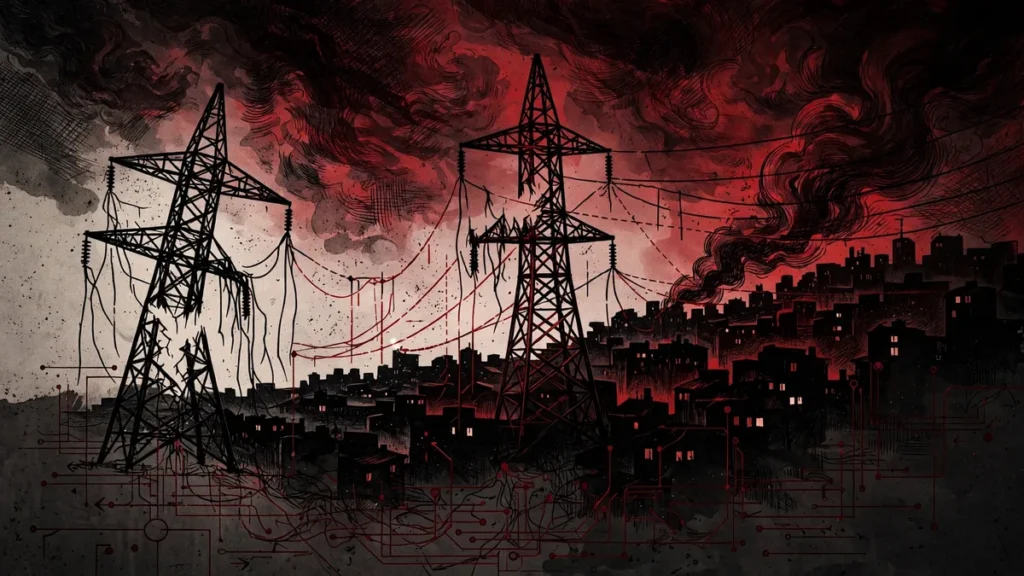
- President Volodymyr Zelensky said Russian strikes on energy infrastructure in four regions left hundreds of thousands of homes without power as the truce expired.
- Zelensky linked a halt to Ukrainian strikes on Russian refineries to either restraint on Russian energy strikes or the supply of Patriot interceptors, in a Fox News interview on November 1.
- Technical-level trilateral talks involving Ukraine, Russia and the United States are expected in Abu Dhabi in November, with Zelensky pointing to November 6 to 10 as a possible window; the exact date has not been finalised.
What happened when the Oleshky ceasefire ended?
Ukraine’s Parliament Commissioner for Human Rights, Dmytro Lubinets, confirmed that the ceasefire in effect from October 27 to November 1 had ended, calling it an important step in joint humanitarian efforts with Russian Human Rights Commissioner Yana Lantratova, coordinated by US First Lady Melania Trump. Agence France-Presse, via Malay Mail, reported that a senior Ukrainian official said Kyiv’s Foreign Ministry had offered an extension but that Russia refused it. That refusal is the confirmed hinge of this story: it is attributed to Ukrainian officials, and the reporting reviewed for this article does not set out a detailed Russian explanation for declining an extension.
At the same time, the end was orderly in one important respect. Neither side reported violations of the localised truce, according to Al Jazeera’s account of the expiry, and there was no immediate indication, in the first reporting on November 1, of a resumption of hostilities inside the paused area itself. That distinction matters. The wider war did not pause: Russian and Ukrainian strikes continued elsewhere throughout the six days, and the expiry removes protection from one small area rather than ending fighting across the front.
Kherson regional governor Oleksandr Prokudin warned residents to stay alert as the truce ran out and urged them not to visit so-called red zones near the Dnipro, where he said the intensity of Russian strikes remained high. For people who stayed in Oleshky and nearby settlements, the practical change on November 2 is therefore stark: movement that had been possible under a jointly observed pause is once again a calculation about risk, timing and whether help can reach them at all.
How the six-day Oleshky truce worked
Oleshky lies on the Dnipro River opposite the Ukrainian-held city of Kherson and has been occupied by Russian forces since the first days of the full-scale invasion. When the truce took effect, an estimated 2,000 civilians were still in the town, according to reporting cited by Al Jazeera, and residents had faced severe shortages of food, water and electricity. The pause was brokered with the help of Melania Trump and with the involvement of Pope Leo XIV, and it was first limited to Oleshky before being extended across the wider Kherson region.
Melania Trump said on X that the mission had delivered critical aid and enabled the evacuation of nearly 800 people, adding that she hoped Oleshky would serve as a foundation for lasting peace between both nations. That total is best read as a mission figure from the US First Lady, not as a day-by-day audited count: the day-by-day figure that is separately sourced is the 167 people evacuated on November 1, reported by Ukraine’s General Staff and carried by Reuters. The General Staff said its civil-military cooperation units, working with local authorities, moved those civilians to safer points in the Kherson region, including 22 children and 21 people with limited mobility who needed special assistance.
- October 27, 2026: The localised ceasefire in Oleshky and the surrounding area takes effect, enabling a humanitarian mission and civilian evacuations.
- October 30, 2026: Buses carry residents out of Russian-held Oleshky, two days before the truce is due to expire.
- November 1, 2026: Ukraine’s General Staff reports 167 more civilians evacuated from threatened areas of southern Kherson region on the final day.
- November 1, 2026, late evening: The ceasefire expires at 22:59 Ukrainian time, according to Al Jazeera, after Russia refuses a Ukrainian offer of an extension, according to Ukrainian officials.
- November 2, 2026: Reporting confirms the expiry and the return of the pre-truce risk calculation for civilians near the Dnipro, while wider strikes continue elsewhere.
WarBrief covered the start of the pause in Oleshky Ceasefire: What the Localised Ukraine-Russia Truce Covers and the period in which it held in Kyiv’s Southern Bridge Hit as the Oleshky Truce Holds. This article is not a repeat of either: it deals with the expiry itself, the final-day evacuation, the energy strikes that accompanied it, and what the next diplomatic step would need to achieve.
Why did Russia refuse an extension, and what is still unclear?
The honest answer is that the public record, as reported on November 1 and 2, does not settle Russia’s reasoning. A senior Ukrainian official told Agence France-Presse that Kyiv offered an extension and that Russia did not want it. Kremlin spokesperson Dmitry Peskov, quoted by Russian news agencies and reported by Al Jazeera, positively assessed the operation and the coordination between the two countries’ human rights commissioners. Those two points can both be true: a humanitarian operation can be judged a success by both sides without either side agreeing to prolong it.
Three explanations are plausible, and each should be labelled as interpretation rather than fact. First, Moscow may have treated the pause strictly as a finite humanitarian mission, with a fixed end date, rather than as a step towards a wider ceasefire. Second, it may have wanted to avoid a precedent in which a local pause, once extended, becomes a rolling constraint on operations in Kherson. Third, the pause may simply have served its stated purpose, in Moscow’s view, once aid had been delivered and evacuations completed. None of these is confirmed by a Russian statement in the reporting reviewed here, and this article does not adopt any of them as fact.
What is clearer is the asymmetry of the moment. Ukraine had an incentive to extend a pause that was moving civilians to safety and that carried US political backing. Russia, holding Oleshky, faced less immediate humanitarian pressure to prolong it. That asymmetry also explains why the expiry matters beyond Kherson: it tests whether a model that worked once, under unusual mediation, can be repeated without the same political conditions.
By the numbers: what is confirmed and what is reported
The table below separates figures confirmed by two or more sources from figures that rest on a single source or a single official statement. Readers should treat the second group as reported, not settled.
| Metric | Figure | Source |
|---|---|---|
| Duration of the localised truce | 6 days, October 27 to November 1, 2026 | CONFIRMED: AFP, Al Jazeera, Reuters |
| Civilians evacuated on the final day | 167, including 22 children and 21 people with limited mobility | CONFIRMED: Ukraine General Staff, via Reuters and Al Jazeera |
| Total evacuated during the mission | Nearly 800 | REPORTED: Melania Trump, on X |
| Civilians in Oleshky when the truce began | About 2,000 | REPORTED: cited in Al Jazeera and DW reporting |
| Regions hit in overnight energy strikes | 4 regions | CONFIRMED: Zelensky statement, via BBC and AFP reporting |
| Homes left without power | Hundreds of thousands | REPORTED: Zelensky statement; scale not independently itemised in the reporting reviewed |
| Customers still without power in Dnipropetrovsk region on November 1 evening | More than 60,000 | REPORTED: regional governor, via BBC reporting |
| Patriot missiles approved for sale to Ukraine | 500, valued at $2.1 billion | CONFIRMED: US State Department, via CGTN and Arab News |
Caveat: CONFIRMED here means the figure appears in at least two reputable sources or in an official statement carried by them; REPORTED means it rests on a single source or a single official claim and should be read with that limit in mind.
Why the expiry matters beyond Kherson
The Oleshky pause was the longest localised truce of the war, in a conflict now in its fifth year, and one Ukrainian lawmaker described it to Agence France-Presse as the biggest de-escalation since 2022. Its value was never that it stopped the war. It was that it showed two sides that disagree on almost everything could still agree, for six days, on a narrow humanitarian task: let aid in, let people out, and do not shoot in one defined area while that happens.
The expiry therefore carries two lessons at once. The first is encouraging: a tightly defined, jointly monitored pause can work, even without a wider ceasefire. The second is sobering: a pause that depends on mediation from outside the two militaries, and on a fixed end date, is easy to let lapse. Without a standing mechanism to extend it, or a political deal that gives both sides a reason to keep it going, the default on November 2 is a return to the previous risk.
That risk was visible before the truce ended. Zelensky said Russian strikes on energy infrastructure in four regions overnight into November 1 left hundreds of thousands of homes without power, and the BBC reported a separate strike that killed two people, including a 13-year-old girl, in the Vinnytsia region. Those strikes were outside the paused area, but they set the context in which Kherson civilians now face winter: energy infrastructure under repeated attack, repair crews working under time pressure, and a local pause that no longer shields movement near the Dnipro.
What the Oleshky expiry means for US, UK and EU readers
For readers in the United States, the United Kingdom and the European Union, the expiry is not only a Ukraine story. It is a test of a diplomatic pattern that Washington has been trying to build: narrow, verifiable pauses as stepping stones, rather than waiting for a comprehensive deal that neither side is ready to sign. If Oleshky cannot be repeated or extended, that pattern loses its best recent example.
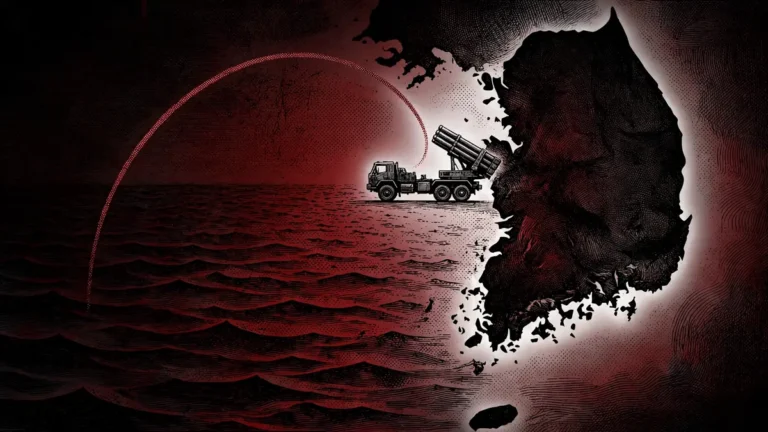
There is also a direct energy link. Zelensky’s November 1 interview tied Ukrainian refinery strikes to Russian energy strikes and to the supply of Patriot interceptors. US President Donald Trump has pressed Kyiv to stop hitting Russian refineries, blaming such attacks for rising diesel costs that analysts attribute to the Iran war, according to Agence France-Presse reporting. Zelensky’s reply, as quoted in that reporting, was that Ukraine could not refrain from responding while Russia attacked its energy system, and that another alternative was for Washington to supply Patriot missiles, with Kyiv willing to find money rather than rely only on aid. For European readers, that exchange matters because it connects a local Kherson decision to winter energy security, fuel prices and the pace at which air-defence stocks are replenished.
Finally, there is a humanitarian point that travels well beyond the front line. The Oleshky model worked because it was small, specific and jointly owned by two human rights commissioners. Aid agencies and governments watching from London, Brussels and Washington will note both halves of the result: the model delivered, and it still expired on schedule. Any future proposal will need to answer the question Oleshky leaves open, namely who extends a pause when its first deadline arrives.
Different views on what Oleshky proved
Kyiv’s view, as expressed by Lubinets and by Zelensky, is that the truce was a humanitarian success and that its expiry is a missed chance to extend a working arrangement. The emphasis in Ukrainian statements is on the people moved and the aid delivered, and on the offer of an extension that was not taken up. From that perspective, the burden of the next step falls on Moscow.
Moscow’s public posture, as reported, is narrower: praise for the coordination of the operation, without a commitment to prolong it. That posture is consistent with treating Oleshky as a completed mission rather than as a precedent. It leaves open whether Russia would accept a similar pause elsewhere, but it does not promise one.
The US position, as reflected in Melania Trump’s statement, is that Oleshky should serve as a foundation for lasting peace. That is a political framing, not a military commitment, but it matters because the pause carried US mediation from the start. Whether Washington can convert that framing into a second pause, or into restraint in the Abu Dhabi talks, is the open question of November.
What to watch next in the Abu Dhabi talks and on the Dnipro
The next diplomatic marker is the planned technical-level trilateral meeting in Abu Dhabi. Kremlin aide Yury Ushakov has said Russia plans to hold trilateral talks with Ukraine under US mediation in Abu Dhabi in November, with Moscow and Washington coordinating the date, and that the meeting would follow November 4, according to CGTN’s reporting of Ushakov’s remarks. Zelensky said he hoped the meeting could take place between November 6 and 10, and that Abu Dhabi had been tentatively chosen as the venue, while cautioning that the exact date and venue had not been finalised. Ushakov has also said European nations would not take part in the trilateral talks, a point that will matter in European capitals even if the meeting itself is technical rather than leaders-level.
WarBrief’s earlier coverage of that process, Abu Dhabi Talks: What to Expect as Ukraine, Russia and the US Meet in November and Abu Dhabi Talks November 2026: What the Meeting Could Decide, sets out the issues those talks are expected to address, including security matters following any peace deal. The Oleshky expiry adds a concrete test for Abu Dhabi: can the talks agree a mechanism for extending local pauses, rather than negotiating each one from scratch?
On the military side, watch two linked questions. The first is whether the Patriot sale approved on October 30, 500 missiles valued at $2.1 billion, changes Zelensky’s refinery-strike calculus in practice; he has warned that deliveries could take years, and US Approves $2.1 Billion Patriot Missile Sale to Ukraine, Explained sets out what was approved and what remains uncertain. The second is whether strikes on energy infrastructure intensify as winter approaches, and whether either side proposes an energy-specific restraint. Zelensky said on November 1 that if Washington supplied Patriot systems for one month, Kyiv would halt refinery strikes for the same period, according to Arab News, carrying Agence France-Presse. That offer is conditional and time-limited, and it should not be read as a permanent halt.
For civilians in Kherson, the watch items are simpler and more urgent: whether any further evacuation window opens, whether power restoration keeps pace with new strikes, and whether the governor’s warning about red zones near the Dnipro is followed by a new, jointly agreed safe route. Readers should also follow the Conflict Zones hub for updates as the November talks take shape.
Frequently asked questions
What is the Oleshky ceasefire?
The Oleshky ceasefire was a six-day localised pause in fighting in and around the Russian-occupied town of Oleshky in southern Ukraine’s Kherson region, running from October 27 to November 1, 2026. It allowed a humanitarian mission, aid deliveries and civilian evacuations, and it was brokered with the help of US First Lady Melania Trump and with the involvement of Pope Leo XIV.
Why did the Kherson ceasefire end?
It ended on its scheduled expiry date, late on November 1, after Russia refused a Ukrainian offer to extend it, according to Ukrainian officials speaking to Agence France-Presse. Neither side reported violations during the six days, but no extension was agreed, so the pause lapsed.
How many civilians were evacuated from Oleshky?
Ukraine’s General Staff said 167 civilians were evacuated from threatened areas of southern Kherson region on the final day, including 22 children and 21 people with limited mobility. Melania Trump said the wider mission enabled the evacuation of nearly 800 people in total; that total is a mission figure from the US First Lady, while the 167 figure is the separately sourced final-day count.
What happens to Kherson civilians now?
Without the pause, movement near the Dnipro returns to the pre-truce risk calculation. Kherson governor Oleksandr Prokudin has urged residents to stay alert and avoid red zones near the river. Whether a further evacuation window opens will depend on a new agreement, not on the expired truce.
What are the Abu Dhabi talks, and when might they happen?
The Abu Dhabi talks are planned technical-level trilateral talks involving Ukraine, Russia and the United States, under US mediation, expected in November 2026. Zelensky has pointed to November 6 to 10 as a possible window, while Kremlin aide Yury Ushakov has said the meeting would follow November 4; the exact date and venue have not been finalised.
Sources
- Malay Mail (AFP): Kherson ceasefire expires as Russia declines to extend pause in fighting
- Al Jazeera: Kherson braces for return of war as localised Russia-Ukraine truce ends
- Reuters: Oleshky ceasefire expires, Ukraine evacuates civilians from parts of Kherson region
- Arab News (AFP): Ukraine’s leader says will stop hitting Russia refineries if US provides interceptor missiles
- CGTN: Russia, Ukraine discuss trilateral talks amid continued fighting

Discussion 0
Share analysis, corrections, or context. Be civil — comments are moderated.