
WarBrief Live | October 29, 2026 | Geopolitics
At a glance: Proposed window: November 6-10, 2026 (Kyiv’s hope, not a confirmed date) | Parties: Ukraine, Russia and the United States | Venue: Abu Dhabi, leading candidate | Prior rounds: 2, in January and February 2026
No firm date has been set for the next Abu Dhabi talks, despite a November 6-10 window proposed by Ukraine. That single distinction shapes everything that follows.
Key Takeaways
- Ukrainian President Volodymyr Zelenskyy said on October 28, 2026 that he hoped trilateral talks with Russia and the United States would take place in Abu Dhabi between November 6 and November 10.
- The Associated Press reported that no date had been set, and Kremlin aide Yuri Ushakov said Moscow had sent no signal yet on timing.
- What is agreed is narrow: a three-sided, team-level format, with Abu Dhabi as the leading venue, aimed at preparing a possible leaders’ meeting.
- What is disputed is wide: the date, whether Europeans take part, and whether the venue holds if the Middle East situation worsens.
- Ukrainian officials at a Brussels event on October 29, 2026 tempered expectations, pointing to an energy truce as a realistic first topic rather than a full peace deal.
What date has actually been agreed for the Abu Dhabi talks?
No date has been agreed, on the reporting available on October 29, 2026. That is the most important sentence in this preview, because headlines that present November 6-10 as a scheduled meeting overstate what the parties have said. Reuters, carried by The Korea Times, reported that Zelenskyy said he hoped a trilateral meeting of peace negotiators from Ukraine, Russia and the United States would take place in Abu Dhabi between November 6 and November 10. Hope is not confirmation, and the rest of the record makes the gap clear.
Zelenskyy made the proposal at a joint press conference in The Hague on October 28, 2026, after meeting Dutch Prime Minister Rob Jetten. He said the meeting should take place by the end of November, and if possible between November 6 and 10, and that Kyiv was waiting for Washington to confirm a date. He expected that answer around November 4, the day after the United States midterm elections on November 3, saying, in the account carried by Brussels Signal, “After November 4, we will have a date.”
Moscow has not matched that timetable. Reuters, carried by The Business Standard, reported that Ushakov, the Kremlin’s foreign policy aide, said Moscow had not yet proposed a specific date and had sent no signal yet. Ushakov denied reports that talks could open on November 4 itself, while confirming that talks would take place after that date. November 4 is a public holiday in Russia, a point that helps explain why Moscow treats it as a floor rather than a start date.
A further complication appeared on October 29, 2026, when Interfax-Ukraine referred to a meeting “tentatively scheduled for November 4” in Abu Dhabi at team level, in a report on Ukrainian officials tempering expectations. That reference sits uneasily alongside Zelenskyy’s November 6-10 hope and the Associated Press report that no date had been set. The honest reading is that the date is still being negotiated in public as much as in private, and readers should treat any single date in a headline as provisional until all three parties confirm it.
Background and timeline: how the Abu Dhabi format reached this point
The Abu Dhabi format is not new. Brussels Signal reported that Ukraine, Russia and the United States held two rounds of trilateral talks in Abu Dhabi in January and February 2026 under United States mediation, without reaching agreement on territorial issues, and that the format has since stalled. That history matters: the November meeting would be a resumption, not a first encounter, and the unresolved issues from the earlier rounds are the same ones that would face negotiators again.
WarBrief previewed the planned November round on October 25, 2026, when Moscow and Kyiv had separately confirmed that technical-level talks were expected in the first half of November. The October 28-29 statements add a proposed window, a date-setting expectation and a public dispute over European participation, but they do not change the format: negotiating teams, not heads of state, would sit down first.

- January-February 2026: Two trilateral rounds in Abu Dhabi under United States mediation; no agreement on territorial issues, and the format then stalled.
- October 20, 2026: Talks in Oslo between Zelenskyy, Finnish President Alexander Stubb, Norwegian Prime Minister Jonas Gahr Store and United States special envoy Steve Witkoff; Witkoff then travelled to St. Petersburg to brief Russian President Vladimir Putin.
- October 23, 2026: Moscow and Kyiv separately confirmed technical-level talks were expected in Abu Dhabi in the first half of November.
- October 27, 2026: Putin held a 90-minute call with Stubb and Store; Ushakov later said European participation was not discussed on that call.
- October 28, 2026: Zelenskyy proposed November 6-10 in The Hague; Ushakov said talks would come after November 4 but no signal had been sent; United States President Donald Trump said talks would come “soon.”
- October 29, 2026: Ukrainian officials in Brussels tempered expectations and pointed to an energy truce as a possible topic, while fighting continued elsewhere in Ukraine.
Who will – and will not – be at the table?
The format itself is one of the few points on which the accounts converge: Ukraine, Russia and the United States, at negotiating-team level. Zelenskyy said the talks would be held at the level of negotiating teams rather than heads of state, and that he did not know when a meeting with Putin might take place, saying that depended on Moscow. The purpose of the team-level round, in Zelenskyy’s framing, is to make a leaders’ meeting possible. As Interfax-Ukraine reported, he put it this way:
“We should move from technical-level negotiations to a meeting of leaders, because key issues can be resolved only at the highest level.”
Europe’s place is where the accounts split. Al Jazeera reported that Ushakov said European countries would not be included in the next round, and that their possible participation was not discussed during the October 27 call between Putin, Stubb and Store. Ushakov was quoted by Reuters as saying: “There is absolutely no talk about this, nothing being considered.”
Stubb offered a different account, telling a meeting of the Nordic Council in Helsinki that European countries would be involved in November’s Abu Dhabi talks. Stubb’s office later clarified that he and Store had spoken as heads of their respective countries, not on behalf of Europe as a whole. Zelenskyy, for his part, said Kyiv wanted Europe to be involved, adding that unity and stronger pressure on Russia were needed, and said he and Jetten had discussed how European partners could ensure their positions were taken into account in a format that does not include them. The leaders of Britain, Germany and France said last weekend that Europe would play a role in United States-mediated talks, according to Reuters. None of that amounts to a European seat at the Abu Dhabi table as of October 29, 2026; it amounts to a dispute about whether there should be one.
By the numbers: what is confirmed and what is only reported
| Metric | Figure | Source |
|---|---|---|
| Zelenskyy’s proposed window | November 6-10, 2026 | Reuters via The Korea Times (proposed, not confirmed) |
| Date-setting expectation | Around November 4, 2026 | Zelenskyy via Brussels Signal (expectation, not a confirmed date) |
| United States midterm elections | November 3, 2026 | Confirmed context in multiple reports |
| Parties at the table | 3: Ukraine, Russia, United States | Confirmed format in all reports |
| Prior Abu Dhabi rounds in 2026 | 2 (January and February) | Brussels Signal |
| Dutch winter military support pledged October 28 | 500 million euros | Al Jazeera, citing the Dutch government |
| Dutch non-military support over three years | 1.2 billion euros | Al Jazeera, citing the Dutch government |
Caveat: figures marked proposed or expectation are not confirmed meeting details. Only the three-party, team-level format and Abu Dhabi as the leading venue are consistently reported across the parties’ statements; the date and European participation remain disputed.
What could the negotiators realistically agree in Abu Dhabi?
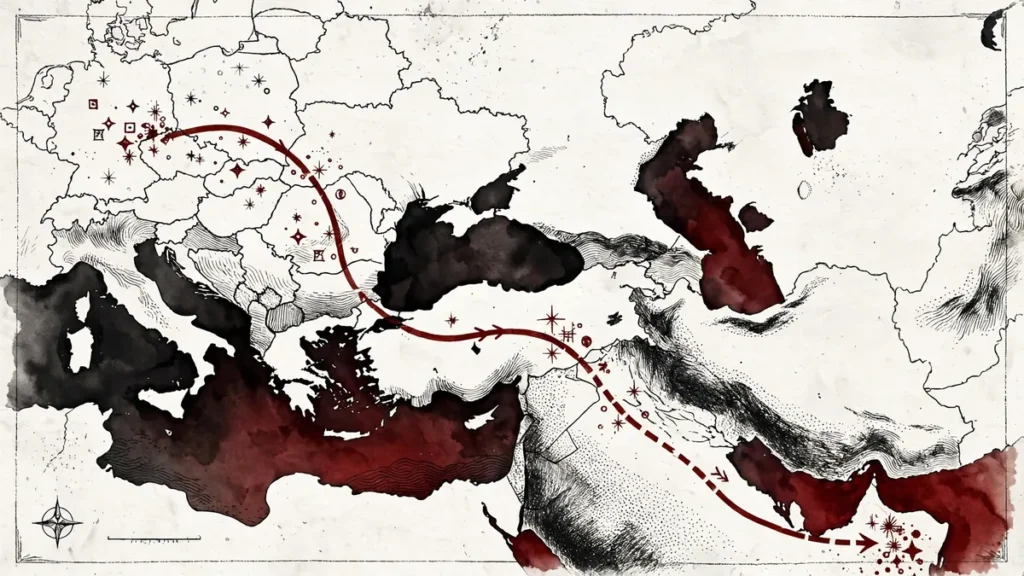
Success in Abu Dhabi, on the evidence of October 29, 2026, would look modest — and that modesty is itself informative. The most concrete topic named by Ukrainian officials was an energy truce: a mutual cessation of strikes on energy infrastructure. Taras Kachka, Ukraine’s representative to the European Union, said at the Brussels event that he hoped the parties would discuss exactly that, while asking: “Do we have any very optimistic expectations? You know that all previous attempts have not been particularly successful.” He pointed to limited past successes, including the localised ceasefire in Oleshky and prisoner-of-war exchanges, as the scale of what talks have actually delivered.
A Black Sea ceasefire was also named by Zelenskyy as a subject for discussion, alongside an energy ceasefire, in Interfax-Ukraine’s account. Both ideas share a logic: they limit a defined category of harm without requiring agreement on territory or security guarantees, which Zelenskyy himself said could only be settled by leaders. A technical round that produced a durable energy or Black Sea pause, with verification arrangements, would therefore count as progress even though it would not end the war.
A second realistic outcome is procedural: agreement on the agenda, format and timing of a leaders’ meeting, and on what each side must bring to it. Ushakov’s remark that Moscow did not expect substantial results from a first, exploratory session, reported by Brussels Signal, points in the same direction from the Russian side. Procedural agreement sounds thin, but after a format that stalled in February 2026, a resumed channel with a defined next step is a result that later rounds can build on.
What could the talks not decide?
The talks could not, at team level, decide the questions that have blocked every previous round: territory and security guarantees. Zelenskyy said the most delicate questions, including territory and security guarantees for Ukraine, could only be settled by the leaders themselves. That is a constraint, not a criticism: negotiating teams can prepare options and test language, but they do not carry the authority to concede territory or to bind a state to a security arrangement.
Nor could a November technical round, on its own, stop the fighting. The backdrop to the diplomacy on October 29, 2026 made that plain. The localised ceasefire in Oleshky, covered by WarBrief here, was reported holding into its third day, while a Russian drone strike on Dnipro’s main railway station killed at least 13 people, according to Ukrainian officials. A ceasefire that covers one town and a war that continues everywhere else can coexist, and the Abu Dhabi negotiators would be meeting in that split reality, not apart from it.
Kremlin spokesman Dmitry Peskov’s caution underlined the same point. Asked about Trump’s remark that talks would come “soon,” Peskov said the word “soon” was fluid, and that an announcement would come once a date was set. A meeting that has not yet been dated cannot be described as imminent, however often the word “soon” appears in headlines.
Where Kyiv, Moscow and Washington disagree
Kyiv’s position, as stated on October 28-29, 2026, is that the meeting should happen in the November 6-10 window, that Europe should be involved, and that the round should prepare a leaders’ meeting and discuss an energy or Black Sea ceasefire. Ukrainian officials in Brussels were notably more cautious than the headline window suggests: former finance minister Natalie Jaresko said she did not believe Putin was genuinely ready to sit down at the negotiating table at this stage, and parliamentary committee chair Ivanna Klympush-Tsyntsadze said Europe must finally be at the negotiating table rather than, in her phrase, “somewhere on the menu.” DTEK chief executive Maxim Timchenko expressed hope that Trump’s call for an energy truce would be received positively, adding that if it were not, Ukraine would have the moral right to resume attacks on Russian oil refineries.
Moscow’s position, as stated by Ushakov and Peskov, is that talks will resume after November 4, that no date has been signalled, that timing depends on the battlefield and on the situation in the Middle East, and that European participation is not under discussion. Ushakov linked timing explicitly to the regional fallout from the United States-Israeli war on Iran, saying the Middle East situation “just doesn’t allow us to hold it in the near future,” in his words as quoted by Reuters. Zelenskyy, by contrast, left open the possibility of moving the venue because of sensitive moments in the Middle East, while saying the dates should not change. The two sides therefore disagree not only on the date but on what could move it.
Washington’s position, on the public record on October 29, 2026, is the least detailed: Trump said talks would come “soon,” and Zelenskyy said Kyiv was waiting for a United States announcement after the midterm elections. Former United States special representative Kurt Volker, speaking in Brussels, said he believed Trump was currently focused exclusively on the midterm elections and that his position on Ukraine would not change, while arguing that a full, immediate and unconditional ceasefire should be the foremost priority. That is an expert assessment, not an administration statement, and it should be read as such.
What the Abu Dhabi talks mean for US/UK/EU readers
For readers in the United States, the timing is inseparable from the November 3 midterm elections. Zelenskyy’s expectation of a date around November 4 reflects that calendar, and any United States announcement after the elections will be read in Washington as a signal of how much political capital the administration is willing to spend on a negotiation whose outcome is uncertain. The talks do not directly change United States domestic policy, but they will shape the debate over further aid, sanctions relief and the terms on which the United States engages Moscow.
For readers in the United Kingdom and the European Union, the central question is whether Europe is a participant or an audience. The Netherlands’ October 28 pledges — 500 million euros in winter military support for drones and other material, 1.2 billion euros in non-military support over three years, and 40 million euros for the Ukraine Energy Support Fund by the end of 2026, as reported by Al Jazeera — show European governments continuing to fund Ukraine’s defence and energy resilience while the format of the talks remains trilateral. If an energy truce emerged from Abu Dhabi, it could ease pressure on European energy supplies heading into winter; if the talks produced only a procedural step, European capitals would face the same winter with the same war, and the same argument about whether pressure or engagement moves Moscow.
For all three audiences, the practical implication is patience with headlines. A dated meeting is not a dated peace, a proposed window is not a confirmed summit, and a technical round is not a leaders’ deal. The most useful way to follow November is to watch for three confirmations in order: a date confirmed by all three parties, an agenda that names an energy or Black Sea item, and any statement on European participation that goes beyond competing claims.
What to watch next before November 6
First, watch for a United States announcement after November 4. Zelenskyy expects the date then; Ushakov says Moscow has sent no signal yet. If Washington names a date and Moscow confirms it, the November 6-10 window becomes real. If Washington names a date and Moscow does not, the window remains Kyiv’s proposal.
Second, watch the venue. Abu Dhabi is the leading candidate in both Kyiv’s and Moscow’s accounts, but Zelenskyy left open a move if the Middle East situation worsens, and Ushakov linked timing to that same situation. A venue change would not necessarily mean collapse, but it would signal that the Middle East war is constraining a European war’s diplomacy.
Third, watch the Oleshky precedent and the Dnipro reality together. A localised humanitarian pause that holds, and a railway-station strike that kills civilians on the same day, are the two facts negotiators carry into any room. If the Oleshky pause expands or a limited energy pause is discussed seriously, Abu Dhabi has something to build on. If strikes on civilian infrastructure continue at the October 29 pace, the technical round will be negotiating under fire, and expectations should be set accordingly.
Finally, watch for the hub that tracks this story day by day. WarBrief’s conflict zones hub carries the Oleshky ceasefire, the Dnipro strike and the earlier Abu Dhabi preview, and the 23:00 UTC hub update will refresh the Oleshky post with the October 29 position. The November meeting, if it happens, will be judged against the record set out here: what was agreed, what was disputed, and what was never promised.
Frequently asked questions
When will the Abu Dhabi talks take place?
No firm date has been confirmed. Ukrainian President Volodymyr Zelenskyy said on October 28, 2026 that he hoped talks would take place between November 6 and November 10, and expected a date around November 4. Kremlin aide Yuri Ushakov said Moscow had sent no signal yet, and the Associated Press reported that no date had been set.
Who will attend the Abu Dhabi talks?
Negotiating teams from Ukraine, Russia and the United States, at team level rather than heads of state. European participation is disputed: Moscow says it is not under discussion, while Kyiv and Finnish President Alexander Stubb say Europe should or will be involved. No European seat has been confirmed.
What could the Abu Dhabi talks achieve?
Realistically, an energy truce or a Black Sea ceasefire discussion, plus agreement on the agenda and timing of a possible leaders’ meeting. Territory and security guarantees, which Zelenskyy said only leaders can settle, are not expected to be decided at team level.
Why is the venue in doubt?
Abu Dhabi is the leading candidate, but both sides have linked timing or venue to the Middle East situation. Zelenskyy said the venue could move while the dates should not change; Ushakov said timing depends on the battlefield and on the Middle East situation.
Have Ukraine, Russia and the US met in Abu Dhabi before?
Yes. They held two rounds of trilateral talks in Abu Dhabi in January and February 2026 under United States mediation, without reaching agreement on territorial issues, and the format then stalled until the planned November resumption.
Sources
- Reuters via The Korea Times: Ukraine, Russia, US peace negotiators to meet between Nov. 6 and 10, Zelenskyy says
- Reuters via Al Arabiya: Ukraine, Russia, US peace negotiators to meet between November 6 and 10, Zelenskyy says
- Al Jazeera: Kremlin says European countries not included in next Ukraine talks
- Reuters via The Business Standard: Next round of Ukraine talks depends on Middle East, other factors, Kremlin aide says
- Interfax-Ukraine: Ukrainian officials temper Abu Dhabi talks expectations, hope for energy truce
- Brussels Signal: Zelensky expects three-way talks with Russia and US in early November
Read next: Oleshky Ceasefire: What the Localised Ukraine-Russia Truce Covers and Russian Drone Strike on Dnipro Train Station Kills 13.
Discussion 0
Share analysis, corrections, or context. Be civil — comments are moderated.