
WarBrief Live | October 29, 2026 | Energy & Oil
By the numbers at a glance
- €100+ — the level Dutch TTF gas crossed on October 28, 2026, for the first time since December 2022.
- ~€30 — where TTF traded in February 2026, before the Iran war; prices have more than tripled since.
- 75% — how full EU gas storage stood on October 21, against a 90% November 1 target.
- €18–33 billion — the EU energy regulator’s estimate of what the war has added to Europe’s gas import bill.
European gas prices passed €100 per megawatt-hour on October 28, 2026, for the first time since December 2022, as thin storage, disrupted Gulf LNG supplies and colder forecasts collided days before winter. EU energy ministers met in Luxembourg on October 29 to discuss the surge.
Key Takeaways
- The Dutch TTF benchmark briefly topped €100/MWh on October 28, settling 4.85% higher on the day, according to ING.
- EU gas storage stood at about 75% on October 21, well short of the 90% November 1 target and below the 83% of a year earlier.
- Supply pressure comes from disrupted Gulf LNG flows, reported QatarEnergy force majeure extended to year-end, and unplanned outages in Norway.
- Industry is already cutting back: fertilizer maker Yara curtailed European ammonia output and used more than 7% less gas in the third quarter of 2026 than a year earlier.
- Ministers discussed electricity-bill relief and refinery output, but no emergency price cap was announced; affordability, not physical shortage, is the stated concern.
What happened on October 28?
Europe’s benchmark gas contract, Dutch Title Transfer Facility (TTF) front-month gas, broke above €100 per megawatt-hour during trading on October 28. Reported intraday prints varied by contract and timing — AFP put the high at €100.45, Bloomberg-linked reporting put it at €100.90, and the Financial Times reported €100.30 for November delivery — but every major wire agreed on the threshold itself: the first crossing of €100 since December 2022, when Europe was reeling from the loss of most Russian pipeline gas. ING’s commodities note records that TTF settled 4.85% higher on the day.
The crossing matters because of where prices started the year. TTF traded at around €30 per megawatt-hour in February 2026, just before the Iran war began, according to Bloomberg-linked reporting carried by the Seoul Economic Daily. Prices have therefore more than tripled in about eight months, a climb that has accelerated as Europe moved into the winter restocking season with stocks already low.
Why did European gas prices pass €100?
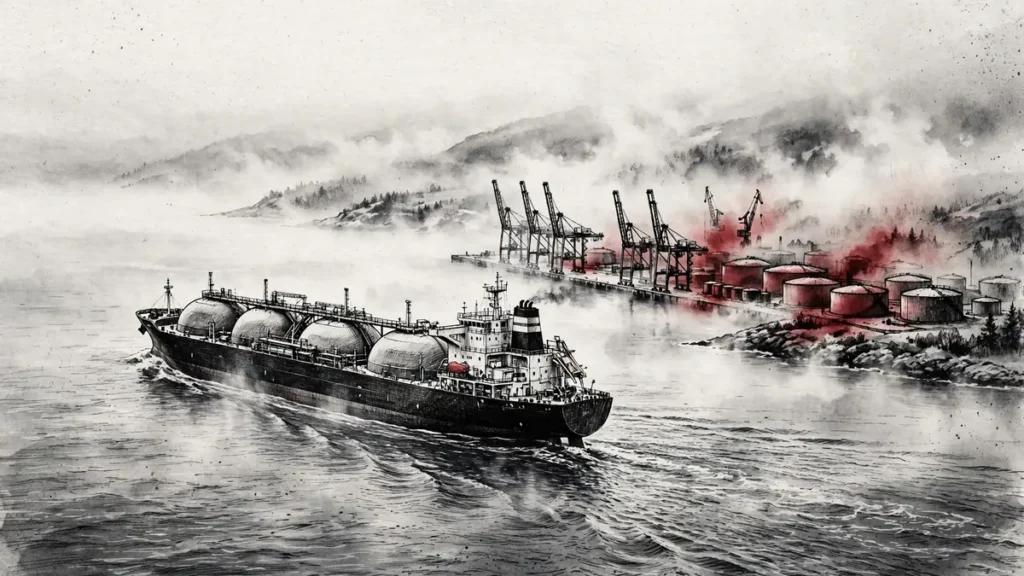
No single event pushed prices over the line. Four pressures arrived together, and traders priced them as one winter risk.
First, Gulf LNG supply remains disrupted. The war in the Middle East has hampered flows through the Strait of Hormuz and the wider Gulf, and Reuters reports that fighting has damaged refineries across the Middle East and Russia and hampered oil and gas flows through the Black Sea, Red Sea and Strait of Hormuz shipping lanes. Europe is importing less liquefied natural gas than a year ago, and the EU energy regulator says almost no Qatari LNG reached the EU during the summer.
Second, two fresh supply warnings landed in the same week. ING reported that QatarEnergy has reportedly extended its force majeure for several buyers until the end of the year, which would push significant LNG disruption deeper into the heating season, and that several unplanned outages in Norway are adding to supply concerns. The force majeure extension is a market report, not a confirmed company announcement, and is treated as reported rather than confirmed in this article.
Third, storage is thin. The EU Agency for the Cooperation of Energy Regulators (ACER) put EU storage at 75% of capacity on October 21, against the bloc’s target of filling storage to 90% by November 1 each year. Reuters reports the same 75% figure against 83% at the same point last year, and notes that Germany’s reserves are around 60% full. ING adds that storage is just shy of 75% full and that a couple of October draw days have already occurred, with sustained winter draws yet to begin.
Fourth, the weather turned supportive of prices. Forecasts point to colder-than-usual weather in northwest Europe from next week, which would lift heating demand just as storage draws gather pace. Markets are also weighing the risk, flagged by analysts, that the United States could resume strikes on Iran after the November 3 midterm elections, a prospect that would threaten further Gulf energy disruption.
By the numbers: what is confirmed and what is reported
| Metric | Figure | Source | Status |
|---|---|---|---|
| TTF intraday high, October 28 | €100.30–€100.90 (prints varied by contract and time) | AFP, Bloomberg, Financial Times | CONFIRMED crossing; exact print varies |
| TTF daily settlement change, October 28 | +4.85% | ING | CONFIRMED |
| TTF price, February 2026 | ~€30/MWh | Bloomberg via Seoul Economic Daily | CONFIRMED |
| EU gas storage, October 21 | 75% of capacity vs 90% November 1 target | ACER | CONFIRMED |
| EU gas storage, same time last year | 83% | Reuters | CONFIRMED |
| Added cost of the war to Europe’s gas import bill | €18–33 billion | ACER | CONFIRMED |
| US share of EU gas supply | ~30% | ACER | CONFIRMED |
| Yara European gas consumption, third quarter 2026 | Down more than 7% year on year | Yara via ING | CONFIRMED |
| Yara estimated extra gas cost, fourth quarter 2026 | $450 million vs a year earlier | Yara | CONFIRMED company estimate |
| QatarEnergy force majeure extension | Extended for several buyers until year-end | ING market report | REPORTED, not independently confirmed |
| TTF peak, March 2022 energy crisis | €345/MWh | AFP | CONFIRMED |
Caveat: CONFIRMED means reported by two or more independent outlets or an official source; REPORTED means a single-source market report that has not been independently confirmed. Nothing in this table is a forecast.
What does €100 gas mean for household bills and industry?

For households, wholesale gas is only one part of the retail bill, but it is the part moving fastest. Higher wholesale prices feed through to heating and electricity costs with a lag that varies by country and contract, and the timing is awkward: the surge arrives just as heating demand rises. The European Commission has urged member states to cut demand for gas and electricity because of high energy costs, and ministers discussed a Commission proposal to cut electricity bills through tax and grid fee reforms, including taxing electricity at a lower rate than natural gas.
For industry, the adjustment is already visible. Chemical company Yara recently reported curtailments of ammonia production in Europe because of high gas prices, and its European gas consumption fell more than 7% year on year in the third quarter of 2026, according to ING. Yara has said it will cut ammonia output further in the fourth quarter and estimates its natural gas costs will be $450 million higher in that quarter than a year earlier. Ammonia is the feedstock for nitrogen fertilizer, so sustained curtailments can keep fertilizer prices elevated into the next planting season, with knock-on effects for food costs months later.
Power markets are also adjusting. ING notes that prices are deep into the range where generators switch from gas to coal, a shift that cushions electricity supply but raises emissions. And the broader context is less alarming than 2022 in one respect: gas demand is currently about 20% lower than before the 2022 crisis, according to the EU energy regulator, meaning stored volumes will last longer than they would have at 2022 consumption levels.
What the €100 gas price means for US/UK/EU readers
For readers in the EU, the immediate effect is on winter bills and on the politics of affordability. Energy Commissioner Dan Jørgensen told reporters on October 29 that the situation is very serious, while stressing that Europe does not currently face a security-of-supply problem. The distinction matters: Europe is not running out of gas, but households and businesses may struggle to afford the gas that is available, and ministers are now debating bill relief rather than rationing.
“We are in a very serious situation now. It does not look like we have a security of supply issue but I would warn against neglecting that.” — EU Energy Commissioner Dan Jørgensen, October 29, 2026, via Reuters
For readers in the UK, which is linked to continental prices through interconnectors and the same LNG market, a €100 TTF price raises the cost of imported gas and of electricity generated from gas, even though the UK’s own storage and supply mix differ. For readers in the US, the direct household effect is smaller, but the US is now Europe’s swing supplier at roughly 30% of EU gas supply, so American LNG cargoes, shipping and export politics are part of the European price story — and a European demand shock competes with Asian buyers for the same cargoes, which can move global LNG prices.
For markets more broadly, the crossing is a reminder that the energy shock of the Iran war is not a one-week event. ACER’s €18–33 billion estimate covers only the added cost of importing the same quantity of gas; it does not capture the industrial output lost to curtailments or the fiscal cost of bill support that governments may now be pressed to provide. Readers should treat any claim that prices will fall, or rise, from here as speculation: this article reports what happened and what officials and analysts said, not a forecast.
What to watch next in Europe’s gas market
Three things will decide whether €100 is a spike or a winter-long level. First, what ministers actually agree in Luxembourg beyond the discussion of bill relief and refinery output — the Commission has already begun talks with European refineries on boosting output, including through the possible easing of some technical specifications. Second, whether the reported QatarEnergy force majeure extension and the Norway outages resolve or deepen, and whether colder northwest-Europe forecasts verify from next week. Third, storage draws: with stocks at 75% and winter draws barely under way, the pace of withdrawal over the next month will show how much margin Europe really has.
Two structural deadlines also frame the winter. The European Union’s full ban on Russian natural gas imports is scheduled for January, which removes a remaining, if small, pipeline option and increases reliance on seaborne LNG. And the November 3 US midterm elections are the hinge for the market’s fear of renewed strikes on Iran, which analysts cite as a key upside risk. Neither event has happened yet; both are dates to watch, not outcomes to assume.
For context, readers can follow how the wider energy shock has moved oil prices in WarBrief’s coverage of Brent crude above $115 and the earlier move above $100, and how fuel costs fed into household budgets in $106 oil and winter fuel bills. The WarBrief conflict zones hub tracks the Middle East fighting behind the disruption, and the G7 emergency diesel release shows one lever governments have already pulled. This article explains market movements for information only; it is not financial advice or a price forecast.
Frequently asked questions
Why did European gas prices rise above €100?
Four pressures combined: disrupted Gulf LNG flows linked to the Iran war, a reported QatarEnergy force majeure extension to year-end, unplanned outages in Norway, and colder northwest-Europe forecasts, all against EU storage of only about 75% ahead of winter.
Is Europe running out of gas?
No, on the evidence officials cite. EU Energy Commissioner Dan Jørgensen said on October 29 that Europe does not appear to have a security-of-supply issue, but warned that affordability is just as urgent, because supply means little to households and businesses that cannot afford it.
Will household heating bills rise this winter?
Wholesale gas is only one component of retail bills and the pass-through varies by country and contract, so no single figure applies. Ministers are discussing electricity-bill relief through tax and grid fee reforms, which suggests governments expect pressure on bills even if they cannot yet say by how much.
What are EU ministers doing about gas prices?
Energy ministers met in Luxembourg on October 29 to discuss winter energy security, electricity-bill relief and boosting refinery output. No emergency price cap was announced in the reporting of the meeting; the Commission has also begun talks with refineries on raising output.
How does this compare with the 2022 energy crisis?
The €100 level is the highest since December 2022, but it remains far below the March 2022 peak of €345 per megawatt-hour, and European gas demand is now about 20% lower than before the 2022 crisis, so stored gas stretches further. The risk this winter is affordability and thin storage, not the scale of the 2022 spike.
Sources
- Reuters via BusinessWorld: EU energy ministers to discuss soaring fuel prices as winter looms
- ING THINK: The Commodities Feed — European gas tops €100 as supply fears grow
- Seoul Economic Daily: European Gas Prices Hit 4-Year High, Triple Since Iran War
- AFP via Vanguard: European gas prices hit 100 euros for first time since 2022
- Times Now: Gas Prices Top €100, Hit Four-Year High as Europe Fears Fresh Iran War Escalation
Discussion 0
Share analysis, corrections, or context. Be civil — comments are moderated.