WarBrief Live | October 5, 2026 | Breaking Analysis
The United States has redeployed all 12 of its B-1 bombers from RAF Fairford in England to their home stations in the United States, one week after British police foiled a suspected terror plot targeting the base. The RAF Fairford bombers withdrawn in the move had been flying strikes against Iranian missile sites threatening shipping in the Strait of Hormuz, and the Pentagon confirmed the pullout on October 4, 2026 — just as the Iranian government’s alleged role in the plot, which Tehran denies, became a fresh diplomatic flashpoint in the US-Iran war.
Key Takeaways
- All US bombers at RAF Fairford — a dozen B-1s — were redeployed to the United States over the weekend, confirmed by a Pentagon official on October 4, 2026.
- The withdrawal follows the foiled terror plot of September 27: five men arrested near the base in white vans, and a sixth, a dual British-Iranian national, arrested on October 1. All six were released on bail and remain under investigation.
- Prime Minister Andy Burnham said on September 30 there were “strong indications” Iran played a part; a senior US official told the Wall Street Journal the suspects were recruited by Iran’s Islamic Revolutionary Guard Corps. Tehran denies involvement and summoned the British ambassador.
- US President Donald Trump criticised the bail releases on September 28, saying he was “surprised that they released them”.
What happened at RAF Fairford?
Over the weekend of October 3–4, the US Air Force moved every bomber it had stationed at RAF Fairford, a Gloucestershire airbase about 100 miles west of London, back to the United States. The Wall Street Journal first reported the departure, citing security concerns over suspected terror plots against the facility, and the Pentagon then confirmed it. A Pentagon spokesman told Reuters in an email: “While operational security precluded us from confirming the movement of our assets and forces in real-time, we can acknowledge now that all US bombers that were deployed to RAF Fairford have re-deployed to their home stations in the United States.”
A dozen B-1 bombers had been stationed at the base, according to Reuters and the Associated Press reporting carried by USA Today. The War Zone reported the B-1B Lancers had been deployed at Fairford since the operation against Iran began, and that their hasty departure was sparked by new Iranian threats against the base — an assertion the Pentagon has not formally confirmed.
Who was arrested in the Fairford terror plot?
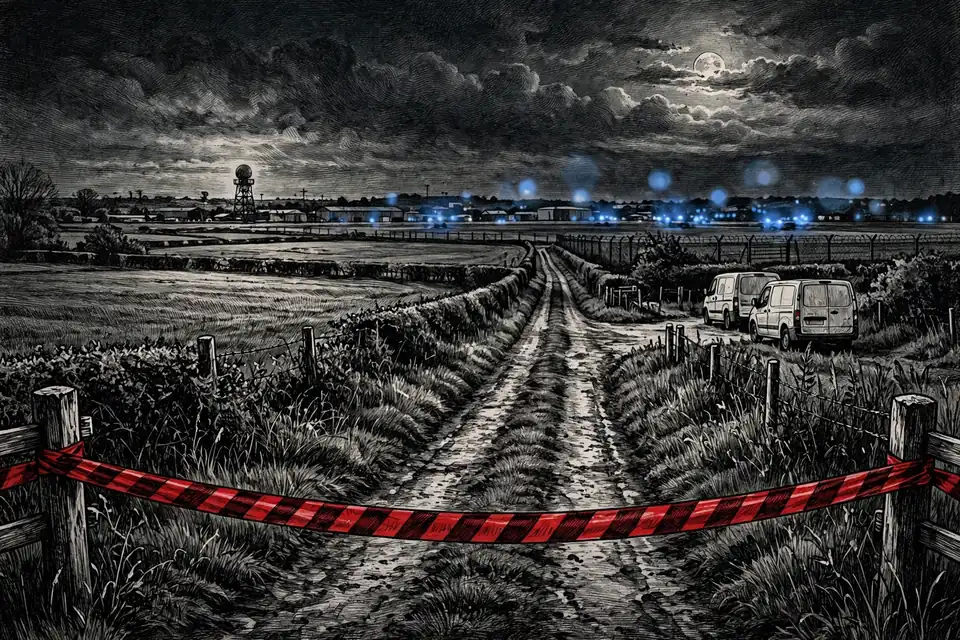
In the early hours of September 27, 2026, British authorities arrested five men driving white vans near the base after residents in the Gloucestershire village of Whelford reported suspicious vehicles with masked occupants on a country lane, according to the New York Post. Police declared a major incident, searched the vans, and found petrol — but no explosives. The men were later released on bail while the investigation continues.
A sixth person, a 25-year-old dual British-Iranian national, was arrested on October 1 on suspicion of preparing terrorist acts under the Terrorism Act 2006. He, too, has been released on bail. British counter-terrorism police have stressed that all six men remain under investigation and that they are considering whether a foreign state was involved.
The arrests drew an immediate reaction from Washington. President Donald Trump criticised the decision to release the men on bail in remarks from the White House on September 28: “I’m surprised that they released them,” he said. “I wouldn’t have done that.” Reuters reported that Trump said those involved in the plot had planned “big damage”, while US Secretary of State Marco Rubio pointed to the “hands of a foreign actor”.
Is Iran behind the RAF Fairford attack plot?
The Iranian government’s alleged role is the most contested part of the story. British Prime Minister Andy Burnham said on September 30 that there were “strong indications that Iran played a part” in the incident, according to USA Today. The Wall Street Journal reported that a senior US official alleged Iran backed the plot and that the crew had been recruited by the country’s Islamic Revolutionary Guard Corps — a claim reported by a single unnamed official and not independently confirmed by the Pentagon’s public statements.
Iran has repeatedly denied any involvement. Iranian officials called the accusations “fabricated speculations” and Iran summoned the British ambassador in Tehran over the matter, Reuters reported. The War Zone separately reported, citing the New York Times, that the US withdrew the bombers after commanders received new threats about an Iran-backed plot against the installation.
Readers should treat Iran’s role as unconfirmed: British and American officials have alleged involvement and pointed to a foreign state, but no evidence has been publicly presented, and Tehran firmly denies it. This story will be updated as the counter-terrorism investigation progresses.
Why were US B-1 bombers stationed at Fairford?
Fairford has been a key launchpad for the US campaign against Iran. The British government had allowed the US to use bombers based at Fairford to strike Iranian missile sites that were attacking ships in the Strait of Hormuz, Reuters reported. The base is strategically important because the shorter flight distance reduces the time and cost of striking targets in Iran, according to USA Today.
The withdrawal does not mean the end of US strike capability. The dozen B-1s were redeployed to their home stations in the United States — the same aircraft that had been used for US strikes on Iran from Fairford, according to Reuters. The shorter flight distance from the UK reduced the time and cost of striking targets in Iran, according to USA Today — so with the failed weekend talks in Pakistan still unresolved (see our coverage of Trump’s Camp David meeting on Iran and Yemen), the bombers’ departure is a tactical adjustment rather than the end of US strike operations.
| Metric | Figure | Source |
|---|---|---|
| B-1 bombers redeployed to the US | 12 — all US bombers at RAF Fairford (CONFIRMED) | Pentagon spokesman via Reuters |
| Pentagon confirmation of withdrawal | October 4, 2026 (CONFIRMED) | Reuters; USA Today |
| Suspects arrested and bailed | 6 (CONFIRMED) | British police via USA Today |
| Explosives found in the vans | None; petrol only (CONFIRMED) | USA Today |
| Distance of Fairford from London | ~100 miles west (CONFIRMED) | USA Today |
| IRGC recruitment of the suspects | Claimed by a senior US official (REPORTED, single source) | Wall Street Journal via New York Post |
Figures marked CONFIRMED are reported by two or more reputable outlets or an official statement; REPORTED items rest on a single unnamed official and remain unverified. Iran denies any involvement.
What this means for US/UK/EU readers
UK readers: the episode is a stark reminder that the Iran conflict is playing out on British soil. A suspected Iran-linked plot against a UK airbase, a public war of words between London and Tehran, and a summoned ambassador mean heightened security around defence installations and a diplomatic relationship with Iran at its lowest point in years.
US readers: the withdrawal is a tactical move, not a retreat — the Pentagon stresses it can still strike from the continental US. But the incident feeds the political debate over the war’s costs ahead of the midterms, alongside reports of suspected Iranian-linked cyberattacks on US water and energy grids.
EU readers: the Fairford plot shows how the war is spilling beyond the Middle East. Energy remains the exposure to watch: with the Iran-backed Houthis under a new Yemeni offensive and OPEC+ holding November output quotas as the Hormuz closure drags on, any fresh strike campaign against Iran could push fuel and shipping costs higher across Europe.
What to watch next
First, the counter-terrorism investigation: six suspects remain under investigation, and any new arrests or charges would materially change the story. Second, the diplomatic fallout between London and Tehran, which now includes a summoned British ambassador. Third, whether the bombers return to Fairford or stay stateside — a signal of how Washington assesses the threat. And fourth, the war itself: with the US blockade of Iranian ports in place and talks possibly resuming, the next two weeks could decide whether the ceasefire holds or a wider campaign resumes. WarBrief will update this analysis as events unfold.
Frequently asked questions
Why did the US withdraw B-1 bombers from RAF Fairford?
The US redeployed all 12 B-1 bombers from RAF Fairford to their home stations in the United States over the weekend of October 3–4, 2026, citing security concerns. The move followed a foiled suspected terror plot against the base on September 27. The Pentagon said operational security had prevented confirming the movement in real time.
What happened at RAF Fairford on September 27, 2026?
British authorities arrested five men driving white vans near the airbase after reports of suspicious masked occupants on a country lane. Police found petrol but no explosives in the vehicles. The men were released on bail. A sixth suspect, a dual British-Iranian national, was arrested on October 1 on suspicion of preparing terrorist acts and also released on bail. All six remain under investigation.
Is Iran behind the RAF Fairford terror plot?
British Prime Minister Andy Burnham said there were “strong indications” Iran played a part, and a senior US official told the Wall Street Journal that Iran’s Revolutionary Guard recruited the suspects. Iran denies any involvement, calling the claims “fabricated speculations”. No public evidence has been presented, so Iran’s role remains unconfirmed.
Can the US still strike Iran without the Fairford bombers?
Yes. The Pentagon says US bomber crews remain ready to deliver precision strikes that launch and recover from the continental United States. Fairford’s value was a shorter flight distance to Iran, which reduced strike time and cost — so the withdrawal is a tactical adjustment, not the end of US strike capability.
Where did the bombers at RAF Fairford go?
The Pentagon said all US bombers deployed to RAF Fairford “have re-deployed to their home stations in the United States”. B-1 bombers are normally based at Dyess Air Force Base in Texas and Ellsworth Air Force Base in South Dakota, though the Pentagon has not publicly named their destinations.
Sources
- Reuters: US removes B-1 bombers from UK base amid security concerns
- USA Today: US removes B-1 bombers from UK base amid security concerns
- The War Zone: B-1B Bombers Make Hasty Departure From England
- New York Post: US yanks all B-1 bombers from UK base targeted in foiled terror plot