WarBrief Live | October 3, 2026 | Breaking Analysis
President Donald Trump’s top national security aides held a secret, hours-long meeting at Camp David on Friday, October 2, 2026, to weigh next steps in the eight-month war with Iran and a possible Saudi offensive against the Houthis in Yemen. The unannounced session, chaired by Vice President JD Vance, is the first of its kind since June 2025 — days before Israel launched its 12-day war with Iran — and it lands as tanker strikes rattle the Strait of Hormuz and G7 leaders scramble to release emergency diesel reserves.
Key Takeaways
- Axios, citing three US officials, reports that Vance chaired the hours-long October 2 session with Secretary of State Marco Rubio, Defense Secretary Pete Hegseth, envoy Steve Witkoff, CIA Director John Ratcliffe and Joint Chiefs Chairman Gen. Dan Caine. One official said “things were decided or at least deeply discussed.” The White House did not announce the meeting and declined to comment.
- Trump is weighing whether to resume major combat operations against Iran after rejecting Tehran’s latest proposal. On Thursday he said Iran must sign “a very fair deal” or “won’t exist any longer,” and on Friday he told reporters that revealing his plans “would have a major story.”
- Saudi Arabia is preparing a major counteroffensive against the Iran-backed Houthis to secure Red Sea shipping routes, Reuters reported Friday. Riyadh has twice asked Washington for direct US airstrikes on Houthi targets in recent weeks — requests the administration has rebuffed, though officials say Trump could still order them.
- The meeting followed a violent 48 hours: a Kuwaiti crude tanker was struck near the Strait of Hormuz, Houthi missiles were intercepted over Saudi Arabia, and G7 leaders agreed to release up to 100 million barrels of diesel and crude from emergency reserves to steady fuel markets.
The Camp David meeting on Iran and Yemen: what happened
The session took place on Friday morning at the presidential retreat in Maryland, with no prior public notice — a secrecy Axios described as highly unusual. According to the three US officials who spoke to the outlet, the agenda covered two linked crises: the stalled US-Iran war, now in its eighth month, and the escalating Saudi-Houthi conflict in Yemen.
On Iran, officials said Trump is weighing whether to resume major combat operations after diplomacy stalled. The administration recently rejected Tehran’s latest proposal — a seven-day plan that included reopening the Strait of Hormuz — and Trump has repeatedly tied his next move to the November midterm elections, signaling he could order strikes after the vote if no deal is in place.
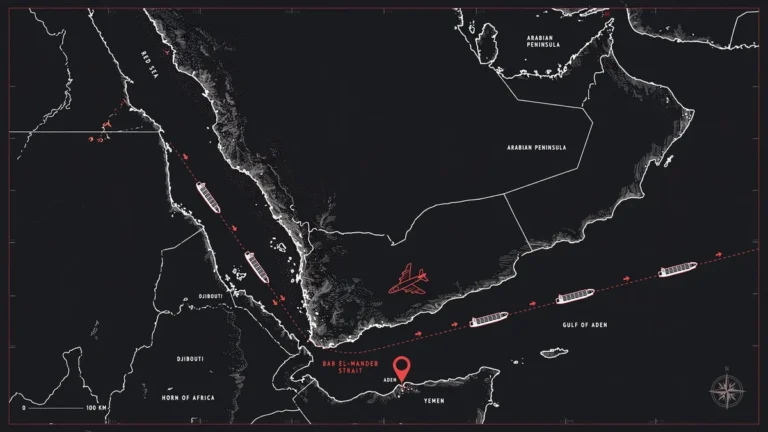
On Yemen, the discussion centered on Saudi Arabia’s preparations for a large ground and air counteroffensive against the Houthis, aimed at breaking the group’s hold on key coastal areas and reopening Red Sea shipping lanes. Riyadh has pressed the White House to join with direct US airstrikes on Houthi targets, a request Washington has turned down twice in recent weeks, according to the officials. Trump has leaned against joining the Yemen fight, they said — but he could still order airstrikes.
The White House declined to comment on the meeting. Asked by reporters on Friday afternoon about his next move on Iran, Trump offered no specifics.
“If I told you, you would have a major story.” — President Donald Trump, responding to reporters on October 2, 2026
Background and timeline
- June 2025: The last unannounced Camp David session of Trump’s top national security aides takes place — days before Israel launches its 12-day war against Iran.
- February 2026: The US-Israeli war with Iran begins; Washington imposes a naval blockade on Iranian ports and starts escorting commercial vessels through the Strait of Hormuz.
- March 2026: IEA member countries pledge to make 400 million barrels of oil available to markets to slow surging prices, with the United States providing nearly half.
- October 1, 2026: Trump rejects Iran’s seven-day ceasefire proposal that included reopening the Strait of Hormuz; Qatar-mediated follow-up amendments stall.
- October 2, 2026: G7 leaders hold an emergency video meeting chaired by French President Emmanuel Macron and agree to a coordinated release of up to 100 million barrels of diesel and crude over four months, supervised by the IEA, after Trump threatens a US diesel export ban. The same day, Trump’s aides meet secretly at Camp David, and the Pentagon’s deployment of a third US carrier strike group to the Middle East is confirmed.
- October 2–3, 2026: UKMTO reports a crude oil tanker struck by an unknown projectile near Oman; Saudi air defenses intercept Houthi ballistic missiles over the southwest of the kingdom.
- November 2026: US midterm elections — the political deadline Trump has repeatedly linked to decisions on both the Iran war and fuel prices.
Why it matters
Escalation risk is rising on two fronts at once. The June 2025 precedent is the reason analysts are watching this meeting so closely: the last time Trump’s national security team gathered unannounced at Camp David, a major regional war followed within days. The United States already has roughly 50,000 troops in the Middle East, and The Washington Post reported Friday that the Pentagon is considering adding up to 20,000 more troops, 150 fighter jets and additional destroyers. Tehran, for its part, has braced publicly for a broader clash.
Two of the world’s most important shipping chokepoints are under simultaneous pressure. The Strait of Hormuz — through which roughly a fifth of global oil supply normally flows — has seen six vessels struck in the past week, according to maritime monitors, even as the US Navy escorts commercial traffic through it. At the same time, the Houthis’ grip on Yemen’s Red Sea coast threatens the Bab al-Mandeb Strait, the southern gateway to the Suez Canal. A Saudi offensive there and resumed US strikes on Iran would put both passages at risk in the same window. Read our analysis of how the battle of Hormuz is turning and how naval blockades actually work for the mechanics behind the disruption.
Energy markets are already pricing in the danger. Diesel prices in the United States have climbed above $6.50 a gallon, and Europe — heavily dependent on imported diesel since banning Russian fuel — faced the prospect of a US export ban that President Macron called “catastrophic.” The G7’s 100-million-barrel release, frontloaded with a substantial diesel tranche in the first 20 days, is designed to buy time, not to solve the underlying supply shock. As our earlier reporting showed, every tanker incident in the Gulf now feeds directly into what drivers and farmers pay.
Different perspectives
Washington is split between officials who see renewed strikes as the only way to force Tehran to accept US terms and those wary of an open-ended war weeks before the midterms. The Camp David format — the president’s inner circle, no public readout — suggests decisions are being made at the very top, with little room for the interagency debate that normally precedes major operations.
Riyadh sees the Houthi missile campaign — including Friday’s interceptions over Khamis Mushait and the shrapnel that injured a resident in Asir — as justification for a decisive offensive. Saudi officials have argued for months that only a ground campaign can break the Houthis’ hold on the Red Sea coast, and they want American airpower alongside it.
Tehran has publicly braced for escalation while insisting it will respond to any renewed bombing. Iranian officials rejected the US framing of the stalled talks and have warned that American bases and assets in the region would be legitimate targets if Washington resumes major combat operations.
European allies are focused on the economic fallout. Macron convened the emergency G7 session precisely to head off Trump’s threatened diesel export ban, and the group’s statement pointedly committed members to “refrain from export restrictions on energy” — a signal that even close allies fear the war’s economic spillover as much as its military course.
What to watch next
- Any White House readout or presidential order following the Camp David session — the June 2025 meeting was followed by war within days.
- US naval movements: whether the USS Theodore Roosevelt strike group and the Makin Island amphibious group stay in the region, creating a three-carrier presence.
- The start of a Saudi ground offensive toward Yemen’s Red Sea coast and whether US aircraft join it.
- Iran’s response — missile or drone retaliation against US bases, Gulf shipping, or Israeli targets would mark a sharp escalation.
- Fuel prices and the IEA release schedule: the first diesel tranche is due within 20 days; watch whether tanker insurance rates and Hormuz transits stabilize.
- The November midterms: Trump’s self-imposed political deadline for the war’s endgame.
Frequently asked questions
What happened at the Camp David meeting on Iran?
On October 2, 2026, Vice President JD Vance chaired an unannounced, hours-long meeting of President Trump’s top national security officials — including Marco Rubio, Pete Hegseth, Steve Witkoff, CIA Director John Ratcliffe and Joint Chiefs Chairman Gen. Dan Caine — to discuss next steps in the Iran war and a possible Saudi offensive against the Houthis in Yemen. Axios, citing three US officials, reported that “things were decided or at least deeply discussed.” It was the first such secret session since June 2025, days before Israel’s 12-day war with Iran.
Is the US about to bomb Iran again?
President Trump is weighing whether to resume major combat operations against Iran, according to US officials cited by Axios, after rejecting Tehran’s latest proposal. He has said Iran must sign “a very fair deal” or “won’t exist any longer,” and has signaled strikes could resume after the November midterm elections if talks fail. No decision has been publicly announced, and the White House declined to comment on the Camp David meeting.
Why are oil tankers being attacked near the Strait of Hormuz?
The UK Maritime Trade Operations agency reported that a crude oil tanker was struck by an unknown projectile near Oman in the early hours of October 3, with all crew safe. Indian officials identified the vessel as the Kuwait-flagged MT Kazimah III and rescued five Indian crew members. Maritime monitors say six vessels have been hit in the past week as the US-Iran war disrupts one of the world’s most important oil shipping lanes. No group has claimed responsibility for the latest strike.
What did the G7 decide about diesel reserves?
At an emergency meeting on October 2 chaired by French President Emmanuel Macron, G7 leaders agreed to a coordinated release of up to 100 million barrels of diesel and crude oil over four months, supervised by the International Energy Agency, with a substantial diesel tranche in the first 20 days. The deal came after President Trump threatened to ban US diesel exports unless Europe opened its own stockpiles. Members also pledged no export restrictions on energy between G7 countries.
Could Saudi Arabia launch an offensive against the Houthis?
Reuters reported on October 3 that Saudi Arabia is preparing a major counteroffensive against the Iran-backed Houthis aimed at breaking their hold on Yemen’s Red Sea coast and securing shipping routes. Riyadh has twice asked Washington for direct US airstrikes on Houthi targets in recent weeks; the administration rebuffed both requests, though officials say Trump could still order strikes. The Houthis have intensified missile and drone attacks on Saudi cities in recent days.
Sources
- Newsmax: Trump Cabinet Holds Secret Camp David Iran, Yemen Talks (reporting Axios)
- Reuters: Crude oil tanker struck by unknown projectile off Oman, UKMTO says
- Reuters: Saudi civil defense says shrapnel from intercepted ballistic missile in Asir injures one
- Le Monde: Under pressure from Donald Trump, G7 releases 100 million barrels of oil
- USA Today: Trump says Europe to draw on diesel reserves after G7 emergency meeting
- NPR: The G7 will release 100 million reserve barrels of diesel fuel over the next 4 months
- The DeepDraft: Kazimah III hit near Oman pushes Hormuz incidents to six vessels
WarBrief Live provides analysis for informational purposes only. Nothing in this article is financial advice.