WarBrief Live | October 2, 2026 | Markets & Economy
Oil prices surged to their highest levels in months this week while American diesel prices hit records above $6.50 a gallon, and the causes are written in the wars of 2026. The seven-month Iran conflict has choked the world’s most important energy corridor, Ukraine’s drone campaign against Russian refineries has throttled diesel supply, and China has now suspended its October fuel exports. If you have filled up a truck, heated a home, or simply paid more for groceries this autumn, this is the story of why.
Key Takeaways
- Brent crude traded near $110 a barrel earlier this week and held above $100 on October 2, capping a 14 percent September surge.
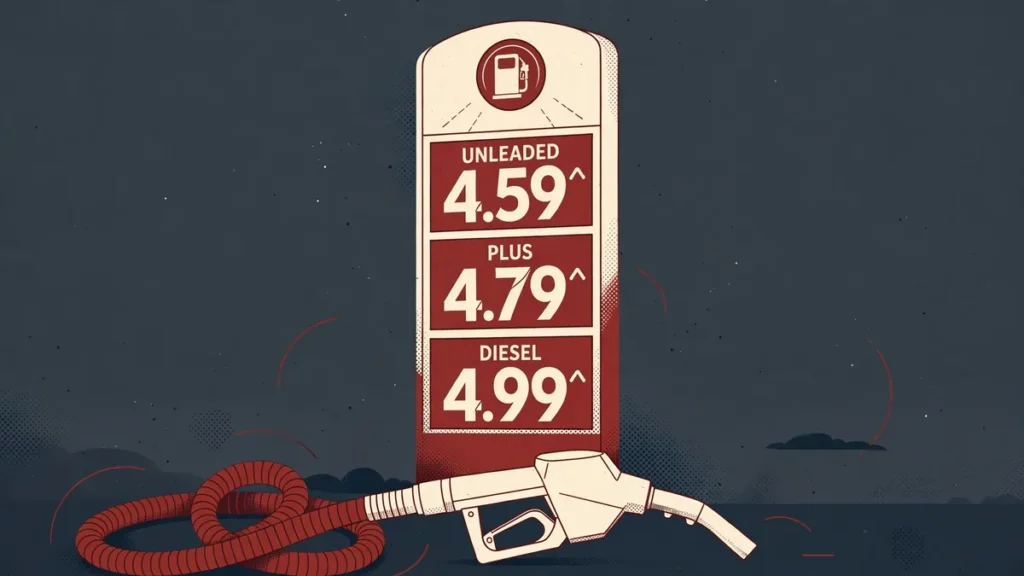
- US diesel prices smashed records above $6.50 a gallon as global refined-fuel supplies tightened; only about 58 percent of pre-war diesel and distillate flows have returned to the market.
- Vladimir Putin said Russia will not release diesel to global markets until sanctions are lifted, and Moscow extended its diesel export ban to the end of October.
- Washington is reportedly pressing European allies to release 120 million barrels of diesel from strategic reserves, while the Pentagon moves a third carrier strike group and up to 10,000 troops toward the Gulf.
On this page: What happened | Why diesel is the fuel that wars broke | Background and timeline | What record prices mean for your bills | Different perspectives | What to watch next | FAQ | Sources
What happened: crude near records, diesel past $6.50
Oil markets have whipsawed this week on a contradictory mix of signals. Front-month Brent crude touched around $110 a barrel earlier in the week, according to Ship & Bunker, before easing to about $102.60 on Friday morning as traders spotted signs that Gulf crude exports were recovering. Even after the pullback, Brent is on track for a 14 percent gain in September. West Texas Intermediate swung between roughly $89 and $93 a barrel during Friday’s session, while EIA data showed US gasoline inventories had fallen to a nearly 12-year low.
The immediate catalyst for Thursday’s rally was a report that the United States is sending a third aircraft-carrier strike group and up to 10,000 additional troops to the Middle East as President Donald Trump weighs resuming strikes on Iran after November’s midterm elections. Trump told aides he expects bombing of Iranian targets to resume by the end of November, and told reporters this week: “Now I have to make a decision. They’ll either sign a very fair deal, or they won’t exist any longer.”
For ordinary fuel buyers, the sharpest pain is in diesel. The United States is paying more than $6.50 a gallon for diesel — a record — and the reasons are structural rather than speculative. According to JPMorgan data reported by Barchart, Middle Eastern crude exports have rebounded to about 98 percent of pre-war levels, but flows of gasoline, diesel, and distillates sit at only around 58 percent. The world has crude; it lacks the refineries and shipping lanes to turn it into usable fuel. For context on the broader military pressure, see our analysis of Trump’s deal-or-bombing ultimatum to Tehran.
Why diesel is the fuel that wars broke
Diesel is the workhorse fuel of the global economy: trucks, freight trains, farm equipment, ships, and heating systems run on it. When diesel prices spike, the cost ripples into nearly everything consumers buy. Four distinct shocks have converged on the diesel market at once.
First, the Iran war has choked the Strait of Hormuz. Although some shipping has resumed, ING analysts note flows remain well below normal levels and could deteriorate quickly. Much of the Middle East’s refining capacity sits on the wrong side of the disruption. Read our assessment of whether the Strait of Hormuz remains the world’s most dangerous chokepoint.
Second, Ukraine’s drone campaign against Russian refineries has knocked out significant Russian refining capacity. Putin himself admitted at this week’s Valdai Forum that the strikes had cost Russia 1 percent of its gross domestic product and that Ukraine had “partially achieved its objectives.” Russia has now extended its ban on diesel exports to the end of October, keeping its limited production at home. See our report on Ukraine’s drone war on Russian refineries.
Third, China has effectively frozen its fuel exports. Beijing, which manages diesel, gasoline, and jet-fuel shipments on a monthly basis, began its week-long national holiday on October 1 without authorizing major refiners to export beyond Hong Kong and Macau for the month. It is unclear whether exports resume after the holiday ends on October 7. We covered the supply-side shock in China’s halt of October fuel exports.
Fourth, inventories are thin almost everywhere. US gasoline stocks are at a nearly 12-year low, and analysts describe global distillate markets as historically tight. When buffers are this low, every disruption translates directly into the pump price.
Background and timeline
- March 2026: The US-Israeli war on Iran begins. Beijing restricts fuel exports, and flows through the Strait of Hormuz collapse.
- July–August 2026: China relaxes fuel-export curbs as markets adapt; Saudi crude exports recover toward 5.28 million barrels a day, the highest in seven months.
- September 2026: Brent climbs 14 percent, its largest monthly gain since mid-year, as hopes of an Iran peace deal fade. Trump rejects a Tehran proposal; Iran insists Hormuz will reopen only with sanctions relief, unfrozen assets, and an end to the US naval blockade (see our explainer on how naval blockades actually work).
- October 1, 2026: At the Valdai Forum, Putin says Russia will not supply diesel to global markets until sanctions are lifted, and Moscow extends its diesel export ban to the end of October. China enters its holiday with no October export authorizations.
- October 2, 2026: Reports of a third US carrier strike group and up to 10,000 more troops heading to the Gulf send Brent above $100 again, while the US presses Europe to release 120 million barrels of diesel from strategic reserves after an emergency EU diesel meeting.
What record prices mean for your bills
The pump is only the first place households feel a diesel shock. Because diesel powers freight, a record price filters into the cost of moving food, clothing, and building materials — and ultimately into inflation readings that central banks watch. Naeem Aslam of Zaye Capital Markets told Barron’s that “tight distillate markets, reduced refined-product availability and uncertainty around Middle East shipping continue to support prices.”
For American consumers, the timing is politically charged. The record $6.50-plus diesel price lands weeks before the November midterm elections, and the White House is acutely aware of it. Trump’s refusal to ease sanctions on Iran — including rejecting a proposal to waive them during negotiations — keeps one of the world’s largest oil exporters shut out of markets, even as he reportedly uses the threat of a US diesel export ban to pressure France and Germany into opening their own strategic reserves. Our sanctions hub tracks the full web of measures behind this.
Europe faces its own bind. EU governments held an emergency meeting on the diesel market this week, weighing whether to release strategic stockpiles. Saudi Arabia, meanwhile, is exporting more crude — 5.28 million barrels a day in September, the most in seven months — but its production in August fell to 6.238 million barrels a day, the lowest since 1990, after drone strikes damaged the East-West Pipeline. The Kingdom says it has restored about half of that pipeline’s 7-million-barrel capacity.
Different perspectives
The Trump administration frames the crisis as leverage. Officials argue that maximum pressure on Iran — more troops, the threat of renewed bombing, and an untouched sanctions wall — is the price of a durable deal, and that allied stockpiles should cushion the transition. Trump’s statement that the US might “give Iran another big hit” within days underscores how directly military timelines now move fuel prices.
European governments see a winter fuel emergency. With Ukrainian strikes limiting Russian diesel, Hormuz flows depressed, and China’s exports on hold, the EU’s diesel deficit is the most acute since the energy crisis of the early 2020s. Releasing strategic reserves would help now but leaves fewer buffers for January.
Market analysts are more circumspect. Phillip Nova’s Priyanka Sachdeva notes that markets are “increasingly pricing a world where supply chains remain vulnerable for longer,” rather than simply trading each headline. JPMorgan’s data — crude exports at 98 percent of pre-war, diesel flows at 58 percent — suggests the problem is now a refining and logistics crisis, not a crude shortage. That distinction matters: refineries cannot be rebuilt or rerouted as quickly as oil can change hands.
What to watch next
Five developments will determine where fuel prices go from here. First, China’s decision after its October 7 holiday: if Beijing restores fuel-export quotas, global diesel supply improves quickly; if not, the squeeze deepens. Second, Russia’s diesel export ban expires at the end of October — whether it is renewed again will matter for European supply. Third, the US midterm elections and Trump’s stated timeline for possible renewed strikes on Iran could add a large risk premium to prices. Fourth, the EU’s decision on the 120-million-barrel diesel release would be one of the largest coordinated stockpile moves in recent years. Fifth, winter heating demand across Europe and the northeastern United States will test inventories that are already at multi-year lows.
This article is for educational and informational purposes only. It is not financial advice, and nothing here should be taken as a recommendation to buy, sell, or hold any security, commodity, or financial instrument.
Frequently asked questions
Why are diesel prices higher than gasoline in 2026?
Diesel supply has been hit harder than crude because the wars have disrupted refining and shipping rather than just production. The Iran war has restricted flows through the Strait of Hormuz, Ukrainian strikes have reduced Russian refining capacity, Russia has banned diesel exports until at least the end of October, and China has suspended October fuel exports. Crude exports have recovered to about 98 percent of pre-war levels, but diesel and distillate flows are at roughly 58 percent, creating a refined-fuel shortage that hits diesel hardest.
How does the Iran war affect fuel prices in the United States?
The seven-month conflict constrains shipping through the Strait of Hormuz, the world’s most important energy corridor, and keeps Iranian crude and refined products under sanctions. Trump has refused to ease sanctions and is weighing renewed strikes after the midterms, which adds a risk premium to prices. The result is record US diesel above $6.50 a gallon and Brent crude holding over $100 a barrel after a 14 percent September rally.
Will releasing emergency oil reserves lower diesel prices?
Releases can help in the short term. The US has asked European allies to release 120 million barrels of diesel from strategic reserves after an emergency EU meeting, and such releases have historically cooled prices for weeks to months. But reserves are finite, and analysts caution that stockpiles do not fix the underlying refining and shipping bottlenecks. Strategic reserves are discussed further in our analysis of how the Iran war has reshaped strategic petroleum reserves.
How long will record fuel prices last?
No one can say with certainty, and markets are volatile — Brent fell from around $110 to about $102.60 within a single week. Key dates include China’s post-holiday export decision around October 7, the end of Russia’s diesel export ban at the end of October, and the US midterms, after which renewed strikes on Iran have been floated. A durable ceasefire that reopens the Strait of Hormuz fully would do more than any single policy move.
Sources
- Reuters: Putin says Russia won’t supply diesel to global markets until sanctions are lifted
- Reuters: Oil prices drifted slightly higher on Friday after China halted fuel exports
- The Wall Street Journal: Oil Edges Higher Amid Rising Mideast Tensions
- Barron’s: Oil Falls Despite Middle East Escalation Fears
- Barchart: Crude Oil Prices Surge on Possible Escalation of US-Iran War
- Investopedia: 5 Things to Know Before the Stock Market Opens on Friday
- Ship & Bunker: Oil Prices Rise As Trump Says U.S. Might Have To Give Iran “Another Big Hit”
- FX Empire: Oil Rallies As Trump Signals U.S. Could Bomb Iran After Midterms