
WarBrief Live | November 6, 2026 | Breaking Analysis
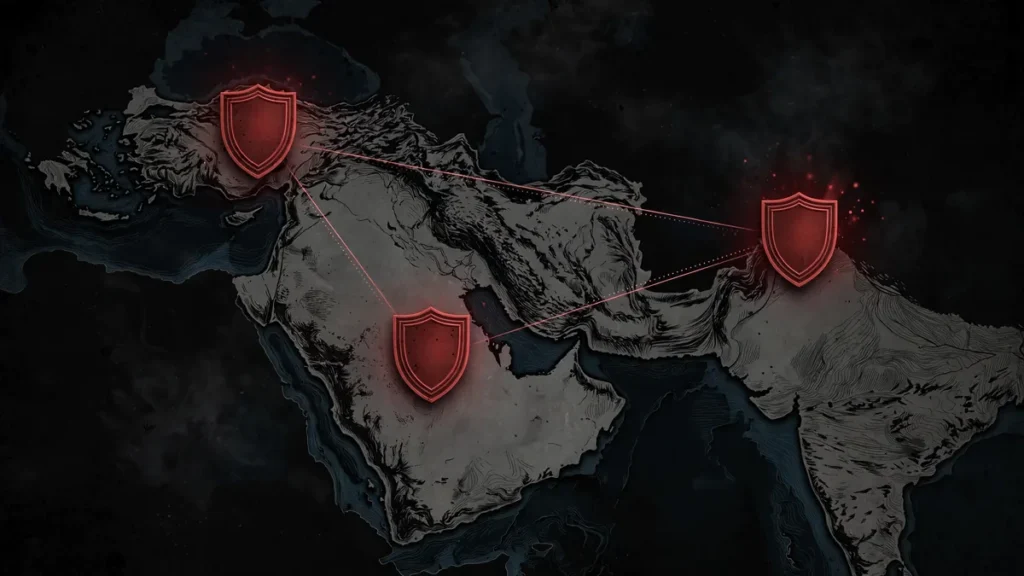
Turkiye’s parliament ratified the Mecca Joint Defence Agreement on November 5, 2026, voting 279 to 119 to bind Ankara, Riyadh and Islamabad to mutual defence for ten years. With the vote, Turkey ratifies the Mecca defence pact in full: an attack on one member will now be treated as an attack on all three, a commitment modelled on NATO’s Article 5 that lands as Saudi Arabia faces an escalating Houthi air campaign.
| 279-119 Parliamentary vote to ratify | 398 of 592 Lawmakers who took part | 16 Articles in the pact | 10 years Lock-in before withdrawal |
Key Takeaways
- Turkiye’s parliament ratified the Mecca Joint Defence Agreement on November 5, 2026, by 279 votes to 119, with 398 of the chamber’s 592 lawmakers taking part.
- The 16-article pact commits Turkiye, Saudi Arabia and Pakistan to treat an attack on one as an attack on all, with immediate mutual assistance, joint training, intelligence sharing and defence-industry cooperation.
- Ratification does not automatically deploy Turkish troops to Saudi Arabia. Defence Minister Yasar Guler has said Ankara does not foresee entering into conflict with the Houthis and aims instead to strengthen deterrence; any deployment needs further parliamentary steps.
- Syria is evaluating whether to join the pact, and Riyadh and Damascus signed a separate military cooperation agreement on November 4, 2026.
What did Turkiye’s parliament actually approve?
Turkiye’s parliament approved the Mecca Joint Defence Agreement, a collective-defence pact signed in Mecca on August 7, 2026, by Turkish President Recep Tayyip Erdogan, Saudi Crown Prince Mohammed bin Salman and Pakistani Prime Minister Shehbaz Sharif. The agreement was sent to parliament for ratification last month, and the vote completed the process on November 5, 2026. Al Jazeera reported that Article 1 of the approving bill was adopted on Wednesday, before Deputy Parliament Speaker Celal Adan adjourned the session until Thursday afternoon, when lawmakers debated and passed the remaining articles.
The pact contains 16 articles, according to a document submitted to the Turkish parliament and seen by the Reuters news agency. Its first article commits the signatories to use “all necessary means” to eliminate threats to one another’s territorial integrity, and it can be invoked in case of an attack on any member state. Article 2 goes further: if one party is subjected to an armed attack or military aggression by another country or group of countries, the parties “shall immediately provide assistance to the party under attack, utilising the full range of mutual assistance measures available to them.”
The structure deliberately mirrors Article 5 of the North Atlantic Treaty, the founding document of NATO, which establishes that an attack on one member is treated as an attack on all. That parallel is what makes this vote significant: Turkiye, which fields NATO’s second-largest military, has now signed up to a second collective-defence commitment, this time outside the alliance. Other articles in the pact commit the members to joint training, technological innovation, shared logistics and intelligence resources, and deeper defence-industry cooperation, all aimed at deterring threats. The draft approved by lawmakers commits the three countries to the pact for ten years, after which they may withdraw, and it leaves open the possibility of other countries joining with the approval of the existing members.
By the numbers: the vote and the pact
| Metric | Figure | Source |
|---|---|---|
| Votes in favour | 279 | CONFIRMED — Al Jazeera; Reuters |
| Votes against | 119 | CONFIRMED — Al Jazeera; Reuters |
| Lawmakers taking part | 398 of 592 | CONFIRMED — Al Jazeera |
| Articles in the pact | 16 | CONFIRMED — Reuters document seen by Al Jazeera |
| Lock-in period | 10 years | CONFIRMED — Al Jazeera; Geo News |
| Houthi claim of a “direct hit” on Riyadh airport | Claimed, damage unconfirmed | REPORTED — Houthi claim only; not independently confirmed |
Figures marked CONFIRMED are corroborated by two or more reputable sources. Figures marked REPORTED rest on a single or partisan source and should be treated as claims, not established fact.
Background and timeline
The Mecca pact was negotiated against a deteriorating security picture in the Gulf. Tensions between Saudi Arabia and Yemen had eased after a 2022 ceasefire, but the Houthis have escalated attacks on Saudi Arabia in recent months, notably launching a series of deadly strikes on King Khalid International Airport in Riyadh. On Thursday, Saudi Arabia announced it had intercepted a drone in the region of Medina. Riyadh has accused the Houthis several times of targeting Mecca and Medina, an accusation the Iran-backed group systematically rejects. The region also remains embroiled in the US-Israel war on Iran, which has contributed to cross-border tensions.
- August 7, 2026: Erdogan, Mohammed bin Salman and Shehbaz Sharif sign the Mecca Joint Defence Agreement in Mecca.
- October 2026: Turkiye sends the pact to parliament for ratification. Defence Minister Yasar Guler says the scope of potential support for Saudi Arabia will be determined after ratification.
- November 4, 2026: Article 1 of the ratification bill is adopted in parliament; the session is adjourned until Thursday afternoon. The same day, the Saudi and Syrian defence ministries sign a military cooperation agreement during Syrian President Ahmed al-Sharaa’s visit to Riyadh.
- November 5, 2026: Parliament completes the debate and ratifies the pact, 279 votes to 119, with 398 of 592 lawmakers taking part.
- November 6, 2026: Al Jazeera and Reuters report the ratification; Saudi Arabia announces the interception of a drone near Medina.
WarBrief covered the opening of this process in our report on parliament beginning the ratification, published before the final vote. This article covers what the completed vote changes. Readers wanting the mechanics of collective-defence clauses can also read our explainer on how mutual defence pacts work.
What changes now that the pact is ratified?
Three things change immediately. First, the pact is now binding law in Turkiye, the last of the three signatories to complete ratification, which means the mutual-defence commitment is no longer a signed intention but an enforceable obligation. Second, the legal groundwork is laid for Turkish military support to Saudi Arabia: ratification clears the way for Ankara to send military support to Riyadh, as Reuters reported, though it does not itself order any deployment. Third, the pact’s ten-year lock-in starts the clock on a durable trilateral security bloc, one that can admit new members with the existing members’ approval.
What does not change is equally important. Ratification is a legal act, not a deployment order, and Turkish officials have been careful to draw that line. Defence Minister Yasar Guler said in October that the scope of potential support would be determined after ratification, and Turkish media reported him saying: “We absolutely do not foresee entering into any conflict with the Houthis.” Instead, he said, Turkish support “would be to strengthen deterrence.” Experts cited by Al Jazeera note that any Turkish troop deployment would also require other legislative processes. A ruling-party lawmaker told Reuters last month that Turkiye would also submit to parliament a mandate allowing military personnel to be deployed to Saudi Arabia under the pact, but that mandate has not yet been put to a vote.
The practical shape of support is therefore likely to be defensive and technical first: air defence, intelligence sharing, training and logistics, rather than Turkish combat forces on Saudi soil. That fits the pact’s own emphasis on joint training, technological innovation and shared logistics, and it fits the immediate threat, which is an air campaign of drones and missiles against Saudi airports and cities rather than a ground invasion.
Will Turkish troops deploy to Saudi Arabia?
Not automatically, and not soon on the evidence available. The honest answer is that deployment is possible but not decided. Ratification clears the legal path, and the planned parliamentary mandate for military personnel would be the next step, but no deployment has been announced, no timeline has been published, and the defence minister has publicly ruled out entering into conflict with the Houthis. The distinction matters: the pact obliges assistance in the event of an armed attack, but the form that assistance takes, and when, is a political decision for Ankara, not an automatic trigger.
Opposition lawmakers made the deployment question the centre of the debate. During the parliamentary discussion, opposition parties argued the agreement could embroil Turkiye in regional wars and put Turkish soldiers in harm’s way, which helps explain the 119 votes against. The government side, led by ruling Justice and Development Party lawmaker Ziya Altunyaldiz, argued the agreement aims to expand security cooperation in the region, according to state-run Anadolu. The 279-119 margin is comfortable, but the opposition’s warning will shadow every future deployment decision.
There is also a structural question that critics have raised and Turkish officials have dismissed: Turkiye is a member of both NATO and now the Mecca pact, and critics have asked whether the government might face a conflict of interest in allocating its military resources between two collective-defence commitments. Turkish officials have dismissed such concerns as unfounded. For now, the pact’s deterrent value is the point: a formal, public commitment that an attack on Riyadh is an attack on Ankara and Islamabad too.
Why does Syria want in, and what would it mean?
The pact may not stay a three-country club for long. Syria’s government has already expressed interest: Foreign Minister Asaad al-Shaibani confirmed that “discussions are currently underway to evaluate Syria’s entry into the Mecca alliance,” according to Syrian state media. That is the correct framing, and it matters: Syria is evaluating entry, not joining, and no decision has been announced. WarBrief’s conflict-zone coverage tracks Syria’s new government separately on our conflict zones hub.
The signal behind the words is already visible. On November 4, the Saudi and Syrian defence ministries signed a military cooperation agreement during President Ahmed al-Sharaa’s visit to Riyadh, where he met Crown Prince Mohammed bin Salman for the second time in a month. Details of that agreement have not been made public, and Reuters reported Syria was considering helping Saudi Arabia in the war against the Houthis. A Syrian entry into the Mecca pact would extend the bloc across the Levant and give Riyadh a northern partner in the same security architecture, but it would also raise new questions about how a pact built around Gulf security would operate on Syria’s very different front lines, including Israeli strikes on Syrian territory.
The wider context is the US-Israel war on Iran, which Al Jazeera notes has contributed to cross-border tensions across the region. The Mecca pact was partly a response to that war: with Iran’s regional position under pressure, Turkiye, Saudi Arabia and Pakistan moved to formalise a security bloc of their own. Our earlier analysis of the pact’s diplomacy with Tehran examined that dynamic, and the ratification vote locks it in.
What the Mecca pact ratification means for US, UK and EU readers
For readers in the United States, Britain and Europe, the ratification matters in four concrete ways. First, energy and fuel: the pact hardens the security of the world’s largest oil exporter at a moment when Houthi strikes are already hitting Saudi airports, and any escalation or de-escalation in the Gulf moves oil prices, which feed directly into petrol and diesel costs in the US, UK and EU. Second, travel: the Houthi air campaign has already disrupted operations at Riyadh’s King Khalid International Airport, and a formal Turkish commitment to Saudi defence could either deter further strikes or, if deployments follow, deepen the confrontation that travellers and airlines must navigate. Third, NATO: a NATO member has now taken on a second collective-defence obligation outside the alliance, which raises real questions for Washington and European capitals about where Turkish forces, air-defence assets and attention will be committed if two crises coincide. Fourth, markets and diplomacy: the pact is a signal that the Gulf’s security architecture is being built by regional powers themselves, with Pakistan as a nuclear-armed partner, and that has consequences for how the US and Europe engage the region, from arms sales to mediation.
None of this is a reason for alarm on its own. The pact is defensive in its stated purpose, its most likely near-term output is air defence and intelligence cooperation, and the Turkish government has explicitly said it does not foresee fighting the Houthis. But the direction of travel is unmistakable: the Gulf’s security map is being redrawn in Mecca, Ankara and Islamabad, and Western readers should expect it to feature in oil prices, travel advice and NATO debates for years.
What to watch next in the Gulf
Five developments will show whether the pact becomes a paper commitment or a working alliance. First, the parliamentary mandate for deploying Turkish military personnel to Saudi Arabia, which a ruling-party lawmaker told Reuters would be submitted: its timing and its terms will reveal how far Ankara intends to go. Second, the form of the first Turkish support package, likely air defence, training or intelligence, and whether it is announced publicly. Third, Syria’s evaluation of entry, and whether Damascus moves from discussion to a formal application. Fourth, the Houthi response: whether the attacks on Saudi airports continue, escalate or pause in the face of a formalised trilateral deterrent, and whether Houthi claims about damage to Riyadh airport are ever independently confirmed. Fifth, the reaction from Washington and NATO, where the dual-commitment question will be tested the first time a crisis demands Turkish resources in two directions at once.
Frequently asked questions
What is the Mecca defence pact?
The Mecca Joint Defence Agreement is a 16-article collective-defence pact signed on August 7, 2026, by Turkiye, Saudi Arabia and Pakistan. It commits the three countries to treat an attack on one as an attack on all, provide immediate mutual assistance, and cooperate on joint training, intelligence sharing, logistics and defence industry.
What did Turkiye’s parliament vote on November 5, 2026?
Parliament ratified the pact by 279 votes to 119, with 398 of the chamber’s 592 lawmakers taking part. Article 1 of the approving bill was adopted on Wednesday, November 4, and the remaining articles passed on Thursday, November 5, completing Turkiye’s ratification.
Does ratification mean Turkish troops will deploy to Saudi Arabia?
No, not automatically. Ratification clears the legal way for military support, but Defence Minister Yasar Guler has said Ankara does not foresee entering into conflict with the Houthis, and any deployment would need further parliamentary steps, including a mandate for military personnel that has not yet been voted on.
Can other countries join the Mecca pact?
Yes. The pact leaves open the possibility of other countries joining with the approval of the existing members. Syria’s foreign minister has confirmed Damascus is evaluating entry, but no decision has been announced.
How is the Mecca pact different from NATO Article 5?
The structure is similar: both treat an attack on one member as an attack on all. The difference is membership and scope. NATO Article 5 binds 32 allies across North America and Europe; the Mecca pact binds three countries, Turkiye, Saudi Arabia and Pakistan, and Turkiye is now a member of both, which raises questions about how it would allocate resources if both commitments were called on at once.
Sources
- Al Jazeera: Turkiye’s parliament ratifies Mecca defence agreement
- Reuters via The Jerusalem Post: Turkey’s parliament approves Mecca defense pact
- Geo News: Turkiye’s parliament ratifies Makkah defence pact with Pakistan and Saudi Arabia amid Houthi attacks
- Business Standard: Turkish lawmakers approve defence pact with Pakistan, Saudi Arabia



Discussion 0
Share analysis, corrections, or context. Be civil — comments are moderated.