
WarBrief Live | November 19, 2026 | Breaking Analysis
| 4–7 days length of the joint air campaign Netanyahu is seeking | 96 hours notice for US bombers deployed in the region | 2 carriers US aircraft carriers now in the region; three briefly this week | $92.12 Brent crude a barrel on November 19 (Reuters) |
Benjamin Netanyahu is pressing Donald Trump to join Israel in a four-to-seven-day campaign of airstrikes against Iran, The New York Times reported on November 18, and the US president has not yet decided whether to agree. The proposal, if accepted, would reopen major combat operations in a war that began on February 28, 2026, and has now run for nearly eight months.
The report, based on US and Israeli officials briefed on the discussions, lands at a volatile moment. Iran widened its attacks on Gulf neighbours on November 18, hitting a US air base in Kuwait and targets in Bahrain, a day after a US strike on Qeshm Island. At the same time, Gulf states, Pakistan and Turkey are lobbying Washington to avert a return to all-out war, while Trump is in Shenzhen for a trilateral meeting with Xi Jinping and Vladimir Putin. What follows is what investigators and officials have confirmed, what remains only reported, and what each side wants from the decision.
Key Takeaways
- Netanyahu is pressing Trump to join a four-to-seven-day joint air campaign against Iran, according to The New York Times, citing US and Israeli officials. Trump has not decided.
- Israeli planning includes further strikes on nuclear sites and widespread attacks on energy infrastructure that could cut power to civilians — a step Trump has not approved.
- Israel says Iran has rebuilt its missile and drone arsenals and is advancing chemical and biological weapons; US intelligence sees evidence of stepped-up efforts but assesses the programme as a deterrent, not a prelude to pre-emptive use.
- The Pentagon has massed unusual firepower in the region — bombers on 96-hour notice, two aircraft carriers and an extra Patriot battery for Israel — while Gulf states, Pakistan and Turkey press Washington not to restart the war.
What did Netanyahu ask Trump for?
According to the Times report, carried by Haaretz, Netanyahu wants the United States to join Israel in a concentrated campaign of airstrikes lasting four to seven days. The request is for a joint operation, not merely American permission for Israel to act alone: Israeli officials have framed US participation as the difference between a limited Israeli campaign and a sustained blow to Iran’s military and energy infrastructure.
The discussions intensified last week, when Mossad Director Roman Gofman travelled to Washington for meetings with senior administration officials, including CIA Director John Ratcliffe. Gofman then travelled to Miami for a meeting with US envoy Steve Witkoff, according to two regional officials cited by the Associated Press. IDF Military Intelligence Directorate chief Maj. Gen. Shlomi Binder has also pressed the case for resuming operations in discussions with his American counterparts, the Times reported.
A senior Israeli official disputed the characterisation that Netanyahu had pressured Trump, and a spokesman for the prime minister said Netanyahu had always acted solely to “safeguard the security” of Israel. The denial is part of the story: the report itself rests on officials briefed on the discussions, and the push is described by the Times as pressure, not as a formal request delivered in a single meeting.
What would a four-to-seven-day campaign actually hit?
Israeli planning, as described to the Times, includes further attacks on Iranian nuclear sites and widespread strikes on energy infrastructure that could cut off power to civilians. That last element is the most consequential part of the proposal: it is a measure Trump has yet to approve, and it would deliberately impose hardship on the Iranian population as well as on the military.
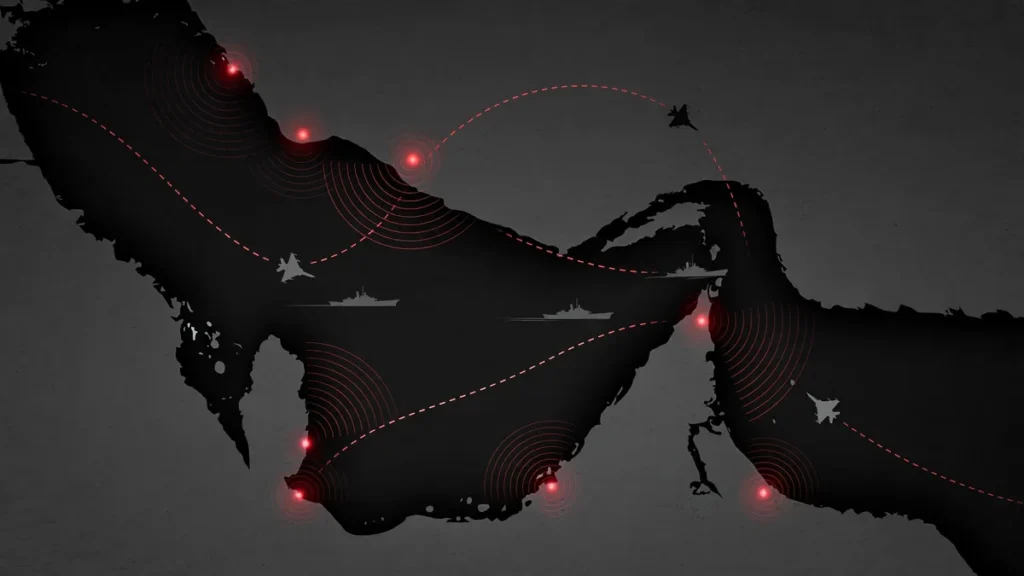
US planning, briefed separately to the president, looks narrower in some respects and broader in others. Defense Secretary Pete Hegseth and Joint Chiefs of Staff Chairman Gen. Dan Caine have briefed Trump on strike plans drawn up by US Central Command chief Adm. Brad Cooper, according to Israel Hayom. Those plans would target Islamic Revolutionary Guard Corps command posts, rebuilt missile and drone assets, and energy sites.
Axios, cited by The Times of Israel, reported that renewed strikes could also hit Iranian nuclear facilities, including Pickaxe Mountain, a suspected underground nuclear facility that has not yet been hit by US or Israeli strikes, as well as bridges, power plants, and both military and civilian leadership. Israeli proposals, according to the same reporting, also include sweeping power-grid attacks aimed at sparking an uprising inside Iran — an objective that goes well beyond degrading weapons programmes and raises obvious questions about civilian harm.
It is unclear, as The Times of Israel noted, how another air campaign would coax Iran into conceding US demands over the full reopening of the Strait of Hormuz and its nuclear programme, when previous offensives did not produce that result. That doubt sits at the centre of the argument inside the administration.
By the numbers: the forces, the targets and the stakes
| Metric | Figure | Source |
|---|---|---|
| Proposed campaign length | 4–7 days of airstrikes (REPORTED) | The New York Times |
| US bombers in the region | On 96-hour notice (REPORTED) | The New York Times |
| US aircraft carriers in the region | 2 now; three briefly this week (CONFIRMED) | US Navy / AP |
| Brent crude, November 19 | $92.12 a barrel (CONFIRMED) | Reuters |
| WTI crude, November 19 | $83.17 a barrel (CONFIRMED) | Reuters |
| War duration | Nearly 8 months, since February 28, 2026 (CONFIRMED) | The New York Times / The Times of Israel |
| Share of world oil that passed through Hormuz before the war | Nearly one-third (CONFIRMED) | AP via The Times of Israel |
Figures marked REPORTED rest on a single news report (The New York Times) corroborated by secondary reporting; figures marked CONFIRMED appear in two or more reputable sources.
The military posture behind the debate is already substantial. The Pentagon has amassed significant firepower in the Middle East, including fighter jets, bombers on 96-hour notice and a third aircraft carrier that briefly entered the region this week, while withdrawing nonessential personnel and delivering an additional Patriot antimissile battery to Israel, military officials told the Times. The USS George Washington departed the region after four months at sea in the same week the USS Theodore Roosevelt arrived, briefly bringing the number of carriers off Iran to three. The USS George H.W. Bush, in the region since April, and the Roosevelt are now the two carriers there, alongside more than a dozen destroyers, cruisers and a littoral combat ship, according to the Associated Press.
That buildup is what Trump’s advisers describe as a window of opportunity: the forces for a major operation are already in place, so the marginal cost of acting is lower than it would be from a standing start. The counter-argument, made by officials inside the administration, is that the same forces also underpin the blockade and the economic pressure campaign that is already, in one official’s words, “devastating Iran to such an extent that the president does not have any need to conduct major combat operations.”
Why is Netanyahu pushing for the campaign now?
Netanyahu heads a caretaker government following last month’s election in Israel, and opposition parties are trying to form a coalition. The Times noted that renewed fighting could delay or derail those coalition efforts and create pressure for a unity government that includes Netanyahu — a domestic political context that some US officials have noticed. Axios reported that some in the administration believe the Israeli intelligence warnings are “driven by an agenda,” referring to Netanyahu’s political position during the transitional period.
The intelligence case Israel is making has two parts. First, Israeli officials have asserted to Washington that Iran has rebuilt its missile and drone arsenals since the earlier rounds of fighting. Second, they say Iran holds chemical and biological weapons capable of arming regional drones or targeting senior US officials. US intelligence officials see evidence of stepped-up Iranian efforts to bolster chemical and biological weapon capacities, the Times reported, but the prevailing view is that Tehran intends them as a deterrent rather than for pre-emptive use. That gap — between what Israel says the intelligence means and what US analysts think it means — is the central dispute inside the administration.
Trump himself echoed the Israeli warning on Fox News on Wednesday, saying there was “indication that Iran is looking at gases, looking at bio because we’ve shut them out with the nuclear.” Hours later, the Times report made the disagreement public. The president has repeatedly shifted position in recent months, at times suggesting the war was over and at others leaving open further attacks to prevent Iran acquiring nuclear weapons.
Why is Trump hesitating?
Three pressures pull against a new campaign. The first is political. The war, which began nearly eight months ago, has contributed to rising prices and failed to deliver the swift victory Trump initially promised, creating pressure on the White House after the Republican Party’s defeat in this month’s midterm elections. Trump has privately vented frustration at Vice President JD Vance for declaring that the Iran war was to blame for the losses, telling aides that Vance should also have made the point that launching the war was the right thing to do. Publicly, Trump said of Vance: “He was right. Other than one thing. He should have made one other statement, which I think is very important. If you had it to do again, would you do it again? The answer is yes.”
The second is diplomatic. Trump recently instructed Vance to abandon efforts to reach a negotiated settlement with Tehran and focus instead on domestic anti-fraud work, while increasingly favouring sustained economic pressure intended to force Iran to relinquish its nuclear programme. Yet the president also confirmed on Fox News that contacts with Tehran were continuing: “They want to make a deal, but I want a deal that can be lasting.” Asked whether he would keep American troops in the region until such an agreement was reached, he replied: “Yeah, I’m going to finish it off. Yeah, soon. I mean, one way or the other, we’ll finish it off.” The remark left open whether Washington intends to conclude the confrontation through diplomacy or renewed military action.
The third is the advice of allies. Just last week, Trump declared that another US offensive against Iran was “quite unlikely,” indicating that he was heeding Gulf allies who supported maintaining economic pressure instead of renewing a conflict that has already seen them targeted. That position has now been tested by Iran’s November 18 attacks and by Netanyahu’s push — and it is not clear it will hold.
What the Gulf states, Pakistan and Turkey are doing to stop it
American allies in the Middle East have accelerated efforts to prevent a resumption of all-out war, the Associated Press reported on November 19, citing four regional officials briefed on the matter. Government and security officials from the Persian Gulf countries, as well as Pakistan and Turkey, have engaged in concerted diplomacy, including phone calls with senior US officials, in a bid to avert renewed war.
Their goal is to counter Netanyahu’s efforts for the US to restart the war or allow Israel to launch airstrikes on Iran’s nuclear facilities and missile capabilities. The officials said they were concerned that Gofman’s visit to Washington would tilt Trump’s thinking in favour of restarting the war. Qatar’s prime minister, Sheikh Mohammed bin Abdulrahman bin Jassim Al Thani, met Trump at the White House last week in a bid to bring the US and Iran back to the negotiating table.
The urgency is driven by what the region’s officials expect in return. They believe Iran and its allies would retaliate not only against US military facilities but also against oil facilities, power and desalination plants, and undersea cables essential for financial transactions and communications. They are also concerned that a new round of strikes would prompt Yemen’s Houthi rebels to disrupt traffic through the Bab el-Mandeb Strait, the shipping route connecting the Red Sea with the Gulf of Aden. Iran’s Arab neighbours have become increasingly concerned that any new round of fighting would be more devastating than the last — a fear sharpened by the events of November 18, when Iran hit a US air base in Kuwait and launched several attacks on Bahrain, in what appeared to be retaliation for the American strike on Qeshm Island the day before. It had been about two months since Tehran last ordered such attacks on US facilities in Bahrain, which hosts the US Navy’s 5th Fleet.
What a new Iran campaign would mean for US, UK and EU readers
For readers in the US, Britain and Europe, the most immediate effect of a new campaign would be felt at the petrol pump and in energy bills. Brent crude traded at $92.12 a barrel on November 19, up 0.18 percent, while US West Texas Intermediate stood at $83.17, Reuters reported. Prices had fallen in the previous session on expectations of a supply surplus, as crude shipments through the Strait of Hormuz returned to roughly pre-war levels. That calm is fragile: Iran’s navy said three oil tankers sailing east of the strait were disabled by mines, Iranian media reported on November 18, and nearly a third of the world’s oil passed through the strait before the war began on February 28.
A four-to-seven-day campaign that hit energy infrastructure and power grids would test that calm directly. Strikes on Iranian energy sites would not themselves stop Gulf oil exports, but Iranian retaliation against Gulf oil facilities, desalination plants and undersea cables — the scenario regional officials fear most — could push Brent sharply higher and feed into fuel and heating costs across Europe and North America. Shipping through the strait and the Bab el-Mandeb would face higher insurance premiums and rerouting, costs that eventually reach consumers.
Travel is a second exposure. Gulf hubs in Doha, Dubai and Bahrain are among the busiest transit points for UK and EU travellers to Asia and Australia, and the November 18 attacks on Bahrain and the US base in Kuwait show that the fighting now reaches the Gulf states themselves. Further escalation would bring airspace closures and flight cancellations across the region. Readers with travel booked through the Gulf should check airline advisories and keep flexible bookings.
Security is the third. The US has already withdrawn nonessential personnel from regional bases and sent an additional Patriot battery to Israel, and the debate over chemical and biological weapons — whether Iran holds them as a deterrent or for use — is now public. A campaign that struck power grids and civilian infrastructure would also sharpen the legal and political debate in Washington and London about proportionality and civilian harm, a debate that has already begun in Congress and Parliament.
Different perspectives
From Jerusalem, the case is that the window is closing: Iran is rebuilding its arsenals, the US has the forces in place, and a short, sharp campaign now could set back the nuclear and missile programmes before they become harder to hit. Netanyahu’s supporters argue that economic pressure alone has not stopped the rebuilding, and that the intelligence warnings justify action while the opportunity lasts.
From Washington, the administration is split. One camp, including officials who question the Israeli intelligence, argues that economic pressure is already devastating Iran and that another campaign would risk a wider regional war without a clear path to Iranian concessions. A US official told Axios that Trump “has all options at his disposal to ensure that Iran can never have a nuclear weapon” — a formulation that keeps the threat alive while avoiding a commitment to act.
From the Gulf capitals, the calculation is different again: the states that would absorb Iranian retaliation are the ones urging restraint, and their argument is that they, not Israel, would pay the price of a new round. From Tehran, the message carried by the November 18 attacks is that Iran retains the ability to hit US bases and Gulf targets, and that it will use that ability if the war resumes. None of these positions has yet prevailed with the president, which is why the decision remains open.
What to watch next in the Iran war
The first signal will be Trump’s own words in Shenzhen, where he is meeting Xi Jinping and Vladimir Putin today. Any comment on Iran from the trilateral — or from the parallel Ukraine talks in Berlin, where US envoys Steve Witkoff and Jared Kushner are engaged — will be read as a sign of which way he is leaning. Our APEC Shenzhen preview sets out what is on the table there.
The second is the US force posture: whether the bombers come off 96-hour notice, whether more personnel are withdrawn from Gulf bases, and whether additional air defences move into the region. The third is Iran’s next move — whether the November 18 attacks on Kuwait and Bahrain were a one-off retaliation for Qeshm or the start of a sustained campaign against Gulf targets. Our coverage of Iran’s second drone attack on a US radar in Bahrain and Iran’s claim that a US warship was hit near Hormuz tracks that pattern.
The fourth is the coalition arithmetic in Israel. If opposition parties move closer to forming a government without Netanyahu, the incentive structure around a new campaign changes — and if fighting resumes, the pressure for a unity government including Netanyahu would grow. Finally, watch the oil market: Brent above $95 would signal that traders expect escalation, while a drift back toward $85 would suggest the market believes Trump will stay with economic pressure. For the wider picture, see our conflict zones hub.
Frequently asked questions
Is Trump going to strike Iran again?
Not decided yet. The New York Times reported on November 18 that Netanyahu is pressing Trump to join a four-to-seven-day campaign, but Trump has not made a decision. He said last week that another offensive was “quite unlikely,” yet he has also said he will “finish it off” one way or the other. The decision is genuinely open.
What would a four-to-seven-day campaign target?
According to the reporting, Israeli planning covers further strikes on nuclear sites and widespread attacks on energy infrastructure that could cut power to civilians. US plans briefed to Trump cover Revolutionary Guard command posts, rebuilt missile and drone assets and energy sites. Axios reported that nuclear facilities including Pickaxe Mountain, bridges, power plants and leadership targets could also be hit.
Why does Netanyahu want the campaign now?
Netanyahu heads a caretaker government after last month’s Israeli election, with opposition parties trying to form a coalition. The Times noted that renewed fighting could delay those efforts and create pressure for a unity government including Netanyahu. Israel also says Iran has rebuilt its missile and drone arsenals and is advancing chemical and biological weapons — a claim US intelligence partly corroborates but interprets differently.
What is Pickaxe Mountain?
Pickaxe Mountain is a suspected underground Iranian nuclear facility that has not yet been hit by US or Israeli strikes, according to Axios reporting cited by The Times of Israel. It is named in the reporting as a possible target of any renewed campaign, but no official has publicly confirmed its status or role.
How would a new campaign affect oil prices?
Brent crude traded at $92.12 a barrel on November 19. A campaign that hit energy infrastructure, or Iranian retaliation against Gulf oil facilities and shipping, would be expected to push prices higher and raise fuel and heating costs in the US, UK and EU. Prices have so far stayed steady because Hormuz crude shipments have returned to roughly pre-war levels.
Sources
- Haaretz: Report: Netanyahu Steps up Push for Short U.S.-Israeli Campaign Against Iran
- The Jerusalem Post: Benjamin Netanyahu pushing for Donald Trump to join Iran strike campaign
- The Times of Israel: Trump said weighing another Iran offensive as Netanyahu pushes 4- to 7-day campaign
- Associated Press: Mideast nations ramp up efforts to avert all-out war as Israel urges Iran strikes, officials say
- Reuters: Oil prices steady as supply surplus softens sentiment though Gulf war supports
- Ynet: Netanyahu pushes for 4-7 day Iran war as Trump hesitates, NYT reports



Discussion 0
Share analysis, corrections, or context. Be civil — comments are moderated.