
WarBrief Live | November 19, 2026 | Geopolitics
3
nuclear powers at one table, for the first time
1,550
deployed-warhead limit that lapsed with New START in February 2026
~620
China’s estimated warheads, per SIPRI, and rising fast
1 hour
expected length of the trilateral, per the Kremlin
The first-ever meeting of the US, Chinese and Russian presidents takes place in Shenzhen on November 19, 2026, with nuclear arms control, the Iran war and Ukraine on the table — and expectations of a breakthrough deliberately low.
Donald Trump, Xi Jinping and Vladimir Putin sit down together at 2:30 p.m. local time (06:30 UTC) at the Kylin Villa, on the sidelines of the 33rd Asia-Pacific Economic Cooperation (APEC) leaders’ meeting. It is the first time the three leaders have met face to face, and the first time the presidents of the world’s three largest nuclear powers have shared a table. Officials on all three sides have spent the week lowering expectations: the Kremlin says the session should last no more than an hour, and a senior US official told reporters that no agreement of any kind is expected. What is confirmed is the room; what is not confirmed is almost everything that might come out of it.
Key Takeaways
- The first-ever trilateral of the three presidents meets today, November 19, 2026, at 2:30 p.m. local time at the Kylin Villa in Shenzhen, on the APEC margins. The Kremlin expects it to last no more than an hour.
- Nuclear arms control tops Donald Trump’s agenda after the New START treaty lapsed in February 2026 — but China has refused to join trilateral talks it had no part in shaping.
- Ukraine is the fault line: US officials have given mixed signals on whether it will be raised, the Kremlin says it could feature, and Volodymyr Zelenskyy fears a deal struck behind Kyiv’s back.
- A joint statement is possible but unconfirmed; the Kremlin says a draft is under discussion. Officials on all sides have played down the chance of substantive outcomes.
What is the Trump-Putin-Xi trilateral meeting?
The meeting brings together the presidents of the United States, China and Russia for the first time. China’s Foreign Ministry confirmed it on Monday, with spokesperson Mao Ning describing it as the first face-to-face meeting among the heads of state of the three countries, to discuss “maintaining world peace” and strategic stability among major powers. It is not formally part of APEC: the leaders’ meeting runs alongside the economic forum in Shenzhen on November 18–19, but the trilateral is a separate political dialogue.
The idea came from Moscow. The Wall Street Journal reported that Putin proposed the trilateral during a phone call with Trump last month, with the Ukraine war in mind. Trump arrived in Shenzhen on Wednesday afternoon and was greeted at the airport by Xi himself — the first time Xi has met a visiting leader on the tarmac since becoming president, reciprocating Trump’s gesture at Joint Base Andrews in September. The two leaders shook hands and embraced. Xi and Putin held their own bilateral meeting on Wednesday, and Trump is due a separate bilateral and working lunch with Xi before the three-way session — his third substantial meeting with Xi this year — as well as a one-on-one with Putin, their first talks since the Alaska summit in 2025 failed to broker a deal to ease Russia’s war in Ukraine.
Trump has already declared the gathering a success before it begins. In an interview with Fox News he called the meeting “already a ‘win’”, pointing to the welcome he received in Shenzhen. The venue is the Kylin Villa, a lakeside official reception complex opened in 1997 just outside central Shenzhen, with more than 20 meeting rooms and a capacity of 1,600 people. It has hosted foreign dignitaries before, including North Korea’s Kim Jong Il during a visit in 2006, according to South Korean press reports.
What is on the agenda in Shenzhen?
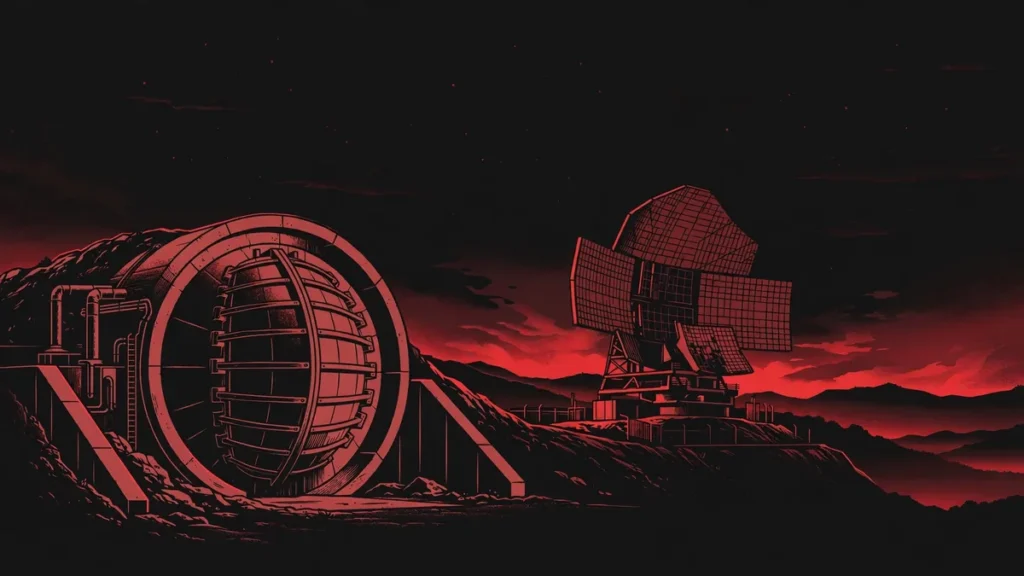
Nuclear arms control is the issue Trump has put first. The New START treaty, signed in 2010, expired in February 2026, leaving the United States and Russia with no limits on their strategic arsenals for the first time in more than 50 years. Trump rejected Moscow’s proposal to extend the treaty after its expiry, calling instead for a “new, improved and modernised” agreement that would also include China. Beijing has refused. Last month, China’s Foreign Ministry said it would be “neither fair, reasonable nor realistic to ask China to join the so-called trilateral nuclear disarmament negotiations at this stage”. The three sides have reportedly spent weeks discussing the agenda and protocol, and a senior US official told Reuters that nuclear arms will start the conversation but that no agreement is expected.
Artificial intelligence is also expected to feature, including its potential use in nuclear weapons systems and possible commitments on regulating it. Speaking at the APEC summit on Thursday, Trump said the United States opposes “any form of robust regulation” of AI. Trade is the third leg of the Trump–Xi bilateral: a fragile US–China trade detente is due to expire in January, and the prospect of tighter US curbs on China’s access to advanced AI chips looms over the talks, analysts say.
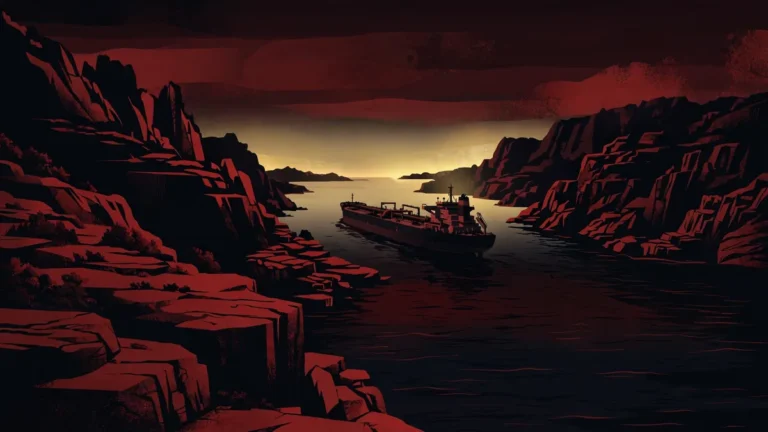
The Iran war will be discussed, US officials have indicated. The war, which the US and Israel launched on February 28, has reached a deadlock: large-scale military strikes have stopped for now, but the conflict is unresolved. India TV reports that the strategically important Strait of Hormuz remains closed, with ships attempting to navigate the waterway facing Iranian attacks and sea mines, while around one-third of China’s crude oil supplies passed through the strait before the war. The US strike on an Iranian missile site on Qeshm Island on November 17 and Iran’s retaliatory drone attacks on US facilities in Bahrain and Kuwait this week are the immediate backdrop. In his Fox News interview, Trump claimed the US had defeated Iran’s navy, air force and anti-aircraft systems, and that Iran’s missiles were down to about 12–13% of what they were — his own claim, which remains unverified — while saying Tehran was exploring chemical and biological weapons and that Washington did not need help from China or Russia to end the war.
Ukraine is where the signals conflict. US officials told the Associated Press that the three leaders will likely discuss, among other issues, the war in Ukraine, the situation in Iran, global energy stability and nuclear arms control. But a US administration official told reporters separately that Trump does not intend to raise Russia’s war in Ukraine, while Kremlin officials indicated it could feature. Beijing, for its part, has maintained that Ukraine is a European issue and that China is not part of the separate peace track Washington is pursuing — US envoys Steve Witkoff and Jared Kushner are in Berlin in parallel, where the Coalition of the Willing also meets today. The ambiguity is itself the story: nobody outside the room knows whether Ukraine will be discussed at all.
What does each leader want from the talks?
Each of the three arrives with a different prize in mind, and the gaps between them explain the low expectations.
Trump: a new nuclear deal with his name on it
For Trump, the centrepiece is nuclear arms reduction. White House spokesperson Olivia Wales told reporters that “the president has made it clear that, among other topics, he will discuss the reduction of nuclear weapons in the world. This proliferation, President Trump believes, is very dangerous.” A new three-way framework that includes China would be a legacy achievement no predecessor has managed. Trump can also use the meeting to showcase his administration’s diplomatic reach at a moment when the Iran war is deadlocked and Kyiv is publicly accusing Washington of restricting its Starlink satellite connection. The risk for him is the opposite: a photo opportunity that produces nothing, after the Alaska talks with Putin last year ended without a Ukraine deal.
Putin: a seat at the top table
For Putin, the meeting itself is the prize. Sharing a table with Trump and Xi breaks through the relative international isolation Russia has faced since launching its full-scale invasion of Ukraine, and lets him present Moscow as one of the world’s three main powers. The Kremlin is pushing hardest for a tangible output: Putin’s foreign policy aide, Yuri Ushakov, said on Monday that the three sides were engaged in intensive consultations over a draft joint statement, and that Russia had conveyed its position to China. Whether a statement is adopted remains unclear. Putin also wants Ukraine discussed — the original purpose of his proposal, according to the Wall Street Journal — and for any peace framework to reflect Russia’s maximalist demands, which Moscow confirmed this week remain unchanged. Ukraine’s deep-strike campaign against Russian refineries, which has cut processing sharply this month, gives Kyiv leverage Putin would rather negotiate away than concede on the battlefield.
Xi: the host, the mediator, the holdout
For Xi, hosting the first trilateral is a statement of China’s standing: the leader who brought the other two together, on Chinese soil, in China’s southern technology hub. Beijing has framed the meeting as a discussion of world peace and strategic stability among major powers, and Xi opened the APEC gathering with a pitch for openness and stable supply chains. Substantively, China wants an end to the war on Iran, which has disrupted its energy supplies, and wants to avoid being drawn into a nuclear arms agreement it had no role in negotiating. China’s arsenal is far smaller than those of the US and Russia, but it is growing fast — and Beijing sees no reason to cap it on Washington’s timetable. Xi will also be watching the trade clock: the US–China detente expires in January, and chip curbs are the sharpest point of friction in the bilateral relationship.
Why is the meeting being compared to Yalta 1945?
The comparison writes itself, and that is precisely why it alarms people. At Yalta in February 1945, the wartime leaders of the US, Britain and the Soviet Union — Franklin D. Roosevelt, Winston Churchill and Joseph Stalin — divided Germany and Berlin, carved out zones of influence in Europe and agreed to establish the United Nations, largely without the consent of the nations whose fates they were deciding. Some commentators now call Shenzhen a “second Yalta”, a meeting where three great powers might settle the world’s wars over the heads of the countries fighting them.
Both Moscow and Beijing play the comparison down. The Kremlin, which has long courted the concept of a “multipolar world”, rejects the Yalta analogy in public, and the comparison is unwelcome to China for similar reasons. But Fyodor Lukyanov, a pro-Kremlin foreign policy expert, noted that even as Moscow publicly rejects the analogy, it seems to believe the leaders could “reach agreements and make decisions that will determine global developments”. Of the three nations, he said, “it seems that only Russia really believes in the possibility of global control”.
The warning from London is sharper. Chatham House director Bronwen Maddox wrote that “standing with Xi and Trump, Putin will look like one of the three main leaders of the world”, even though “Russia is no superpower” and its economy, overloaded with military spending, is dwindling. Her concern is Ukraine: “the danger for Ukraine is that Trump uses this summit to try to advance his notion of peace, including giving Russia territory it has not managed to seize by force”. Zelenskyy shares the fear. He has said the three leaders “can end the war if they want”, but warned that Ukraine does not want the summit to turn into “Yalta 2, 3, 4” — a deal about Ukraine, without Ukraine. Kyiv’s anxiety is sharpened by the fact that the Crimean Bridge was struck for a third time this week overnight, a reminder that the war the leaders may or may not discuss is still being fought while they talk.

By the numbers: the arsenals behind the talks
The numbers explain why nuclear arms top the agenda — and why a deal is so hard. The United States and Russia hold by far the world’s largest arsenals; China ranks third and is expanding rapidly.
| Metric | Figure | Source |
|---|---|---|
| Deployed warhead limit under New START (lapsed February 2026) | 1,550 | Treaty text (CONFIRMED) |
| Deployed delivery vehicle limit under New START | 700 | Treaty text (CONFIRMED) |
| On-site inspections per year under New START | 18 | Treaty text (CONFIRMED) |
| China’s estimated warheads | ~620, rising by ~100 a year | SIPRI estimate (CONFIRMED as an estimate) |
| Expected duration of the Shenzhen trilateral | No more than 1 hour | Kremlin (CONFIRMED) |
| Share of China’s pre-war crude passing through Hormuz | ~one-third | India TV (REPORTED) |
| Iran’s remaining missiles, as a share of its pre-war arsenal | ~12–13% | Claimed by Trump, Fox News (REPORTED, unverified) |
Caveat: figures marked CONFIRMED come from treaty texts, official statements or two or more reputable sources; figures marked REPORTED rest on a single source or a leader’s own claim and remain unverified.
What the Shenzhen trilateral means for US/UK/EU readers
For readers in the US, Britain and Europe, the stakes are practical, not abstract. First, energy. The Iran war has kept the Strait of Hormuz effectively closed to commercial shipping, and the APEC summit itself is taking place against a backdrop of fluctuating oil and gas prices. Any signal from Shenzhen that the war might move toward a settlement would feed straight into petrol, diesel and heating-oil prices as winter sets in; any escalation would do the opposite. Second, security. With New START lapsed, there are no limits on US and Russian strategic arsenals for the first time in more than half a century, and no inspection regime to verify what either side holds. If Shenzhen produces even a follow-up arms-control track, it matters for every European capital living within range of those arsenals; if it produces nothing, the drift toward an unconstrained arms race continues. Third, trade and technology. A US–China detente expiring in January and tighter chip curbs would raise costs for electronics and the AI supply chain on both sides of the Atlantic. And fourth, Ukraine: any framework the three leaders sketch — with or without Kyiv in the room — shapes European security for years, which is why the Coalition of the Willing is meeting in Berlin on the same day. The Budapest Memorandum, under which Ukraine gave up its nuclear weapons in 1994 in exchange for security assurances, is the cautionary tale for any deal struck over Kyiv’s head.
What to watch next after the Shenzhen trilateral
The first test comes within hours: whether the three sides adopt a joint statement, and what the separate readouts from Washington, Moscow and Beijing say about what was actually discussed. A statement would be the meeting’s only concrete output; its absence would confirm the session was symbolic. Watch, too, for any announcement of a follow-up arms-control track — a working group, a date for further talks, or a commitment to keep negotiating — and for China’s response to being pressed on a treaty it has so far refused to join. Trump departs Shenzhen for Washington after the meeting, and his public remarks on the flight home will be the first unfiltered account of the room.
The parallel track matters just as much. Whatever Witkoff and Kushner bring back from Berlin, and whatever the Coalition of the Willing decides there, will show whether the Ukraine peace effort is advancing or stalling while the three presidents talk in Shenzhen. And the Iran war will not wait for diplomacy: the Qeshm strike, the drone attacks on Bahrain and Kuwait, and the pressure building around the Strait of Hormuz mean the next escalation could arrive before the next meeting is even scheduled. WarBrief will update this story as the readouts land.
Frequently asked questions
When is the Trump-Putin-Xi trilateral meeting?
It takes place on Thursday, November 19, 2026, at 2:30 p.m. local time (06:30 UTC) at the Kylin Villa in Shenzhen, China, on the sidelines of the 33rd APEC Economic Leaders’ Meeting. The Kremlin expects it to last no more than an hour. It is the first-ever face-to-face meeting of the US, Chinese and Russian presidents.
What is New START and why does its expiry matter?
New START was the 2010 treaty limiting the United States and Russia to 1,550 deployed nuclear warheads, 700 deployed delivery vehicles and 800 launchers, with 18 on-site inspections a year. It expired in February 2026, so there are currently no limits on either side’s strategic arsenal and no inspection regime. Trump wants a new, modernised agreement that also includes China; Beijing has refused to join talks it had no part in shaping.
Will Ukraine be discussed at the trilateral?
The signals conflict. US officials told the Associated Press the three leaders will likely discuss Ukraine, but a US administration official told reporters separately that Trump does not intend to raise it, while Kremlin officials indicated it could feature. Beijing calls Ukraine a European issue. The separate US peace track continues in parallel, with envoys Steve Witkoff and Jared Kushner in Berlin.
Why is the meeting being compared to Yalta 1945?
At Yalta in February 1945, the leaders of the US, Britain and the Soviet Union decided the post-war fate of Europe largely without the consent of the nations involved. Critics fear Shenzhen could see three great powers discuss Ukraine and other conflicts over the heads of the countries affected. Both Moscow and Beijing play the comparison down, and Ukraine’s President Zelenskyy has warned against a “Yalta 2, 3, 4” outcome.
What could the trilateral actually achieve?
Probably very little in the room itself: officials on all sides have said no agreement is expected, and the session is set to last an hour at most. The realistic outcomes are a joint statement, a commitment to further arms-control talks, or a signal on the Iran war. The meeting’s real weight is symbolic — three nuclear powers talking directly at a moment when two wars are unresolved and no arms-control limits remain in force.
Sources
- The Hindu: Xi-Trump-Putin trilateral meeting LIVE: Leaders meet with nuclear arms and two wars on table
- India TV News: Trump, Putin and Xi to hold first-ever trilateral meeting today: What’s on the agenda
- Yonhap News Agency: Trump, Xi, Putin set to hold historic trilateral summit; U.S.-N. Korea meeting uncertain
- Financial Express: Trump-Xi-Putin Trilateral Meet: Will the top nuclear powers make progress on arms control?
- Nikkei Asia: Trump, Xi and Putin gear up for first-ever trilateral meeting
- WION: Trump, Xi and Putin set for historic talks: What China, Russia and US said and why Europe fears ‘Yalta 2.0’?
Discussion 0
Share analysis, corrections, or context. Be civil — comments are moderated.