
WarBrief Live | November 14, 2026 | Breaking Analysis
Turkiye and Qatar signed a mutual defence pact in Istanbul on November 13, 2026, pledging a unified stance against any external armed attack on either country. The turkiye qatar mutual defence pact explained in this article is the third Turkish-linked defence arrangement in three months — but neither government has published its text, and no trigger or mechanism for a military response has been announced.
The agreement was signed by Turkish President Recep Tayyip Erdogan and Qatar’s Emir, Sheikh Tamim bin Hamad Al Thani, at the Presidential Dolmabahce Office during the 12th session of the two countries’ Supreme Strategic Committee. It lands at a moment when the Gulf’s security assumptions are being rewritten: Qatar was struck by Israel in September, Iran hit the US base at Al Udeid in June, and the war in the Gulf has cut shipping through the Strait of Hormuz by about two-thirds.
Key Takeaways
- Turkiye and Qatar signed a mutual defence pact on November 13, 2026, committing to “a unified stance in confronting any external armed attack” on either country.
- The pact’s text has not been published. No trigger, no response mechanism and no entry-into-force date have been announced — what it obliges either side to do in practice is still undefined.
- It is the third Turkish-linked defence arrangement since August, after the Mecca pact with Saudi Arabia and Pakistan and the four-way Badr memorandum with Indonesia.
- Turkiye completed ratification of the Mecca pact on the same day the Qatar deal was signed: Law No. 7597 was published in the Official Gazette on November 14, 2026.
- For Qatar, the pact is insurance after two attacks on its soil in five months. For Ankara, it extends a defence network that now spans the Gulf’s two shores.
What did Turkiye and Qatar actually agree on November 13?
The signing took place in Istanbul on November 13, 2026, after talks between President Erdogan and Emir Tamim during the 12th meeting of the Turkiye–Qatar Supreme Strategic Committee. According to the joint statement issued after the talks and carried by Reuters, the two sides committed to “strengthening collective defence and promoting regional security and stability, and a unified stance in confronting any external armed attack targeting either party or both of them.”
The statement, published by Qatar’s Foreign Ministry, added that both parties agreed to consult on threats to their security, as well as on regional and global security issues and defence policies, and to expand cooperation through joint military exercises, defence-industry cooperation and personnel training exchanges. The two sides said the agreement reflected their commitment to safeguarding their sovereignty and territorial integrity and their shared vision of “a more secure and stable regional order”.
Five agreements were signed at the meeting in total, covering trade, education, diplomacy and defence, according to the Turkish state news agency Anadolu. A separate memorandum of understanding on cooperation in peace, reconciliation and conflict resolution was also signed, Al Jazeera reported, citing a statement by the Amiri Diwan.
President Erdogan said the mutual defence agreement “would add another dimension to our brotherhood”, and that the two countries would “continue working together to prevent the resurgence of war in the Gulf region and establish a basis for dialogue and achieve peace”. The Turkish presidency said the two leaders also agreed to develop and diversify their energy partnership and to keep growing defence-industry cooperation. Emir Tamim described the deal as a “strategic partnership” and said the talks had covered “ways to build on what has been achieved and identify priorities for joint action in the coming period”.
The meeting also produced a joint position on Gaza. Both sides accused Israel of violating the Gaza peace plan endorsed by UN Security Council Resolution 2803 (2025) and agreed to coordinate support for early recovery and reconstruction in Gaza and for humanitarian aid, Qatar’s Foreign Ministry said.
What is missing from the pact?
Almost everything that would make a defence pact operational. Neither government has published the agreement’s text. The joint statement gives no trigger for a military response, no description of what form a response would take, and no indication of what would oblige either country to send forces if the other were attacked. No ratification schedule and no entry-into-force date have been announced.
That vagueness is the central fact about the deal, and it is worth stating plainly: what investigators and officials have confirmed is a political commitment to a unified stance and to consultation. What remains unverified is whether the pact contains any binding mutual-assistance obligation at all. The contrast with the Mecca pact signed in August is instructive — that agreement states explicitly that an attack on one party constitutes an attack on all, a clause the Turkiye–Qatar statement does not repeat.
Analysts quoted in the first coverage were cautious for the same reason. The question in Western coverage, as one specialist outlet put it, is whether the pledge “has teeth”. Until the text is published or either parliament ratifies it, the honest description is a signed political commitment whose military content is unconfirmed — not a mutual-defence guarantee in the NATO Article 5 sense. Readers should treat any claim that Turkish troops are now automatically committed to Qatar’s defence as reported, not confirmed. For background on how such clauses normally work, see our explainer on how mutual defence pacts work.
By the numbers: three months of Turkish defence deals
| Metric | Figure | Source |
|---|---|---|
| Date the Turkiye–Qatar pact was signed | November 13, 2026 | Reuters / Al Jazeera — CONFIRMED |
| Supreme Strategic Committee session | 12th | Turkish presidency — CONFIRMED |
| Agreements signed at the Istanbul meeting | 5 | Anadolu — CONFIRMED |
| Mecca pact parliamentary vote (November 5) | 279–119 | Anadolu — CONFIRMED |
| Mecca pact ratification law | No. 7597, Official Gazette, November 14, 2026 | Hurriyet Daily News — CONFIRMED |
| Mecca pact term | 10 years | Agreement text — CONFIRMED |
| People killed in the September 9 Doha strike | 5 Hamas members, 1 Qatari officer | Reuters / Clingendael — CONFIRMED |
| Hormuz shipping vs pre-war levels | About 65% below | UKMTO via Al Jazeera — CONFIRMED |
| Brent crude close, November 13 | $95.84 a barrel | Reuters via Gulf News — CONFIRMED |
| Turkish base capacity in Qatar | Up to 5,000 troops | Multiple reports — REPORTED |
Figures marked CONFIRMED are corroborated by two or more sources; REPORTED figures come from a single source or older reporting and should be treated with caution.
Why Doha and Ankara signed now
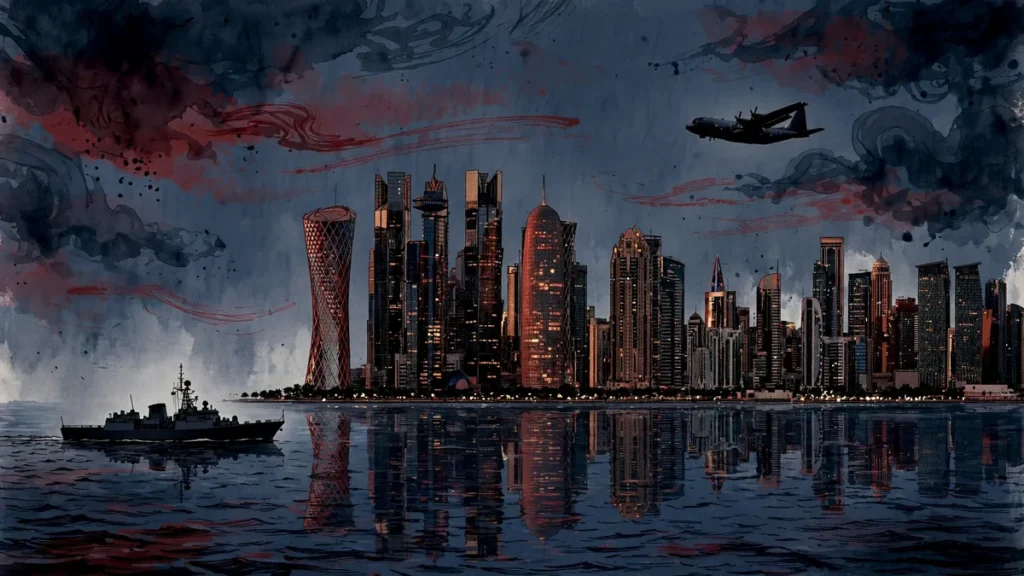
Qatar has been attacked twice in five months. On September 9, 2026, Israeli jets struck a compound in Doha used by Hamas’s negotiating team, killing five members of the organisation and a member of the Qatari security forces; the targeted Hamas leaders, including Khalil al-Hayya, survived. The strike, carried out against a major non-NATO US ally that hosts the forward headquarters of US Central Command, broke a regional taboo and prompted what the Clingendael Institute called “a fundamental reassessment of Gulf security”. Three months earlier, on June 23, Iran had struck Al Udeid air base in Qatar during the US–Israel–Iran war that began in February 2026.
That history explains the timing. Speaking to Al Jazeera, security analyst Yusuf Alabarda said that since the start of the Iran war, countries in the region “are feeling the effects of the war and no one is feeling secure”, adding that “all the Gulf countries, but especially Qatar, understood that their security guarantees from the United States are not working properly”. He suggested Turkish weapons and air defences “might be deployed to Qatar to guarantee its safety” — an analyst’s expectation, not an announced plan.
The military groundwork is already there. Turkish troops have been stationed at the Qatar–Turkiye Combined Joint Force Command, based at the Tariq ibn Ziyad camp south of Doha, since 2015, under a defence agreement signed in 2014. The base was built to hold up to 5,000 personnel, and President Erdogan said in 2019 that about 5,000 Turkish soldiers were stationed there. Qatar also hosts Al Udeid, the largest US air base in the Middle East — a reminder that Doha is layering new guarantees on top of old ones rather than replacing them. Our country profile of Qatar sets out the emirate’s military posture and alliances in full.
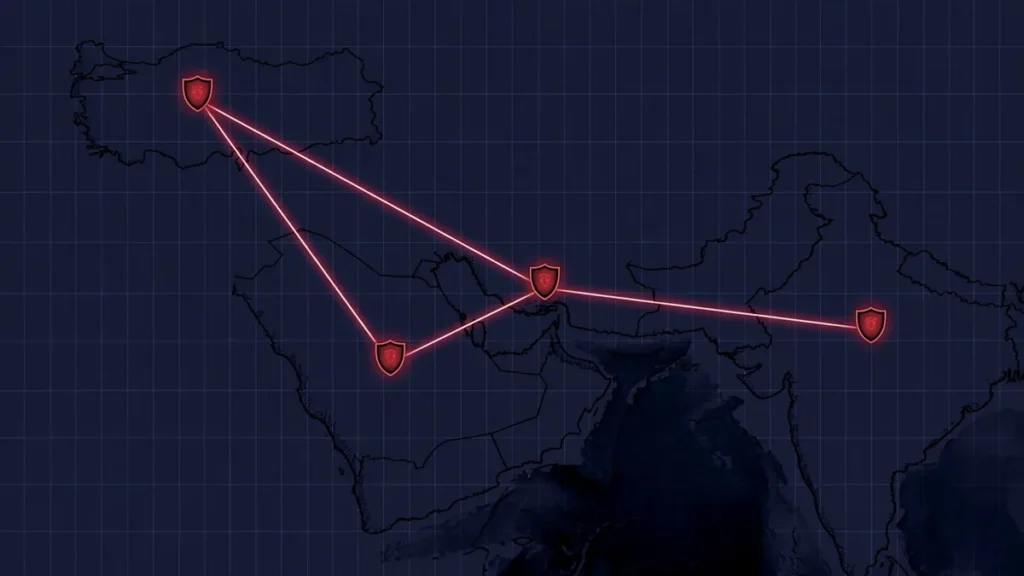
For Ankara, the pact is the third strand of a defence network it has been building across the region since August. The sequence matters, and it is worth setting out in full.
- August 7, 2026: Turkiye, Saudi Arabia and Pakistan sign the Mecca Joint Defence Agreement, a 16-article pact under which an attack on one party counts as an attack on all. It runs for 10 years.
- September 9, 2026: Israel strikes Hamas leaders in Doha, killing five Hamas members and a Qatari security officer.
- October 2026: Qatar, Indonesia, Pakistan and Turkiye sign the multilateral “Badr” memorandum of understanding on defence cooperation in Doha.
- November 5, 2026: Turkiye’s parliament approves ratification of the Mecca pact by 279 votes to 119, with 398 of the 592 members taking part.
- November 13, 2026: Turkiye and Qatar sign their bilateral mutual defence pact in Istanbul. President Erdogan signs the law approving Mecca pact ratification the same day.
- November 14, 2026: Law No. 7597, approving ratification of the Mecca pact, is published in Turkiye’s Official Gazette and takes effect on publication.
How the Turkiye–Qatar pact differs from the Mecca pact
The two agreements look similar from a distance and differ sharply up close. The Mecca pact is trilateral — Turkiye, Saudi Arabia and Pakistan — runs for 10 years, contains 16 articles, and carries the explicit “attack on one is an attack on all” clause. Its ratification is now complete in Turkiye: parliament approved it on November 5 by 279 votes to 119, and Law No. 7597 was published in the Official Gazette on November 14, 2026, taking effect on publication. The agreement itself enters into force only when the last instrument of ratification is deposited with its secretariat in Saudi Arabia; Saudi Arabia and Pakistan had already completed their domestic approval procedures, according to Turkiye’s deputy foreign minister. Our coverage of that process is here: Turkiye ratifies Mecca defence pact and the Mecca pact explained.
Important limits apply even to the Mecca pact. Ratification does not automatically authorise the deployment of Turkish troops to Saudi Arabia; any deployment abroad would still need a separate parliamentary decision under the Turkish constitution. The same caution applies a fortiori to the Qatar deal, which has not even reached the ratification stage and whose text is unpublished.
The Qatar pact is bilateral, shorter on detail and wider in scope: alongside the defence commitment it covers energy, trade, education and humanitarian cooperation, and a separate memorandum on peace, reconciliation and conflict resolution. It also sits inside a different strategic logic. The Mecca pact links three large Sunni-majority states across the Gulf and South Asia; the Qatar pact deepens a decade-old bilateral military relationship — Turkish troops on Qatari soil since 2015 — at a moment when Doha’s faith in outside guarantees has been shaken twice in one year.
What the Turkiye–Qatar pact means for US/UK/EU readers
For readers in the US, Britain and Europe, the deal matters in four concrete ways. First, energy. Qatar is one of the world’s largest exporters of liquefied natural gas and a significant supplier to European markets; any arrangement that makes Doha feel more secure also steadies the Gulf gas supplies that European buyers depend on. Brent crude closed at $95.84 a barrel on November 13, according to Reuters, and the war has already pushed shipping through the Strait of Hormuz to about 65% below pre-war levels, according to the UK Maritime Trade Operations — so Gulf security is, directly, a European heating and fuel bill.
Second, the US alliance system. Turkiye is a NATO member with the alliance’s second-largest military, and Qatar is a major non-NATO ally hosting the largest US base in the region. A Turkish–Qatari defence pact does not conflict with either relationship on paper — Ankara says the Mecca pact is not aimed at any other country and remains open to other states, including Egypt — but it does signal that Gulf states are hedging: buying insurance from more than one provider at once. Washington will be watching whether the pact produces real deployments, such as Turkish air defences in Qatar, or stays a political statement.
Third, travel and shipping. The Houthi campaign against Saudi Arabia and the mine claims in the Strait of Hormuz have already disrupted Red Sea and Gulf shipping; a more formalised Turkish–Qatari defence relationship is one more variable for insurers and airlines pricing Gulf risk, and for travellers checking advisories before flying through Doha, one of the world’s busiest hubs.
Fourth, the precedent. If the pact’s text is published and contains a genuine mutual-assistance clause, it becomes a template other Gulf states could copy — and a model for how middle powers build security outside the US umbrella. If it stays unpublished and vague, it will be read instead as a diplomatic signal: useful, but not a guarantee.
How Washington, Tehran and Tel Aviv are likely to read it
Reactions have not yet been formally stated by any of the three capitals, so what follows is analysis, not reported fact. In Washington, the pact is likely to be read as a symptom rather than a threat: a Gulf ally that no longer fully trusts US protection is shopping for additional cover, and the shopping list now includes a NATO ally. That is awkward for the US, but it is also a sign that Doha still wants Western-aligned partners rather than alternatives.
In Tehran, the deal will probably be read as encirclement. Iran is already fighting a war with the US and Israel, has warned South Korea against joining the Hormuz naval mission, and has watched Turkiye assemble a chain of defence agreements around the Gulf since August. A Turkish–Qatari pact adds another link, and Iranian officials may frame it as proof that Ankara is choosing sides.
In Tel Aviv, the immediate significance is the Gaza language: Turkiye and Qatar jointly accused Israel of violating the Gaza peace plan and pledged to coordinate reconstruction and humanitarian aid. Israel has not responded publicly to the pact. But the September 9 strike on Doha is the reason the pact exists in its current form — and any future Israeli operation against Hamas figures in Qatar would now, at least on paper, engage a Turkish commitment as well.
Within the Gulf itself, the reaction is likely to be mixed. Saudi Arabia and the UAE have their own defence ties with Turkiye and were partners in the Mecca pact; the Qatar deal does not cut across those arrangements. But smaller Gulf states will be asking the same question analysts are asking: does the “unified stance” language mean anything when tested? The answer will come from the text, if it is published, and from what Turkiye actually deploys.
What to watch next in the Gulf
Five things will show whether the Turkiye–Qatar pact is a real defence commitment or a diplomatic gesture. First, publication: whether either government releases the agreement’s text, and whether it contains a binding mutual-assistance clause or only consultation language. Second, ratification: whether the pact goes to the Turkish parliament, as the Mecca pact did, and how quickly.
Third, deployments: whether Turkish air-defence systems or additional troops arrive in Qatar, as analyst Yusuf Alabarda suggested they might. Fourth, the Mecca pact’s entry into force: the deposit of Turkiye’s ratification instrument with the secretariat in Saudi Arabia, the last step before the trilateral pact takes legal effect. And fifth, the US response: whether Washington treats the pact as a welcome burden-sharing step or as a sign that its Gulf guarantees need reinforcing.
The pact was signed on November 13 and announced the same day. What it obliges either side to do — the only question that ultimately matters — is still unanswered. WarBrief will update this article if the text is published or either parliament takes it up.
Frequently asked questions
What does the Turkiye–Qatar mutual defence pact say?
According to the joint statement issued on November 13, 2026, Turkiye and Qatar pledged “a unified stance in confronting any external armed attack targeting either party or both of them”, and agreed to consult on security threats and to expand joint military exercises, defence-industry cooperation and personnel training. The full text has not been published, so the precise obligations are not publicly known.
Does the pact mean Turkiye will send troops if Qatar is attacked?
Not on the evidence published so far. The joint statement contains no trigger, no response mechanism and no commitment to deploy forces. Even the Mecca pact, which has an explicit “attack on one is an attack on all” clause, does not automatically authorise Turkish troop deployments — those need a separate parliamentary decision. Treat any claim of an automatic Turkish military commitment to Qatar as reported, not confirmed.
How is the Turkiye–Qatar pact different from the Mecca pact?
The Mecca pact, signed on August 7, 2026, is trilateral (Turkiye, Saudi Arabia and Pakistan), has 16 articles, a 10-year term and an explicit attack-on-one clause, and Turkiye completed ratification on November 14, 2026. The Qatar pact is bilateral, its text is unpublished, and it covers wider cooperation including energy, trade and education alongside defence.
Why did Turkiye and Qatar sign a defence pact now?
Qatar was attacked twice in five months: Iran struck Al Udeid air base on June 23, 2026, and Israel struck a Hamas compound in Doha on September 9, killing five Hamas members and a Qatari security officer. Analysts say Doha concluded that US security guarantees were not working properly and sought additional cover; Turkiye, which has stationed troops in Qatar since 2015, was the natural partner.
Has the Turkiye–Qatar pact been ratified?
No ratification schedule has been announced. The pact was signed on November 13, 2026, and neither government has said when or whether it will go to parliament. Turkiye completed ratification of the separate Mecca pact on November 14, 2026, when Law No. 7597 was published in the Official Gazette — that is a different agreement.
Sources
- Reuters via The Jerusalem Post: Turkey, Qatar sign defense agreement, accuse Israel of violating Gaza peace plan
- Al Jazeera: Turkiye and Qatar sign mutual defence agreement
- Gulf News: US-Iran war: Turkey, Qatar sign defence deal; Hormuz shipping down 65%
- Hurriyet Daily News: Turkiye enacts law approving Mecca defense pact
- The National: Turkey’s approval of Makkah pact takes effect as it signs separate defence agreement with Qatar
- Clingendael: The Israeli strike on Doha and its strategic implications for the Gulf
- Free Malaysia Today (Reuters): Turkey, Qatar sign mutual defence agreement, pledge unified stance against attack
Discussion 0
Share analysis, corrections, or context. Be civil — comments are moderated.