
WarBrief Live | November 13, 2026 | Global Conflicts
| First claim since early September Iranian claim of an attack on US assets in a Gulf country | Day 258 of the US-Israel-Iran war | 4 tankers reported hit by explosions in Hormuz this week (Iran’s claim, unverified) | $96 Brent crude per barrel on Thursday |
Iran says it destroyed a US early-warning radar in Bahrain. The claim is confirmed — Tehran really said it. The strike itself is not: neither Washington nor Manama has confirmed any attack, damage or casualties. That gap between claim and confirmation is the story of the day in the Gulf, and it arrives at the most fragile moment in the eight-month war between Iran and the United States.
Iran’s Islamic Revolutionary Guard Corps (IRGC) announced the alleged strike on Friday, November 13, 2026, saying its Aerospace Force had targeted the radar in retaliation for what it described as an air attack on a telecommunications tower in the southern Iranian port city of Sirik. The announcement was carried by Iranian state media and reported within hours by Reuters and Al Jazeera. If the strike happened, it would be the first Iranian attack on American military assets in a Gulf country since early September. If it did not, the claim is still a deliberate escalation of language — and a warning of what Tehran says comes next.
Key Takeaways
- Iran’s Revolutionary Guards say they targeted and destroyed a US early-warning radar in Bahrain on Friday, November 13 — the first such claim since early September.
- The claim itself is confirmed by multiple outlets; the strike, any damage and any casualties are not. The US and Bahrain have made no immediate comment.
- Tehran frames the alleged strike as retaliation for an attack on a telecom tower in Sirik, southern Iran, which state media said was hit by “enemy fire” on Thursday.
- The claim lands in the same week Iran said four tankers were hit by explosions in the Strait of Hormuz, and as Brent crude traded near $96 a barrel.
What did Iran claim happened in Bahrain?
In a statement carried by the semi-official Tasnim news agency and Iranian state television on Friday morning, the IRGC said its Aerospace Force had struck the radar “a few hours ago”. The statement, as reported by The Hindu, read: “An hour ago, in response to the enemy’s air attack on a telecommunications tower in Sirik, the IRGC’s aerospace fighters targeted and destroyed the early-warning radar of the American aggressors on the island of Bahrain.”
The IRGC-affiliated Fars news agency used the same wording — “targeted and destroyed” — while Reuters, in its own voice, reported only that the Guards “said they targeted” the radar. That distinction matters. No satellite imagery, no photographs, no damage assessment and no casualty report accompanied the claim, and the statement did not say how the attack was carried out: no weapon, no launch point, no flight path.
The Guards called the alleged strike a “serious warning” to the “aggressor enemy” to stop what it described as a series of aerial provocations and oil smuggling in the Strait of Hormuz. Bahrain matters because it hosts the headquarters of the US Navy’s Fifth Fleet, the command that coordinates American naval operations across the Middle East. An early-warning radar is part of the air-defence and surveillance network that protects those forces and their Gulf hosts. A successful strike on one would be both an operational blow and a political message: that US installations in Gulf states are reachable. An invented one would still be a message — just a cheaper one.
What happened in Sirik, and why does Tehran say it retaliated?
The claimed trigger was an incident hours earlier in Sirik, a port city in Hormozgan province on Iran’s southern coast, east of the Strait of Hormuz. Iran’s state news agency IRNA, citing official sources, reported on Thursday that Sirik had been hit by “enemy fire”, and that a telecommunications tower was among the targets. The semi-official Tasnim news agency had earlier reported several consecutive explosions in Sirik county, saying their cause was initially unclear.
What IRNA did not say is as important as what it did. The agency did not identify the attacker, did not describe the weapon or the scale of the strike, and gave no details about damage or casualties. News18, reporting the IRNA account, noted that some sources suggested the explosions could have been warning shots fired at vessels suspected of violating maritime regulations. In other words, the incident Tehran cites as justification for the Bahrain claim is itself unverified — an alleged attack, attributed to an unnamed enemy, with no independent confirmation.
That does not make the Sirik incident false. It makes it unconfirmed, and the chain of claims now rests on two unverified links: an attack on Sirik that no outside source has confirmed, and a retaliatory strike on Bahrain that no outside source has confirmed either. Both halves of Tehran’s account need the same treatment: reported, attributed, and held apart from what is known.
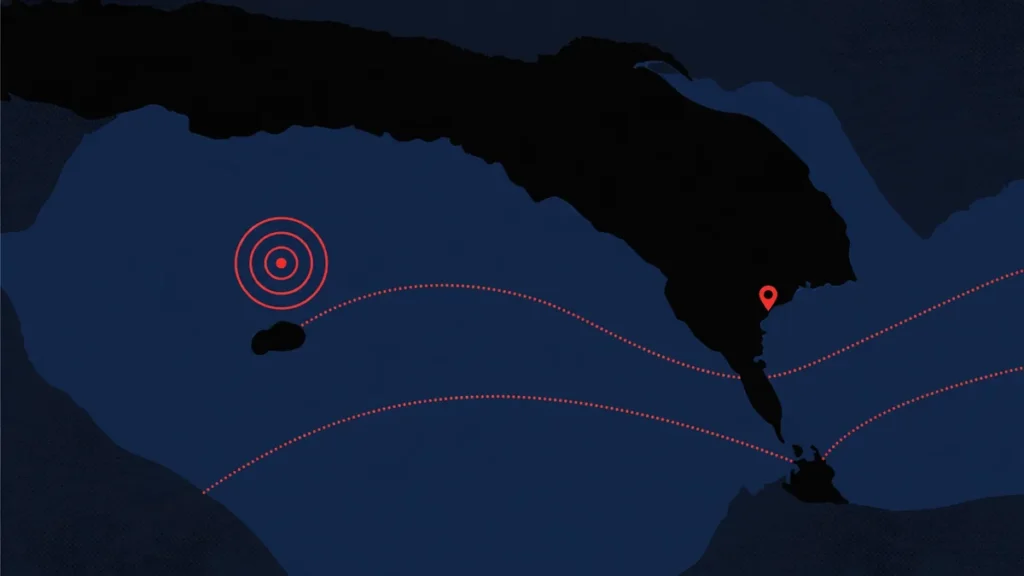
By the numbers: what is confirmed and what is only reported
| Metric | Figure | Source |
|---|---|---|
| IRGC claim of a Bahrain radar strike | Made on Friday, November 13, 2026 — CONFIRMED as a claim | Reuters; Al Jazeera |
| Radar destroyed | Claimed by the IRGC; no independent evidence — REPORTED | Tasnim; Fars |
| Sirik telecom tower attacked | Reported by IRNA on Thursday; attacker unidentified — REPORTED | IRNA via Al Jazeera |
| US and Bahrain response | No immediate comment — CONFIRMED | Reuters; Al Arabiya |
| Tankers hit by explosions in Hormuz this week | Four, according to Iran’s military; unverified — REPORTED | Business Recorder; Gulf News |
| Brent crude | Around $96 a barrel on Thursday — CONFIRMED | CNBC-TV18 |
| Ships hit in the strait | At least 10 in the first 10 days of November; 37 in October — CONFIRMED | Washington Institute data via Business Recorder |
| Attacks on vessels since February 28 | More than 130 verified — CONFIRMED | International Maritime Organization, cited in reports |
Figures marked REPORTED rest on a single source or an interested party and have not been independently verified. Treat them as claims, not facts.
How the February war reached Bahrain’s doorstep
The war began on February 28, 2026, with US and Israeli strikes on Iran. Since then it has spread across the region in stages: Iran launched missile and drone attacks on US bases in Gulf states, sought to restrict shipping through the Strait of Hormuz, and Washington responded with a naval blockade on Iranian ports. The fighting has settled into a pattern of strikes, claims and counter-claims, punctuated by fragile lulls — and the lull of the past two months is now under strain from several directions at once.
- February 28, 2026: US and Israeli strikes on Iran open the war.
- Early September 2026: Iran’s last claimed attack on US military assets in a Gulf country before this week.
- November 2, 2026: US strikes on Qeshm Island, which we examined in our explainer on what happened — and what it was not.
- November 10, 2026: An ADNOC vessel was damaged and a tanker struck near Hormuz, as reported in our account of the November 10 tanker attacks.
- November 11–12, 2026: The United Kingdom Maritime Trade Operations agency reported a vessel struck by an unidentified projectile about 14 nautical miles northwest of Ras Al Khaimah, starting a fire in its engine room.
- November 12, 2026: Iran’s parliament speaker and lead negotiator, Mohammad Bagher Ghalibaf, told Al Jazeera the Strait of Hormuz “would never go back to how it was before the war” and that “the ball is now in the American court”.
- November 12–13, 2026: Iran’s military said four oil tankers were hit by explosions in the Strait of Hormuz over Wednesday and Thursday — two supertankers disabled after ignoring warnings, two more said to have hit mines. Reuters said it could not independently verify the account, and Tehran named none of the vessels.
- November 13, 2026: The IRGC claims the Bahrain radar strike.
The same week, Yemen’s Houthis said they had attacked a pumping station on Saudi Arabia’s East-West oil pipeline and an oil facility in Yanbu on the Red Sea coast, and Dawn reported oil prices jumping more than $2 a barrel on Thursday as attacks on Saudi energy infrastructure escalated. The Bahrain claim does not sit alone. It is the sharpest point of a week in which the Gulf’s energy and shipping arteries have come under pressure from several directions at once.
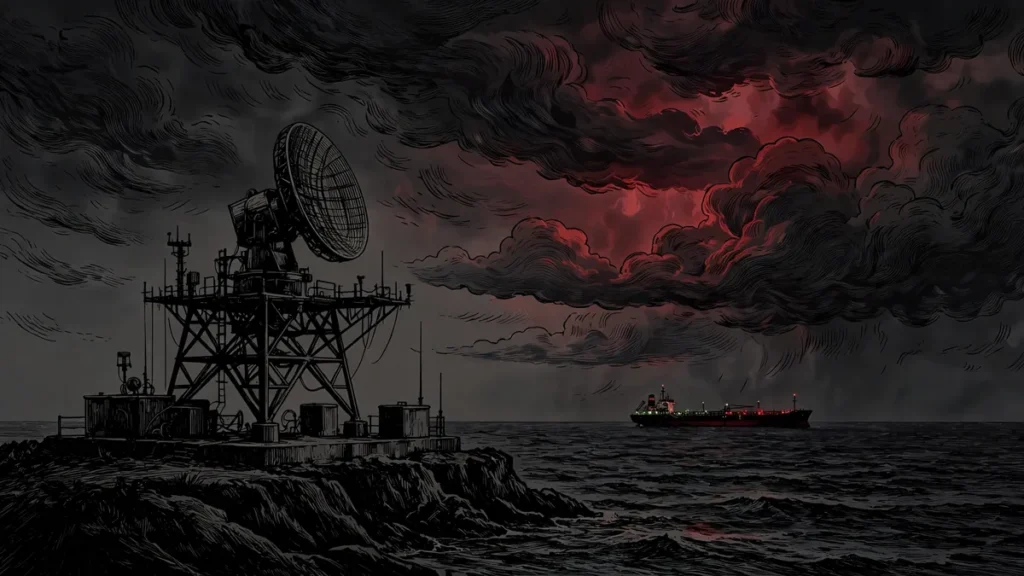
Why the Bahrain claim matters for Gulf security
Start with what would change if the strike is real. A successful Iranian attack on a US early-warning radar in Bahrain would be the first direct hit on American military infrastructure in a Gulf host state in more than two months, and it would show that Tehran can reach the surveillance systems that protect the Fifth Fleet and its neighbours. Early-warning radars are not symbolic targets: they are the eyes of an air-defence network, and losing one degrades the ability to detect incoming missiles and aircraft. It would also put Bahrain — a small island state that hosts the US Navy’s regional headquarters — directly in the line of fire in a way it has not been since the war’s opening weeks.
Now consider what changes if the strike is not real, or not as described. The claim still does work for Tehran. It answers the Sirik incident in public, it warns Gulf states hosting US forces that their territory is part of the conflict, and it links the radar to the Hormuz shipping campaign — the “oil smuggling” language in the IRGC statement ties the alleged strike to Tehran’s effort to control who moves through the strait. Claims have been a weapon in this war from the start, and a claim that cannot be disproved quickly is useful precisely because it forces Washington and Manama to respond to something they cannot yet verify.
Either way, the risk is miscalculation. A claim of a strike on US forces demands a response of some kind, and the space between “no comment” and retaliation is where this war has repeatedly escalated. Israel’s Kan News, citing an American source, reported that US Central Command had told the Israel Defense Forces to prepare for the possibility of the campaign in Iran resuming — a report that, like the radar claim, is attributed and unverified, but which points in the same direction: the lull is ending, and the parties are positioning for what comes next.
What the Bahrain radar claim means for US/UK/EU readers
Fuel and heating costs. Brent crude settled at around $96 a barrel on Thursday and traded at $95.95 in early Asian hours on Friday, after jumping more than $2 in a day. The Strait of Hormuz carried nearly one-fifth of the world’s crude oil before this conflict began, and every attack on shipping in the strait feeds directly into the price at the pump and the cost of heating a home. If the tanker campaign continues, expect further upward pressure on fuel prices in the US, the UK and the EU. This is educational context, not financial advice.
Travel. Bahrain is a Gulf transit hub, and the strait is one of the world’s busiest shipping lanes. Travellers to the Gulf should watch for updated government travel advice and possible flight-route changes if the security situation deteriorates, and anyone with shipping or business interests in the region should check the latest UK Maritime Trade Operations advisories before moving vessels through the strait.
Markets and security. Energy and shipping stocks are the most exposed, and insurers have already been repricing Gulf risk through the autumn. For the wider public, the practical signal is simpler: the war that began in February has not ended, it has paused, and the pause is now being tested in the Gulf’s most sensitive waterway.
How Washington, Manama and Tehran are reading the claim
Tehran is presenting the alleged strike as measured retaliation, not escalation: a single radar, in answer to a single tower, with a warning attached. Ghalibaf’s interview on Wednesday set the diplomatic frame — Hormuz will never return to how it was, and the next move belongs to Washington. The message is that Iran can impose costs on the Gulf’s shipping and surveillance architecture for as long as the blockade and the strikes continue.
Washington has said nothing about the claim so far. But the Jerusalem Post reported that President Trump, in a Salem News Channel interview, said he would use force “without hesitation” to protect US allies and vessels, and asserted that the Iranian regime is “on the brink of collapse”. The administration has also said it does not need a deal with Iran — a position that dims hopes of a diplomatic breakthrough and raises the odds that the next move is military rather than negotiated.
Manama has also stayed silent. Bahrain’s position is the most delicate of the three: it hosts the Fifth Fleet, it is named in the claim, and it has the most to lose from becoming a battlefield. Its silence is likely deliberate — neither confirming nor denying while it waits to see whether any evidence of an attack emerges.
Analysts will be watching for the evidence that settles the question: satellite imagery of the radar site, any visible damage, tanker traffic data, and whether the US or Bahrain eventually confirms or denies the strike. Until then, the honest description is the one this article has used throughout — a claim, not a confirmed event.
What to watch next in the Gulf
First, any statement from US Central Command or the Bahraini government. A confirmation would transform the story; a denial would leave Tehran’s claim exposed; continued silence would keep the ambiguity alive, which may suit both sides for now. Second, satellite imagery and open-source reporting on the radar site in Bahrain, which should show damage quickly if a strike of the kind described actually happened. Third, Hormuz itself: whether tanker transits slow, whether insurers raise war-risk premiums, and whether the UK Maritime Trade Operations agency issues new advisories after this week’s incidents.
Fourth, the diplomatic calendar. The APEC summit in Shenzhen on November 18–19 brings Presidents Trump and Xi together for a third meeting this year, with the Gulf war and Hormuz shipping on the agenda whether or not they are formally listed. A claim like this one, days before that meeting, is also a message to the negotiating table. And fifth, the pattern of the tanker campaign: at least 10 ships were hit in the first 10 days of November after 37 attacks in October, the highest monthly tally since the conflict began. If that pace holds, the radar claim — real or not — will not be the last Gulf incident of the month. Our Conflict Zones hub and Sanctions Tracker will carry updates as they are verified.
Frequently asked questions
Did Iran really destroy a US radar in Bahrain?
That has not been confirmed. Iran’s Revolutionary Guards say their Aerospace Force targeted and destroyed a US early-warning radar in Bahrain on Friday, November 13, 2026. Reuters and Al Jazeera confirm the claim was made. But neither the United States nor Bahrain has commented, and no independent evidence of a strike or damage has been published. Until such evidence appears, the strike itself is reported, not confirmed.
Why does Iran say it attacked the radar?
Tehran says the strike was retaliation for an air attack on a telecommunications tower in the port city of Sirik, in southern Iran’s Hormozgan province. Iran’s state news agency IRNA reported on Thursday that Sirik had been hit by “enemy fire”. The attacker was not identified, and the incident itself has not been independently confirmed. The IRGC also called the alleged strike a “serious warning” against what it described as aerial provocations and oil smuggling in the Strait of Hormuz.
What is the US early-warning radar in Bahrain?
Early-warning radars detect incoming aircraft and missiles at long range, giving air-defence systems time to respond. The United States maintains such systems across the Gulf to protect its bases and its allies, and Bahrain hosts the headquarters of the US Navy’s Fifth Fleet. The specific installation Tehran named has not been publicly identified by Washington, and no details of its type or location have been confirmed.
What happened in Sirik?
According to IRNA, citing official sources, the southern port city of Sirik was hit by “enemy fire” on Thursday, November 12, and a telecommunications tower was among the targets. Tasnim had earlier reported several explosions in Sirik county, with the cause initially unclear. No attacker was named, and no details of damage or casualties were given. The incident has not been independently verified.
Does this mean the war is escalating again?
Not necessarily — but the direction of travel is worrying. The claim is the first of its kind since early September, it comes in the same week as reported attacks on four tankers in the Strait of Hormuz and Houthi strikes on Saudi energy infrastructure, and oil prices have risen sharply. A confirmed strike on US assets would be a clear escalation. An unconfirmed claim is a warning. Either way, the fragile lull of the past two months is under strain.
How does this affect oil prices?
Brent crude settled at around $96 a barrel on Thursday, November 12, after rising more than $2 in a day, and traded near $95.95 early on Friday. The Strait of Hormuz carried nearly one-fifth of the world’s crude oil before the war began, so attacks on shipping there feed quickly into fuel and heating costs in the US, the UK and the EU. Prices will stay volatile while the tanker campaign continues.
Sources
- Reuters: Iran’s Guards say they targeted a US early-warning radar in Bahrain
- Al Jazeera: Iran says it targeted US radar site in Bahrain
- Al Arabiya: Iran’s IRGC says it targeted US radar system in Bahrain
- The Hindu: Iran says it struck U.S. military radar in Bahrain
- Dawn: Oil gains over $2 as supply disruptions persist
- Business Recorder: Four tankers struck by explosions in Hormuz: Iran
- Gulf News: US-Israel-Iran Conflict: Key Updates UAE Residents Must Know Today (Nov. 13, 2026)
- CNBC-TV18: Brent near $96: Oil rebounds from recent lows as Trump says US doesn’t need deal with Iran

Discussion 0
Share analysis, corrections, or context. Be civil — comments are moderated.