
WarBrief.live | 3 July 2026 | Energy Security & Global Markets
Latest update – October 3, 2026
Key Takeaways — October 3, 2026
- The UK Maritime Trade Operations centre reported that a tanker was struck by an unidentified projectile while transiting the Strait of Hormuz on October 1; a fire broke out aboard and the crew were reported safe, with no group claiming responsibility.
- Iran’s semi-official Fars news agency claimed the vessel was a 2.5-million-barrel supertanker hit about 8 kilometres off Oman — an unverified, attributed claim that should not be treated as confirmed.
- The Pentagon is sending a third US carrier strike group, the USS Theodore Roosevelt, plus the USS Makin Island amphibious readiness group to the Middle East — 9,000 to 10,000 more troops, with three carriers potentially in the region by late October or November, per the Associated Press and the Wall Street Journal.
- President Trump has said renewed strikes on Iran after the November midterm elections are “possible” if diplomacy fails, while the US Treasury extended sanctions to Iran’s largest automakers and rail companies under Operation Economic Outcast.
A tanker hit by an unidentified projectile in the strait, a third American carrier group steaming east, and a fresh round of Treasury sanctions — October opened with pressure on the Strait of Hormuz intensifying on every front at once.
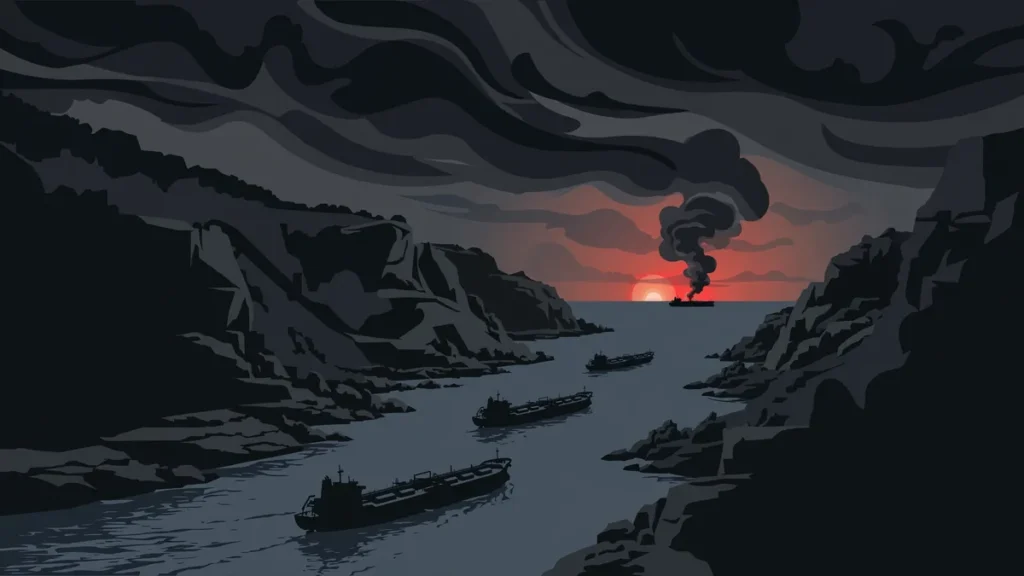
Tanker struck in the strait: what is confirmed
The British military’s UK Maritime Trade Operations (UKMTO) centre said it received a third-party report that a tanker was struck by an “unidentified projectile” while passing through the Strait of Hormuz on Thursday, October 1, 2026. The strike caused a fire aboard the vessel; the crew were reported safe. UKMTO did not identify the ship, its flag, its cargo or its route, and as of publication no group had claimed responsibility. The attack follows a pattern of unidentified projectile strikes on shipping in the strait in recent days.
Iranian semi-official media went further: the Fars news agency, citing the Persian Gulf Shipping Authority, said the struck vessel was a supertanker capable of carrying 2.5 million barrels of crude oil, hit roughly 8 kilometres off the coast of Oman while travelling what it described as an unauthorised route south of the strait. This claim is unverified by independent sources and is presented here as attributed to Iranian state-affiliated media, not as a confirmed fact. Separately, three of the vessels hit in recent days were reportedly owned or chartered by the United Arab Emirates. The strait has been virtually closed to unescorted commercial traffic since the US-Iran war began on February 28, 2026.
Third carrier group heads for the Middle East
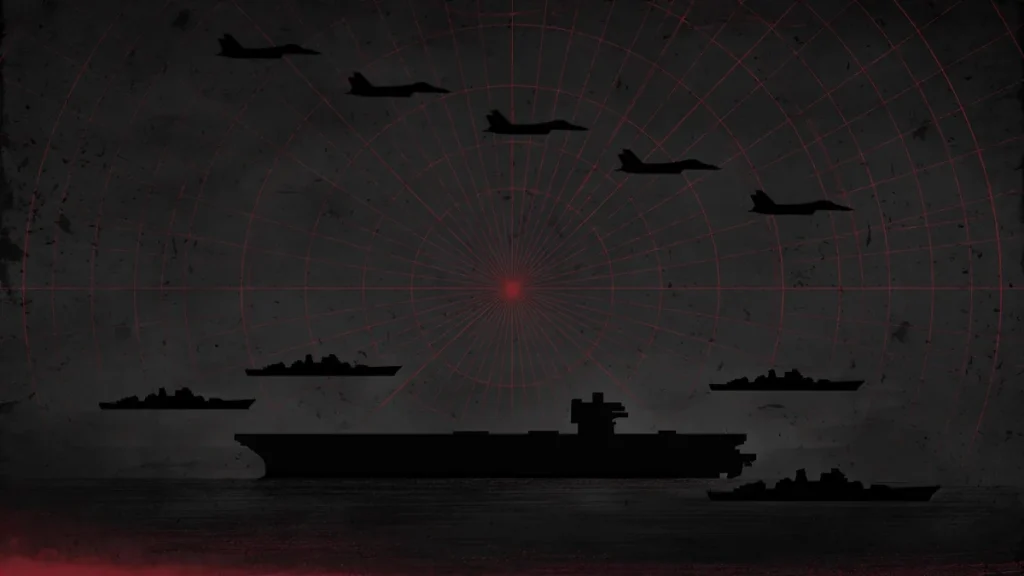
The United States is moving roughly 9,000 to 10,000 more troops to the Middle East aboard a group of ships that includes the USS Theodore Roosevelt carrier strike group — which departed San Diego on September 27 — and the USS Makin Island amphibious readiness group, with its landing ships and a Marine expeditionary unit. A US official told the Associated Press that three carrier strike groups could be operating in the region by the end of October; the Wall Street Journal reported a late-November timeline. The USS George H.W. Bush and the USS George Washington are already deployed in the theatre. Read our explainer on what a third US carrier group in the Middle East actually means.
The buildup is explicitly tied to the diplomatic calendar. President Trump has said renewed military strikes against Iran after the November midterm elections are “possible” if negotiations fail, and US officials say the deployment is meant to reassure regional partners that key energy facilities would be protected if major combat operations resume. The naval pressure runs alongside the US naval blockade of Iranian ports and its escort of commercial traffic through the strait.
Sanctions tighten as diplomacy waits on the midterms
On the economic front, the US Treasury extended its sanctions campaign to Iran’s largest automakers and major rail companies under Operation Economic Outcast, which began in late August — squeezing the industrial base that supports Tehran’s war economy. Follow the full economic campaign in our Sanctions Tracker and see how the Iran war is reshaping global energy geopolitics.
What this means for the chokepoint
The twin developments of October 1–2 confirm the pattern this hub has tracked all year: Hormuz no longer functions as a normal commercial waterway. Traffic moves only under military escort and at sharply higher insurance and freight premiums, and each projectile strike on a tanker raises the risk premium for every cargo behind it. The arrival of a third US carrier group raises the ceiling of a possible escalation; Trump’s post-midterms timeline puts the strait’s status on a direct collision course with the American electoral calendar. For the near term, the strait remains what it has been all year — the world’s most dangerous chokepoint.
Sources for this update:
- Associated Press (via Reflector): Third aircraft carrier and thousands of troops head to Mideast
- LaPresse / AP: UKMTO — Oil tanker hit in the Strait of Hormuz
- Informat.ro (WSJ reporting): Pentagon sends third carrier to the Middle East
- GlobalSecurity.org: Iran War 2026 — Day 217 operational update
- Aju Press: UK tanker struck by unknown projectile in Strait of Hormuz
Latest update – October 1, 2026
Key Takeaways — October 1, 2026
- Trump issued a deal-or-renewed-strikes ultimatum on September 30; Axios reports he leans toward post-midterms escalation if diplomacy fails.
- Iran confirmed receiving Washington’s formal response through Qatari mediators; Araghchi is reviewing it in Tehran on October 1.
- Brent crude neared $108 a barrel and the rial hit a record low above 2.5 million to the dollar; Bessent says Iran has about 15 million barrels left on the water.
- Bahrain joined CENTCOM’s Task Force Falcon Strike drone unit while Iran approved a vessel-seizure navigation article.
Deal or renewed strikes: President Trump issues an ultimatum as Washington’s formal answer to Iran travels through Qatari mediators, oil trades near $107 a barrel, and Bahrain joins CENTCOM’s new multinational drone task force.
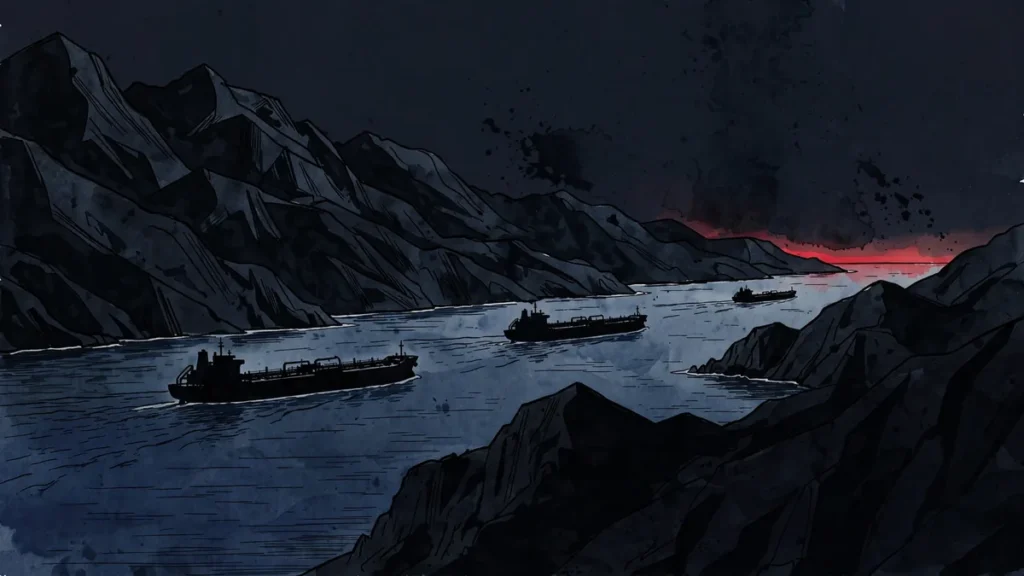
The Strait of Hormuz entered October as the center of gravity of the seven-month US-Iran war. On September 30, 2026, President Donald Trump told reporters in the Oval Office that Washington would soon have to choose between a negotiated settlement and renewed military action against Iran. Read our breaking analysis of Trump’s ultimatum for the full picture.
“Maybe you blow ’em up. We have to make that decision. We blow ’em up or make a deal. But the time is coming. It’s gonna end very soon, one way or the other.” — President Donald Trump, Oval Office, September 30, 2026
Trump was answering a reporter’s question about how a deal could be reached with Iranian leaders. He later highlighted the exchange on Truth Social.
The diplomatic track: Washington’s answer goes through Doha
Iranian officials confirmed on September 30 that Tehran had received Washington’s formal response to its latest proposal for ending the war, delivered through Qatari mediators. Foreign Minister Abbas Araghchi briefed President Masoud Pezeshkian and the cabinet after returning from New York, where contacts took place around the United Nations General Assembly. Araghchi is expected to review the response in Tehran on October 1.
Neither side has publicly disclosed the contents of the US response. An official briefed on the talks described the dispute as one of sequencing rather than components.
Tehran’s latest initiative was a seven-day framework: a ceasefire and steps toward reopening the Strait of Hormuz to commercial shipping, in exchange for the release of roughly $12 billion in frozen Iranian assets, the lifting of oil sanctions, and an end to the US naval blockade of Iranian ports (see our explainer on how naval blockades actually work). Trump publicly rejected that proposal over the weekend, calling it not acceptable, and denied reports that Washington had offered sanctions relief in return for steps on Iran’s nuclear program, posting that he had offered Iran “nothing.”
Axios reported that US officials say Trump is inclined to order a return to major combat operations after the November midterm elections if diplomacy fails — a timeline that puts the strait’s status in direct contention with the American electoral calendar.
The pressure campaign: oil money and the rial
Markets are pricing in prolonged disruption. Brent crude approached $108 a barrel on September 28 after Trump rejected Iran’s proposal, was trading around $107 on the morning of October 1, and settled near $103–105. In the third quarter alone, Brent futures rose 42 percent. The US national average gasoline price has reached $4.48 a gallon, up from $2.98 before the war began, according to AAA.
Tanker-tracking data from Kpler cited by EA WorldView put September Middle East oil exports at about 12.8 million barrels per day — the highest since the war began — but only 7.4 million barrels per day moved through Hormuz, against a pre-war level of 18.8 million. Roughly 40 percent of Gulf crude is now bypassing the strait entirely.
Inside Iran, the economic squeeze is tightening. The rial has fallen to a record low above 2.5 million to the US dollar, with annual inflation at 61.4 percent and food-price inflation at 128 percent, according to CBS News figures. Treasury Secretary Scott Bessent said on September 27 that only about 15 million barrels of Iranian oil remain on the water for delivery to China and predicted Tehran could have “nothing left to trade for anything” within roughly two weeks, as the US blockade under Operation Economic Outcast grinds on. Follow the full economic campaign in our Sanctions Tracker, and see how the Iran war is reshaping global energy geopolitics.
The military track: Bahrain joins the drone task force
On September 30, US Central Command announced that Bahrain had committed to joining Task Force Falcon Strike, which CENTCOM described as the world’s first multinational attack drone unit. The task force was launched in August to advance one-way attack drone development in the Middle East.
“We’re excited to welcome Bahrain to Task Force Falcon Strike after the kingdom affirmed its commitment to join CENTCOM in building the world’s first multinational attack drone unit. Bahrain is a steadfast partner in strengthening regional security and stability.” — CENTCOM Commander Adm. Brad Cooper, September 30, 2026
The announcement underscores how the contest over the strait is increasingly fought with unmanned systems. Iran’s parliamentary National Security Committee has meanwhile approved a navigation article providing for vessel seizure and cargo confiscation — a legal instrument Tehran could use against commercial traffic if talks collapse. Track the wider picture on our Conflict Zones hub.
What to watch
Three things will decide the strait’s near-term future: Araghchi’s review of the US response in Tehran on October 1, whether the Qatari backchannel produces a sequencing both sides can accept, and whether Washington’s post-midterms military timeline becomes the default. Until one path wins, Hormuz remains what it has been all year — the world’s most dangerous chokepoint.
Sources for this update:
- Kashmir Post: Trump Threatens Fresh Iran Strikes as Hormuz Diplomacy Hangs in Balance
- GlobalSecurity.org: Iran War 2026 — Daily Update
- EA WorldView: US War on Iran, Day 217 — Trump Rejects Tehran Proposal
- New York Post: Oil Soars Above $107 After Trump Rejects Iran Peace Deal
- Reuters: US Oil and Gas Production Rises in Q3 2026 but Price Uncertainty Plagues Producers
- Ya Libnan: Iran Received US Counterproposal — Live Updates
As of 3 July 2026, future of hormuz as a chokepoint has become a central storyline in the Iran-US war aftermath. Analysts tracking Strait of Hormuz future 2026 must separate regime messaging from verifiable facts.
This briefing on Strait of Hormuz future 2026 follows WarBrief editorial standards: two independent open sources for high-confidence claims, explicit uncertainty labeling, and analysis set in July 2026.
Current Situation as of 3 July 2026
Open-source reporting through 3 July 2026 indicates that future of hormuz as a chokepoint remains active despite war damage to Iran’s command-and-control networks. State broadcasters frame developments as evidence of resilience; independent monitors stress verification gaps.
Tehran’s security apparatus has tightened controls around major gathering points, affecting how future of hormuz as a chokepoint is documented by foreign media. VPN usage and intermittent throttling continue to shape the information environment.
Diplomatic sources in Muscat and Geneva suggest that future of hormuz as a chokepoint is also being watched for signals about post-war negotiation red lines — not only domestic legitimacy.
WarBrief.live assigns medium-high confidence to geographic claims supported by geolocated video; single-source IRIB segments are flagged until corroborated.
- State media emphasis on martyrdom framing
- IRGC unit rotations near ceremony corridors
- Proxy channel rhetoric in Lebanon and Iraq
Historical and Strategic Context
To interpret future of hormuz as a chokepoint correctly, analysts compare 2026 dynamics with earlier transition moments — particularly 1989 succession rituals and 2020 post-Soleimani mobilization. The difference today is leadership loss amid active external war.
Iran’s theocratic system has historically used mass ceremonies to compress factional disputes into staged unity. future of hormuz as a chokepoint fits that pattern but under higher internal economic stress and degraded military capacity.
Regional actors — Israel, Saudi Arabia, Turkey, and the UAE — monitor future of hormuz as a chokepoint for indicators of whether Iran will prioritize escalation management or revolutionary reaffirmation.
Academic literature on authoritarian resilience suggests public rituals can temporarily raise compliance without resolving structural deficits.
- Basij mobilization in secondary cities
- Rial parallel-market spreads in Tehran bazaars
Operational Implications for Strait Of Hormuz Future 2026
Military planners evaluate future of hormuz as a chokepoint through force protection, proxy coordination, and nuclear decision latency. Even symbolic events can shift alert postures across the Gulf.
Insurance markets and energy traders increasingly treat future of hormuz as a chokepoint as a volatility input for Brent spreads and Hormuz transit premiums.
US officials, including Vice President JD Vance in July 2026 briefings, have referenced Iran developments when defending the administration’s post-Operation Epic Fury bargain strategy.
For OSINT teams, future of hormuz as a chokepoint implies updated collection requirements: satellite revisit rates, Persian-language NLP corpora, and diplomat movement tracking.
- Diplomatic visitor manifests at Mehrabad
Domestic Politics and Public Sentiment
Iranian society enters July 2026 divided between state-orchestrated mourning, war fatigue, and anger over inflation exceeding 40% in unofficial estimates. future of hormuz as a chokepoint interacts with these moods unevenly across provinces.
Students and labor unions remain under surveillance; security services fear that future of hormuz as a chokepoint could provide cover for localized protests in Khuzestan, Kurdistan, or Balochistan.
Reformist newspapers operating within red lines have begun discussing succession without naming preferred candidates — a subtle break from pure eulogy formats.
Women participate in mourning streams but face stricter enforcement of dress and speech codes during funeral week.
International Reactions and Media Narratives
Western outlets emphasize future of hormuz as a chokepoint alongside questions about civilian harm from February–June 2026 strikes. Russian and Chinese state media highlight US aggression and affirm partnership with Tehran.
EU capitals debate whether engagement during funeral week normalizes a regime Washington targeted kinetically. UK and French statements in early July 2026 called for humanitarian corridors while condemning missile tests.
Israel maintains operational silence publicly but continues ISR collection on IRGC movements tied to future of hormuz as a chokepoint.
Disinformation clusters on X and Telegram amplify unverified claims; researchers should apply multi-source triangulation.
Economic, Energy, and Sanctions Dimensions
Sanctions enforcement remains tight even as humanitarian exceptions are debated. future of hormuz as a chokepoint coincides with negotiations over oil export waivers and frozen asset release.
China’s crude buying patterns in June–July 2026 show cautious normalization, not a full return to pre-war volumes.
European industry groups warn that prolonged instability could delay gas infrastructure investments regardless of funeral outcomes.
The Iranian rial’s unofficial rate volatility spiked around major ceremony dates.
Legal, Ethical, and Humanitarian Considerations
Human rights monitors request independent access to detention facilities and hospitals during mass events. future of hormuz as a chokepoint raises crowd safety risks including heat exhaustion.
International humanitarian law experts debate whether militarization of mourning spaces blurs civilian-military distinctions.
UN agencies maintain back-channel contacts but avoid high-profile presence that could legitimize wartime leadership transitions.
Medical NGOs report supply shortages in peripheral provinces still suffering war-related disruptions.
Scenarios for the Next 30–60 Days
Scenario A — Controlled Transition: future of hormuz as a chokepoint concludes without major unrest; interim leadership consolidates; talks resume quietly.
Scenario B — Managed Crisis: localized protests emerge; regime contains them with selective force; international rhetoric intensifies.
Scenario C — Escalation Loop: external strike rumors during funeral week trigger Iranian retaliation threats; oil spikes; diplomacy pauses.
Probability weights should be updated daily using IRGC promotions, missile test cadence, diaspora mobilization, and US carrier group movements.
Market and Insurance Transmission Channels
War-risk insurance for Gulf transits reprices quickly when Iranian rhetoric escalates during funeral peaks.
Asian refiners maintain diversified crude baskets but still react to Tehran ceremony security incidents.
Currency black-market spreads in Iran widen around nationally televised mourning blocks.
Defense equities with Gulf exposure remain sensitive to single-headline escalation risk.
Civil Society Under Pressure
Labor activists face heightened scrutiny when public gatherings coincide with state mourning calendars.
University campuses enforce attendance policies for organized mourning while suppressing unauthorized assemblies.
Medical workers report strain from heat-related admissions among elderly mourners in July temperatures.
Diaspora media compete with state narratives through satellite television and short-form video.
Alliance Coordination and Friction
US-Israeli deconfliction cells continue to exchange strike-risk assessments even during mourning periods.
European capitals differ on whether condolence diplomacy normalizes a leadership transition born from external killing.
Gulf states balance Hormuz stability messaging with quiet intelligence sharing on IRGC unit redeployments.
Turkey and Iraq monitor pilgrim flows that could carry political spillover into Najaf and Karbala networks.
Policy Implications for Strait Of Hormuz Future 2026
Legislative staff in Washington review future of hormuz as a chokepoint when drafting oversight questions on Operation Epic Fury expenditures and authorities.
Allied defense ministries use future of hormuz as a chokepoint as a scenario variable in July 2026 tabletop exercises on Hormuz closure and proxy activation.
Humanitarian agencies map future of hormuz as a chokepoint against access constraints for medical supply corridors in western Iran.
Sanctions compliance teams watch for funeral-linked charitable fronts that may obscure elite fund transfers.
Think tanks publishing rapid response notes on Strait of Hormuz future 2026 stress the difference between regime performance and measurable capability recovery.
Field Reporting Notes and Verification Discipline
WarBrief correspondents and partner stringers apply a three-source rule before elevating claims about future of hormuz as a chokepoint.
Video authenticity checks include shadow-length analysis, audio environment matching, and metadata inspection where available.
Official Iranian statistics on participation and infrastructure damage receive separate confidence labels from independent estimates.
When future of hormuz as a chokepoint intersects with nuclear or missile reporting, analysts separate test events from strike damage using multi-sensor fusion.
Readers should expect partial updates as funeral logistics evolve through mid-July 2026.
Regional Security Calendar for Mid-July 2026
Concurrent exercises by US and partner navies in the Gulf of Oman shape how future of hormuz as a chokepoint is interpreted by Iranian commanders.
Israeli government consultations on post-strike intelligence priorities continue to reference succession uncertainty in Tehran.
Lebanon and Iraq remain early indicators for whether Iran’s proxy chain receives new guidance during funeral week messaging cycles.
Saudi air-defense integration meetings with Western suppliers proceed on a separate track from public condolence diplomacy.
Ankara’s balancing policy links future of hormuz as a chokepoint to trade corridor security across eastern Anatolia and northern Syria.
Pakistan and India monitor developments for spillover into Shia procession calendars and domestic security deployments.
Comparison Table: Key Actors and Incentives (July 2026)
| Actor | Primary Incentive | Likely Action | Risk |
|---|---|---|---|
| Iranian regime | Legitimize transition | Stage unity; control narrative | Protest leakage |
| United States | Lock in post-war deal | Diplomatic pressure via Vance channel | Escalation miscalculation |
| Israel | Prevent nuclear rebound | ISR; selective deterrence | Regional widening |
| Russia/China | Counter US dominance | Diplomatic support; trade | Secondary sanctions |
| Gulf states | Stability & oil flow | Quiet back channels | Proxy blowback |
FAQ
What is the main focus of Strait of Hormuz future 2026 in July 2026?
The central issue is future of hormuz as a chokepoint, viewed against ongoing Khamenei funeral events and post-Operation Epic Fury diplomacy.
Why does future of hormuz as a chokepoint matter now?
It affects succession stability, regional escalation risk, and energy market volatility during a compressed transition window.
Which sources should analysts trust?
Prioritize geolocated OSINT, established wire services, and think-tank briefings with explicit methodology.
How does this relate to Trump’s Iran policy?
The administration links military outcomes to bargain enforcement; July 2026 messaging emphasizes deal compliance.
What role does JD Vance play?
Vance has become a prominent explainer of war outcomes and prospective negotiations in White House briefings.
Could funeral events change the trajectory?
Yes — ceremonies can either buy time for elite bargains or trigger unrest if economic grievances surface.
What are key energy market effects?
Hormuz risk premiums and Asian crude procurement patterns remain sensitive to Tehran security moves.
How should analysts update assessments daily?
Track verifiable changes in IRGC posture, official succession statements, and diplomatic meeting schedules tied to Strait of Hormuz future 2026.
Conclusion
In July 2026, future of hormuz as a chokepoint sits at the intersection of ritual politics, military risk, and post-war bargaining. The Khamenei funeral cycle buys Tehran time to manage succession optics, but it does not resolve structural pressures from sanctions, war damage, and public fatigue. For decision-makers tracking Strait of Hormuz future 2026, the decisive variable is whether ceremony-driven unity translates into policy continuity — or masks accelerating fragmentation inside the security elite.
Analyst Takeaways
Treat future of hormuz as a chokepoint as a regime stability indicator, not only a cultural event. Pair daily headlines with order-of-battle updates from the Gulf, the eastern Mediterranean, and the Strait of Hormuz transit corridor.
Separate official Iranian statements from independently verified battlefield and economic data. When numbers conflict, publish ranges and explain sourcing instead of collapsing uncertainty into false precision.
Map escalation tripwires in 72-hour windows: missile tests, proxy indirect fire, cyber incidents, and US naval posture changes. Strait Of Hormuz Future 2026 stories gain predictive value when tied to these triggers.
Reassess succession probabilities whenever Assembly of Experts messaging and IRGC media narratives diverge. Divergence often precedes personnel announcements by several days.
Correlate future of hormuz as a chokepoint with banking liquidity measures, import queue lengths at Bandar Abbas, and informal exchange rates in Tehran’s currency bazaars.
Watch diaspora satellite channels and independent Persian Telegram rooms for early factional leaks that state outlets delay or reframe.
Further July 2026 context on future of hormuz as a chokepoint: institutional incentives inside Iran still favor controlled spectacle over candid debate. External actors should calibrate responses to verifiable military and economic indicators rather than ceremony optics alone.
[…] naval blockade on Iran. Two ceasefire deals, in April and June, aimed at restoring shipping through the Strait of Hormuz (updated October 1 with the latest developments), both quickly collapsed, according to […]
[…] Washington Post reported this week, most of the refined gasoline and diesel that moved through the Strait of Hormuz before the war is still not getting shipped, even as crude flows […]
[…] helicopters operating over tankers at sea — the visible end of the visit-and-search process. The Strait of Hormuz, the narrow waterway through which the redirected traffic funnels, remains the geographic center of […]
[…] First, the Iran war has choked the Strait of Hormuz. Although some shipping has resumed, ING analysts note flows remain well below normal levels and could deteriorate quickly. Much of the Middle East’s refining capacity sits on the wrong side of the disruption. Read our assessment of whether the Strait of Hormuz remains the world’s most dangerous chokepoint. […]
[…] it was “not good enough,” citing as one example Tehran’s offer to open up the Strait of Hormuz, the energy chokepoint at the heart of the conflict. The war in Iran has been going for just over […]
[…] to prosecute a real conflict while their command layers are being thinned. Read our analysis of how the Strait of Hormuz remains the conflict’s most dangerous chokepoint and how the Iran war is reshaping global energy […]