WarBrief Live | October 2, 2026 | Defense Strategies
On September 30, 2026, Defense Secretary Pete Hegseth used his second annual “State of the Force” address at Marine Corps Base Quantico, Virginia, to confirm the deepest cut to the United States military’s senior leadership in a generation: a 20 percent reduction in generals and admirals. Hegseth’s 20 percent cut of generals and admirals combines two separate actions — roughly one in ten already dismissed, plus another ten percent of positions eliminated outright — and is to be completed by January 1, 2027. With about 850 active-duty generals and admirals across the Army, Navy, Marine Corps, Air Force, and Space Force, the move removes roughly 170 of the Pentagon’s most senior posts.
Key Takeaways
- Hegseth confirmed a 20% reduction in generals and admirals — about 10% already dismissed, another 10% of positions eliminated — to be completed by January 1, 2027.
- With roughly 850 active-duty generals and admirals, the cut removes approximately 170 of the military’s most senior posts.
- The order doubles the May 2025 directive; 23 Joint Staff positions are being downgraded so colonels or Navy captains can fill them instead.
- Senators Jack Reed and Mark Kelly call the move a politically driven purge; Hegseth calls it “accountability, and long overdue.”
- The announcement came alongside a new drone warfare command, an Office of Religious Affairs, and a future-warfare study led in part by Elon Musk and Newt Gingrich.
What Hegseth announced at Quantico
Speaking to junior officers and enlisted leaders at Marine Corps Base Quantico — the second year in a row he has delivered the address in that setting — Hegseth was blunt about the scale of what has already happened. “Number crunchers say that we fired 10% of the generals and admirals across the force, and that number sounds about right,” he said, according to reporting by Le Monde and the Associated Press. “And I know because I directed it, that we’ve also reduced the overall number of general officer slots by an additional 10%. So yes, 20% reduction across the board.”
“The media calls that a purge. I call it accountability, and long overdue.” — Defense Secretary Pete Hegseth, Quantico, September 30, 2026
Associated Press reporting, carried widely on September 30, said Hegseth directed all military services to double the 10% reduction he ordered last spring for roughly 800 flag and general officer positions, making it a total 20% decrease to be completed by January 1, 2027. Two U.S. officials told Reuters ahead of the speech that rather than simply firing people, the rank of some future jobs would change while billets for others would be canceled outright.
Details previewed to Bloomberg before the address added a concrete example: the required rank of 23 positions on the Joint Staff — the body that supports the top officer in the U.S. military — is being reduced, so some posts can be filled with lower-ranking officers such as Army colonels or Navy captains instead of generals and admirals.
Hegseth framed the shake-up as part of what he called “a war of attrition against the Pentagon bureaucracy,” saying the cuts would bring in a new generation of leaders who “think outside the box,” in Le Monde’s account of the speech. He added that officers who “clung to the woke department or seem to think civilian control of the military is simply a suggestion” no longer work there.
Background and timeline
- May 2025: Hegseth ordered a minimum 10% cut to the number of flag and general officers, along with a 20% reduction of general officers in the National Guard. Reuters also reported that he had separately ordered a 20% reduction in the number of four-star officers.
- September 2025: Hegseth summoned hundreds of generals and admirals from around the world to Quantico — the first such gathering — where he defended his firings of senior flag officers, including the top U.S. general and the Navy’s top admiral. President Donald Trump also addressed the gathering and floated the idea of using deployments to U.S. cities as training grounds for the military. Hegseth told the assembled brass: “If the words I’m speaking today are making your hearts sink, then you should do the honorable thing and resign.”
- September 29, 2026: Two U.S. officials told Reuters that Hegseth would use his Wednesday address to announce a 20% cut in the billets for general and flag officers.
- September 30, 2026: In the “State of the Force” address at Quantico, Hegseth confirmed the figure: 10% dismissed plus 10% of positions eliminated, totaling a 20% reduction “across the board,” to be completed by January 1, 2027.
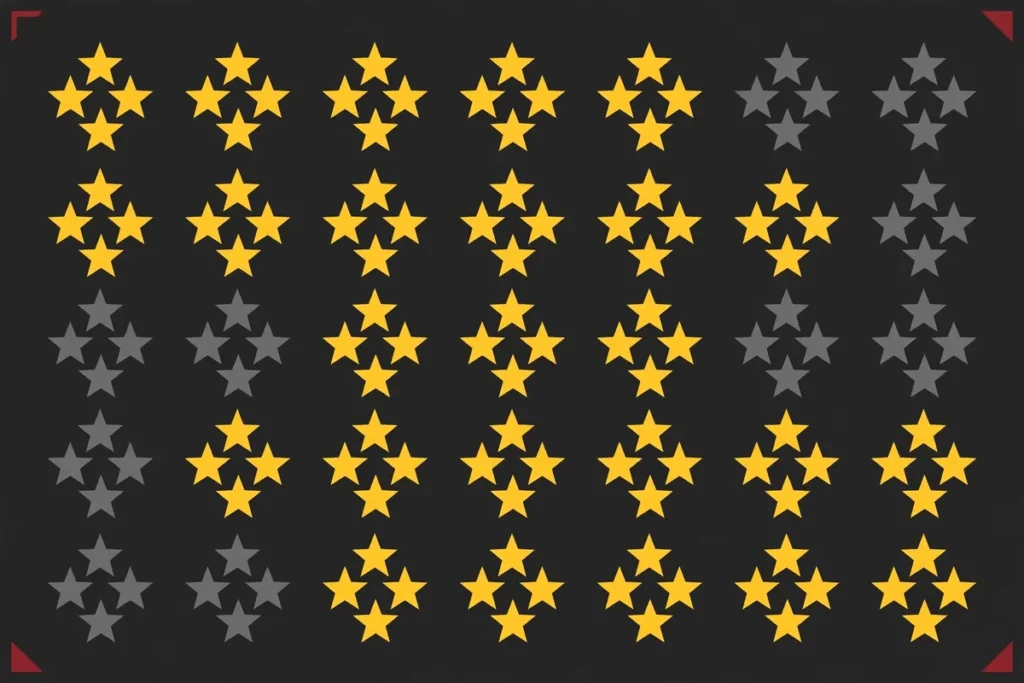
The math behind the 20% generals and admirals cut
Translating percentages into people starts with the current size of the general and flag officer corps. As of July, there were 851 active-duty generals and admirals across the five services, according to a Defense Department tally — a year earlier there were 848. French newspaper Le Monde described the current figure as “around 850.”
| Metric | Figure | Source |
|---|---|---|
| Active-duty generals and admirals (July 2026 DoD tally) | ~851 | Defense Department tally |
| Share already dismissed (~10%) | ~85 officers | Hegseth, Sept 30 speech |
| Positions eliminated (~10% of slots) | ~85 positions | Hegseth, Sept 30 speech |
| Combined 20% reduction | ~170 posts | Computed from above |
| Federal statutory ceiling for active-duty generals and flag officers | 857 | 10 U.S.C. § 526 |
The law itself helps explain why the ceiling matters. Under 10 U.S.C. § 526, federal law caps active-duty general and flag officers at 625 branch-specific positions, with an additional 232 positions for joint assignments excluded from those branch ceilings — bringing total authorized strength to roughly 857 slots. The branch-level ceilings are: Army 219, Air Force 171, Navy 150, Marine Corps 64, and Space Force 21. Actual staffing almost always falls below the legal ceiling because of retirements, promotions, and Senate confirmation delays.
For scale: the U.S. active-duty force is approximately 1.3 million personnel (the FY2026 budget request specified 1,302,800), according to research published September 30 by the Grand Strategy Institute. Against roughly 850 generals and admirals, that is about one star officer for every 1,530 troops — a ratio Hegseth’s supporters call top-heavy and critics call the natural shape of a modern joint force.
That same research cautioned against simple international comparisons: China’s defined senior PLA leadership billets number around 176, but that figure describes a defined set of leadership posts rather than every Chinese general, and rank-to-rank comparisons with Western forces are methodologically unreliable because of China’s political commissar system and institutional grade structure.
Why it matters
The cut lands while the U.S. military is seven months into a war with Iran with no clear end in sight, Associated Press reporting noted — a context that gives the personnel shake-up strategic weight beyond Pentagon staffing charts. Hegseth’s Iran messaging and the administration’s pressure campaign on Tehran mean the services are being asked to prosecute a real conflict while their command layers are being thinned. Read our analysis of how the Strait of Hormuz remains the conflict’s most dangerous chokepoint and how the Iran war is reshaping global energy geopolitics.
Downgrading Joint Staff positions is arguably as significant as the headline number. The Joint Staff supports the nation’s top uniformed officer and coordinates joint planning across services; filling 23 of its billets with colonels or Navy captains changes who sits at the table where the highest-level military advice is prepared. The administration presents that as flattening a bloated headquarters layer. Critics argue it removes experienced joint-planning leadership at precisely the moment large-scale operations demand it.
The fiscal stakes are real but limited: the cut’s purpose, as Hegseth presents it, is accountability and command agility, not budget savings. The broader context is his reshaping agenda — the rollback of diversity, equity, and inclusion programs, a review of ground combat units with female troops, gender-neutral fitness standards requiring combat-role troops to meet a male-level benchmark, a new testosterone screening program for male personnel, a beard ban, and mandatory fitness testing, as summarized by Military.com’s coverage of the address.
Different perspectives
The administration’s case: Hegseth and his supporters frame the reduction as overdue accountability and a return to combat readiness. Administration officials cast the speech as an overhaul refocusing the force on warfighting, per Military.com’s report. Hegseth described himself as engaged “in a war of attrition against the Pentagon bureaucracy,” arguing a new generation of bolder leaders will emerge.
Congressional critics: Senator Jack Reed of Rhode Island, the top Democrat on the Senate Armed Services Committee, criticized the planned reductions as damaging to a military already strained by the Iran war and said Congress should be involved in any such decisions. “I call on Secretary Hegseth to provide the relevant committees, in writing and before any further implementation, the analysis behind these reductions, the criteria used in the dismissals and promotion holds to date, and a full accounting of how each decision serves readiness,” Reed said in a statement Tuesday evening, as reported by Bloomberg.
Fellow senators viewed the move as “nothing short of a ‘purge’ of the military’s top ranks that will take years to rebuild,” the Associated Press reported. Senator Mark Kelly of Arizona, a former Navy combat pilot and NASA astronaut who has been critical of Hegseth, said: “He’s purging a generation of great leaders of the military, and it’s going to take a generation to recover from it.”
Legal and civil-society critics: Civil liberties and religious freedom groups called the broader package of announcements politically charged and said several initiatives raise legal and constitutional questions, according to Military.com. Le Monde’s analysis put it sharply: “The question of how many generals there should be is legitimate; the criteria used to reduce their ranks are far more controversial.”
What to watch next
The January 1, 2027 deadline gives the services roughly three months to say exactly which billets go and which get downgraded — watch for the service-by-service implementation lists and whether the criteria for dismissal are ever disclosed to Congress in the form Reed demanded. The other announcements from the speech carry their own timelines: the Autonomous Warfare Command is slated to become a full combatant command by October 2027, and its rollout — in a conflict where drones are reshaping every front — may prove the more consequential legacy of the address. Also announced: an Office of Religious Affairs, a future-of-warfare study to be led in part by SpaceX CEO Elon Musk and former House Speaker Newt Gingrich, and the construction of the first new military base in 40 years.
WarBrief will keep tracking the service-by-service implementation lists, Congressional oversight, and the Autonomous Warfare Command rollout on our Intel desk.
Frequently asked questions
How many generals and admirals does the US military have?
Roughly 850 active-duty generals and admirals serve across the Army, Navy, Marine Corps, Air Force, and Space Force. A Defense Department tally put the figure at 851 as of July 2026, compared with 848 a year earlier. Federal law (10 U.S.C. § 526) caps active-duty general and flag officers at 857 positions, and actual staffing almost always falls below that ceiling because of retirements, promotions, and Senate confirmation delays.
Why is Hegseth cutting generals and admirals?
Hegseth says the reduction is about accountability and combat readiness, calling it “long overdue” and part of a broader reshaping of the military away from what he terms bureaucratic bloat. Critics, including Senators Jack Reed and Mark Kelly, argue the dismissals are politically motivated and will damage readiness, particularly while the United States is at war with Iran. The Pentagon has not publicly released the written analysis behind the reductions.
What is a flag officer?
“Flag officer” is the Navy and Coast Guard term for what the Army, Air Force, Marine Corps, and Space Force call a “general officer” — a one- to four-star officer. One-star officers are brigadier generals (or rear admirals, lower half), rising through two-star major generals, three-star lieutenant generals, and four-star generals and admirals, who command major commands and combatant commands.
Has the Pentagon cut generals before?
Yes. In May 2025, Hegseth ordered a minimum 10% cut to flag and general officers, a 20% cut to general officers in the National Guard, and separately a 20% reduction in four-star officers, according to Reuters. The September 30, 2026 announcement doubles the earlier spring directive into a 20% total reduction to be completed by January 1, 2027.
What else did Hegseth announce at Quantico?
Alongside the personnel cut, Hegseth announced a new Autonomous Warfare Command for drones and robotics (to become a combatant command by October 2027), an Office of Religious Affairs, a future-of-warfare study led in part by Elon Musk and Newt Gingrich, plans to build the first new military base in 40 years, gender-neutral fitness standards with male-level benchmarks for combat roles, testosterone screening for male personnel, and the continuation of the DEI rollback, beard ban, and mandatory fitness testing.
Sources
- Reuters: Pentagon chief set to announce additional cuts in senior officer positions
- Associated Press (via militarynews.com): Hegseth confirms the US military will cut 20% of its generals and admirals
- Bloomberg (via BusinessMirror): Hegseth to cut Pentagon posts for reserved generals, admirals by 20%
- Le Monde: US Defense Secretary Hegseth touts 20% cut in top military brass
- Military.com: Hegseth at Quantico — covers AI, religion, war fighting, gender and the press
- OpenChronicle / Grand Strategy Institute: America’s Generals — is the Pentagon really more top-heavy than China and Russia?
- LegalClarity: How many generals are in the US military (10 U.S.C. § 526)