
WarBrief Live | November 21, 2026 | Breaking Analysis
3
Russian weapons came down in Poland
515
Missiles and drones in Russia’s overnight strike package on Ukraine
0
Casualties or damage reported in Poland
~3 min
Intercept window NATO pilots had, Polish officials say
Two Russian missiles and a suspected jet-powered drone crashed in southeastern Poland on November 20, 2026, during Russia’s largest air attack on Ukraine that month — and Warsaw calls the incursion a deliberate provocation, not an accident. This explainer sets out what investigators have confirmed, what is still only reported, and what NATO does next.
Key Takeaways
- Three Russian weapons — two missiles and a suspected jet-powered drone — came down in southeastern Poland on the morning of November 20, 2026, during a massive Russian strike on Ukraine. No one was hurt and no damage was reported in Poland.
- Poland has confirmed one weapon as a Russian Kh-101 cruise missile, found near Nowy Lipowiec about 50 kilometres from the Ukrainian border. The identities of the other two objects are still reported, not confirmed.
- Prime Minister Donald Tusk called the incursion an “intentional provocation” timed to the VIP day of Exercise Koalicja, the 11-nation Coalition of the Willing exercise in Nowa Dęba. NATO Secretary General Mark Rutte called it a “grave violation” and visits Poland on November 21.
- Poland has not formally invoked NATO Article 4. It has requested consultations and additional air-defence assets — AWACS aircraft and F-35 jets — under Operation Eastern Sentry.
What happened in Poland on November 20?
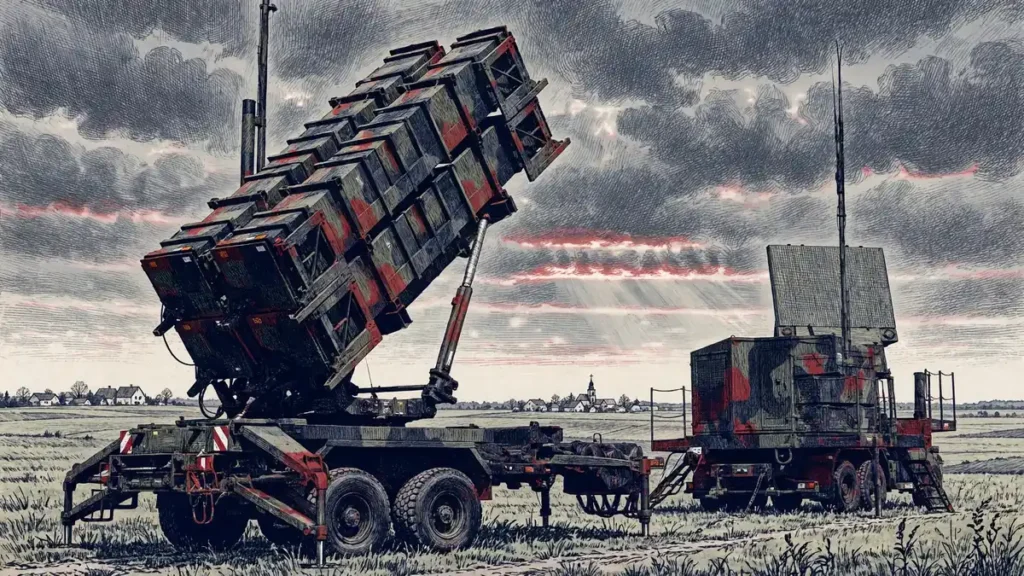
Early on the morning of November 20, 2026, three Russian aerial weapons crossed into Polish airspace and crashed in the country’s southeast, in the Lublin and Podkarpackie regions near the Ukrainian border. Polish Defence Minister Władysław Kosiniak-Kamysz confirmed at a press conference in Warsaw that a Russian Kh-101 cruise missile came down near the village of Nowy Lipowiec, in an open field several hundred metres from the nearest buildings, roughly 50 kilometres from the Ukrainian border. Firefighters said the wreckage burned out on its own, with no casualties and no property damage.
A second object, also assessed as a missile, struck near Rudnik nad Sanem, to the west of Nowy Lipowiec. A railway dispatcher there heard a loud explosion, but no visible damage to the railway infrastructure was found. A third object — most likely a jet-powered drone — came down near Mołodycz, about 30 kilometres from the border, where police found debris scattered across farmland. Polish authorities secured all three sites and opened investigations on November 20.
The timing is the heart of the story. The weapons arrived on the VIP day of Exercise Koalicja, a two-week exercise that began on November 9 at the Nowa Dęba training area, where thousands of troops from 11 European nations in the Coalition of the Willing are rehearsing a possible post-war stabilisation mission in Ukraine. Defence ministers from Britain, France, Estonia, Lithuania and Poland were touring the training site that day. Tusk said he had spoken with Rutte, and that the NATO chief agreed the timing “does not seem to be a coincidence”.
How big was Russia’s November 20 strike on Ukraine?
The Polish incursion happened inside the largest Russian missile and drone strike package of November 2026. According to Ukrainian President Volodymyr Zelenskyy and the Ukrainian Air Force, Russia launched 27 ballistic missiles, 84 cruise missiles and 404 Shahed and Gerbera-type strike drones against Ukraine on the night of November 19 to 20 — 515 weapons in total — targeting critical infrastructure and bridges in Kyiv. Zelenskyy called it “the biggest this year”. At least eight people were killed in Kyiv and more than two dozen injured, and three of the capital’s bridges across the Dnipro — the Podilsko-Voskresensky, Darnytskyi and Southern bridges — were damaged, halting transport links between the two sides of the city.
The barrage followed a direct warning. On November 19, after meeting US President Donald Trump and Chinese leader Xi Jinping at a trilateral summit in Shenzhen, Russian President Vladimir Putin said Moscow’s response to Ukraine’s strikes on the Crimean Bridge would be “far more painful”. The bridge attack — in which Ukraine collapsed a road span of the crossing linking occupied Crimea with the Russian mainland — is covered in our earlier report on the Crimean Bridge attack. The Institute for the Study of War (ISW) assesses that the Kremlin conducted the airspace violations deliberately, to coincide with the Coalition of the Willing exercise, in an effort to deter the coalition’s support for Ukraine and test NATO responses.
| Metric | Figure | Source | Status |
|---|---|---|---|
| Russian weapons that came down in Poland | 3 — two missiles, one suspected drone | Polish Defence Ministry | CONFIRMED |
| Confirmed Kh-101 impact | 1, near Nowy Lipowiec, ~50 km from the Ukraine border | Defence Minister Kosiniak-Kamysz | CONFIRMED |
| Distance from the Nowa Dęba exercise site | ~35 km (Rudnik nad Sanem impact) | ISW | CONFIRMED |
| Casualties or damage in Poland | 0 | Polish authorities | CONFIRMED |
| Russian strike package on Ukraine that night | 27 ballistic + 84 cruise missiles + 404 drones | Ukrainian Air Force / ISW | CONFIRMED |
| People killed in Kyiv | At least 8, more than two dozen injured | AP / Ukrainian authorities | CONFIRMED |
| Objects detected near the Polish border that night | 11 that could have threatened Polish airspace | Polish Armed Forces / ISW | CONFIRMED |
| Intercept window for NATO pilots | ~3 minutes | Polish Armed Forces / ISW | REPORTED |
| Second missile’s type | “Could have been a Kh-101” | Brig. Gen. Ireneusz Nowak | REPORTED |
| Drone’s type | “Could have been a Geran-5” | Brig. Gen. Ireneusz Nowak | REPORTED |
Caveat: figures marked REPORTED rest on a single official statement or a single outlet’s reporting and have not been independently corroborated. Treat them as the current official assessment, not as established fact.
Why did Poland not shoot the missiles down?
Poland’s air defences were active — and still did not intercept. The Polish Armed Forces Operational Command had placed air defences on heightened alert from the night of November 19, scrambling interceptor jets and activating Patriot batteries at around 03:30 as Russia’s bombardment of Ukraine unfolded. NATO scrambled Polish, Swedish and Dutch aircraft, and NATO ground-based radar systems were activated in response.
According to Brigadier General Ireneusz Nowak, the Polish Armed Forces Operational Commander, Poland and NATO did not try to down the Russian drone and missiles because the conditions did not meet the Polish rules of engagement. ISW reports that NATO pilots had a window of only about three minutes to identify and assess the objects before they came down — too narrow a margin to intercept cruise-missile-speed weapons in time — and that Poland likely assessed that shooting them down would pose an unacceptable risk of casualties and damage, and that their projected impact locations would not cause any harm. The Polish Armed Forces noted they had identified as many as 11 missiles and drones in Ukrainian airspace that could have posed a threat of entering Polish airspace; only three crossed the border.
The episode exposes a hard problem for NATO’s eastern flank: cruise missiles and jet-powered drones cross a border in minutes, and the decision to fire must be made faster than the weapons fly. That is the argument Warsaw is now making for more allied air-defence assets — and the reason the three-minute figure matters more than the wreckage itself.
What is Article 4 — and did Poland invoke it?
Article 4 of the North Atlantic Treaty lets any ally call for consultations with the other members whenever it believes its territorial integrity, political independence or security is threatened. It is the consultation clause — distinct from Article 5, the collective-defence clause, which treats an armed attack on one member as an attack on all 32 and requires a political decision by the alliance to act. Article 4 has been invoked only a handful of times in NATO’s history, most recently by Poland itself after Russian drones entered its airspace in September 2026.
Poland has not formally invoked Article 4 over the November 20 incident. An early headline from one outlet claiming an invocation was later corrected: according to official statements and contemporaneous assessments, Warsaw requested additional assets from NATO under Operation Eastern Sentry and called for allied consultations, but stopped short of a formal Article 4 trigger. Readers should treat any claim that Article 4 was invoked as incorrect unless a formal announcement follows.
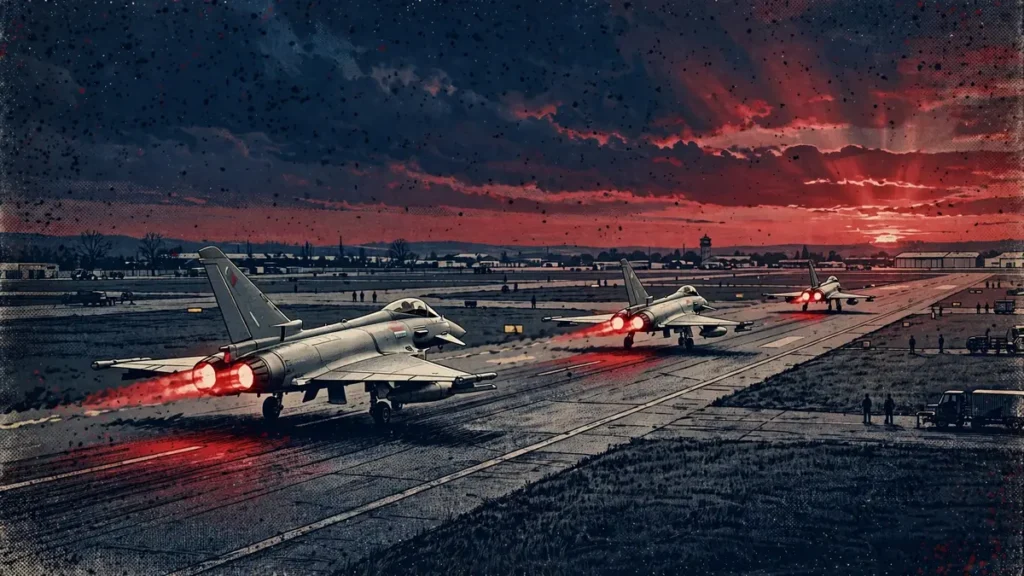
What Poland did request is concrete. Kosiniak-Kamysz called on NATO allies to participate more actively in Polish defence and specifically asked member states to deploy additional AWACS airborne early-warning aircraft and F-35 fighter jets to Poland under Operation Eastern Sentry, the alliance’s standing eastern-flank air-defence mission launched in 2025 to guard against drones. Rutte is expected in Warsaw on November 21 to discuss the request — the visit itself is the first visible test of how the alliance answers.
How Warsaw, Washington and Moscow see it
Warsaw’s position is unambiguous. Tusk called the incident an “intentional provocation” and said the weapons were deliberate, pointing to the exercise timetable. Kosiniak-Kamysz called it “another provocation” and said it was “not accidental” that the incursion fell on the exercise’s VIP day. European leaders echoed the language: Rutte called the incursion a “grave violation” of Polish airspace, writing on X that “this incident is clearly dangerous — a consequence of Russia’s ongoing war against Ukraine”, and declared the alliance “in solidarity with Poland”. The ISW assessment backs Warsaw’s reading, concluding the violations were intentional and timed to the exercise.
Washington’s public line, by contrast, has been softer. UA News reported that President Trump, speaking to Fox News aboard Air Force One after returning from China, said: “Putin accidentally launched a drone and a few small missiles at Poland.” That account has not been independently corroborated by a second major outlet at the time of writing, and it stands in tension with the assessments of Poland’s government and NATO’s secretary general, who say allied partners agreed the incident did not look like an accident. The gap between the American and European readings is itself one of the story’s most consequential facts: it shapes whether the alliance responds with new hardware, new rules of engagement, or only words.
Moscow has offered no immediate public response to the Polish incidents. Russia’s defence ministry said its overnight strike used high-precision weapons and drones against Ukrainian military and energy facilities, port infrastructure in the Odesa region and transport infrastructure in Kyiv — but said nothing about the weapons that crossed into Poland. The silence fits a pattern: previous Russian airspace violations, including the September 2026 drone incursions, drew denials or no comment at all.
What the Poland missile incident means for US/UK/EU readers
For readers in the United States, Britain and the European Union, the incident lands in three places: security, money and travel. On security, the question is whether NATO’s eastern flank can be defended against weapons that arrive with three minutes’ warning. The F-35 and AWACS request is a test of whether allies will put more of their own aircraft over Poland — and of whether rules of engagement will change so that the next incursion is intercepted rather than watched. Britain is directly involved: British troops are among the 11 nations exercising at Nowa Dęba, and London’s role in the Coalition of the Willing is examined in our profile of the United Kingdom’s military capabilities and its Koalicja contribution.
On money, the strike package itself was a reminder of the war’s cost curve. Russia’s largest November strike hit Kyiv’s bridges and power grid as winter approaches, and the wider war’s commodity and energy effects — from grain to gas — are the subject of our Conflict Zones hub. On travel, the incident is a reminder that airspace over Europe’s eastern border is not a settled map: our evergreen guide to airspace closures explains how closures are declared and what they mean for civilian flights. No civilian airspace closure has been announced over Poland as a result of this incident.
What to watch next in Poland and on NATO’s eastern flank
Five things will decide what this incident becomes. First, Rutte’s visit to Warsaw on November 21 — and whether it produces a concrete announcement on F-35s and AWACS, or only a statement of solidarity. Second, the wreckage investigations at Nowy Lipowiec, Rudnik nad Sanem and Mołodycz: confirmation of the second missile’s type and the drone’s identity would settle the reported-versus-confirmed split at the centre of this story. Third, whether Poland formally invokes Article 4 in the coming days — the option remains open, and the correction of the early headline shows how closely that question is being watched. Fourth, whether NATO changes its rules of engagement for border incursions, the question the three-minute window raises. And fifth, the wider war: the November 20 barrage followed the Shenzhen summit and Putin’s “far more painful” warning, and the US proposal on NATO membership for Donbas is still moving through diplomatic channels. Our report on Russia’s Kyiv barrage covers the strike itself in full.
Until the investigations report, the verified picture is narrow and the reported picture is wide. Three weapons crossed into a NATO member’s territory during its allies’ exercise, nobody was hurt, and the alliance’s two most senior voices in Warsaw and Brussels agree it was deliberate. Everything else — the types, the intent, the response — is still being established.
Frequently asked questions
Did Russian missiles hit Poland?
Yes. Two Russian missiles and a suspected jet-powered drone came down in southeastern Poland on the morning of November 20, 2026, during a massive Russian strike on Ukraine. One missile is confirmed as a Russian Kh-101; the other two objects are still being investigated.
Did Poland invoke NATO Article 4?
No. Poland has not formally invoked Article 4 over the November 20 incident. It requested consultations and additional NATO air-defence assets — AWACS aircraft and F-35 jets — under Operation Eastern Sentry. An early headline claiming an invocation was corrected.
Why didn’t Poland shoot the missiles down?
Polish and NATO jets were scrambled and Patriot batteries were active, but officials say the intercept window was only about three minutes and the conditions did not meet Poland’s rules of engagement. Poland assessed that shooting the weapons down risked casualties and damage, and that their projected impact sites would cause no harm.
What is Operation Eastern Sentry?
Operation Eastern Sentry is NATO’s standing eastern-flank air-defence mission, launched in 2025 to guard allied territory against drones and airspace violations. Poland has asked for additional forces under it, specifically AWACS early-warning aircraft and F-35 fighter jets.
Could this trigger NATO Article 5?
Not automatically. Article 5, the collective-defence clause, requires a political decision by all 32 allies that an armed attack has occurred. No ally has proposed invoking it over this incident, and there were no casualties or damage in Poland.
Sources
- Institute for the Study of War: Russian Offensive Campaign Assessment, November 20, 2026
- Associated Press (via The Manila Times): Russian missiles land in Poland, as Europe held military drills nearby
- The Express Tribune: Russian missiles land in Poland amid NATO drills
- CNN: Hours after Trump reportedly says ‘tired’ Putin is ready for a deal, Ukraine hit with massive strikes
- Latin Times (via Europe Says): Poland Invokes Article 4 — correction noting no formal invocation
- UA News: Russian Missiles in Poland — Warsaw’s Response and the Implications for NATO


Discussion 0
Share analysis, corrections, or context. Be civil — comments are moderated.