
WarBrief Live | October 19, 2026 | Geopolitics Explained
Two neighbours are at war along a border one of them has never accepted. Since February 2026, Pakistan’s jets have repeatedly struck targets inside Afghanistan, and Defence Minister Khawaja Asif has declared the two countries in “open war”. The fighting is rooted in a 133-year-old boundary dispute, a militant group that shares a name with Afghanistan’s rulers but is a separate organisation, and a proxy rivalry with India that Islamabad insists is driving the violence. What is independently confirmed — including by the United Nations — is that civilians are dying on both sides of the strikes. What remains unverified are the battlefield casualty claims each government issues, which no independent body can corroborate. This explainer covers the Pakistan Afghanistan war explained through the Durand Line and the TTP: the history, the escalation, and where India fits in.
Key Takeaways
- The root of the conflict is the 1893 Durand Line, the border Afghanistan has never recognised as legitimate; it splits Pashtun and Baloch communities in two.
- The TTP — Tehrik-i-Taliban Pakistan — is a Pakistan-focused militant group distinct from the Afghan Taliban that governs Kabul, though the UN says it operates from Afghan territory.
- Pakistan declared “open war” on February 27, 2026 and has struck targets in Kabul, Kandahar, Kunar, Helmand, Nangarhar and Paktika; the Taliban denies sheltering militants and retaliates along the border.
- Pakistan accuses India of backing the TTP — a claim Delhi denies. What is confirmed is that India has deepened diplomatic ties with the Taliban government.
- Casualty claims from both capitals are contested and unverifiable; UNAMA’s civilian-casualty figures are the only independently confirmed set.
What is the Durand Line — and why does Kabul refuse to accept it?
The Durand Line is the roughly 2,600-kilometre frontier drawn on November 12, 1893, in a single-page agreement with seven articles between Sir Mortimer Durand, representing British India, and Emir Abdur Rahman Khan of Afghanistan. It was a product of the Great Game — the imperial rivalry between Britain and Russia — drawn to fix spheres of influence rather than to reflect the people living on either side. A demarcation survey followed from 1894, and the line was reaffirmed in the Anglo-Afghan Treaty of 1919. Pakistan inherited the border at independence in 1947.
Every Afghan government since — monarchist, communist, mujahideen, the Islamic Republic, and now the Taliban — has refused to recognise the line as an international border. The objection is not only cartographic. The boundary slices straight through Pashtun and Baloch tribal lands, leaving tens of millions of Pashtuns on the Pakistani side of a frontier they never consented to. Kabul’s long-standing position is that no one in Afghanistan ever ratified the arrangement as a permanent state border.
Islamabad, by contrast, treats the line as settled and final. In recent years Pakistan has moved aggressively to fence it — a barrier the Taliban has repeatedly challenged, and which has itself become a flashpoint for border clashes. When Pakistani jets began striking inside Afghanistan in February 2026, it was along this disputed frontier that the war took shape, which is why the Durand Line dispute sits at the centre of every attempt to understand the fighting. Reuters’ September 2026 explainer describes the line as the fault line that turned former partners into open enemies.
Who is the TTP — and is it the same as the Afghan Taliban?
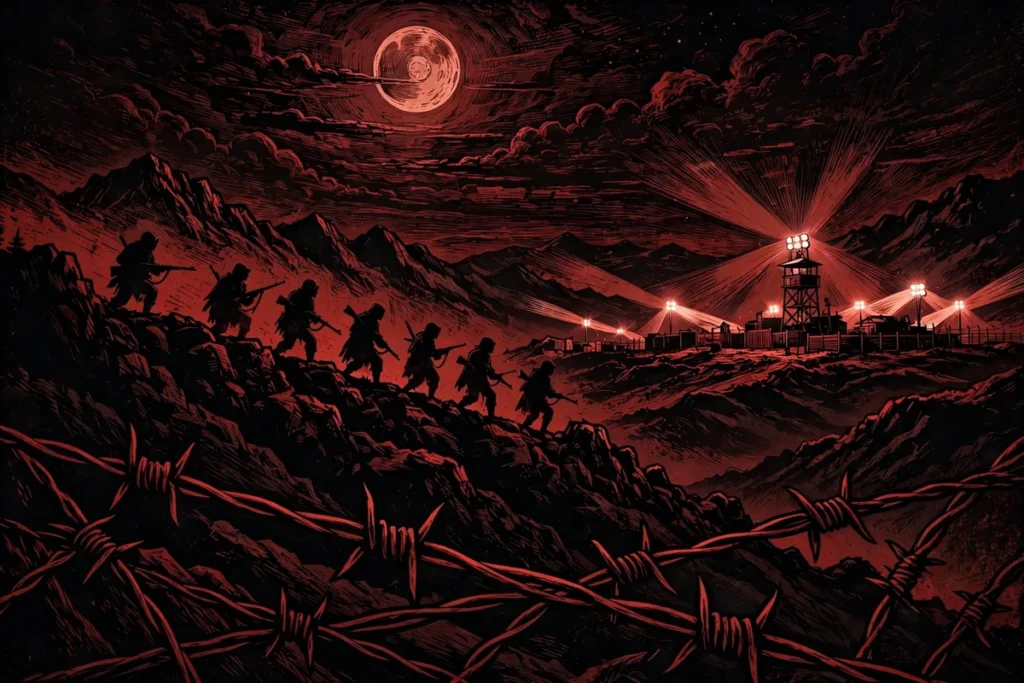
No — and the distinction matters. The TTP, Tehrik-i-Taliban Pakistan (which Islamabad now labels “Fitna al-Khawarij”), is a Pakistan-focused militant group whose stated aim is to overthrow Pakistan’s government and impose its own rule in the country’s tribal regions. It is designated a terrorist organisation by the UN Security Council, the United States and others. The Afghan Taliban — the Islamic Emirate — is the separate movement that has governed Kabul since August 2021. They share an ideological lineage and many Pashtun roots, but they are different organisations with different targets.
Pakistan’s charge is that the Afghan Taliban shelters the TTP on Afghan soil and lets it launch attacks across the border. Islamabad’s Foreign Ministry described Taliban support for the TTP in August 2026 as the “main stumbling block” in the relationship. A United Nations assessment from July 2024 put TTP strength at 6,000–6,500 fighters operating from Afghanistan, and a UN report from February 2026 concluded the Taliban had given the group “greater liberty and support”. The UN’s monitoring-team report of August 2026 (S/2026/651) found that cross-border attacks had escalated, driven by TTP operations.
Kabul rejects the allegation entirely. The Taliban’s position is that it does not harbour militants on Afghan territory and that the TTP insurgency is Pakistan’s own internal problem — a group that predates the Taliban’s 2021 return to power. The truth on the ground is hard to verify independently, but the violence is measurable: the Pakistan Institute for Conflict and Security Studies recorded 1,232 militant attacks in Pakistan over the first nine months of 2026, with September’s 225 attacks — up 13 per cent on August — the highest monthly figure in 12 years. Islamabad cites that bloodshed as the justification for its airstrikes.
What turned Pakistan and the Afghan Taliban from partners into enemies?
The irony of the current war is that Pakistan was long accused of backing the Afghan Taliban’s insurgency against the Western-supported government in Kabul. After the Taliban’s 2021 takeover, Islamabad expected a friendly regime that would rein in the TTP. The opposite happened: cross-border attacks kept rising, and Kabul showed no sign of acting against a group it viewed as a separate Pakistani problem.
The slide toward open war was rapid in early 2026. A February 6 bombing of a Shia mosque in Islamabad, which killed 31 people and was claimed by ISIS-K, hardened the political mood. Between February 21 and 27, Pakistan carried out its first airstrikes inside Afghanistan — in Nangarhar, Paktika and Khost — and the Taliban hit back along the Durand Line. Pakistan then bombed Kabul itself, its first strike on the Afghan capital since the Taliban’s return, along with targets in Kandahar and Paktia. On February 27, Khawaja Asif announced on X: “Our patience has now run out. Now it is open war between us.” The operation was named Ghazab Lil Haq. Battlefield casualty claims were wildly contradictory — Kabul said 55 Pakistani soldiers had been killed; Islamabad claimed at least 133 Afghan fighters dead — and none was independently verified.
A truce in March produced roughly three months of relative calm, but militant violence inside Pakistan kept climbing. The autumn brought a second, sharper phase. On October 1, Pakistani jets struck targets in Kunar and Helmand; Pakistan’s Information Ministry said 22 militants were killed, while UN monitors confirmed that 10 civilians — most of them children — were killed and nine injured. On the night of October 17–18, Pakistan struck again in Nangarhar and Paktika, claiming at least 70 militants killed in strikes on seven camps; Afghanistan’s Defence Ministry said at least 18 civilians, including women and children, were killed in what it called attacks on civilian areas, and threatened “measured and appropriate” retaliation. On October 18, the border crossings at Torkham, Chaman, Kharlachi, Angoor Adda and Ghulam Khan were shut, stranding hundreds of travellers and trucks.
For the day-by-day conflict picture, see WarBrief’s Pakistan-Afghanistan border war profile, and track the wider region on our conflict-zones hub.
By the numbers: what the 2026 fighting has cost so far
| Metric | Figure | Source |
|---|---|---|
| Length of the Durand Line | ≈2,600 km (sources vary between 2,600 and 2,670) | Reuters / Wikipedia — confirmed |
| TTP strength, UN 2024 assessment | 6,000–6,500 fighters | UN assessment via CENO synthesis — confirmed |
| Militant attacks in Pakistan, Jan–Sep 2026 | 1,232 | Pakistan Institute for Conflict and Security Studies — confirmed |
| September 2026 attacks | 225, up 13% month on month; highest in 12 years | PICSS via Pakistani media — confirmed |
| Oct 1 strikes: civilian casualties | 10 killed (mostly children), 9 injured | UNAMA — confirmed |
| Oct 1 strikes: Pakistan’s claim | 22 militants killed | Pakistan Information Ministry — reported |
| Oct 17–18 strikes: Afghan claim | 18 killed, including women and children | Afghan Defence Ministry via reporting — reported |
| Oct 17–18 strikes: Pakistan’s claim | 70 militants killed, 7 camps hit | Pakistan Information Ministry — reported |
| Border crossings closed, Oct 18 | Torkham, Chaman and three more | Reuters-cited reporting — confirmed |
“Confirmed” marks figures stated directly by primary sources (the UN, UNAMA, PICSS, Reuters). “Reported” marks claims by governments that no independent body has verified — both capitals’ battlefield casualty claims are contested, so treat them as claims, not facts.
What is India’s role — and is it really backing the TTP?
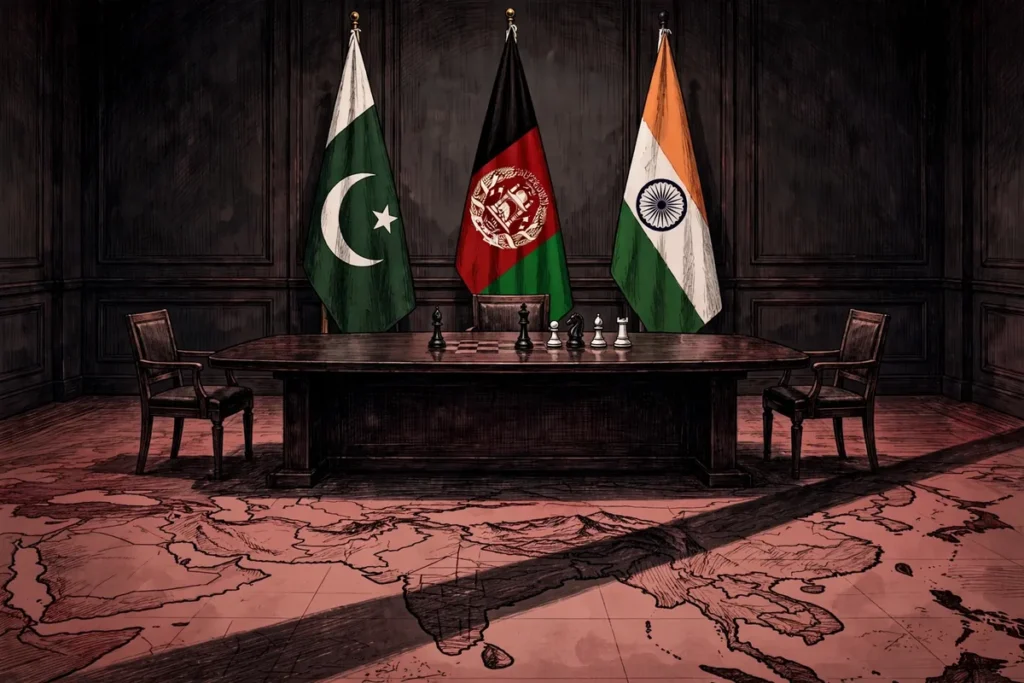
Here the picture splits between what Pakistan claims and what can be established. Islamabad has repeatedly accused India of funding, arming and sheltering militants in Afghanistan, and of turning Kabul into what Khawaja Asif called “a colony of India” and “an Indian proxy”. Pakistan’s military labels Baloch militants “Fitna al-Hindustan” — the Indian faction — implying Delhi’s backing, and the October 1 strike statement invoked the same framing. The Afghan Taliban and the Indian government both deny the allegations. Reuters, which first reported the accusations in detail, could not independently confirm any Indian material support for the TTP.
What is confirmed is that India has been deepening its relationship with the Taliban government. Delhi upgraded its Kabul technical mission to a full embassy in October 2025, the Taliban installed Mufti Noor Ahmad Noor as chargé d’affaires in New Delhi in January 2026, and Indian foreign ministry officials attended the Taliban’s “Victory Day” celebrations at the Afghan embassy on August 15, 2026. India does not formally recognise the Taliban — only Russia has done so — but the diplomatic embrace is public and undeniable. Analysts generally read Delhi’s engagement as an attempt to protect its $2–3 billion in past development investments in Afghanistan and to balance Pakistani and Chinese influence there.
For readers in the West, the honest version is this: India’s backing of the TTP is Pakistan’s claim, denied by India, and unconfirmed by any independent source. India’s diplomatic shadow over the conflict — and Islamabad’s conviction that Delhi is behind Kabul’s intransigence — is real and shapes Pakistani decision-making whether or not the underlying allegation is true. That perception is itself a driver of the war.
What the Pakistan-Afghanistan war means for US, UK and EU readers
The most immediate effect is on travel and personal security. The UK Foreign, Commonwealth and Development Office advises against all travel to within 10 miles of the Pakistan–Afghanistan border, all of Balochistan and most of Khyber Pakhtunkhwa, including Peshawar, Kohat and the Waziristans. Travelling against FCDO advice typically invalidates travel insurance. The US State Department keeps Afghanistan at Level 4: Do Not Travel, and has no consular presence in Kabul. For the EU, the conflict surfaced diplomatically when Brussels expressed concern over civilian deaths in the October 1 strikes, called for restraint and compliance with international humanitarian law, and — notably — called on the Afghan de facto authorities to take effective action against terrorist groups operating in and from Afghanistan.
There is also a trade and humanitarian dimension. The October 18 border closures at Torkham, Chaman and three other crossings choked one of the main trade arteries between South and Central Asia, stranding hundreds of trucks and threatening commodity shortages in Afghanistan. Longer-term, both countries’ refugee dynamics matter for Europe: Pakistan has pressed ahead with deportations of Afghan nationals, while renewed fighting raises the risk of fresh displacement toward Iran, Turkey and ultimately the EU’s external borders.
One context note, handled carefully: Pakistan and India are both nuclear-armed states, and analysts have noted the rarity of two nuclear neighbours engaging in open conventional hostilities — which is part of why diplomats in Washington, London and Brussels are watching the Durand Line so closely.
What happens next along the Durand Line
Three threads will decide whether the war burns on or pauses. The first is mediation. Qatar brokered a brief truce earlier in October that has already collapsed, and no verified ceasefire is in place as of October 19, 2026. Doha and other channels remain the most plausible route back to talks — watch for any announcement of renewed negotiations, because truces in this conflict have so far lasted only weeks to months.
The second is Pakistan’s domestic arithmetic. With militant attacks running at a 12-year high and a government that has publicly declared “open war”, Islamabad has boxed itself into a position where each TTP attack inside Pakistan creates pressure for another cross-border strike — while each strike’s civilian toll, confirmed by UN monitors, hardens the Taliban’s retaliation. It is a self-sustaining cycle, and it is the single biggest obstacle to de-escalation.
The third is the Durand Line itself. No Pakistani government can afford to be seen conceding on a border it treats as settled; no Afghan government — Taliban included — can afford to be seen accepting one it calls illegitimate. Until one side changes its fundamental position, the frontier will keep producing the clashes that ignite everything else. That is why this dispute, which began with a one-page agreement in 1893, remains the most dangerous border in South Asia.
Frequently asked questions
Is the TTP the same as the Afghan Taliban?
No. The TTP — Tehrik-i-Taliban Pakistan — is a Pakistan-focused militant group that seeks to overthrow Pakistan’s government, while the Afghan Taliban governs Kabul. They share ideological roots, but they are separate organisations. The UN has assessed that the TTP operates from Afghan territory with the acquiescence of the Taliban authorities, a charge Kabul denies.
What is the Durand Line and why does it matter?
The Durand Line is the roughly 2,600-kilometre border drawn in 1893 between British India and Afghanistan during the Great Game. Afghanistan has never recognised it as a legitimate international boundary because it divides Pashtun and Baloch tribal communities. Pakistan treats it as settled and has fenced large stretches of it — the fencing itself has become a source of clashes.
Did Pakistan carry out airstrikes in Afghanistan?
Yes. Pakistan struck targets in Nangarhar, Paktika, Khost, Kabul, Kandahar and Paktia in February 2026, in Kunar and Helmand on October 1, and again in Nangarhar and Paktika on October 17–18. Islamabad says the targets were TTP and Islamic State camps; UN monitors confirmed civilians were killed in the October strikes.
How many people have been killed — and were civilians harmed?
Casualty claims from both governments are contested and cannot be independently verified. What is confirmed: UNAMA says more than 1,100 civilians have been killed or injured in cross-border armed violence in Afghanistan so far in 2026, and it verified 10 civilians killed — most of them children — in the October 1 strikes. The 18 deaths claimed by Kabul and the 70 militants claimed by Pakistan from the October 17–18 strikes are unconfirmed.
Has any ceasefire held between Pakistan and Afghanistan?
Not for long. A truce in March 2026 brought roughly three months of relative calm, and Qatar brokered a brief halt earlier in October that collapsed within weeks. As of October 19, 2026, there is no verified ceasefire in place, and the main border crossings remain closed.
Sources
- Reuters: What has turned Afghan Taliban-Pakistan partners into foes
- UNAMA: UNAMA confirms civilian casualties in Afghanistan
- Outlook India: TTP border tensions — why Pakistan and the Taliban are at odds
- CNBC TV18: Operation Ghazab Lil Haq — what Pakistan’s campaign entails
- UK FCDO: Pakistan travel advice
- CENO: Afghanistan’s terrorism ecosystem under Taliban rule
Discussion 0
Share analysis, corrections, or context. Be civil — comments are moderated.