WarBrief Live | October 5, 2026 | Event Preview
Finance ministers and central bank governors from 191 countries will converge on Bangkok from October 12 to 18, 2026, for the Annual Meetings of the International Monetary Fund (IMF) and the World Bank Group — the premier forum for global economic policymaking, now overshadowed by the Iran war’s shock to oil, shipping, and bond markets. Here is what to expect in Bangkok: the agenda, the attendees, the flagship launches, and the war-economy questions no delegate can avoid.
Key Takeaways
- The 2026 Annual Meetings run October 12–18 at Bangkok’s Queen Sirikit National Convention Center — the first time Thailand has hosted since 1991, with more than 15,000 delegates expected from 191 countries.
- Host Thailand has set the theme “Thailand’s New Horizons: Empowering People, Building Resilience,” built around digital and AI transformation, resilience in a fragmented world, climate finance, and demographic change.
- The Bank of Thailand will unveil the “Bangkok Blueprint,” a digital-finance policy framework co-developed with the IMF and World Bank to fight fraud and strengthen trust in the digital economy.
- The Iran war will dominate the economic agenda: Brent is trading near $100 a barrel, the G7 is releasing up to 100 million barrels from emergency stocks, and the IMF says the energy shock “is not over yet.”
What are the IMF–World Bank Annual Meetings 2026?
The Annual Meetings are the yearly gathering of the Boards of Governors of the IMF and the World Bank Group — the finance ministers and central bank governors of the 191 member countries, meeting to set the direction of the global financial system. Every third year the meetings leave Washington for a member country; the formal business — the plenary of the Boards of Governors, the ministerial-level Development Committee, and the IMF’s International Monetary and Financial Committee — sits alongside a week of seminars, press conferences, research launches, and bilateral deal-making.
This year’s meetings will be chaired by Paraguay. Carlos Carvallo Spalding, president of the Central Bank of Paraguay, chairs the Board of Governors, with the plenary session scheduled for October 16, according to the World Bank’s official programme. It is the first time Paraguay has held the chair in more than 70 years, the Asunción Times reported.
The week opens, by tradition, with a curtain-raiser: IMF Managing Director Kristalina Georgieva delivers a pre-meetings speech at Singapore’s Lee Kuan Yew School of Public Policy on October 7, followed by a fireside chat with President Tharman Shanmugaratnam, livestreamed on IMF.org, according to the IMF’s October 1 press briefing transcript.
Who is attending and what is on the agenda in Bangkok?
Thai officials expect more than 15,000 participants — some Thai outlets put the figure as high as 20,000 — including finance ministers, central bank governors, business leaders, academics, civil society representatives, and journalists from all 191 IMF member countries, the Thai News Agency reported. Thailand is only the third country outside the United States to host the meetings more than once, according to the IMF’s joint press release of March 4, 2026.
As host, Thailand has framed the week around the theme “Thailand’s New Horizons: Empowering People, Building Resilience,” organised into four policy pillars: digital transformation and artificial intelligence; resilience — and the role of middle powers — in an increasingly fragmented world; new financial architecture for climate adaptation; and demographic change and the longevity economy. Thai outlets phrase the pillars slightly differently; the substance is consistent across sources.
The flagship host-country launch is the “Bangkok Blueprint,” a digital-finance policy framework co-developed by the Bank of Thailand with the IMF and the World Bank, to be unveiled during the meetings. The framework is meant to serve as a “policy compass” for building trust in the digital financial era, covering policy and legal foundations, fraud prevention and detection, inter-agency and international cooperation, and public financial literacy and digital resilience, according to the Thai News Agency and OpenGov Asia. One Thai outlet described it as a 12-point framework.
The World Bank’s public programme, streamed on World Bank Live, is expected to include sessions on mobilising private capital, AI and development, a civil society town hall with World Bank President Ajay Banga, and a joint IMF–World Bank leadership session — with dates and speakers to be announced closer to the meetings.
On the analytical side, the Fund’s October flagship reports land during the week. Chapters of the October 2026 World Economic Outlook, Fiscal Monitor, and Global Financial Stability Report are being released from October 5 — on corporate-tax spillovers, cost-of-living lessons, and hedge-fund risks — with the full WEO expected mid-October.
Background and timeline
- January 27, 2026: Thailand officially launches host-country preparations at the Queen Sirikit National Convention Center and unveils the meeting theme.
- March 4, 2026: The IMF, World Bank, Thai Ministry of Finance, and Bank of Thailand issue a joint press release confirming October 12–18, 2026, at QSNCC.
- July 15, 2026: The Thai News Agency reports final preparations, with more than 15,000 participants expected from 191 countries.
- August 2026: Thai outlets detail the four policy pillars and the Bangkok Blueprint digital-finance framework.
- September 9, 2026: FinTech Global, citing the Bangkok Post, reports on the central bank’s digital-fraud framework ahead of the meetings.
- October 1, 2026: IMF spokesperson Julie Kozack briefs the press: bond markets functioning “in an orderly manner,” but the energy shock “is not over yet.”
- October 5, 2026: The first October WEO, Fiscal Monitor, and GFSR chapters are released.
- October 7, 2026: Kristalina Georgieva delivers the curtain-raiser speech in Singapore, with a fireside chat alongside President Tharman Shanmugaratnam.
- October 12–18, 2026: The Annual Meetings at QSNCC, Bangkok; plenary of the Boards of Governors on October 16.
- October 15–16, 2026: EU leaders meet in Brussels — with the frozen Russian assets debate back on the agenda in the middle of meetings week.
How is the Iran war shaping the 2026 meetings?
No agenda item exists in a vacuum this year: the Iran war’s aftershocks will frame almost every economic discussion in Bangkok, from inflation to debt to energy security.
Oil is the most visible pressure point. Brent crude traded around $100–$106 a barrel in early October, with WTI near $90–$93, and physical markets are “exceptionally tight,” the Wall Street Journal reported on October 4–5. In response, the G7 agreed to release up to 100 million barrels of crude and diesel from emergency stocks, while OPEC+ allies held output steady at their meeting. Read our coverage of the G7’s 100-million-barrel emergency release and of OPEC+ holding output steady as the Hormuz war keeps Gulf production below target.
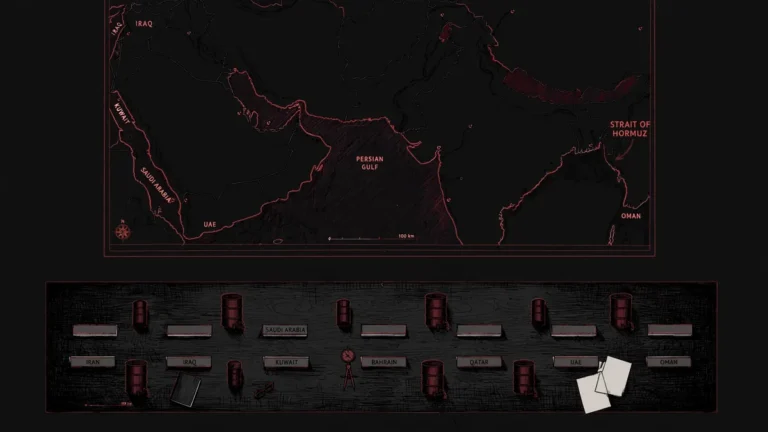
The shipping war in the Strait of Hormuz explains the tightness. Crude flows through Hormuz reached 16.5 million barrels per day in September — up from lows of 5 million bpd in March after the war broke out — according to Kpler data cited by the Journal and OilPrice.com. In the past two weeks, nine commercial vessels were attacked near the strait, leaving two crew injured and one seafarer dead, according to IMO and UKMTO figures cited by the New York Post. Sailors are being offered up to $25,000 per trip to move oil through the danger zone.
The Fund itself is blunt about the outlook. At her October 1 briefing, IMF spokesperson Julie Kozack said the energy shock “is not over yet”: diesel, gasoline, and jet fuel prices are up 60–97% relative to pre-conflict levels, reflecting the war and limited global refining capacity, Reuters reported. The 10-year US Treasury yield hit 5.34% on October 1 — its highest since 2002 — though Kozack said bond markets were still functioning “in an orderly manner.”
The IMF’s baseline, set on September 10, keeps 2026 global growth at around 3%: the Middle East energy shock was weathered “better than feared,” Reuters reported, but risks remain high — elevated energy prices, mounting debt pressures, and stalled disinflation. The full October WEO, due mid-month, will show whether that baseline survives the autumn.
War financing is the other fault line. EU leaders meet on October 15–16 with Ukraine funding back on the table: Belgium still opposes using the roughly €185 billion in Russian central bank assets held at Euroclear — of about €210 billion immobilised across the EU — while more than 120 MEPs wrote to EU leaders in September urging the issue be reopened, Brussels Signal and Reuters reported. The Commission’s “reparations loan” structure remains unresolved, and the €90 billion EU loan for 2026–27 agreed in December 2025 is already seen as insufficient. Expect the sanctions-and-finance debate to echo through the Bangkok corridors — see our sanctions hub for the running picture.
By the numbers
| Metric | Figure | Status | Source |
|---|---|---|---|
| Meeting dates | October 12–18, 2026 | CONFIRMED | IMF / Bank of Thailand |
| Expected participants | 15,000+ from 191 countries | CONFIRMED | Thai News Agency |
| IMF 2026 global growth baseline | ~3% | CONFIRMED | Reuters, Sept 10, 2026 |
| 10-year US Treasury yield (Oct 1) | 5.34% — highest since 2002 | CONFIRMED | Reuters, Oct 1, 2026 |
| Fuel price rise vs pre-conflict | Diesel, gasoline, jet fuel up 60–97% | CONFIRMED | IMF via Reuters, Oct 1, 2026 |
| Brent crude, early October | $100–$106 per barrel | REPORTED | WSJ / OilPrice.com |
| G7 emergency stock release | Up to 100 million barrels | REPORTED | WSJ, Oct 4–5, 2026 |
| Hormuz crude flows, September | 16.5m bpd (vs 5m bpd March low) | REPORTED | Kpler via WSJ / OilPrice.com |
| Vessels attacked near Hormuz (2 weeks) | 9 — two injured, one seafarer dead | REPORTED | IMO / UKMTO via NY Post |
| Russian central bank assets at Euroclear | ~€185bn of ~€210bn EU-wide | REPORTED | Brussels Signal / Reuters |
CONFIRMED figures are corroborated by two or more independent sources; REPORTED figures rely on a single source or commercial data and should be treated as provisional.
What could actually be decided in Bangkok?
The meetings rarely produce binding resolutions, but they set the terms of the economic debate for the year ahead. The October WEO, Fiscal Monitor, and GFSR will frame how governments talk about debt, inflation, and financial risk into 2027 — watch for the Fund’s updated language on energy-driven inflation and on the fiscal space of oil-importing economies.
The Bangkok Blueprint launch is the concrete deliverable to watch: if the IMF and World Bank formally adopt the framework, it becomes a reference standard that finance ministries and regulators worldwide can adapt for digital-fraud prevention. The World Bank’s public sessions — on private-capital mobilisation, AI and development, and the Banga town hall — typically preview the Bank’s lending priorities for the coming year.
Bilateral business matters too. Annual Meetings week is when debt-restructuring talks under the Common Framework advance, when central bank swap lines are quietly renewed, and when finance ministers hold the corridor conversations that surface later as policy. With an EU decision on frozen Russian assets landing mid-week in Brussels, expect the sanctions-finance nexus to feature heavily in those corridors.
What this means for US/UK/EU readers
Fuel and heating bills. With Brent near $100 and diesel and gasoline near record highs, the G7’s 100-million-barrel release is aimed squarely at the pump price — but physical tightness means relief, if it comes, will be gradual. European diesel drivers and US commuters should expect elevated prices through the autumn.
Borrowing costs. A 10-year Treasury at 5.34% — the highest since 2002 — feeds into mortgages, car loans, and corporate credit on both sides of the Atlantic. The IMF’s reassurance that bond markets are “orderly” matters precisely because disorderly bond markets would make everything more expensive, fast.
Markets and savings. The mid-October WEO release and any Middle East headlines during meetings week are the two scheduled volatility events to watch; pension funds and savers are exposed to the bond repricing already under way.
Travel and trade. Thailand expects a tourism and services boost from 15,000+ delegates. For everyone else, the channel is freight: elevated jet fuel and shipping risk keep upward pressure on air cargo rates and, eventually, consumer prices.
WarBrief’s markets coverage is educational only and is not financial advice. Figures cited are reported by the outlets named and may move quickly; check live prices before making any financial decision.
What to watch next
- October 7: Georgieva’s curtain-raiser speech in Singapore — the traditional signal of the Fund’s messaging for the week.
- October 8: GFSR chapter on tokenisation and the remaining WEO chapter releases.
- October 12: Meetings open at QSNCC; watch the opening press conferences for the war-economy framing.
- October 15–16: EU leaders in Brussels decide — or defer — the frozen Russian assets question, mid-meetings week.
- October 16: Plenary of the Boards of Governors, chaired by Paraguay.
- Mid-October: Full October 2026 World Economic Outlook release — the number that resets the global growth debate.
Frequently asked questions
What is the purpose of the IMF and World Bank Annual Meetings?
The Annual Meetings bring together the finance ministers and central bank governors of the 191 member countries to discuss the world economy, set institutional priorities, and release the year’s flagship economic analysis. They are the main annual forum where global financial policy is coordinated — alongside the formal sessions, ministers hold bilateral meetings that often produce debt, aid, and trade decisions.
Who attends the IMF and World Bank Annual Meetings?
Delegations from all 191 IMF member countries — typically led by finance ministers and central bank governors — plus World Bank and IMF staff, private-sector leaders, academics, civil society organisations, and journalists. The 2026 meetings in Bangkok are expected to draw more than 15,000 participants.
Why is the 2026 meeting in Bangkok?
The Annual Meetings are held in a member country every third year rather than in Washington. Thailand is hosting for the second time — the first was in 1991 — making it only the third country outside the United States to host more than once. The meetings run October 12–18, 2026, at the Queen Sirikit National Convention Center.
What is the difference between the Spring Meetings and the Annual Meetings?
Both bring the same governors together, but the Spring Meetings (April, always in Washington) are shorter and more technical, while the Annual Meetings are the full week-long event with the plenary of the Boards of Governors, the Development Committee ministerial, and the year’s major report launches. Every third year the Annual Meetings move to a host country.
Can the public watch the Annual Meetings?
Yes, in part. The World Bank streams the plenary, town halls, and flagship seminars live on World Bank Live with no registration required, and the IMF streams its press briefings and the Managing Director’s curtain-raiser speech. The ministerial sessions and bilateral meetings themselves are closed.
Sources
- IMF: Joint Press Release on the 2026 Annual Meetings (March 4, 2026)
- Bank of Thailand: 2026 Annual Meetings announcement (March 4, 2026)
- IMF: Press Briefing Transcript, October 1, 2026
- Reuters: Bond markets functioning in orderly manner, IMF says (October 1, 2026)
- Reuters: IMF says global growth on track to reach 3% in 2026 (September 10, 2026)
- Wall Street Journal: OPEC allies hold oil output steady amid Middle East tensions
- World Bank Live: 2026 Annual Meetings programme
- Thailand NOW: Thailand prepares for 2026 IMF–World Bank Annual Meetings