
WarBrief Live | November 19, 2026 | Geopolitics
Modi’s visit: Toronto and Ottawa
Two-way trade in 2025
Trade goal by 2030
Trade talks since 2010
Narendra Modi visits Canada on December 11–12, 2026, for a two-day trip to Toronto and Ottawa, with a defence agreement likely to be announced and a Canada–India trade deal on the cusp of being finalised. The visit, confirmed by India’s High Commissioner to Canada, Dinesh K. Patnaik, on November 18, is Modi’s first official bilateral visit to Canada since the two countries’ diplomatic rupture in 2023 — and it caps a year in which Ottawa and New Delhi have moved from open hostility to what Patnaik calls an “unprecedented degree of mutual trust”.
What is actually on the table, and what is still unknown, matters more than the ceremony. The defence agreement’s contents have not been made public, and the trade deal — the Comprehensive Economic Partnership Agreement, or CEPA — is described as nearly finished rather than finished. This preview sets out what is confirmed, what is only reported, and what to watch in the three weeks before Modi lands.
Key Takeaways
- Modi visits Toronto and Ottawa on December 11–12, 2026 — his first official bilateral visit to Canada since the diplomatic rupture of 2023.
- A defence agreement is likely to be announced during the visit, India’s High Commissioner said on November 18 — but its terms have not been made public.
- The Comprehensive Economic Partnership Agreement is “on the cusp” of finalisation after 16 years of talks, relaunched in March 2026.
- Two-way trade was $30.4 billion in 2025; the two governments aim to reach $70 billion a year by 2030.
When is Modi visiting Canada — and what is on the agenda?
Modi will spend December 11–12, 2026 in Canada, with stops in Toronto and Ottawa, according to reporting by The Globe and Mail on High Commissioner Patnaik’s remarks. The visit was first announced on October 16, after a telephone conversation between Modi and Canadian Prime Minister Mark Carney, in which the two leaders agreed to build on the momentum in ties and work towards concrete outcomes in trade, energy, technology, security and people-to-people links.
Patnaik disclosed the likely defence announcement while addressing a gathering in Ottawa organised by the Centre for Strategic Statecraft and the Canadian International Council on November 18. The Hindu reported that Patnaik said a defence agreement would likely be signed during the trip, and that the two countries are in the final stages of negotiating the Comprehensive Economic Partnership Agreement. “We are on the cusp of finalising it,” he said.
The timing is deliberate. The visit comes days before this year’s G20 summit in Miami on December 14–15, which both leaders will attend, and it closes a year of steady diplomatic repair. Carney visited India in March 2026 — the first visit to India by a Canadian prime minister in eight years — and the two governments have since held six rounds of trade talks, the latest in New Delhi in early November.
What would the India–Canada defence pact cover?
The honest answer is that nobody outside the two governments knows yet. Patnaik said a defence agreement is likely, but neither he nor any official statement has described its text or its operational commitments. Any account of what the pact “will” cover is, at this stage, reported expectation — not a confirmed fact.
What can be said with confidence is the framework around it. The two countries have already launched negotiations towards a General Security of Information Agreement, which would provide a framework for sharing intelligence and information across secure channels — the kind of arrangement that underpins deeper defence-industrial cooperation, cyber security, maritime security, space and AI work, according to the Asia Pacific Foundation of Canada. Patnaik himself framed the reset in sweeping terms, saying the two countries are “no longer talking about a reset of their derailed relations, but rather an overarching boost in ties spanning defence, space, nuclear energy, deep tech, trade, and the mobility of people”.
The defence strand also fits Modi’s wider security agenda in the Indo-Pacific. At the Quad leaders’ meeting in Manila this month, Modi joined the United States, Japan and Australia in recommitting to regional security cooperation — see our report on the Quad’s Manila comeback. A Canada–India defence agreement would add a second bilateral leg to that posture, linking New Delhi to a NATO member with Arctic and Pacific coastlines.
| Metric | Figure | Source |
|---|---|---|
| Visit dates | December 11–12, 2026 (Toronto and Ottawa) | The Hindu; The Globe and Mail |
| Two-way trade, 2025 | $30.4 billion | The Globe and Mail |
| Trade goal | $70 billion a year by 2030 | Government of Canada; APF Canada |
| CEPA talks | Launched 2010; relaunched March 2026; six rounds held | APF Canada |
| Uranium deal, March 2026 | $2.6 billion for about 22 million pounds of uranium | The Globe and Mail |
| Team Canada mission, October 2026 | About 300 delegates; 34 deals worth about C$300 million | APF Canada |
| Defence agreement terms | Not publicly specified | The Hindu |
All figures above are confirmed in the cited reporting. The defence agreement’s contents are not yet public — any description of what it covers is reported expectation, not confirmed text.
What is the CEPA — and why has it taken 16 years?
The Comprehensive Economic Partnership Agreement is the trade deal at the centre of the visit. Canada and India have been in trade talks since 2010. The negotiations stalled in 2017 and were shut down in 2023, after Ottawa accused New Delhi of involvement in the killing of a Canadian Sikh activist in Surrey, British Columbia. They were formally relaunched in March 2026, when Carney visited India, and negotiators have since completed six rounds of talks. If the agreement is concluded before the December visit — after just nine months of fresh negotiations — it would be one of the fastest major trade deals Canada has ever negotiated, according to the Asia Pacific Foundation of Canada.
The deal is meant to go beyond tariff cuts on goods and services, with clauses on investment, intellectual property, rules of origin and non-tariff barriers. The hard parts are familiar. Agriculture is the sharpest: India is the second-biggest export market for Canadian pulses, but Indian tariffs on Canadian pulses have ranged from 10 per cent on lentils to 30 per cent on yellow peas, and Canadian exporters also face unpredictable sanitary and phytosanitary rules. Patnaik has suggested a quota system similar to the one Australia secured for lentils under its trade agreement with India. Industrial goods raise a different problem — rules of origin that must account for North American supply chains, in which production can span Canada and the United States.
Both sides have recent precedents to point to. The United Kingdom–India free trade agreement phases duties on eligible British vehicles down to 10 per cent from up to 110 per cent, and the European Union–India agreement concluded in January 2026 aims to cut duties to 30 per cent on luxury cars under an annual quota. International Trade Minister Maninder Sidhu has said Canada wants a trade agreement signed before the end of the year, and Sidhu has met Indian Commerce Minister Piyush Goyal ten times since May 2025. The political will is visible; whether the remaining chapters close in the next three weeks is the visit’s first real test.
How did India–Canada relations break down — and how were they rebuilt?
The rupture was fast and total. In June 2023, Sikh activist Hardeep Singh Nijjar was murdered in Surrey, British Columbia. Three months later, then-prime minister Justin Trudeau said Canada had evidence linking Indian government agents to the murder. In 2024, the Royal Canadian Mounted Police said there was evidence of a wider campaign of intimidation and violence by agents with links to the Indian government, and expelled the high commissioner and five diplomats. India expelled Canadian diplomats in return. Both countries had earlier expelled each other’s high commissioners and reduced their diplomatic presence.
The rebuild began at the G7 summit in Kananaskis, Alberta, on June 17, 2025, when Modi — attending on Carney’s invitation, his first visit to Canada in a decade — held a bilateral meeting with Carney. The two leaders agreed to designate new high commissioners and resume senior and working-level mechanisms on trade, people-to-people contact and connectivity. Patnaik took over as India’s High Commissioner to Ottawa in September 2025, and the mutual reinstatement of high commissioners followed. At the G20 summit in South Africa in November 2025, the two leaders agreed to launch formal trade talks covering goods and services, agriculture, digital trade, mobility and sustainable development.
- June 2023: Hardeep Singh Nijjar murdered in Surrey, British Columbia.
- September 2023: Prime Minister Trudeau accuses India of involvement; relations collapse.
- 2024: RCMP alleges a wider intimidation campaign; both sides expel diplomats.
- June 17, 2025: Modi and Carney meet at the G7 in Kananaskis and agree to reappoint high commissioners.
- September 2025: Dinesh K. Patnaik takes over as India’s High Commissioner to Ottawa.
- November 2025: Modi and Carney agree at the G20 in South Africa to launch formal trade talks.
- March 2026: Carney visits India; $2.6 billion uranium deal and commercial agreements worth more than $5.5 billion signed.
- May 2026: Indian Commerce Minister Piyush Goyal visits Canada with a large business delegation.
- October 2026: Team Canada trade mission of about 300 delegates visits India; 34 commercial agreements worth close to C$300 million.
- November 18, 2026: Patnaik announces the likely defence agreement and says CEPA is “on the cusp” of finalisation.
Patnaik’s own account of the turnaround is striking. “The fact is that in the core strategic concerns of Canada and India, there is no conflict,” he said in Ottawa. “Still, all it took for the entire bilateral relationship to be derailed was the fringe diaspora issue.” He described a deliberate repair effort — “a series of meetings between senior Ministers, NSAs of both countries, and agencies at all levels” — and said the two countries had moved “from a complete lack of trust over a year ago to an unprecedented degree of mutual trust”. The visit is the public proof of that claim; whether the trust survives the still-unresolved Nijjar investigation is the question neither side has answered.
What the Modi visit means for US, UK and EU readers
For American readers, the visit is a data point in Canada’s deliberate turn away from dependence on the United States. The Liberals have set out to double non-US exports over the next decade, and a trade deal with India — the world’s most populous country — is the largest single piece of that strategy. Energy is part of the same story: Canada is under active consideration as a crude supplier for India’s newer refineries, which are built to process heavy crude, and the Strategic Energy Partnership signed in March 2026 explicitly covers increased Indian imports of Canadian crude and liquefied natural gas. Modi then flies from Ottawa to the G20 in Miami, so Washington will be watching the visit’s outcomes within days.
For British readers, the visit echoes the United Kingdom’s own recent deal-making with India — the UK–India free trade agreement is the template both sides cite when they talk about what a Canada–India deal could deliver, including on cars and professional services. For European readers, the parallel is the EU–India agreement concluded in January 2026. Canada has also been signing partnership deals across the Atlantic in its own right, including the EU–Canada summit in Montreal in October, where trade diversification and critical minerals topped the agenda. The Modi visit is the Indo-Pacific half of the same Canadian strategy: new markets, new energy buyers, new defence partners — all hedges against a world in which the old certainties no longer hold.
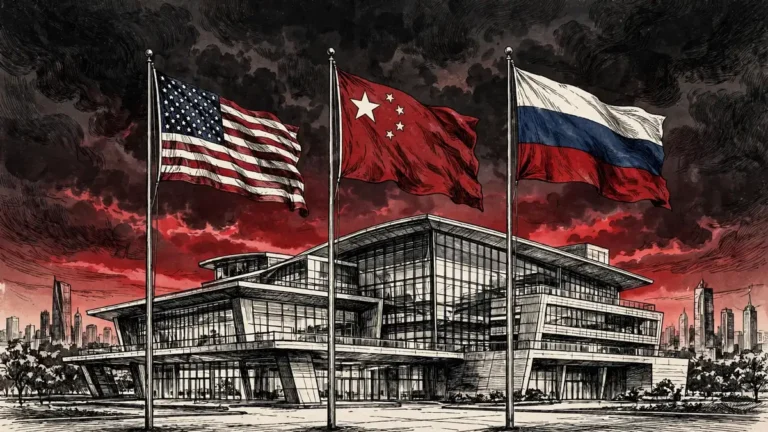
There is also a direct security angle for all three audiences. A General Security of Information Agreement between Canada and India would create a framework for sharing intelligence across secure channels, supporting cooperation on defence-industrial production, cyber security, maritime security, space and AI. That is the kind of quiet institutional plumbing that rarely makes headlines but shapes what two democracies can do together in a crisis — and it arrives in the same month as the first-ever trilateral meeting of Trump, Putin and Xi in Shenzhen, a reminder of how crowded the diplomatic season has become.
What to watch before December 11
Three things will decide whether the visit is remembered as a milestone or a photo opportunity. First, whether the CEPA text is actually concluded before Modi arrives — Patnaik’s “on the cusp” leaves room for a signing ceremony, a political announcement, or a last-minute slip into 2027. Second, whether either government briefs the defence agreement’s scope in advance: a pact with published terms is a commitment; a pact announced without them is a headline. Third, the choreography around the visit itself — the Toronto business events, the Ottawa meetings, and the tone of the joint statement — which will show whether the “unprecedented trust” Patnaik describes extends to the still-sensitive questions around the Nijjar case. Our Country Profiles hub will carry updates as the visit approaches.
Frequently asked questions
When is Modi visiting Canada?
December 11–12, 2026, with stops in Toronto and Ottawa. It is his first official bilateral visit to Canada since the diplomatic rupture of 2023; he previously attended the G7 summit in Kananaskis, Alberta, in June 2025.
What is the India–Canada defence pact?
A defence agreement that India’s High Commissioner to Canada, Dinesh K. Patnaik, said on November 18 is likely to be announced or signed during Modi’s visit. Its terms have not been made public, so what it will cover is not yet confirmed.
What is CEPA?
The Comprehensive Economic Partnership Agreement, a Canada–India trade deal under negotiation since 2010. Talks stalled in 2017, were paused in 2023, and were relaunched in March 2026. Patnaik says the agreement is “on the cusp” of finalisation.
Why did India–Canada relations break down?
The killing of Sikh activist Hardeep Singh Nijjar in June 2023, followed by then-prime minister Justin Trudeau’s accusation that Indian government agents were involved, led to mutual expulsions of diplomats. Ties were rebuilt from June 2025, starting with the Modi–Carney meeting at the G7 in Kananaskis and the reinstatement of high commissioners.
How much do Canada and India trade?
Two-way goods and services trade was $30.4 billion in 2025. The two governments aim to double that to $70 billion a year by 2030.
Sources
- The Hindu: India, Canada eye defence pact during Modi visit in December
- The Globe and Mail (via Europe Says): Canada, India close to finalizing free trade deal, envoy says
- Asia Pacific Foundation of Canada: Explainer — What a Canada–India CEPA Can (and Cannot) Solve
- The Northern Current: Canada, India close to free trade deal, Indian high commissioner says
- Moneycontrol: PM Modi to visit Canada on December 11-12 to boost bilateral ties
Discussion 0
Share analysis, corrections, or context. Be civil — comments are moderated.