
WarBrief Live | November 20, 2026 | Breaking Analysis
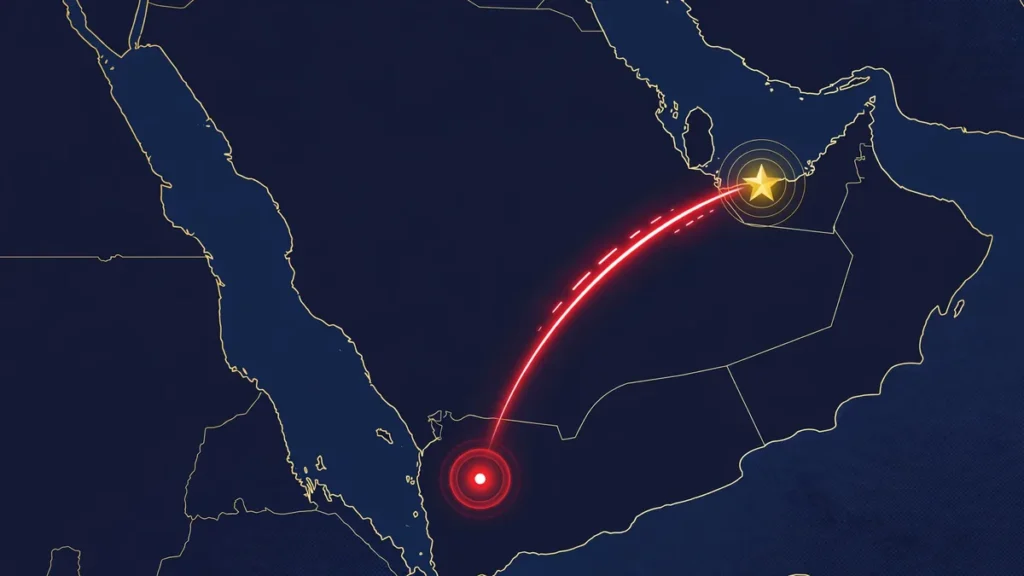
On November 19, 2026, a Houthi missile damaged the PIF Tower in Riyadh’s King Abdullah Financial District, blowing out windows across seven to eight floors of Saudi Arabia’s tallest skyscraper and the headquarters of its $1.15 trillion sovereign wealth fund. Saudi Civil Defence confirmed material damage and no injuries, while three sources told Reuters the building was struck directly by an incoming missile.
385 m
Height of the PIF Tower, Riyadh’s tallest building
7-8 floors
Reported damaged, windows blown out (sources via AFP)
0 injuries
Confirmed by Saudi Civil Defence
$1.15 trillion
PIF assets under management (Sovereign Wealth Fund Institute)
Key Takeaways
- A Houthi attack on November 19 damaged the PIF Tower, the 80-storey headquarters of Saudi Arabia’s Public Investment Fund in Riyadh’s financial district. No injuries were reported.
- Saudi authorities say air defences dealt with a missile threat and attribute the damage to debris; three sources told Reuters the tower was struck directly by a Houthi missile.
- It is the second landmark in the King Abdullah Financial District to be hit in 11 days, after the Aramco tower on November 8.
- Saudi Arabia warned on November 20 that attacks on Riyadh “will not be tolerated”, and Reuters reported Saudi officials expect the campaign against the Houthis to run for up to six months.
What happened at the PIF Tower on November 19?
In the early hours of Thursday, November 19, journalists in Riyadh reported a powerful blast in the capital. Hours later, Saudi Arabia’s Civil Defence agency confirmed that a Houthi attack had damaged a tower in the King Abdullah Financial District (KAFD), causing material damage to several floors and to nearby buildings, but no injuries. The agency’s statement did not name the building, but a photograph published by the state news agency SPA showed the PIF Tower, and witnesses told AFP the damage was to the Public Investment Fund’s headquarters.
The damage is visible and extensive. According to three sources who spoke to AFP and Reuters, windows were blown out across seven to eight floors of the 80-storey tower and sections of its metal facade were bent. Two adjacent buildings also sustained damage, with glass facades shattered. The tower, at 385 metres (1,263 feet), dominates the financial district, which was closed to visitors after the strike.
The Saudi-led coalition’s spokesman, Major-General Turki al-Maliki, said forces had responded to a Houthi missile threat launched towards Riyadh, and that an initial assessment indicated the impact of debris, with material damage being surveyed. The coalition said it had also intercepted ballistic missiles aimed at the southern region bordering Yemen, destroyed a ballistic missile launchpad in Dhamar, about 100 kilometres south of Sanaa, and intercepted two drones. The Houthis said they had targeted Riyadh’s international airport and the capital’s financial district with cruise missiles, twice on Thursday, first at dawn and again in the evening.
Who is behind the strike – and what did each side claim?
The Houthis, the Iran-aligned armed group also known as Ansar Allah, claimed the attack. Their military spokesman, Yahya Saree, said in a post on X that the group had targeted Riyadh’s airport and financial district with cruise missiles. The claim came hours after the blast, and the group said it had struck the financial centre twice in the day.
Saudi authorities have not confirmed a direct hit. The coalition’s public account is that its defences dealt with a missile threat and that the damage came from debris. Three people familiar with the matter told Reuters the building was struck by an incoming Houthi missile, a version also supported by the scale of the facade damage described by witnesses. The PIF itself acknowledged receiving a Reuters request for comment but did not respond to questions, and the Saudi government did not respond to questions from the Wall Street Journal.
What is confirmed is the damage itself: Saudi Civil Defence confirmed it, SPA published a photograph of it, and multiple witnesses described it independently. What remains disputed is the mechanism – a direct missile impact, as the sources told Reuters, or debris from an intercepted projectile, as the coalition’s initial assessment suggests. That distinction matters for air-defence assessments, but it does not change the outcome: a missile fired from Yemen reached the heart of Riyadh’s financial district.
By the numbers: what is confirmed and what is reported
| Metric | Figure | Source |
|---|---|---|
| PIF Tower height | 385 m (1,263 ft), 80 storeys | CONFIRMED – AFP, Wall Street Journal |
| Floors damaged | Several floors (Civil Defence); 7-8 floors (witnesses) | CONFIRMED / REPORTED – SPA, AFP |
| Injuries | 0 | CONFIRMED – Saudi Civil Defence |
| Ballistic missiles intercepted (south) | 4 (Al Jazeera) / 5 (AFP) | REPORTED – coalition statements differ in reporting |
| Drones intercepted | 2 | REPORTED – Saudi-led coalition via AFP |
| Days between KAFD tower hits | 11 (November 8 to November 19) | CONFIRMED – Wall Street Journal, AFP |
| PIF assets under management | About $1.15 trillion | CONFIRMED – Sovereign Wealth Fund Institute via Arab News |
| Expected Houthi campaign duration | Up to 6 months | REPORTED – Reuters, citing Saudi officials |
Figures marked CONFIRMED are carried by two or more reputable sources or an official statement. Figures marked REPORTED rest on a single source or on accounts that differ between outlets, and should be treated as provisional.
Why the PIF Tower matters: the fund behind Vision 2030
The building hit on November 19 is not a random skyscraper. The PIF Tower houses the headquarters of the Public Investment Fund, Saudi Arabia’s sovereign wealth fund and the financial engine of Vision 2030, Crown Prince Mohammed bin Salman’s programme to diversify the kingdom’s economy away from oil. According to the Sovereign Wealth Fund Institute, the fund manages about $1.15 trillion in assets, making it the world’s fifth-largest sovereign wealth fund, with a stated ambition of reaching $2 trillion by 2030.
That is why the strike lands differently from the dozens of Houthi attacks on Saudi airports and oil facilities over the years. The PIF finances the giga-projects – NEOM, Qiddiya, the Red Sea resorts – that define the kingdom’s post-oil pitch to investors, and its headquarters sits in a district built to showcase Saudi Arabia’s economic ambitions to the world’s biggest financial firms. A missile reaching that building, eleven days after the Aramco tower in the same district was hit, puts the war within sight of the institutions that fund the transformation.
The timing adds a further edge. The explosion was heard shortly after SPA reported that Crown Prince Mohammed bin Salman had met the US Central Command chief, Admiral Brad Cooper, in Riyadh. The meeting underlined the kingdom’s central role in the wider regional war: the United States struck Qeshm Island on November 18 after Iranian attacks on a US radar in Bahrain, and the Strait of Hormuz remains closed, with Qatar warning on November 19 that the closure has become a global crisis for energy security and supply chains.

Background and timeline: eleven days, two towers
The November 19 strike is the latest in a campaign of Houthi drone and missile attacks on Saudi airports, oil facilities and office buildings that has intensified as the wider Iran war has escalated. Riyadh’s airport has been the most heavily targeted: the Houthis first said they targeted it on September 19, and subsequently claimed attacks there on eight days in October and six days in November, according to Reuters.
- September 19, 2026: The Houthis first say they have targeted Riyadh’s international airport.
- October 2026: The Houthis claim attacks on Riyadh airport on eight days.
- November 8, 2026: A Houthi attack hits the Aramco tower in the King Abdullah Financial District, causing visible damage to several floors. Saudi authorities say the damage followed the interception of a projectile.
- November 18, 2026: The United States strikes Qeshm Island after Iranian attacks on a US radar in Bahrain; Iran fires drones at a US airbase in Kuwait.
- November 19, dawn: The Houthis say they target Riyadh’s airport and financial district with cruise missiles; a powerful blast is heard in the capital.
- November 19: The Saudi-led coalition says it dealt with a missile threat towards Riyadh, intercepted ballistic missiles aimed south, destroyed a launchpad in Dhamar and intercepted two drones. Civil Defence confirms material damage to the PIF Tower and nearby buildings, with no injuries. The Houthis say they struck the financial district a second time in the evening.
- November 20, 05:36 UTC: Saudi Arabia warns the Houthis that attacks on Riyadh will not be tolerated and urges the UN Security Council’s permanent members to condemn them.
The Yemen war itself began in 2015, when Saudi Arabia led a coalition to restore the internationally recognised government after the Houthis seized Sanaa. A ceasefire reached in 2022 largely halted the fighting until hostilities resumed this year, and the Houthis have stepped up attacks on Saudi airports, oil infrastructure, military installations and other targets in recent weeks. The Houthis are aligned with Iran, and their campaign now runs in parallel with the wider US-Israel-Iran war that has closed the Strait of Hormuz.
What the Riyadh strike means for US/UK/EU readers
For readers in the United States, Britain and Europe, the strike matters on three fronts. First, energy: the Houthi campaign and the Hormuz closure are already pushing up freight and fuel costs worldwide, and further attacks on Gulf financial and energy infrastructure add risk to oil and gas supplies that European and Asian buyers depend on. Second, markets: the PIF is one of the world’s largest pools of deployable capital, invested across Western equities, infrastructure and technology. A sustained threat to its home base raises the risk premium on Gulf assets and on the giga-projects that employ Western contractors and suppliers.
Third, travel and security: Riyadh’s airport has been claimed as a target on more than a dozen days since September, and the financial district was closed to visitors after the strike. Airlines and travel advisories for the Gulf are worth checking before any trip, and the US and European governments will be watching whether the Houthis can repeat a strike that reaches the capital’s centre. The Saudi warning on November 20, and Reuters’ reporting that Riyadh expects its campaign against the Houthis to continue for up to six months, suggest this is a sustained confrontation rather than a one-off exchange.
Different perspectives
From Riyadh’s perspective, the strike is an attack on civilian and economic facilities by an Iran-backed group, and the kingdom has framed it as a threat to regional and global security, calling on the international community and the UN Security Council to condemn it. The coalition emphasises its interceptions – four or five ballistic missiles destroyed in the south, a launchpad in Dhamar hit, two drones downed – and presents the tower damage as debris from a threat it dealt with.
From the Houthis’ perspective, the strikes are part of a campaign against Saudi Arabia and its allies in the wider regional war, and the group has claimed the financial district as a deliberate target, twice in one day. Houthi-run media also reported Saudi airstrikes on Sanaa and claimed 15 people were killed in strikes on Mocha and Taiz – a claim that has not been independently verified and should be treated as reported, not confirmed.
Analysts watching the Gulf will note a third reading: that the Houthis, whatever the mechanism of the damage, have now shown they can put a weapon into the centre of Riyadh’s financial district twice in eleven days. That changes the risk calculation for investors, insurers and airlines even if no one was hurt, and it raises the pressure on Riyadh to show that its air defences can protect the institutions at the heart of Vision 2030. For background on the earlier intercepts, see our November 15 analysis of the Houthi missiles aimed at Riyadh, and for the wider campaign, our conflict zone profile of the Yemen-Saudi escalation and our profile of Saudi Arabia’s military capabilities. The shipping dimension is covered in our comparison of the Bab el-Mandeb and Strait of Hormuz chokepoints, and the regional escalation in our explanation of the US strikes on Qeshm Island. The full picture is tracked on our Conflict Zones hub.
What to watch next in Riyadh and Yemen
Several things will show whether November 19 was a one-off or a new phase. First, whether the Houthis attempt a third strike on the financial district, and whether Saudi air defences intercept it cleanly. Second, whether Riyadh follows its November 20 warning with a visible escalation – more strikes on Houthi launch sites in Yemen, or a new diplomatic push at the UN Security Council. Third, what the coalition’s fuller damage assessment says: if it confirms a direct hit rather than debris, the air-defence debate in Riyadh and Washington will sharpen.
Fourth, the wider war: the United States has said it will decide its next steps on Iran after January 1, and the Strait of Hormuz remains closed, so the Houthi campaign and the Gulf shipping crisis are now linked in a single escalation ladder. And fifth, the market signal: watch whether insurers raise war-risk premiums for Gulf shipping and whether the PIF or the Saudi government comments publicly on the damage to its headquarters. WarBrief will update this story as verified information emerges.
Frequently asked questions
What is the PIF Tower?
The PIF Tower is an 80-storey, 385-metre skyscraper in Riyadh’s King Abdullah Financial District and the headquarters of Saudi Arabia’s Public Investment Fund, the kingdom’s sovereign wealth fund. At 385 metres it is Riyadh’s tallest building.
Was anyone hurt in the PIF Tower strike?
No. Saudi Civil Defence confirmed the attack caused material damage to several floors of the tower and to nearby buildings, but no injuries were reported.
Who attacked the PIF Tower in Riyadh?
The Houthis, the Iran-aligned armed group also known as Ansar Allah, claimed the attack, saying they targeted Riyadh’s airport and financial district with cruise missiles. Three sources told Reuters the building was struck by an incoming Houthi missile; the Saudi-led coalition says its defences dealt with a missile threat and attributes the damage to debris.
Why are the Houthis attacking Saudi Arabia?
The Houthis have fought Saudi Arabia since 2015, when Riyadh led a coalition to restore Yemen’s internationally recognised government after the Houthis seized Sanaa. A 2022 ceasefire largely halted fighting until hostilities resumed in 2026, and the Houthis have intensified attacks on Saudi airports, oil facilities and office buildings as the wider US-Israel-Iran war has escalated.
How tall is the PIF Tower?
The tower stands 385 metres (1,263 feet) tall with 80 storeys, making it the tallest building in Riyadh and the centrepiece of the King Abdullah Financial District.
Sources
- Al Jazeera: Saudi Arabia says Houthi attack damaged Riyadh tower
- Reuters: Houthi attacks on Saudi Arabia
- Wall Street Journal: Houthi Attack Damages Saudi Capital’s Tallest Tower
- The Straits Times: Riyadh’s tallest skyscraper hit in Houthi strike on Saudi wealth fund HQ
- Dawn: Riyadh’s tallest skyscraper hit by Houthis
- Arab News: Saudi Arabia’s PIF rises to 5th among world’s largest sovereign wealth funds
- Gulf News: Middle East war live coverage, November 19-20, 2026


Discussion 0
Share analysis, corrections, or context. Be civil — comments are moderated.