
WarBrief Live | November 20, 2026 | Middle East
On November 20, 2026, the Saudi-led coalition struck the Houthi-held port of Hodeidah on Yemen’s Red Sea coast, a day after a Houthi missile damaged Riyadh’s tallest skyscraper. The coalition said it hit facilities used to smuggle weapons and ballistic missiles, while the Houthis threatened to attack Saudi Red Sea ports and warned airlines that Saudi airspace was unsafe.
Key Takeaways
- The Saudi-led coalition launched a “targeted operation” against Houthi assets at Hodeidah port on November 20, 2026, after ordering civilians to evacuate the port area.
- Coalition spokesman Turki al-Malki said the strikes hit facilities used to smuggle weapons and transport ballistic missiles, with operations also under way in Sanaa, Saada and Taiz.
- Houthi military spokesman Yahya Saree threatened to attack Jeddah and all Saudi Red Sea ports, and warned airlines to avoid Saudi airspace in the coming hours.
- The escalation follows a Houthi missile strike on Riyadh’s PIF Tower on November 19, and comes as a tanker was hit near Oman in the Strait of Hormuz.
What happened at Hodeidah port on November 20?
On Friday morning, the Saudi-led coalition supporting Yemen’s internationally recognised government urged civilians to evacuate areas of Hodeidah port for their safety, publishing a map identifying the area. Shortly afterwards, the coalition said on X that it had begun a “targeted operation” against Houthi assets it claimed were being used to target civilians in Saudi Arabia and Yemen.
“We targeted operational capabilities at Hodeida port that were used in smuggling operations and the transport of weapons and ballistic missiles,” coalition spokesman Maj Gen Turki al-Malki wrote, adding that operations were “ongoing” in the governorates of Sanaa, Saada and Taiz. The coalition described the operation as a “special operation to neutralise the sources of threats used to target civilians in Yemen and the kingdom.”
In Sanaa, the Houthi-held capital, the coalition said it carried out a dawn operation against the Houthis’ ballistic missile and drone capabilities. The coalition claimed it destroyed seven military targets and six workshops used to manufacture and assemble structures for ballistic missile and drone launch platforms, and neutralised one of the group’s main supply depots in Sanaa. Those damage claims come from the coalition itself and have not been independently verified.
The Houthis’ Al Masirah television reported a coalition air raid on a power station in Mocha, on Yemen’s Red Sea coast. Yemen’s information minister, Salem Thabit al-Awlaki, defended the strikes, saying they were consistent with international law because they targeted port facilities used to transport smuggled weapons, particularly ballistic missiles, and that the government would not allow civilian facilities to be turned into platforms threatening the security of Yemenis, the wider region or maritime navigation in the Red Sea and the Bab el-Mandeb strait. Hodeidah’s governor, Dr Al Hassan Taher, said the Houthis were preventing civilians from leaving the area and using them as human shields — a claim from the coalition-aligned side that has not been independently verified. Yemen’s information minister said the port remained fully operational and the flow of goods would continue.
Why did the Saudi coalition strike Hodeidah now?
The immediate trigger came a day earlier. On November 19, a Houthi missile damaged the PIF Tower, the tallest skyscraper in Riyadh and the headquarters of Saudi Arabia’s sovereign wealth fund, blowing out windows across seven to eight floors and bending parts of its metal facade. No casualties were reported. The strike was the second time in less than two weeks that a Houthi attack damaged a landmark in Riyadh’s financial district, after a missile struck the Aramco tower in the same district on November 8. WarBrief covered the PIF Tower strike in detail earlier today.
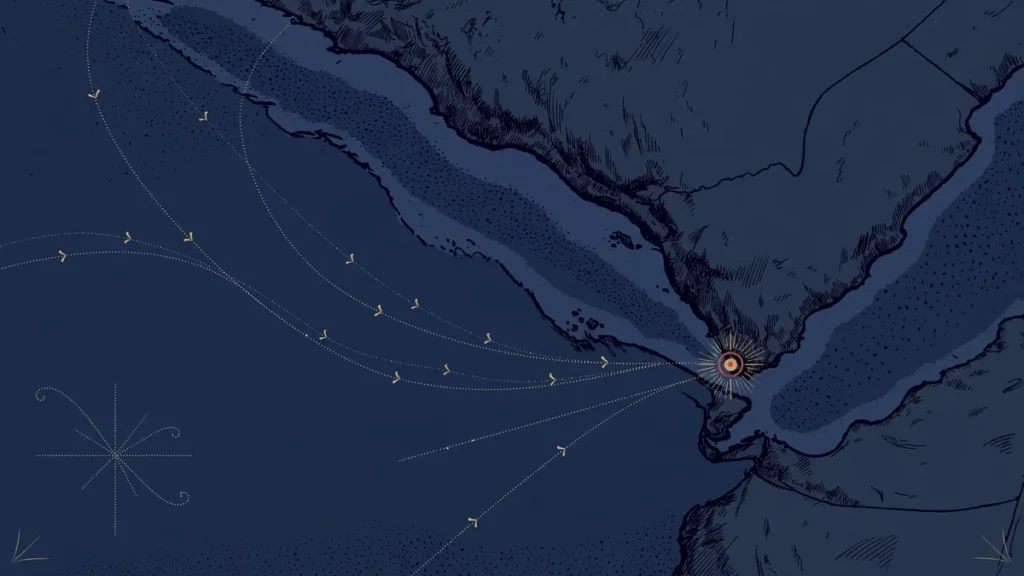
The wider backdrop is a war that reignited this year. A four-year truce in Yemen’s civil war collapsed in July 2026, and the two sides have exchanged attacks since. The Houthis launched a sweeping offensive in September, and Saudi-backed government forces withdrew from areas near the Bab el-Mandeb strait this month, ceding territory to the group. The coalition’s framing is that Hodeidah’s port facilities were being used to move smuggled weapons, including ballistic missiles, into Houthi hands — a claim the internationally recognised government’s information minister repeated on Friday.
Al Jazeera’s correspondent in Sanaa, Yousef Mawry, reported that the strikes on the capital on Friday morning were among the heaviest of the war. “Both sides seem to be stepping up their attacks. These are the heaviest air strikes that we have witnessed since the conflict began,” he said, adding that both sides “seem to carry a very serious tone in delivering on their promise to target” energy infrastructure and airports. As Reuters noted, cross-border fighting between the coalition and the Houthis “has intensified amid the US-Israeli war on Iran, opening another front in the conflict.”
What are the Houthis threatening next?
The Houthi response came within hours of the evacuation warning. Military spokesman Yahya Saree said on X that Jeddah port and all Saudi ports on the Red Sea coast would become “targets” if the coalition carried out its threat to strike Hodeidah port. “We warn all employees, workers, and those in the vicinity of [Saudi Arabia’s Red Sea] ports to evacuate them immediately and stay away. We also urge all shipping companies to immediately evacuate their ships from these ports,” he said.
Saree also warned airlines to avoid Saudi airspace “because it will be the scene of our operations in the coming hours”, making an exception only for the airspace near the Muslim holy cities of Mecca and Medina. He said the group would target a power station at Shuqaiq in the Jazan region of southern Saudi Arabia in the coming hours, and warned people to avoid Riyadh’s King Abdullah Financial District, calling it a military target.
Saudi air defences were already active on Friday. The coalition said it intercepted and destroyed two ballistic missiles launched by the Houthis towards the Jazan region, with debris falling in the Al Shuqaiq area, and intercepted drones launched towards Riyadh and southern Saudi Arabia along with a ballistic missile targeting the southern region. Saudi Arabia’s civil defence agency issued early warning alerts for Najran province in the south before lifting them minutes later.
Casualty claims from the Houthi side remain unverified. Early on Friday, the Houthis accused the Saudis of striking a civilian boat, killing 19 people. The Houthi-run Health Ministry said airstrikes killed 15 people in the port city of Mokha and in Taiz province on Thursday. Separately, the Houthis said Saudi forces struck Hodeidah on Tuesday, killing at least 14 people. None of these figures has been independently confirmed, and they are reported here only as claims.
By the numbers: what is confirmed and what is only reported
| Metric | Figure | Source | Status |
|---|---|---|---|
| Coalition operation at Hodeidah port | Under way on November 20, 2026 | Reuters, Al Jazeera, Gulf News | CONFIRMED |
| Military targets claimed destroyed | Seven | Coalition spokesman (Arab News) | REPORTED |
| Workshops claimed destroyed | Six | Coalition spokesman (Arab News) | REPORTED |
| Supply depots claimed neutralised | One, in Sanaa | Coalition spokesman (Arab News) | REPORTED |
| Tanker struck off Khasab, Oman | 8 nautical miles north; fire on board, no casualties | UKMTO via Reuters and AFP | CONFIRMED |
| Tanker attacks in the Strait of Hormuz | Four in 96 hours | Gulf News | REPORTED |
| US war cost against Iran | More than $48 billion | Pentagon official via Gulf News | REPORTED |
Figures marked REPORTED come from a single source or from one side’s own claims and have not been independently confirmed. Figures marked CONFIRMED are carried by two or more reputable outlets or by an official maritime authority.

Why Hodeidah matters: Yemen’s lifeline port
Hodeidah is the main port bringing food and other supplies into Houthi-controlled northern Yemen, which makes it both a strategic prize and a humanitarian pressure point. The port has been under Houthi control since October 2014, a month after the group advanced south from its stronghold in Saada and seized Sanaa. The coalition placed a blockade on the port the following year over fears it was being used for weapons smuggling, although it continued to receive humanitarian shipments under a United Nations verification system.
Coalition air strikes have hit port infrastructure several times during the Yemen war, and coalition-backed forces launched a major offensive to seize Hodeidah in 2018 before a UN-brokered ceasefire halted the advance. Since the Gaza war began in October 2023, the port and surrounding facilities have come under repeated attack, and Israel first struck Hodeidah in July 2024, saying it was responding to Houthi attacks on Israel.
Fighting is raging in other parts of Yemen at the same time. The Houthis are advancing on Aden, the government’s de facto capital, and government forces are now preparing for the defence of the coastal city, their last real stronghold. The Houthis also continue to besiege the government-held city of Taiz, north of Aden, which has now been cut off from the port city, with residents complaining of shortages of water and fuel. WarBrief’s Red Sea shipping corridor profile tracks how the Houthi campaign has reshaped traffic through the strait.
What the Hodeidah strikes mean for US/UK/EU readers
For readers in the United States, Britain and Europe, the direct stakes are shipping, energy prices and travel. The Houthis have now threatened the main Saudi Red Sea ports, including Jeddah, and told shipping companies to pull their vessels out — a threat that, if acted on, would push more traffic around Africa and raise freight costs for goods moving between Europe and Asia. The Bab el-Mandeb strait at the southern end of the Red Sea is already one of the world’s most disrupted shipping lanes, and the Strait of Hormuz profile explains why the Gulf waterway matters just as much.
The energy picture worsened on the same day. A tanker sailing outbound through the Strait of Hormuz was struck by an unknown projectile about eight nautical miles north of Khasab, Oman, according to the United Kingdom Maritime Trade Operations agency, with a fire reported on board. No casualties or environmental impact were reported. Iran’s Revolutionary Guards said shortly afterwards that the tanker had hit a mine, while UKMTO described an unknown projectile — the cause is therefore disputed, not confirmed. Gulf News reported four tanker attacks in the Strait of Hormuz in 96 hours. WarBrief explained why Brent oil fell while tankers burned earlier this week, and our evergreen guide to how war affects oil prices sets out the mechanics behind the risk premium.
Air travel is also affected. The Houthis’ warning that Saudi airspace will be “the scene of our operations in the coming hours” is a threat, not a closure — but airlines route around threatened airspace, and the Saudi civil defence alerts in Najran on Friday show how quickly the warnings move. The wider war is expensive: a Pentagon official said the war against Iran has cost the US military more than $48 billion since the United States and Israel launched the conflict in late February. US President Donald Trump has said Washington will reassess the Iran conflict after January 1, without explaining the significance of the date.
How each side frames the strikes
The coalition and the internationally recognised Yemeni government present the operation as lawful and defensive: a targeted strike on smuggling infrastructure, preceded by a civilian evacuation warning, aimed at neutralising threats to civilians in Yemen and Saudi Arabia and at protecting maritime navigation in the Red Sea and Bab el-Mandeb. Their information minister said the government would not allow civilian facilities to be turned into platforms for threatening regional security.
The Houthis present themselves as responding to aggression and as holding a deterrent: they accuse the coalition of striking a civilian boat and killing 19 people, they say Hodeidah is a civilian lifeline, and they answer with threats against Saudi ports, airspace and energy infrastructure. Their spokesman has framed the coming hours as a period of Houthi operations, not a pause.
International reaction so far has been condemnatory of the Riyadh attacks rather than of the coalition operation. The Palestinian Ministry of Foreign Affairs condemned the Houthi attacks on civilian and economic facilities in Riyadh as a violation of Saudi sovereignty. Germany’s Chancellor Friedrich Merz said he would like to see the Strait of Hormuz reopen “in the very short term”, and Qatar has warned that the Hormuz closure has become an international crisis affecting energy security, supply chains and global economic stability.
What to watch next in Yemen and the Red Sea
The first question is whether the Houthis follow through on their threats within the “coming hours” they named — strikes on Jeddah or other Saudi Red Sea ports, attacks on the Shuqaiq power station, or further missile and drone launches towards Riyadh and the south. Saudi air defences have intercepted several such attacks in recent days, but the PIF Tower strike showed that some get through.
The second is whether the coalition’s operation expands beyond Hodeidah, Sanaa, Saada and Taiz, and whether it targets the port’s civilian infrastructure in a way that disrupts humanitarian supplies into northern Yemen. The internationally recognised government’s information minister has said the flow of goods will continue; that claim will be tested in the coming days.
The third is the ground war. The Houthi advance on Aden and the siege of Taiz could decide more than the air campaign does. And the wider Iran war continues to set the tempo: Iranian state media reported on Friday that the United States carried out a fresh missile strike near Qeshm Island, a claim that has not been independently confirmed, while Washington’s next decision on Iran is not expected until after January 1. WarBrief will update this story as new verified developments emerge.
Frequently asked questions
What is Hodeidah port and why does it matter?
Hodeidah is the main port bringing food and other supplies into Houthi-controlled northern Yemen. It has been under Houthi control since October 2014 and is the largest Red Sea port in Yemen, which makes it both a strategic target and a humanitarian lifeline.
Why did the Saudi-led coalition strike Hodeidah on November 20, 2026?
The coalition said it targeted operational facilities at the port used to smuggle weapons and transport ballistic missiles, as part of a “special operation” to neutralise threats to civilians in Yemen and Saudi Arabia. The strikes came a day after a Houthi missile damaged Riyadh’s PIF Tower.
What have the Houthis threatened in response?
Houthi military spokesman Yahya Saree threatened to attack Jeddah and all Saudi Red Sea ports, urged shipping companies to evacuate their vessels, warned airlines that Saudi airspace would be unsafe in the coming hours, and said the group would target a power station at Shuqaiq in southern Saudi Arabia.
Is Hodeidah port still operating?
Yemen’s information minister said the port remained fully operational and the flow of goods would continue after the strikes. That is the internationally recognised government’s position; independent verification of port operations was not available at the time of publication.
How does the Hodeidah escalation affect Red Sea shipping?
The Houthis have threatened Saudi Red Sea ports and told shipping firms to withdraw vessels, while a tanker was also hit near Oman in the Strait of Hormuz on the same day. If the threats are acted on, more shipping would divert around Africa, raising freight costs and delivery times for Europe-Asia trade.
Sources
- Al Jazeera: Saudi coalition and Houthis exchange threats to bomb key ports
- Reuters: Yemen’s Houthis threaten to strike Saudi Red Sea ports
- Arab News: Coalition targets Houthi sites in Sanaa, Saada and Taiz, strikes Hodeidah port
- Gulf News: Saudi coalition launches special operation, Yemen’s Houthis vow reprisals
- The National: Saudi-led coalition targets Houthi weapons smuggling at Hodeidah port
- Reuters: Fire reported on tanker after projectile strike off Oman, UKMTO says
Read next: Conflict Zones — WarBrief’s hub for active conflicts, including the Red Sea and the Strait of Hormuz.



Discussion 0
Share analysis, corrections, or context. Be civil — comments are moderated.