
WarBrief Live | November 13, 2026 | Geopolitics
| 100+ vessels | 3 theatre commands | 1 ICBM test | 18–19 Nov |
|---|---|---|---|
| Chinese naval and coast guard ships reported massed at the peak of the drills | Eastern, Northern and Southern commands operating together | Submarine-launched missile fired from the Yellow Sea, Taipei says | APEC summit in Shenzhen, where Trump and Xi are due to meet |
Figures as reported by Taipei officials via Reuters on November 13, 2026; Beijing has not commented.
China carried out a large, unannounced military exercise across the western Pacific and around Taiwan in early November, massing more than 100 naval and coast guard vessels in what officials in Taipei call a campaign of “silent intimidation”.
What is confirmed is that the exercise happened and that Taipei is treating it as a deliberate pressure campaign timed ahead of major international meetings. What remains reported rather than independently verified is the precise scale: the vessel counts, the simulated attacks and the missile test all come from Taiwanese officials speaking to Reuters, and China’s defence ministry did not respond to a request for comment.
Key Takeaways
- More than 100 Chinese naval and coast guard vessels massed at one point in early November, according to a senior Taiwan security official.
- The drills brought together forces from three theatre commands and included a submarine-launched intercontinental ballistic missile test, Taipei says.
- President Xi Jinping used a November 12 speech to urge peaceful “reunification” — with no mention of using force.
- The show of force lands days before Donald Trump and Xi Jinping are due to meet at the APEC summit in Shenzhen on November 18–19.
What happened in China’s unannounced Pacific drills?
According to Reuters, which reported the exercise on November 13, China carried out a large, unannounced military exercise across the western Pacific and around Taiwan in early November. A senior Taiwan security official, speaking on condition of anonymity, said China’s military and coast guard had at one point massed more than 100 vessels in the region, conducting drills that included simulated attacks on other militaries and cities, including Taiwan’s.
The naval deployment was larger than “Justice Mission 2025”, China’s last formally named drills targeting Taiwan nearly a year ago, and one of the largest Chinese naval deployments to date, the official said. The drills involved coordinated naval forces from China’s eastern, northern and southern theatre commands — a scale that suggested Beijing was rehearsing not only a Taiwan blockade scenario but broader operations across the western Pacific, and an effort to integrate regional fleets into a single far-seas operational force.
During the latest drills, the official said, a Chinese submarine also launched an intercontinental ballistic missile from the Yellow Sea into the Chinese mainland. The scale of the deployment has since fallen: around 70 vessels were operating within the first island chain on Friday, according to two Taiwan security officials. Taiwan National Security Council Secretary-General Joseph Wu posted details of the latest deployments on X late on Thursday, saying that while the number of vessels had decreased, “the groups of Northern, Eastern & Southern Theater Commands plus Liaoning carrier strike group remain operating in waters east of the Philippines”. He added that Chinese air force activity also remained high near Taiwan.
The exercise is distinct from the Liaoning carrier drills WarBrief covered earlier this month. Our explainer on the Liaoning drills dealt with a smaller, carrier-centred deployment; this unannounced exercise was larger, involved three theatre commands, and added a missile test and a presidential speech. For the wider picture, see our conflict zones hub and our tracker of Chinese military activity around Taiwan in October 2026.
What does “silent intimidation” mean — and why was nothing announced?
The phrase comes from Taipei. “It is a silent exercise — and in effect, silent intimidation,” the senior Taiwan security official told Reuters, adding: “This is like a robber hiding a gun in the pocket of a coat — with the muzzle pointed at the bank teller. It scares the teller into handing over the money, while avoiding setting off the alarm and bringing in a large police response.”
A foreign intelligence source told Reuters that the “silent drills without a name” — given the lack of a public announcement by China — appeared deliberate, allowing Beijing to apply military pressure while avoiding a diplomatic backlash. The same source noted that the latter part of the year, when the weather is typically calmer, is when China normally carries out drills.
Beijing has offered a different account. China, which has never renounced the use of force to bring Taiwan under its control, has said the carrier is on “routine” exercises that are not directed at any country. Its defence ministry did not respond to Reuters’ request for comment. Meanwhile, China’s widely read state-backed paper the Global Times said on Friday that if Taiwan’s ruling party persists in “seeking ‘independence by relying on external forces or military means,’ dragging the residents of Taiwan onto their war chariot, they will inevitably face a harsh reckoning”.
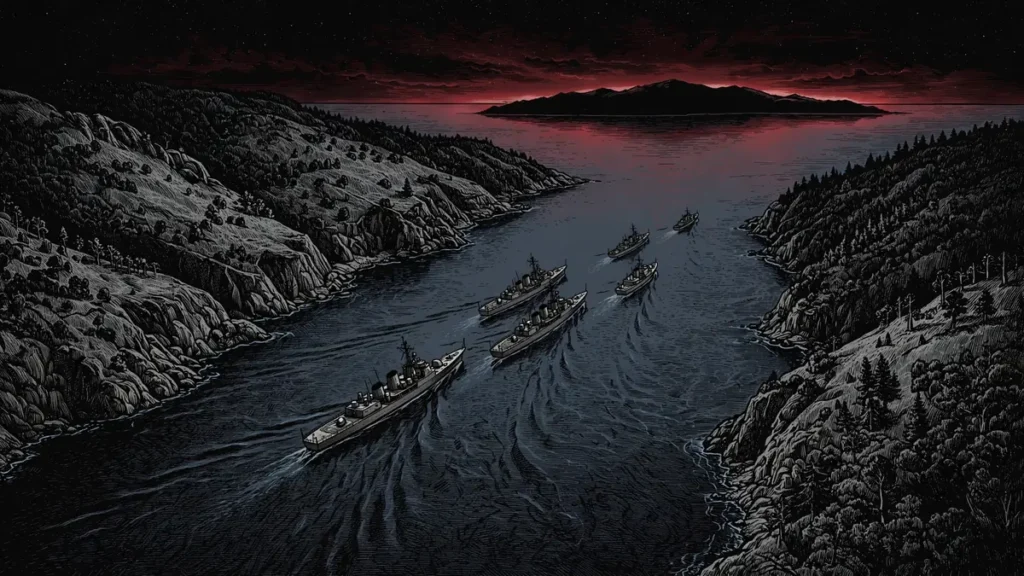
From Justice Mission 2025 to the Liaoning deployment: the timeline
The November exercise did not appear from nowhere. Its outlines were visible for more than a week before Reuters reported it, in ship movements, official statements and independent analysis:
- October 23 – November 2: The Liaoning carrier strike group moves into the western Pacific via the Basilan Strait in the Philippines, according to a joint report by the American Enterprise Institute and the Institute for the Study of War.
- Early November: More than 100 PLA Navy and China Coast Guard vessels mass across the region, conducting drills that include simulated attacks, according to a senior Taiwan security official.
- November 7: The AEI/ISW joint report says China may be conducting a major, unannounced exercise simulating the isolation of Taiwan, larger than “Justice Mission 2025”, with two clusters: four task forces between Taiwan and Guam, and at least six coast guard vessels plus naval ships around Taiwan.
- November 10: Defence Minister Wellington Koo says China is carrying out “area denial” drills in the western Pacific involving an aircraft carrier and other naval formations.
- November 12: Xi Jinping gives a major Taiwan policy speech urging peaceful “reunification”. Joseph Wu posts deployment details on X the same evening.
- November 13: Reuters reports the exercise; the Global Times issues its warning to Taiwan’s ruling party.
- November 18–19: APEC leaders’ summit in Shenzhen, where Trump and Xi are expected to meet for the third time this year. Taiwan also attends APEC.
By the numbers: what is confirmed and what is reported
| Metric | Figure | Status | Source |
|---|---|---|---|
| Vessels massed at the peak | 100+ | REPORTED | Senior Taiwan security official via Reuters |
| Vessels within the first island chain, November 13 | ~70 | REPORTED | Two Taiwan security officials via Reuters |
| Theatre commands involved | 3 (Eastern, Northern, Southern) | REPORTED | Senior Taiwan security official via Reuters |
| ICBM launched from the Yellow Sea | 1 | REPORTED | Senior Taiwan security official via Reuters |
| Liaoning carrier strike group | Operating east of the Philippines | CONFIRMED | NSC Secretary-General Joseph Wu on X; AEI/ISW report |
| APEC summit, Shenzhen | November 18–19, 2026 | CONFIRMED | Reuters; Channel News Asia |
| Trump–Xi meetings in 2026 | Third this year | CONFIRMED | Reuters; Channel News Asia |
Caveat: REPORTED figures come from a single official source chain and have not been independently verified. Beijing has not commented on the exercise.
Why the drills matter beyond the Taiwan Strait
The most consequential reading of the exercise comes from the AEI/ISW analysis, reported by the Taipei Times on November 8: China may be simulating the isolation of Taiwan. Two concentrations of forces were identified — four task forces from three theatre commands operating between Taiwan and Guam, including the Liaoning carrier strike group, and a second cluster of coast guard and naval vessels surrounding Taiwan. That is the shape of a blockade rehearsal, not a routine training cruise.
The three-theatre coordination matters for a second reason. It suggests Beijing is practising the integration of regional fleets into a single far-seas operational force, able to operate across the western Pacific rather than only in the waters immediately around Taiwan. A force that can mass more than 100 vessels, sustain them east of the Philippines and coordinate them across three commands is a different proposition from the single-theatre drills of previous years.
There is also a risk that has nothing to do with intent. More than 100 warships and coast guard vessels operating in confined waters, running simulated attacks, raises the chance of miscalculation — a collision, a close encounter, or a misread signal — at a moment when there is no formal announcement, no published exercise area and no direct military-to-military channel publicly managing the activity. That is the practical meaning of “silent” intimidation: pressure applied without the guardrails that normally accompany a named exercise.
The pattern is not new. China has stepped up its military pressure on Taiwan over the past five years, drawing condemnation from Taipei and heightening concern in Western capitals about the potential for conflict. What is new is the combination of scale, silence and timing — days before the region’s leaders gather in Shenzhen. Our earlier report on China’s coast guard patrols east of Taiwan traced how the coast guard has become a central instrument of that pressure.
What China’s silent drills mean for US, UK and EU readers
For readers in the United States, Britain and Europe, the drills are not only a Taiwan story. Three interests are directly engaged. First, trade: the fragile US–China trade truce runs only until January 10, with disputes over tariffs, agricultural purchases and technology still unresolved, according to Channel News Asia. A military crisis in the Taiwan Strait would put that truce — and the tariff levels that flow from it — under immediate strain.
Second, supply chains. Taiwan produces the advanced semiconductors that power everything from smartphones to cars, and the waters around it carry a large share of the container traffic between Asia and Europe. A blockade rehearsal is a reminder that those supply lines pass through waters where a crisis could close sea lanes with days of warning. Third, diplomacy: analysts expect the Trump–Xi meeting in Shenzhen to cover Taiwan and US arms sales to the island, so the drills set the tone for the most important bilateral meeting of the year.
For European readers specifically, the stakes are quieter but real. European navies and coast guards operate in the Indo-Pacific, European exporters depend on the same sea lanes, and any escalation would reach European energy and goods prices through shipping disruption and market volatility. The drills are a test of whether pressure without announcement becomes a normal tool of statecraft — a precedent that would matter well beyond the Pacific.
How Taipei, Beijing and Washington read the drills
Taipei reads the exercise as deliberate intimidation, and has said so unusually openly. The senior official’s “silent intimidation” framing, Defence Minister Koo’s “area denial” description and Joseph Wu’s public posts on X all point the same way: Taiwan is choosing to publicise what it is tracking, rather than leaving the pressure unanswered in silence. The timing matters to Taipei because the drills come just before APEC, where Taiwan sits at the same table as the leaders pressuring it.
Beijing reads it differently, or at least presents it differently. The carrier deployment is “routine” and “not directed at any country”; Xi’s November 12 speech urged peaceful “reunification” and made no mention of using force. That is a deliberate pairing: military pressure on the water, conciliatory language in the speech. The Global Times warning supplies the harder edge for a domestic and Taiwanese audience — the ruling party in Taipei will “inevitably face a harsh reckoning” if it keeps seeking independence through outside support.
Washington’s response will come in Shenzhen. Trump and Xi are expected to meet for the third time this year, and analysts told CNA they expect the two leaders to discuss Taiwan and US arms sales to the island alongside trade. Trump arrives with a complicated political backdrop at home — a Democratic sweep in the November 3 midterms and a scandal around Nvidia chief executive Jensen Huang — but, as one analyst told CNA, Beijing may in fact prefer dealing with a transactional counterpart who focuses on interests rather than lectures. Our APEC Shenzhen preview sets out what to expect from the summit.
What to watch next before APEC Shenzhen
- Vessel numbers: whether the deployment keeps shrinking toward normal levels, or a second wave forms as the summit approaches.
- Any formal PLA statement: a named exercise, a published exercise area or a defence ministry comment would end the “silent” phase — and signal a different message.
- The Trump–Xi meeting on November 18–19: whether Taiwan is raised publicly, and whether anything is said about arms sales.
- Regional responses: statements from Japan, the Philippines and Australia, whose waters and airspace sit inside the exercise area.
- Taiwan’s local elections on November 28: the drills land in the middle of a campaign in which China is already watching closely — see our Taiwan local elections preview.
Frequently asked questions
What are China’s unannounced Pacific drills?
A large military exercise China carried out across the western Pacific and around Taiwan in early November 2026, involving more than 100 naval and coast guard vessels from three theatre commands. Unlike previous drills, it was not publicly announced and carried no formal name.
What does “silent intimidation” mean?
It is the phrase officials in Taipei use for the exercise: military pressure applied without a formal announcement, so it frightens its target without triggering the diplomatic backlash a named exercise would bring. One senior official compared it to a robber hiding a gun in his coat pocket — the threat is visible enough to scare, quiet enough to avoid setting off the alarm.
Did China really launch an ICBM during the drills?
A senior Taiwan security official told Reuters that a Chinese submarine launched an intercontinental ballistic missile from the Yellow Sea into the Chinese mainland during the drills. The claim has not been independently verified and Beijing has not commented, so it should be treated as reported, not confirmed.
Why is China putting pressure on Taiwan now?
The drills come days before the APEC summit in Shenzhen, where Donald Trump and Xi Jinping are due to meet, and follow five years of stepped-up Chinese military pressure on Taiwan. Xi Jinping’s November 12 speech urged peaceful “reunification” with no mention of force — the drills supply the pressure behind the words.
What is the APEC summit in Shenzhen, and why does it matter?
The Asia-Pacific Economic Cooperation leaders’ summit, held in Shenzhen on November 18–19, 2026. It matters because Trump and Xi are expected to meet there for the third time this year, with a fragile trade truce, tariffs, technology and Taiwan all on the agenda. Taiwan also attends APEC.
Sources
- Reuters: China stages unannounced Pacific drills in ‘silent intimidation’ of Taiwan, officials say (November 13, 2026)
- Taipei Times: PLA may be simulating Taiwan isolation: report (November 8, 2026)
- Channel News Asia: How Nvidia scandal, US midterm losses could affect Trump’s hand with Xi (November 13, 2026)
- Brookings: Trump, Xi and Putin: What to expect from the APEC summit
Discussion 0
Share analysis, corrections, or context. Be civil — comments are moderated.