
WarBrief Live | November 4, 2026 | Breaking Analysis
At a glance
- No immediate strike: Donald Trump told the Financial Times on November 3 that the United States has no immediate plan to strike Iran.
- Ready, not rushing: He added that US forces are “locked and loaded” if they are needed.
- Talks continue: Qatar is mediating indirect exchanges, but a senior Iranian official told Reuters on November 3 that the two sides remain far from a deal.
- Hormuz still shut: Iran says the Strait of Hormuz will reopen only if its seven conditions are met in full.
US President Donald Trump has ruled out an immediate new strike on Iran, telling the Financial Times in a six-minute telephone interview on November 3 that Washington has no immediate plan to renew attacks, while insisting that American forces remain ready to act. In short: this is a pause in a threatened post-midterm campaign, not a settlement, and not a withdrawal of the military option. That distinction matters because the same 48 hours produced a limited US strike on Qeshm Island, a new round of Iranian claims in the Strait of Hormuz, and a mediation effort that both sides describe as continuing but unresolved.
Trump’s language, as reported by the Financial Times and relayed by Reuters, was deliberately two-sided. “We seem to be getting everything we want,” he said, describing the current standoff as a “brilliant situation”. Asked about indications from Israeli Prime Minister Benjamin Netanyahu that an attack could come later in the week, he answered with readiness rather than a timetable: “I’m ready, we’re ready. We’re locked and loaded if we need to go, but there may be no reason for it.” The interview took place hours before polls closed in the US midterm elections on November 3, a timing that helps explain why the remarks were read in Washington as much as a political signal as a military one.
Key Takeaways
- Trump told the Financial Times on November 3 that the US has no immediate plan to strike Iran, after telling reporters on November 2 that he was not considering a post-midterm strike.
- The pause follows a limited US strike on Qeshm Island on November 2, which US officials described as defensive and which Trump called a “minor attack”.
- Qatar-mediated indirect talks continue, but Iran’s security chief Mohsen Rezaei said on November 3 that the US response to Iran’s seven conditions was “not convincing”.
- What is confirmed and what is merely claimed still diverge sharply in the Strait of Hormuz, where Iranian claims about tankers and a drone on November 4 remain unverified by independent sources.
- For US, UK and EU readers, the practical stakes are fuel prices, shipping risk and the chance of a short, sharp escalation if the mediation fails.
What did Trump actually say on November 3?
Three points in the Financial Times interview are consistently reported across the accounts that relayed it, including the Jerusalem Post and Reuters. First, there is no immediate plan for a new strike. Second, negotiations with Iran are continuing, including over its stockpile of enriched uranium, which Trump said remains a sticking point. Third, the military option is explicitly preserved. “We’re locked and loaded” is not a promise to attack; it is a statement that the capability and the political willingness to use it have not been removed.
Trump also pushed back against framing the confrontation as a conventional war. He told the Financial Times that the US is “not really in a war” with Iran, citing the earlier bombing campaign against Iranian nuclear infrastructure, including Operation Midnight Hammer, and subsequent limited operations. “We then hit them again, Epic Fury, etc … But if you think about it, we haven’t really had a war with them in a long time, six months, maybe more,” he said, according to the Jerusalem Post’s account. Readers should treat that as Trump’s characterisation, not as an agreed description of a conflict that has included strikes, a naval blockade and a closed strait since late February 2026.
One reported divergence deserves care. Israeli outlet Ynet reported that the United States was preparing for a possible strike as soon as the same day, placing Trump’s remarks on the eve of a possible attack and amid last-minute negotiating efforts. Ynet did not say who its report of preparations came from, and no US official has been quoted confirming it. The contradiction is itself the story: a president publicly ruling out an immediate strike while at least one report describes preparations continuing. Until the White House, the Pentagon or US Central Command clarifies, preparation and intention must not be conflated.
How the standoff reached this pause: a timeline
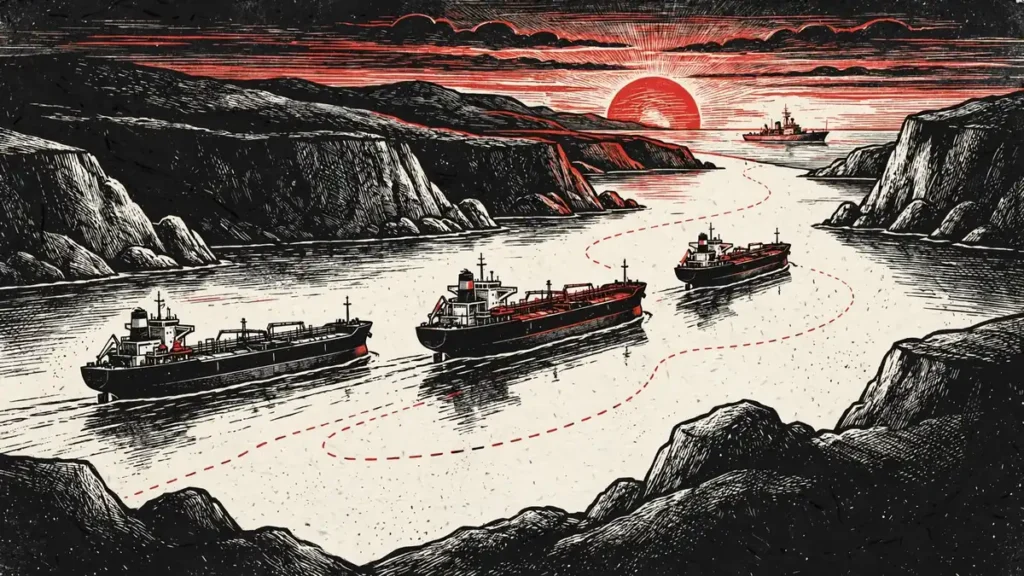
- February 28, 2026: The US and Israel launch a large-scale war with Iran. The Strait of Hormuz is subsequently closed, and the US imposes a naval blockade on Iranian ports.
- October 2026: Qatar-mediated indirect talks intensify. Iranian negotiators meet Qatari mediators in Doha for three consecutive days, and US Vice President JD Vance says on November 2 that there have been “a number of good conversations with the Iranians”.
- November 2, 2026: Asked by reporters whether he is considering striking Iran after the midterm elections, Trump answers “no”, according to Reuters. Later that day, US forces strike an Iranian air-defence facility on Qeshm Island in the Strait of Hormuz. US officials describe the operation as defensive, saying Iranian surface-to-air missiles had been used against US assets.
- November 3, 2026: Trump confirms the Qeshm strike on Fox News, saying US forces watched the facility being built for about two months and hit it as soon as it was completed. He calls it a “minor attack” and says it “wasn’t war”. The same day, he gives the six-minute Financial Times interview ruling out an immediate further strike.
- November 3, 2026: A senior Iranian official tells Reuters that Iran and the US remain far from a deal to end the war, even as Qatar steps up efforts to avert a renewed escalation after the midterms.
- November 4, 2026: Iran’s Islamic Revolutionary Guard Corps claims four oil tankers were destroyed after striking naval mines in a prohibited lane south of the Strait of Hormuz, and claims an MQ-9 drone was shot down at 01:00 GMT. Both claims are unattributed to independent verification and are treated in this article as claims, not confirmed events.
What is the Hormuz proposal Qatar is mediating?
The mediation centres on an Iranian proposal to reopen the Strait of Hormuz, as reported by Al Jazeera. Under the proposal as described in its November 4 reporting, Iran would reopen the waterway over two days if the United States meets Tehran’s seven demands, including the lifting of sanctions and ending the US naval blockade. Qatar’s foreign ministry spokesperson, Majed al-Ansari, said talks were continuing and that both sides “remain committed to the negotiation process”, with Qatar facilitating the “real-time exchange of proposals” between Washington and Tehran.
That is where agreement stops. Mohsen Rezaei, secretary of Iran’s Supreme National Security Council, wrote on November 3 that “America’s response to Iran’s rights and demands was not convincing, and they must fully and explicitly address Iran’s seven conditions and act upon them,” adding: “Only in this case will the Strait of Hormuz be reopened.” A senior Iranian official told Reuters the same day that the two sides remain far from a deal. In other words, the framework of a bargain is visible — sanctions relief, blockade relief and frozen funds on one side; a reopened strait and eventual nuclear talks on the other — but neither side has publicly accepted the other’s version of it.
The enriched uranium question sits inside that gap. Trump told the Financial Times that indirect discussions continue over Iran’s stockpile, which reporting puts at roughly 454 kilograms. He said he was unhappy that the material remains in place, even buried under rock, and that “we’ll see how that all works out”. That phrasing is important: it signals that the nuclear file has not been resolved by the pause, and that any future escalation could be framed around it rather than around Hormuz shipping alone.
By the numbers: what is confirmed, and what is only reported
| Metric | Figure | Source |
|---|---|---|
| Financial Times interview length | 6 minutes | Jerusalem Post / Times of Israel accounts — REPORTED |
| Iranian enriched uranium stockpile under discussion | Roughly 454 kilograms | TRT World, citing Reuters — REPORTED |
| Brent crude, early November 4 | $103.34 per barrel, down 0.25% | Reuters — CONFIRMED market price |
| US West Texas Intermediate, early November 4 | $95.56 per barrel, down 0.55% | Reuters — CONFIRMED market price |
| Tanker struck near Limah, Oman (UKMTO report) | About 26 kilometres north-east of Limah; no casualties reported | UKMTO, via Al Jazeera — CONFIRMED as a UKMTO report; attribution of the attack is unconfirmed |
| IRGC November 4 Hormuz claims | 4 tankers destroyed, 2 vessels detained, 1 MQ-9 claimed downed | IRGC statement via IRNA / Al Jazeera — REPORTED, unverified |
Caveat: figures marked CONFIRMED are supported by at least two reputable sources or by a named official market or maritime report. Figures marked REPORTED rest on a single claim or a single secondary account and should not be treated as established fact.
Why a pause is not a peace deal
Three reasons argue against reading November 3 as a turning point. First, the pause is explicitly conditional and reversible. Trump has twice in two days paired restraint with readiness — “no” to a post-midterm strike on November 2, “locked and loaded” on November 3 — and he has not ruled out a larger campaign if talks fail. Second, the underlying demands have not moved. Iran insists its seven conditions be met in full before Hormuz reopens; the US has not publicly accepted that package. Third, the theatre is still active. The Qeshm strike, the UKMTO tanker incident and the IRGC’s November 4 claims all occurred within the same 48-hour window as the diplomatic language, which means the risk is not a distant one but a live one.
There is also a domestic logic that cuts both ways. Reuters has reported that the Iran war is a leading cause of high petrol prices weighing on US voters, and that Trump is under pressure to end the conflict. A pause that lowers escalation risk can therefore help at home, especially if oil prices ease. But the same pressure can reverse quickly if a tanker incident or a Hormuz closure pushes prices back up, or if allies in Jerusalem argue that restraint is being read in Tehran as weakness. That is why the Netanyahu question in the Financial Times interview mattered: Trump was asked about an ally signalling a possible attack later in the week, and he answered without endorsing or dismissing that signal.
For context, readers should also keep the earlier WarBrief reporting in view. Our November 2 report on the Doha talks described Iran warning of a longer war even as negotiations entered a third day, and our factual account of the Qeshm Island strike separated what US officials confirmed from what remained claimed. This article is the next step in that sequence: not a repeat of the strike facts, but an assessment of the posture decision that followed them. The WarBrief conflict-zones hub carries the wider regional picture.
What the post-midterm pause means for US/UK/EU readers
For American readers, the immediate effect is on petrol prices and on the political debate about a war that voters have already linked to inflation. Brent crude slipped in early trading on November 4 as investors awaited midterm results and weighed the Qatar mediation, according to Reuters, after easing more than 1% in the previous session. That is a modest move, not a collapse, and it reflects uncertainty rather than relief: traders are pricing both a possible deal and a possible escalation at the same time.
For UK and EU readers, the exposure runs through shipping and energy security. The Strait of Hormuz remains a chokepoint for internationally traded oil and liquefied natural gas, and any incident there — a mine claim, a projectile strike on a tanker, a detained vessel — raises insurance and freight costs even before it changes the physical flow of oil. The UK Maritime Trade Operations report of a tanker struck about 26 kilometres north-east of Limah, Oman, with no casualties reported, is a reminder that the risk is not theoretical. European governments also face a diplomatic choice: whether to press Washington and Tehran publicly toward the Qatar framework, or to wait for a US-Iranian answer first. Neither approach removes the risk of a short, intense campaign if the mediation breaks down, a scenario US media have previously reported as planned and short in duration.
For all three audiences, the practical signal to watch is not a single presidential sentence but the sequence that follows it: a Qatari statement that proposals are being exchanged, an Iranian statement that conditions are unmet, or a military incident that forces either side to respond. A pause that survives a week of such signals is a policy. A pause that collapses at the first incident was only a timetable.
Different perspectives
Washington’s perspective, as expressed by Trump and by Vice President JD Vance, is that pressure is working. Vance said on November 2 that he and the president “feel pretty good about the prospects for potentially coming to a negotiated settlement”. Trump’s “getting everything we want” line fits that framing: the US believes its combination of strikes, blockade and mediation is extracting concessions without requiring a major new campaign.
Tehran’s perspective, as expressed by Rezaei and by the senior official who spoke to Reuters, is that the US has not yet paid the price of a settlement. Iran’s conditions — sanctions relief, an end to the blockade, frozen funds released — are presented not as opening bids but as prerequisites for reopening Hormuz and for any return to nuclear talks. From that vantage point, a US pause is welcome only if it is followed by concrete moves, not merely by a change in rhetoric.
Qatar’s perspective, as mediator, is narrower and more procedural: keep both sides exchanging proposals in real time and prevent a post-election escalation. That role gives Doha influence over process but not over substance, and it explains why Qatari statements emphasise commitment to the process rather than claiming a breakthrough. Israel’s perspective, by contrast, is largely absent from the public record on November 3 — no Israeli government response to Trump’s remarks has been reported — which leaves the Netanyahu signal that Trump was asked about as an unverified element in an otherwise documented interview.
What to watch next in the US-Iran standoff
First, watch for a Qatari or Iranian statement on whether the US response to the seven conditions has changed since Rezaei called it “not convincing” on November 3. A shift in that language would be the earliest credible sign of movement. Second, watch Hormuz shipping reports from UKMTO and from commercial operators: a second confirmed tanker incident, or a confirmed mine incident, would test the pause within days. Third, watch for any US official clarification of the Ynet preparation report — confirmation would reframe the pause as a delay, while a denial would strengthen the reading that Trump has genuinely stood down a near-term campaign. Fourth, watch the enriched uranium file: any new statement about the roughly 454-kilogram stockpile, its location or its future, would indicate whether the nuclear question is being negotiated in parallel or held for a later round.
WarBrief will update this assessment if any of those signals moves. Until then, the accurate summary is narrow: on November 3, the US president said there is no immediate plan to strike Iran, kept the option open in the plainest possible language, and left a mediation effort that both sides say is continuing and neither side says is close to a deal.
Frequently asked questions
Did Trump rule out striking Iran altogether?
No. He ruled out an immediate strike in a Financial Times interview on November 3, 2026, while saying US forces are “locked and loaded” if they are needed. He did not rule out future military action.
What happened on Qeshm Island on November 2?
US forces struck an Iranian air-defence facility on Qeshm Island in the Strait of Hormuz. US officials described the operation as defensive, saying Iranian surface-to-air missiles had been used against US assets. Trump later called it a “minor attack” and said it “wasn’t war”.
Is the Strait of Hormuz open again?
No. Iran says it will reopen the strait only if the United States fully addresses its seven conditions, including lifting sanctions and ending the US naval blockade. Qatar is mediating, but no agreement has been announced.
What are the November 4 tanker and drone claims?
Iran’s Islamic Revolutionary Guard Corps claimed on November 4 that four tankers were destroyed after striking naval mines and that an MQ-9 drone was shot down. Those are IRGC claims carried by Iranian state media; they have not been independently verified, and it is not confirmed whether they are linked to the separate UKMTO tanker incident near Oman.
Why does this matter for fuel prices in the US, UK and EU?
The Strait of Hormuz is a key route for internationally traded oil and gas. Escalation risk there raises shipping and insurance costs and can push crude prices higher, which feeds through to petrol and diesel prices even when crude itself moves only modestly.
Sources
- Reuters: Oil edges down as investors await US midterm election results
- Reuters: Trump raises doubts about renewed attacks on Iran
- Al Jazeera: Iran says US reply to Hormuz plan ‘unconvincing’; Trump confirms strikes
- Jerusalem Post: US has no immediate plans to strike Iran but is ‘locked and loaded,’ Donald Trump says
- Korea Times (Reuters): Iran, US still far apart on deal to end war as Qatar pushes mediation
- TradersUnion: US rules out Iran strike — Trump
- Gulf News: Trump confirms US strikes on Iran’s Qeshm Island
Discussion 0
Share analysis, corrections, or context. Be civil — comments are moderated.