
WarBrief Live | November 3, 2026 | Breaking Analysis
| 17 November 2025 UN Security Council Resolution 2803 adopted | 0 ISF troops reported deployed inside Gaza as of late October 2026 | Up to 500 Moroccan personnel reported trained by late October 2026 | About 200 Troops whose entry Israel’s cabinet approved in July 2026 |
The Gaza Stabilization Force is a temporary multinational force authorised by the United Nations Security Council in 2025 to help secure Gaza during a political transition, but it has not yet deployed inside Gaza. It would answer to a transitional body called the Board of Peace, train and support a vetted Palestinian police force, and work alongside a Palestinian technocratic administration — not replace it.
That gap between authorisation and deployment is the story. The legal instrument exists, troop contributors have signed up and trained, and a detailed phase-two roadmap has been published. What is still missing is the sequence of approvals, entries and withdrawals that would let the force actually enter Gaza and start work. This explainer sets out what the force is, what it would and would not do, why it is still waiting, and what to watch next.
Key Takeaways
- UN Security Council Resolution 2803, adopted on November 17, 2025, authorised a temporary International Stabilization Force (ISF) for Gaza under the Board of Peace.
- The ISF is not a UN peacekeeping mission in the usual sense: it would deploy under a unified command agreed by the Board of Peace, in close consultation with Egypt and Israel, and may use all necessary measures to carry out its mandate.
- Its core jobs are demilitarisation, border security, protection of civilians and aid, and training vetted Palestinian police — while internal policing stays with Palestinian authorities under the published roadmap.
- As of late October 2026, reporting said no ISF troops had yet deployed inside Gaza, despite signed participation agreements and training, because Israeli approvals and the disarmament-withdrawal sequence remained unresolved.
- On November 3, 2026, Al Jazeera reported fresh Gaza casualties and a Board of Peace visit to Israel to press for shelter supplies and faster reconstruction — a reminder that the transition is being negotiated while fighting continues.
What is the Gaza Stabilization Force?
The International Stabilization Force, usually shortened to ISF, is the security arm of the Gaza plan that followed the October 2025 ceasefire. The United States first circulated a draft Security Council resolution in early November 2025, and the Council adopted Resolution 2803 on November 17, 2025. That resolution welcomed the establishment of the Board of Peace as a transitional administration and authorised member states working with the Board to establish the temporary force, according to the UN resolution text and analyses of it.
The force’s mandate, as set out in the resolution and the Board of Peace roadmap published since, is to stabilise security in Gaza. That includes ensuring the demilitarisation of Gaza, including the destruction and prevention of rebuilding of military and offensive infrastructure, and the permanent decommissioning of weapons held by non-state armed groups. It also includes securing border areas, protecting civilians and humanitarian operations, and training and supporting a newly vetted Palestinian police force.
Two limits matter as much as the mandate itself. First, the force is temporary: it is tied to a transitional period, not a permanent presence. Second, under the phase-two roadmap published by the Board of Peace, the ISF would not perform policing missions or tasks related to the Palestinian community. Internal security incidents would be the responsibility of the Palestinian administration, the National Committee for the Administration of Gaza (NCAG). The ISF would instead separate Israeli forces from NCAG-controlled areas, monitor compliance, protect aid deliveries, train police, and support the NCAG at its request in other non-policing missions.
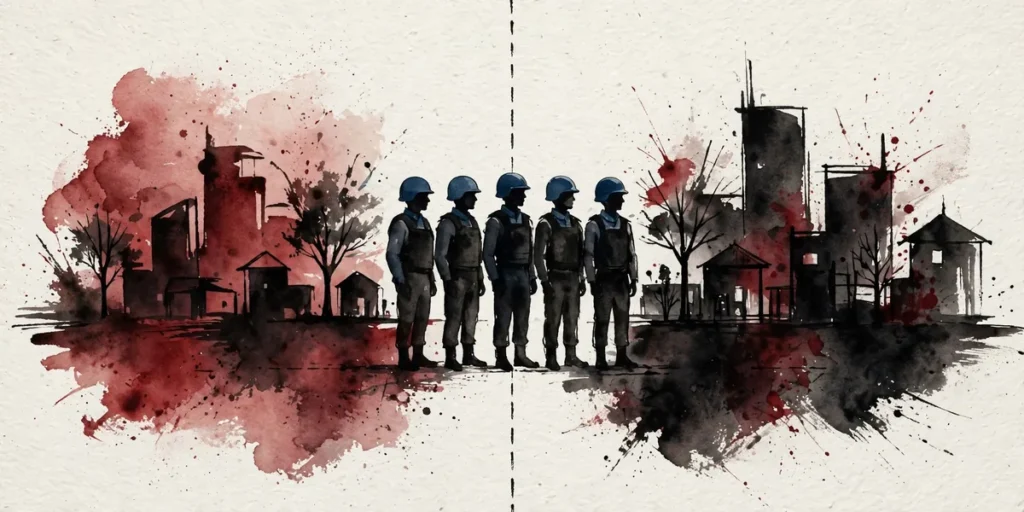
Who runs the force? The Board of Peace, the NCAG and the verification committee
The Board of Peace is the transitional governance body at the top of the structure. Chaired by US President Donald Trump, it is described in the resolution as a transitional administration with international legal personality that sets the framework and coordinates funding for Gaza’s redevelopment until the Palestinian Authority has completed a reform programme and can securely take back control. Its high representative for Gaza is Nickolay Mladenov, who, according to Israeli Army Radio reporting cited by Al Jazeera on November 3, 2026, arrived in Israel that Monday to seek permission to bring in tents and push for steps to accelerate reconstruction.
Below the Board sits the NCAG, a Palestinian technocratic committee intended to run day-to-day administration, civilian services and, in time, internal security. The roadmap states a clear principle: one authority, one law, one weapon. At the end of the disarmament process, the NCAG would be the sole entity that possesses, stores or controls weapons in Gaza, and factions would hand civil governance and security functions to it and not interfere in its work during the transitional period.
Verification is assigned to a third body, the International Verification Committee (IVC). The roadmap says the IVC, formed by the Board of Peace and including representatives of the guarantors, the Board and the ISF, must certify that both parties are fulfilling their commitments before phase-two implementation proceeds. In practice, that makes the IVC the gatekeeper: no certified compliance, no next step.
By the numbers: what is confirmed, and what is only reported
| Metric | Figure | Source |
|---|---|---|
| UN authorisation | Resolution 2803, adopted November 17, 2025 | UN Security Council resolution text; Board of Peace roadmap |
| ISF troops deployed inside Gaza | None yet, as reported in late October 2026 | Times of Israel, October 26, 2026; Just Security analysis |
| Moroccan personnel trained | Up to 500, ISF-led training since late August 2026 (reported) | Board of Peace official, via Times of Israel |
| Israeli cabinet approval, July 2026 | Entry of about 200 troops approved, each entry still needing sign-off (reported) | Times of Israel reporting, summarised October 27, 2026 |
| Palestinians killed since the October 2025 ceasefire | At least 1,593, with 5,748 wounded, per Gaza’s Health Ministry | Al Jazeera, November 3, 2026 |
Caveat: figures in the first row are confirmed by the UN record. Deployment, training and approval figures are reported by the outlets cited, not confirmed by an ISF deployment announcement, and contributor numbers offered at meetings are pledges, not troops on the ground.
Why has the force not deployed yet?
The short answer is sequencing. Every party agrees, in outline, that disarmament, Israeli withdrawal and the entry of the Palestinian administration are linked — but they disagree on the order, and each step is conditional on the one before it.
Israel’s position, as reported by the Times of Israel in late October 2026, is that Hamas must be fully disarmed and Gaza demilitarised before withdrawal and reconstruction proceed. The Board of Peace, by contrast, envisions a phased withdrawal tied to verified disarmament: as disarmament is verified step by step, Israeli forces withdraw step by step. Hamas and other Palestinian factions, in statements reported in July 2026, tied their acceptance of a disarmament roadmap to an end to Israeli attacks, a phased Israeli withdrawal, and a process overseen by the Palestinian committee rather than by Israel. Those three positions can all be true at once — and still leave the force waiting at the border.
Israeli domestic politics added a further delay. According to reporting by Israel’s public broadcaster Kan, cited in late October 2026, decisions on Gaza’s future — including the force’s deployment, the arrival of the Palestinian administrative committee and police training in Egypt — were put off until after Israel’s October 27 election. A Board of Peace official told the Times of Israel that progress was hoped to speed up after the vote. That hope had not yet produced a deployment announcement by the time of the October 26 reporting.
Practical blockers are also unresolved. The Times of Israel reported outstanding Israeli approvals, including for a proposed ISF base near the Yellow Line, the demarcation line inside Gaza behind which Israeli forces hold territory. Without an agreed base, entry route and status arrangements, contributor contingents can train and sign agreements — as Albania did in October, and Kosovo did on September 7 — but cannot enter.
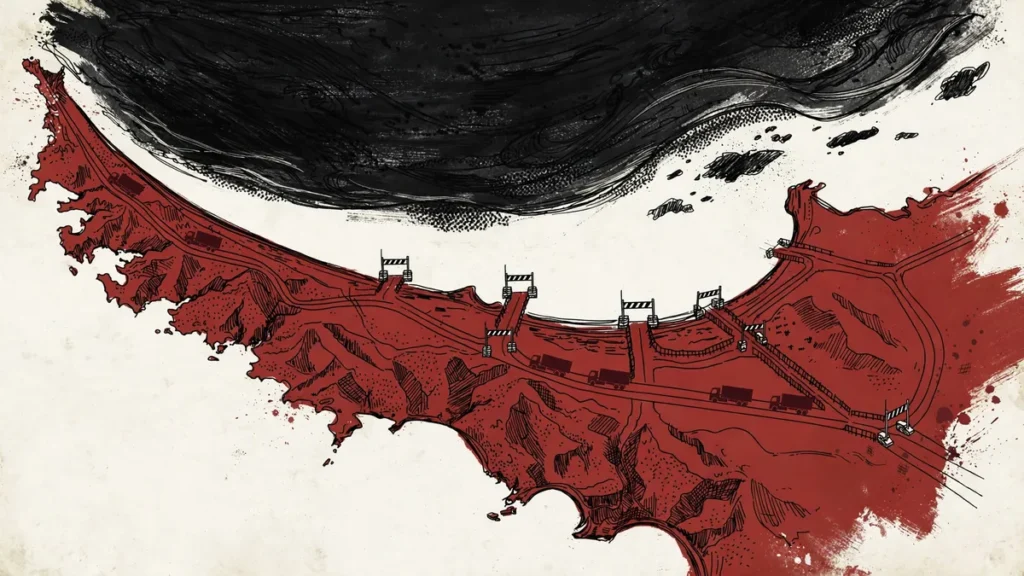
What would deployment actually look like, step by step?
The published roadmap lays out a sequence, not a single event. First, both parties complete their remaining obligations under the earlier Sharm el-Sheikh protocol, including the cessation of military operations. Within 14 days of agreeing the roadmap, a timeline and implementation mechanisms are to be prepared, extendable by the verification committee.
Second, once that timeline is complete, the NCAG enters Gaza and begins to assume its responsibilities, while the verification committee certifies compliance. Third, the ISF deploys to separate Israeli forces from NCAG-controlled areas. Only after those steps does the disarmament and storage of heavy weapons, production sites, depots and tunnels begin — managed and executed by the NCAG in a gradual, sequenced and time-bound manner, monitored and verified by the IVC with ISF support.
Fourth, Israeli forces complete a phased withdrawal on an agreed timetable linked to that disarmament, with a commitment in the roadmap not to force anyone to leave Gaza. Personal weapons would be regulated under Palestinian law, militia members would not be integrated into security and police services, and a social peace agreement would commit all sides to ending internal violence, retribution and armed displays. Reconstruction, overseen by the Board and the NCAG, would run in parallel — which is why the November 3 visit about tents and shelter matters: winter shelter is the most immediate reconstruction test, and nearly two million people needed shelter assistance as of October 9, according to the UN migration agency cited by Al Jazeera.
What does the November 3 picture show?
On November 3, 2026, Al Jazeera reported that Israeli forces had killed at least four Palestinians in attacks across Gaza, while a fifth person died of wounds from an earlier assault, according to medical sources and media reports. The Israeli military said it targeted Palestinian fighters in three strikes but provided no further details. Gaza’s Health Ministry put the toll since the October 2025 ceasefire at at least 1,593 killed and 5,748 wounded.
That toll is consistent with WarBrief’s own November 1 conflict-zone entry, which recorded 1,580 killed and 5,711 wounded as of October 31, 2026, and described the second phase as stalled. The small rise between the two dates is a toll update, not a new phase: it shows a ceasefire that has reduced full-scale war without stopping the killing.
A correction to some online coverage is also worth stating plainly. Some analyses dated November 3, 2026, describe a United States draft resolution as newly circulated that day and claim its adoption on a future date. The UN record does not support that framing: the draft was circulated in November 2025 and adopted as Resolution 2803 on November 17, 2025. What is new in late October and early November 2026 is implementation — signed contributor agreements, training, a published phase-two roadmap and a post-election wait for Israeli approvals — not a new authorisation. Readers should treat any claim of a fresh November 2026 Security Council vote as unverified unless a reputable outlet or the UN itself confirms a vote.
What the Gaza force delay means for US/UK/EU readers
For readers in the United States, Britain and Europe, the delay is not abstract. The United States commands the force through Major General Jasper Jeffers and chairs the Board that oversees it, so Washington’s diplomacy directly shapes whether the force deploys. European contributors are already in the pipeline: Albania signed its participation agreement in October 2026, Kosovo’s explosive-ordnance-disposal team has been ready since spring, and Morocco has trained personnel — so European and neighbouring-state troops, not only regional forces, are waiting on the same approvals.
There are also direct humanitarian and market stakes. Aid agencies need a secure route into Gaza and a functioning Palestinian police force to distribute it safely; without the ISF and the NCAG, aid remains exposed to the same insecurity that has marked the ceasefire year. And because Gaza’s future is tied to wider regional diplomacy — including the Iran talks and regional shipping covered in WarBrief’s conflict zones hub — a stalled Gaza transition keeps a live source of regional escalation on the agenda for Western governments, energy markets and travellers alike.
Different perspectives
Supporters of the plan argue that only a force with a Security Council mandate, a unified command and a clear link between disarmament and withdrawal can break the cycle in which each side waits for the other to move first. They point to the signed agreements, the training pipeline and the detailed roadmap as evidence that the architecture is real, even if deployment is slow.
Critics, including legal analysts, raise a different concern: the force is not a UN peacekeeping mission, its troops would not wear blue helmets or take orders directly from the UN, and the resolution’s “all necessary measures” language leaves the legal basis for force unclear. Disarming an armed movement, they argue, is extremely difficult without clear legal backing, sufficient troops and local consent — and a force strong enough to impose order may struggle to win the local support it needs to keep it.
Palestinian critics go further, arguing that a transitional administration chaired from outside Gaza, however technocratic its local committee, risks sidelining Palestinian self-determination. The roadmap answers that concern in part by giving the NCAG sole authority over weapons and internal security and by framing the process as a path to self-governance and statehood — but whether that promise is credible depends, as with everything else in this plan, on implementation.
What to watch next in Gaza
Watch first for an Israeli government decision on ISF entry and the proposed base near the Yellow Line: that is the practical trigger for any deployment. Watch second for the verification committee’s certification — or its absence — since the roadmap makes certification a precondition for phase-two steps. Watch third for the NCAG’s entry into Gaza and the start of police training in Egypt, both of which were reportedly postponed until after the Israeli election. And watch the winter shelter figures: if tents and reconstruction materials move at scale, it will be the first visible sign that the transition is moving from paper to ground.
Frequently asked questions
What is the Gaza Stabilization Force?
The International Stabilization Force is a temporary multinational force authorised by UN Security Council Resolution 2803 in November 2025. It would secure Gaza’s borders, protect civilians and aid, support the demilitarisation of Gaza, and train vetted Palestinian police, under the Board of Peace.
Has the force deployed in Gaza yet?
No. As of late October 2026, reporting by the Times of Israel and others said no ISF troops had yet deployed inside Gaza, although countries including Albania, Kosovo, Morocco and Kazakhstan had signed agreements or trained personnel, and Albanian liaison officers were expected to deploy to the region in November.
Who commands the force, and who governs Gaza under the plan?
The force is commanded by US Major General Jasper Jeffers under a unified command agreed by the Board of Peace, which is chaired by President Donald Trump. Day-to-day governance would fall to the Palestinian National Committee for the Administration of Gaza, with the International Verification Committee certifying compliance by all parties.
Why is disarmament the hardest part?
Because it is sequenced with Israeli withdrawal and verified step by step: Israel wants full disarmament before withdrawal, the Board envisions phased withdrawal tied to verified disarmament, and Palestinian factions want disarmament overseen by the Palestinian committee and linked to an end to attacks and a withdrawal timetable. Until that sequence is agreed in practice, deployment stalls.
Is the force a UN peacekeeping mission?
No. Legal analysts note it is not a traditional UN peacekeeping mission: troops would not wear blue helmets or take orders directly from the UN, and the resolution’s “all necessary measures” language leaves questions about its legal basis — one reason its mandate is debated as closely as its deployment.
Read next: Conflict Zones hub | Intelligence hub | Gaza ceasefire in name only: toll since October 2025 | Israel Elections 2026: What to Expect on October 27
Sources
- Board of Peace: Gaza Roadmap — A Roadmap to Complete the Implementation of President Trump’s Comprehensive Peace Plan for Gaza
- The Times of Israel: Albania formalizes Gaza stabilization force role, as Kosovo tells ToI its troops are ready to deploy
- Al Jazeera: Israeli forces kill four in Gaza as fifth Palestinian dies of wounds
- Just Security: Under the Gaza Peace Plan, Who Is Responsible for the Treatment of Protected Persons?
- United Nations Digital Library: Security Council draft resolution S/2025/748
- Sada News: Read the Draft Text of the Gaza Agreement for Transition to Phase Two

Discussion 0
Share analysis, corrections, or context. Be civil — comments are moderated.