
WarBrief Live | October 25, 2026 | Shipping and Logistics
By the numbers at a glance: 21.6 million barrels per day reported through Hormuz in late 2025, falling to 4.9 million in the second quarter of 2026 (EIA tracking data) | 28 confirmed and reported ship attacks in and around Hormuz in October (Washington Institute tally reported by Reuters) | 11 very large crude carriers damaged in October alone | Daily freight rates for Gulf-to-Asia very large crude carriers above $1 million (Reuters).
On October 24, 2026, Saudi-owned Al Arabiya reported that Iran had told Pakistan it was prepared to reopen the Strait of Hormuz if the United States lifted its naval blockade of Iranian ports. On October 25, an informed source speaking to Iran’s Tasnim news agency called that report “lies and fantasies” and said Iran had submitted no new proposal to Pakistani mediators. The clash is not just a row over a headline. It exposes the central shipping question of the Iran war: whether the world’s most important oil waterway can be reopened by a deal, or whether it stays shut until one side’s conditions are met in full. This article explains the Hormuz blockade shipping standoff, what is confirmed, what is only reported, and what it means for tankers, oil flows and fuel costs.
Key Takeaways
- Al Arabiya reported on October 24 that Iran offered, via Pakistan, to reopen Hormuz in exchange for lifting the US blockade; Tasnim’s source denied a new proposal on October 25.
- What is not in dispute is the standing Iranian position: a seven-day plan for reopening the strait, already conveyed to the United States, which Tehran says remains on the table.
- Tracking data show a steep fall in reported Hormuz oil flows, but the figures measure what tankers can be seen doing, not a complete picture of supply.
- October 2026 has been the worst month of the war for attacks on shipping in and around the strait, which keeps insurance and freight costs high even when cargoes move.
What happened in the Hormuz reopening row?
According to a report by Izvestia summarising Al Arabiya’s October 24 reporting, Iran had sent a proposal to the US administration through Pakistan to reopen the Strait of Hormuz in exchange for ending the US blockade of Iranian ports, and had told Pakistan it was ready to return to negotiations. Al Arabiya’s sources did not specify how Washington had reacted, or when talks might resume. The report landed at a moment of maximum tension: US President Donald Trump had said a strike on Iran could come as soon as “tomorrow” or that a “nice, big, beautiful agreement” might be reached instead, a decision point covered in WarBrief’s October 25 analysis of Trump’s “maybe tomorrow” remark.
The denial came quickly. Tasnim reported on October 25 that an informed source said Iran “fundamentally does not accept any equation of the Strait of Hormuz in exchange for the blockade,” that Iran was circumventing the blockade through its own methods, and that it had not submitted any new proposal to Pakistani mediators. The source added that Iran’s seven-point plan, setting out its demands, had already been conveyed to the United States and remained Tehran’s stated position. That distinction matters for readers: the dispute is primarily about whether a new offer exists, not about whether Iran has ever linked reopening the strait to an end to interference with its ports and shipping. On that underlying point, the Tasnim source was explicit: “Until all of Iran’s legitimate demands are met, one of which is ending interference with Iran’s ports and maritime shipping, the insecurity imposed by the American enemy in the Strait of Hormuz will not be eliminated.”
Separately, Iran’s ambassador to Pakistan, Reza Amiri Moghadam, told a seminar in Islamabad on October 24, in remarks carried by the Associated Press, that Iranian officials had conveyed through Pakistan that they were prepared to reopen the strait if Washington lifted its naval blockade, but accused President Trump of rejecting the proposal by insisting the blockade of Iranian ports would continue. Moghadam said the willingness had been conveyed during visits to Tehran by Pakistan’s army chief, Field Marshal Asim Munir. Readers should treat the ambassador’s account and the Tasnim source’s denial as two different Iranian voices describing the same channel at different levels of precision: one speaking about a willingness conveyed in talks, the other denying a formal new proposal. Neither, on its own, proves what was put in writing to Washington.
What is the June agreement both sides keep citing?
The June 2026 interim agreement, brokered by Pakistan and Qatar, is the reference point for both the reported offer and the denial. According to the Associated Press account of Moghadam’s remarks, that agreement sought to restore shipping through the strait, lift the US naval blockade, and begin negotiations toward a broader deal addressing Iran’s nuclear programme. It was, in other words, already a Hormuz-for-blockade bargain in outline, reached to end the first phase of the conflict. The current argument is therefore less about inventing a new formula than about whether that formula is being revived, revised, or simply restated.
Foreign Minister Abbas Araghchi added a further fixed point on October 18, 2026, when he said in Baghdad that Iran’s offer to reopen the Strait of Hormuz within seven days was still on the table, that the United States had responded, and that Tehran was reviewing those comments. That seven-day proposal is the plan the Tasnim source referred to on October 25 as already conveyed. For shipping, the practical consequence is the same whichever label is used: no reopening is on offer without movement on the blockade and on interference with Iranian ports, and no timetable has been agreed in public.
Background and timeline
The Strait of Hormuz, between Iran to the north and Oman and the United Arab Emirates to the south, is the exit route for Gulf oil and liquefied natural gas to world markets. The US-Israeli war with Iran began on February 28, 2026, and the strait has been contested ever since, through Iranian restrictions, a US naval blockade of Iranian ports, tanker attacks, and a patchwork of convoys, ship-to-ship transfers and rerouting. The timeline below sets out only dated, sourced steps in the current standoff.
- February 28, 2026: The US-Israeli war with Iran begins; the Strait of Hormuz becomes a contested waterway for the months that follow.
- June 2026: Pakistan and Qatar broker an interim agreement aimed at restoring shipping through the strait, lifting the US naval blockade, and opening negotiations toward a broader deal.
- October 18, 2026: Foreign Minister Abbas Araghchi says Iran’s seven-day proposal to reopen the strait remains on the table and that Tehran is reviewing a US response.
- October 23, 2026: The foreign ministers of Turkey, Egypt, Pakistan and Saudi Arabia call for the restoration of safe and unhindered navigation through the strait as soon as possible, according to Turkey’s foreign ministry.
- October 24, 2026: Al Arabiya reports a new Iranian offer via Pakistan to reopen Hormuz for an end to the blockade; Ambassador Moghadam says Tehran conveyed willingness to reopen the strait if the blockade is lifted.
- October 25, 2026: A Tasnim source denies any new proposal to Pakistani mediators and says Iran’s seven-point plan already conveyed to Washington stands.
How much oil is actually moving through Hormuz?
This is where readers need to separate tracked flows from physical supply. The US Energy Information Administration’s Short-Term Energy Outlook, published in August 2026, reports oil flows through the Strait of Hormuz falling from 21.6 million barrels per day in the fourth quarter of 2025 to 4.9 million barrels per day in the second quarter of 2026. Those are the figures most often quoted as proof that the strait is closed. They are real figures, but they are tracking-based: they record what tanker-tracking data can see, and the EIA’s own methodology note, as summarised by Energy Factbook, says that tracking data have been “especially unreliable” since late February 2026, when vessels began switching off transponders, using unauthorised routes, and transferring cargoes at sea.
More recent shipping data point in a different direction without contradicting the EIA picture outright. Reuters reported on October 23, 2026 that Gulf producers had pushed exports higher in September and October even as attacks rose, with daily freight rates for Gulf-to-Asia very large crude carriers exceeding $1 million and regional producers offering steeper discounts against dated Brent. Reuters also reported, citing Kpler data in early October, that crude crossing the strait had fallen 27 percent from a wartime high the week before to at least 10.1 million barrels a day, back to its September average. The honest summary is that Hormuz transits remain far below pre-war levels, are volatile week to week, and are partly hidden by design: a strait can look empty on a tracking map while cargoes still move through convoys, coastal routes and ship-to-ship transfers in the Gulf of Oman. WarBrief’s earlier October 2026 shipping-costs analysis and its energy-geopolitics overview track how those workarounds developed.
Why have attacks on tankers surged if exports are recovering?
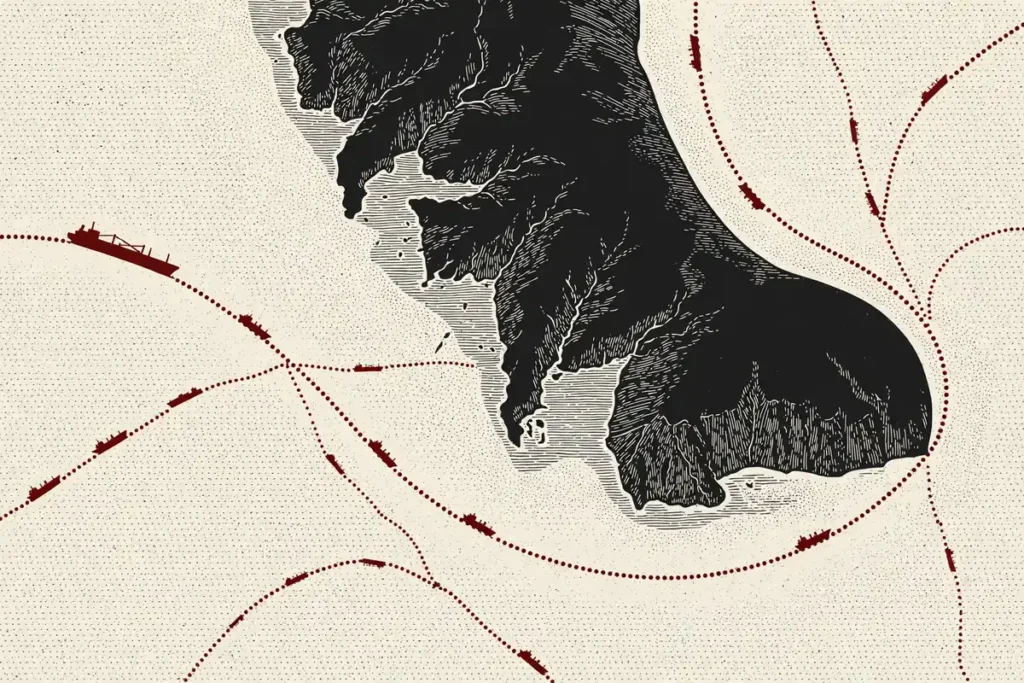
October 2026 has been the worst month of the war for commercial shipping in and around the strait, according to data compiled by the Washington Institute for Near East Policy and reported by Reuters on October 23. The institute recorded 28 confirmed and reported attacks in the Strait of Hormuz and surrounding waterways in October, and 113 since the war began on February 28. The International Maritime Organization recorded 120 incidents in the strait and the wider Middle East since the conflict began, and its list includes more than 30 very large crude carriers damaged, including 11 in October alone. Each such vessel can carry about 2 million barrels of crude, and the damaged vessels account for about 3.5 percent of the global very large crude carrier fleet, which exceeds 900 ships.
The surge and the export recovery are not contradictory. Higher freight rates and producer discounts have lured more owners to load inside the Gulf, Reuters reported, which puts more targets in the water at the same time as Iran steps up attacks to slow the recovery and maintain pressure on energy markets ahead of November’s US midterm elections. Between October 5 and October 11, a dozen ships were attacked, the highest weekly number since the conflict began, according to Greece-based consultancy Marisks, cited by Reuters. For crews and insurers, that tempo matters more than any single week’s export total: it is the reason war-risk pricing stays elevated, why some owners reroute around the Cape of Good Hope despite the longer voyage, and why a political “offer” that is denied within a day does nothing, on its own, to bring a single premium down.
By the numbers: what is confirmed and what is only reported?
| Metric | Figure | Source |
|---|---|---|
| Reported Hormuz oil flows, fourth quarter of 2025 | 21.6 million barrels per day (CONFIRMED as reported tracking data) | US Energy Information Administration, Short-Term Energy Outlook, August 2026 |
| Reported Hormuz oil flows, second quarter of 2026 | 4.9 million barrels per day (CONFIRMED as reported tracking data; EIA notes tracking has been especially unreliable since late February 2026) | US Energy Information Administration, Short-Term Energy Outlook, August 2026 |
| Confirmed and reported ship attacks in and around Hormuz in October 2026 | 28 (CONFIRMED tally) | Washington Institute for Near East Policy, reported by Reuters, October 23, 2026 |
| Very large crude carriers damaged in October 2026 | 11 (CONFIRMED from IMO list review) | International Maritime Organization list, reviewed by Reuters, October 23, 2026 |
| Gulf-to-Asia very large crude carrier daily freight rates | Above $1 million (REPORTED) | Reuters, October 23, 2026 |
| New Iranian offer to reopen Hormuz via Pakistan, October 24 | REPORTED by Al Arabiya; DENIED as a new proposal by a Tasnim source, October 25 | Al Arabiya via Izvestia; Tasnim, October 25, 2026 |
Caveat: figures marked CONFIRMED are confirmed as reported by the named source; tracking-based flow figures are not a complete measure of physical oil supply, because vessels switch off transponders and transfer cargoes at sea.
What does the Hormuz standoff mean for US, UK and EU readers?
For readers in the United States, Britain and the European Union, the Hormuz standoff reaches home through fuel prices, freight costs and market volatility rather than through any direct shipping link. When tanker owners face attack risk, war-risk premiums and longer rerouted voyages, those costs feed into delivered crude prices, and from there into petrol, diesel, heating and air fares, with a lag that varies by market. That transmission is why WarBrief’s October 24 analysis of why oil hit $117 tied the strike threat directly to fuel prices, and why a denied diplomatic offer still matters: markets price the risk of the next attack, not only the cargoes already loaded.
There is also a practical travel and supply point. Gulf air routes, holiday and business travel through the region, and goods that transit Gulf ports all sit downstream of the same security picture that closed Riyadh airport before its October 25 reopening. A reopened Hormuz would not instantly normalise any of this: mine clearance, insurance repricing and crew confidence take weeks, and any deal would need verification arrangements that have not yet been agreed in public. Until then, the most useful question for household budgets is not whether a headline offer is real, but whether attacks, freight rates and premiums are falling together for several weeks. On the latest verified data, they are not.
This article is educational only and is not financial advice. It does not recommend buying or selling any security, commodity or fuel contract.
What happens if the blockade and the strait stay linked?
If Tehran holds its stated position, that insecurity in the strait will not end until its demands are met, including an end to interference with its ports and shipping, then the standoff becomes a test of endurance: Washington maintains the blockade and naval presence, Gulf producers keep pushing cargoes through convoys and coastal routes, and Iran keeps attacking to raise the cost of that workaround. That is a stable, expensive equilibrium, not a resolution, and it explains why October’s attack record coincided with an export push rather than replacing it. For background on how blockades differ from sanctions in law and effect, see WarBrief’s explainer on naval blockades versus sanctions.
Two developments would change the picture quickly. The first is a verified, written agreement on reopening, with named verification and a timetable, rather than competing media reports about what was conveyed through intermediaries. The second is a sustained fall in attacks and premiums, which would signal that owners and insurers, not just diplomats, believe the risk has changed. Neither was present on October 25. The next test is therefore not another headline, but whether the coming week’s attack tally, transit count and freight rates move in the same, calmer direction.
What to watch next in the Hormuz shipping standoff
Watch for three things in the days ahead. First, any statement from Washington or Islamabad confirming or denying that a written proposal was received, which would settle the new-versus-standing question that Tasnim’s denial left open. Second, the next weekly attack and transit counts from UKMTO, the International Maritime Organization and Kpler, which will show whether October’s record pace is easing or accelerating. Third, any movement in very large crude carrier rates and war-risk pricing, which are the market’s own verdict on whether the strait is getting safer. WarBrief’s conflict zones hub will track each of those signals as they are verified.
Different perspectives
From Tehran’s perspective, as stated by the Tasnim source, the strait is leverage that should not be traded away for a blockade that, in its view, was imposed unlawfully, and any reopening must follow the meeting of its demands, including an end to interference with its ports. From Washington’s perspective, as reflected in President Trump’s October remarks, the blockade is pressure that should continue until a durable deal, including on the nuclear programme, is reached and can be held. From Gulf producers’ perspective, the priority is narrower and more immediate: getting cargoes out safely, whatever the diplomatic label, which is why convoys, discounts and rerouting have all expanded at once. From Asian buyers’ perspective, which matters because most Hormuz crude heads east, the priority is continuity of supply at a predictable price, and that is the audience most exposed to any prolonged premium. None of these perspectives, on its own, describes a deal that is ready to sign.
Frequently asked questions
What is the Strait of Hormuz and why does it matter for oil shipping?
The Strait of Hormuz is the narrow waterway between Iran and Oman and the United Arab Emirates that connects the Persian Gulf with the Arabian Sea. It is the exit route for a large share of Gulf oil and liquefied natural gas, so disruption there raises freight and insurance costs and can move global oil prices even when cargoes still move by other routes.
Did Iran offer to reopen the Strait of Hormuz in exchange for lifting the US blockade?
Al Arabiya reported on October 24, 2026 that Iran had made such an offer via Pakistan. On October 25, a source speaking to Tasnim denied that Iran had submitted any new proposal to Pakistani mediators, while saying Iran’s earlier seven-day plan for reopening the strait remained its stated position. The existence of a new written offer is therefore unconfirmed.
What is Iran’s seven-day plan for Hormuz?
Foreign Minister Abbas Araghchi said on October 18, 2026 that Iran’s proposal to reopen the strait within seven days was still on the table. The Tasnim source on October 25 described a seven-point plan already conveyed to the United States. The full written terms of that plan have not been published, so its precise conditions beyond an end to interference with Iranian ports and shipping remain unverified.
How much oil flows through Hormuz now?
The US Energy Information Administration reported flows of 21.6 million barrels per day in the fourth quarter of 2025 and 4.9 million barrels per day in the second quarter of 2026, but those are tracking-based figures and the EIA notes that tracking has been especially unreliable since late February 2026. More recent shipping data show volatile, higher transits in September and October, so no single figure should be read as a complete measure of supply.
What would reopening Hormuz mean for fuel prices in the US, UK and EU?
Reopening would, over time, ease freight and insurance costs and reduce the risk premium in oil prices, which can feed through to petrol, diesel and heating costs. The effect would not be instant: mine clearance, insurance repricing and restored crew confidence take weeks, and any deal would need verification arrangements that have not yet been agreed.
Sources
- Tasnim News: Source Rejects Report of Hormuz-for-Blockade Deal with US as ‘Lies and Fantasies’
- Associated Press via ETV Bharat: Iran Remains Open To Talks With US Under Pakistan-Brokered Deal, Envoy Says
- Reuters: Ship attacks in Strait of Hormuz hit record high in October
- Izvestia: Al Arabiya: Iran offered the United States to open the Strait of Hormuz for lifting the blockade
- US Energy Information Administration: Short-Term Energy Outlook, energy security data
- Reuters: Hormuz transits at lowest in over two months after attacks, data shows


Discussion 0
Share analysis, corrections, or context. Be civil — comments are moderated.