
WarBrief Live | October 24, 2026 | Breaking Analysis
On October 23, 2026, gunmen opened fire on mourners at a Greek Orthodox church funeral in the village of Hammoud in Jordan’s Karak governorate, killing at least seven people at the scene and wounding dozens more. By the morning of October 24, 2026, Jordan’s health minister said the death toll had risen to eight. This is what is known about the Jordan church shooting in Karak, what investigators have confirmed, and what remains unverified: no group has claimed responsibility, no motive has been established, and the gunmen were still at large when the latest official updates were published.
Key Takeaways
- Gunmen attacked a funeral at a Greek Orthodox church in Hammoud, Karak governorate, on October 23, 2026; the death toll rose to eight by October 24, 2026, according to Jordan’s health minister.
- Jordanian authorities have called the shooting a terrorist attack by extremists, but say it is too early to say whether the attackers were linked to any known group inside or outside Jordan.
- King Abdullah II visited the wounded in Karak on October 23, 2026, and promised the “harshest retaliation”, while the government declared three days of national mourning.
- The United States Embassy in Amman warned on October 24, 2026, that security had been stepped up across Jordan and that the manhunt and investigation were continuing.
What happened at the Hammoud church on October 23?
According to Jordan’s Public Security Directorate, the attackers arrived by vehicle and opened fire during a funeral procession at the church in Hammoud. State television footage described by Reuters appeared to show three armed men firing from the street before running towards the church entrance. Witnesses told state broadcaster Al-Mamlaka that the shooting lasted several minutes, and one witness put the number of people in and around the church at between 150 and 200.
Accounts still differ on details that matter. Footage broadcast by Al-Mamlaka appeared to show two men carrying pistols and a third carrying a longer firearm, while a mourner told the Associated Press that other people had reported seeing four attackers; the Associated Press said it could not independently verify that number. A witness told Al-Mamlaka that one attacker carried an AK-47-style rifle. Those differing witness accounts are not the same as an official finding, and this article does not treat them as settled fact.
What is not in dispute is the setting. The attack struck a funeral, in a place of worship, in a community where Christians and Muslims have lived alongside one another for generations. A witness who spoke to CNN described hiding behind the altar with other mourners as the shooting continued. Jordan’s Interior Minister, Mazin al-Farrayeh, described the attackers as extremists and said security forces were making every effort to find them, while stressing that it was too early to name any group behind the attack.
Background and timeline: how the casualty toll changed
The toll moved several times on October 23, 2026, and readers comparing early and late reports will see different numbers for a reason: officials revised their counts as hospitals reported in. Early reports put the dead at six and the wounded at 28. The head of the Public Security Directorate, Major General Abdallah al-Maaytah, later said seven people had been killed and 34 injured, with 27 of the wounded still receiving treatment. Later reporting, including Reuters on October 24, 2026, put the wounded at 40. On the morning of October 24, 2026, Health Minister Ibrahim al-Budour said the death toll had risen to eight and that one of the wounded remained in critical condition.
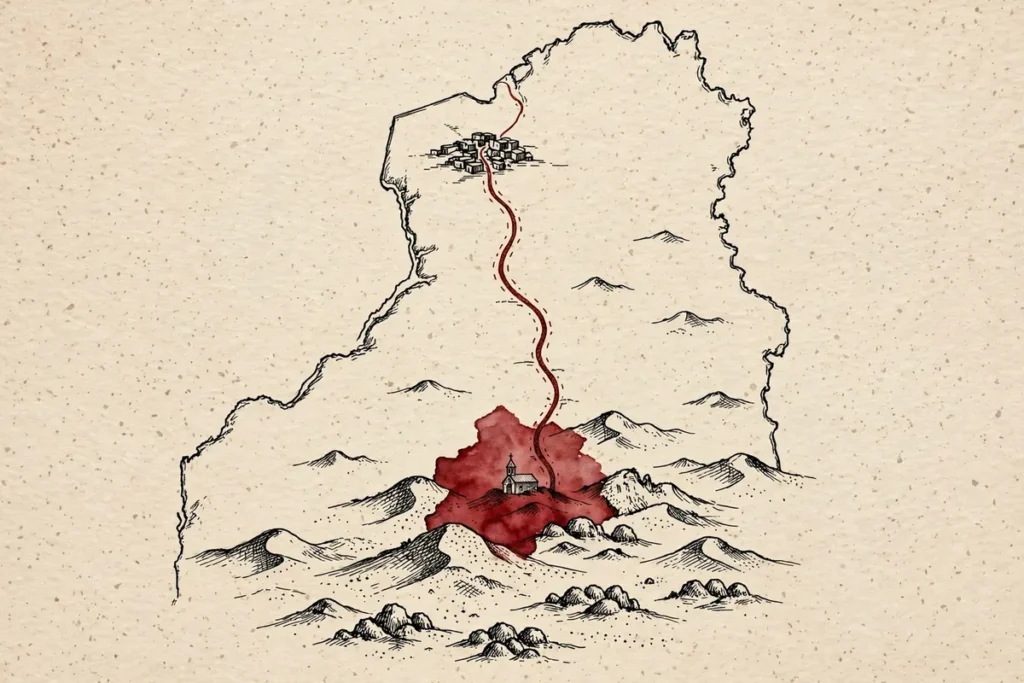
- October 23, 2026, daytime: Gunmen open fire during a funeral at the Greek Orthodox church in Hammoud, Karak governorate; early counts report six dead and 28 wounded.
- October 23, 2026, afternoon: Public Security Directorate chief Abdallah al-Maaytah revises the toll to seven killed and 34 injured; King Abdullah II visits Karak and the wounded in hospital that evening.
- October 23, 2026: Prime Minister Jafar Hassan orders three days of national mourning from October 23, 2026, with flags lowered to half-mast at ministries, government departments and public institutions.
- October 23, 2026, late evening: The United States Embassy in Amman issues a security alert saying the area around the attack has been cordoned off and the investigation is continuing.
- October 24, 2026, morning: Health Minister Ibrahim al-Budour says the death toll has risen to eight, with one wounded person still in critical condition; the manhunt continues.
Karak itself is no stranger to violence, which is part of why this attack has drawn such attention. In December 2016, gunmen attacked security patrols and a police station in Karak before barricading themselves in the town’s Crusader-era castle. Ten people were killed, including seven members of the security forces and a Canadian tourist, before security forces killed the attackers; Islamic State later claimed responsibility for that attack. The 2016 attack targeted security forces and a tourist site. The October 23, 2026, attack targeted a funeral inside a church, which is why Jordanian officials and foreign governments have described it in different terms.
By the numbers: confirmed, reported, and still unconfirmed
Separating confirmed figures from reported ones matters here because the numbers changed within hours. The table below uses the latest official statements available at publication and labels anything else accordingly.
| Metric | Figure | Source |
|---|---|---|
| Killed (latest, October 24, 2026) | 8 | Health Minister Ibrahim al-Budour, via Al-Mamlaka |
| Killed (October 23, 2026, official count) | 7 | Public Security Directorate chief Abdallah al-Maaytah |
| Wounded (latest reported) | 40 | Reuters, October 24, 2026, citing the Public Security Directorate chief |
| Wounded still receiving treatment (October 23, 2026) | 27 | Public Security Directorate chief Abdallah al-Maaytah |
| Wounded in critical condition (October 24, 2026) | 1 | Health Minister Ibrahim al-Budour |
| People in and around the church (witness estimate) | 150–200 | Witness to Al-Mamlaka (reported, not official) |
| Days of national mourning declared | 3 | Government directive via Petra News Agency |
Caveat: figures marked as witness estimates or early counts are reported, not confirmed by Jordanian authorities; the confirmed toll at publication is eight killed, with the wounded count most recently reported as 40.
Why has the Karak attack shocked Jordan?
Attacks on houses of worship are rare in Jordan, and an attack on a funeral inside a church is rarer still. Christians make up between 2 and 3 per cent of Jordan’s population, according to Agence France-Presse, and the Greek Orthodox Church is the largest denomination among them. Karak is home to a significant Christian community, and local leaders have stressed coexistence rather than division since the attack.
The Greek Orthodox Archdiocese in Jordan said that if the attack was aimed at driving Christians from the holy land, “it will only make us cling to it more firmly and deepen our roots in it”. That framing matters because Jordan presents itself internationally as a custodian of Christian and Muslim holy sites in Jerusalem, and as a relatively stable state in a region at war. An attack designed, or perceived, to divide Jordanians therefore strikes at a central part of the kingdom’s public identity, not only at one village.
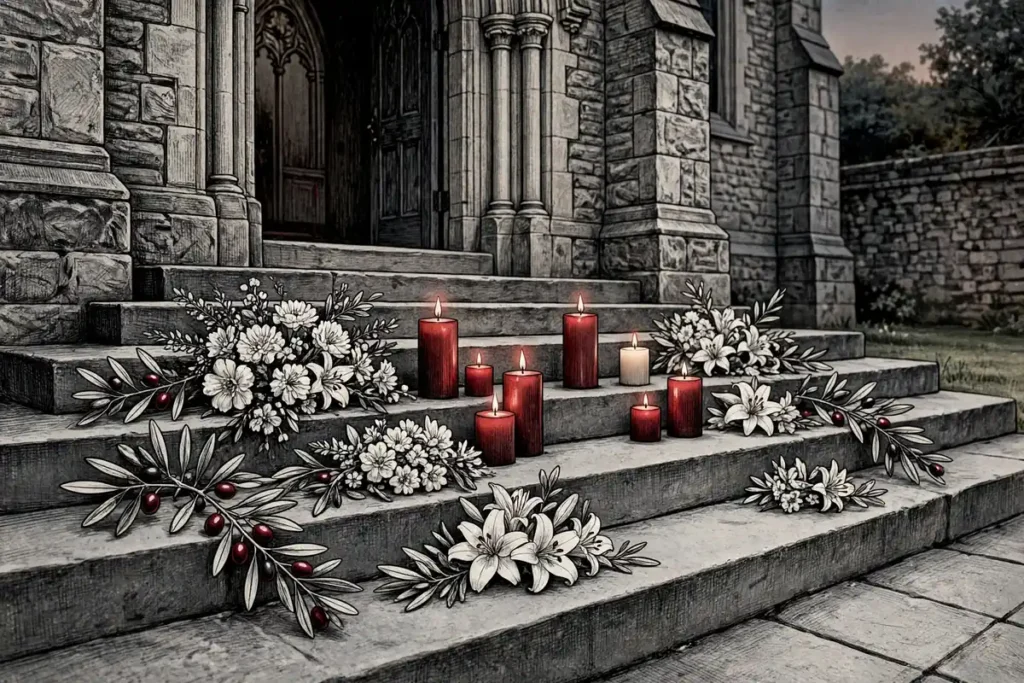
Jordan’s security record also shapes the shock. Reuters notes that Jordanian authorities say they have repeatedly foiled attempted attacks by Islamist militants in recent years, which makes a successful mass shooting at a church stand out against the usual pattern of prevented plots. That history does not, on its own, identify who carried out this attack. No claim of responsibility had been made at publication, and officials have explicitly said group links remain unknown.
Different perspectives on the Karak church attack
King Abdullah II’s response was immediate and personal. In an English-language post on X, he said: “The terrorist attack against Karak will be met with the harshest retaliation” and “We will strike with an iron fist against those who dare to threaten our nation.” He then travelled to Karak on the evening of October 23, 2026, and visited the wounded in hospital. Prime Minister Jafar Hassan, quoted by the official Petra news agency, attributed the attack to extremist terrorist ideology rooted in takfir, the practice of declaring others to be infidels, and said all state agencies were working to bring the perpetrators to justice.
International condemnation followed quickly. A spokesman for United Nations Secretary-General António Guterres said an attack “not only on a place of worship, but during a funeral procession, is especially heinous”. Lebanese President Joseph Aoun called the shooting a heinous terrorist attack and said terrorism has no religion and no homeland, and that its aim is to strike at coexistence and spread strife. Greek Prime Minister Kyriakos Mitsotakis said on X that targeting a place of worship was “an affront to our shared humanity”. The United States Embassy in Amman said the United States stands with King Abdullah II in confronting those seeking to sow discord and division.
Those statements share a condemnation, but they do not share an explanation, because none is yet available. Jordanian officials have used the language of extremism and terrorism; foreign governments have condemned the attack without attributing it. Until investigators name suspects, publish evidence, or a credible claim appears, the responsible reading is the official one: a terrorist attack whose perpetrators and motive are under investigation. Speculation about which group was involved, however widely repeated on social media, is not evidence, and this article does not repeat it as fact.
What the Karak attack means for US, UK and EU readers
For readers in the United States, the United Kingdom and the European Union, the most direct consequence is practical, not abstract. The United States Embassy in Amman said in its security alert late on October 23, 2026, that security had been stepped up at shopping malls, foreign embassies and other locations, and warned American citizens to expect a heightened police presence in many parts of Jordan. Travellers already in Jordan, or planning to travel there, should follow the guidance of Jordanian authorities and their own embassy, allow extra time at checkpoints and public venues, and avoid the cordoned area around Hammoud while the investigation continues.
The wider consequence is about regional stability. Jordan is a close United States ally, a partner in counterterrorism, and a state that has absorbed the pressures of wars on several borders while remaining comparatively stable. A successful attack on a Christian funeral tests that stability in a new way, and it arrives while the region is already tense: the WarBrief conflict zones hub tracks the overlapping crises around Jordan, including the United States order for diplomats to leave Saudi Arabia amid Houthi strikes and the intelligence memo behind that decision. None of those stories explains the Karak attack, and no evidence published so far links them to it, but together they describe a region in which security incidents travel quickly across borders, headlines and travel advice.
There is no reported disruption to commercial aviation or to Jordan’s borders arising from this attack at publication, and this article does not claim any. The effect to watch is subtler: whether Jordanian authorities can make arrests quickly, whether any group claims the attack, and whether foreign ministries update their travel guidance beyond the United States Embassy alert already issued. Those three developments, not speculation about motive, will determine how long the heightened security posture lasts.
What to watch next in the Karak investigation
First, the manhunt. Jordanian security agencies said on October 24, 2026, that they were continuing to hunt for the perpetrators and had cordoned off the area in Hammoud. Any arrest, or any official statement naming suspects, will be the single most important next development, because it will replace speculation with an investigable lead. Until then, the number of attackers, their weapons and their route out of Hammoud remain partly a matter of conflicting witness accounts.
Second, the casualty and medical picture. With one wounded person still in critical condition on October 24, 2026, the death toll could move again, as it already moved from seven to eight. Readers should expect further revisions and treat any single social-media figure as provisional until Jordan’s Public Security Directorate or Health Ministry confirms it.
Third, the official account of motive and links. Interior Minister al-Farrayeh said it was too early to determine whether the attackers had links to known groups inside or outside Jordan, and that investigators would announce findings once the investigation is complete. A claim of responsibility, if one appears, will need the same verification as any other claim: who made it, through which channel, and whether Jordanian authorities confirm it. A claim alone does not prove authorship.
Fourth, the public response in Karak itself. The funerals of the victims, the three days of national mourning, and the statements of the Greek Orthodox Archdiocese all point to a community response built around unity. Whether that holds, and whether Christian and Muslim leaders in Karak appear together in the coming days, will say more about the attack’s social impact than any single official statement. WarBrief will update this article if Jordanian authorities announce arrests, a motive, or a revised toll.
Frequently asked questions
What happened in the Jordan church shooting in Karak?
Gunmen opened fire during a funeral at a Greek Orthodox church in Hammoud, Karak governorate, on October 23, 2026. At least seven people were killed at the time, and Jordan’s health minister said on October 24, 2026, that the toll had risen to eight, with dozens wounded.
Who carried out the Karak church attack?
That is not yet known. Jordanian authorities have called the attackers extremists and said the attack was an act of terrorism, but they have said it is too early to determine whether the attackers were linked to any known group. No group had claimed responsibility at publication, and the gunmen were still at large.
Where is Hammoud, Karak, in Jordan?
Hammoud is a village in Karak governorate in southern Jordan, south of the capital, Amman. Karak is known for its historic Crusader-era castle and for a Christian community that has lived alongside Muslims for generations.
Why is the Karak church attack significant?
Attacks on houses of worship are rare in Jordan, and this attack struck a funeral inside a church in a mixed Christian-Muslim community. It also tests Jordan’s image as a stable state and custodian of holy sites, which is why the king visited Karak the same evening and foreign governments condemned it so quickly.
Is it safe to travel to Jordan after the Karak attack?
The United States Embassy in Amman warned on October 23, 2026, that security had been stepped up at malls, embassies and other locations, and that Americans should expect a heightened police presence. Travellers should follow Jordanian authority guidance and their own embassy’s advice, and avoid the cordoned area around Hammoud while the investigation continues.
Sources
- Reuters: US embassy says security ramped up in Jordan after deadly church attack
- Reuters: Unidentified gunmen open fire at church in Jordan, causing deaths and injuries, state TV says
- CNN: At least 8 people killed in unprecedented shooting at church in Jordan
- Associated Press via New Indian Express: Gunmen open fire at a church during a funeral in Jordan, killing 7 and wounding 40
- Anadolu via ANews: Death toll from church attack in Jordan rises to 8
- Dawn: Jordan church shooting claims 7 lives
- The Times of Israel: Seven killed in shooting at Jordan church; king vows harshest retaliation

Discussion 0
Share analysis, corrections, or context. Be civil — comments are moderated.