
WarBrief Live | October 23, 2026 | Breaking Analysis
Two Palestinian gunmen opened fire at an Israeli military checkpoint near Hebron on the morning of October 23, 2026, wounding five people before being shot dead by Israeli forces. Within hours, Prime Minister Benjamin Netanyahu ordered an immediate cordon around Hebron and instructed security forces to prepare for a full lockdown of the entire West Bank — four days before Israel holds its first national election since the October 7, 2023 attacks. This breaking analysis of the Hebron shooting and the West Bank lockdown of October 2026 separates what investigators have confirmed from what remains reported but unverified.
Key Takeaways
- Two gunmen opened fire at the Farsh al-Hawa checkpoint near Hebron on October 23; both were killed by Israeli forces, and five people were wounded, two critically, according to Israel’s Magen David Adom emergency service.
- Netanyahu ordered an immediate military cordon around Hebron and preparations for a full West Bank lockdown starting October 23, after a security assessment with the IDF chief of staff, the defense minister and the Shin Bet chief.
- The IDF says the attackers carried an automatic rifle, a handgun and a large quantity of ammunition, and believes they planned a larger attack; Palestinian media named the two men as relatives from Hebron, which remains unconfirmed by Israeli authorities.
- The shooting lands four days before Israel’s October 27 election — the first since October 7, 2023 — and coincides with Israeli strikes in Gaza that killed at least four Palestinians on the same day, further straining a year-old ceasefire.
What happened at the Hebron checkpoint on October 23?
The attack took place in the early morning at the Farsh al-Hawa checkpoint — also referred to as the Judea Junction or Yehuda Junction checkpoint — at the northern entrance to Hebron in the occupied West Bank. An AFP journalist who was en route to another assignment witnessed the gun battle break out and saw two Palestinian men, armed with a handgun and an automatic rifle, exchanging fire with Israeli forces before troops shot and killed them. The journalist later saw their bodies lying on the ground next to a petrol station as troops patrolled the area, according to reports carried by The Straits Times.
Israel’s military said soldiers rushed to the scene after the shooting and “eliminated two terrorists,” adding that the gunmen arrived in a vehicle carrying a large quantity of ammunition. IDF Chief of Staff Lt Gen Eyal Zamir described the attack as “serious,” saying the ammunition found in the vehicle was intended for a larger-scale attack, The National reported.
Five people were wounded in the shooting, two of them in critical condition, Israel’s Magen David Adom emergency service said. CNN reported that it was not immediately clear whether the victims were soldiers or civilians, while The Hindu reported that all five were Israelis in their 20s, including one man in “very serious condition” with gunshot wounds. Emergency responders said gunfire was still ongoing when they arrived at the scene.
Palestinian media outlets named the two dead men as Mohammad Jaaba and Firas Jaaba, both 27 and from Hebron, describing them as family members — an identification Israeli authorities had not confirmed as of publication. Treat the names as reported, not confirmed.
Why did Netanyahu order a full West Bank lockdown four days before Israel’s election?
Netanyahu held a security assessment with senior officials — including Zamir, Defense Minister Israel Katz, Shin Bet head David Zini, National Security Adviser Shmuel Ben Ezra and IDF Central Command chief Maj Gen Avi Bluth — and then announced the lockdown measures on social media, The Times of Israel reported.
“I salute the courage of our soldiers who acted with determination and prevented what could have been a major attack. I have instructed the IDF and security forces to impose an immediate cordon on the city of Hebron and to prepare for a full lockdown of all of Judea and Samaria starting today.” — Benjamin Netanyahu, statement, October 23, 2026
The prime minister’s office said the orders took effect on Friday, October 23. The IDF imposed what it described as a “full siege” on Hebron and set up roadblocks and closures in surrounding Palestinian towns. Netanyahu also cancelled all Likud party political meetings scheduled for October 23.
The timing is impossible to separate from the election calendar. Israelis vote on October 27 — Tuesday — in the country’s first election since the Hamas-led October 7, 2023 attack, and Netanyahu is facing a tight race while campaigning as a security hardliner. Our preview of Israel Elections 2026: What to Expect on October 27 lays out the stakes. The Times of Israel noted that the West Bank and Gaza were already expected to be under lockdown on Monday and Tuesday as a routine election-security measure; the Hebron attack has now brought that lockdown forward and widened its scope.
Far-right National Security Minister Itamar Ben-Gvir, who lives in the Hebron-area settlement of Kiryat Arba, responded by calling for the Palestinian Authority to be “dismantled and demilitarised,” saying its “terror infrastructure” must be “wiped out completely.” Officials presented no evidence linking the West Bank leadership to the shooting. Hamas, without claiming responsibility, praised the attack as a “heroic operation” and called for more attacks, according to The Hindu.
By the numbers: what is confirmed and what is reported
Breaking stories attract conflicting early figures. Here is where the Hebron shooting stands, with each figure traced to its source.
| Metric | Figure | Source |
|---|---|---|
| CONFIRMED (multiple independent sources) | ||
| Gunmen killed at the Hebron checkpoint | 2 | AP; CNN; IDF statement |
| People wounded in the attack | 5, two critically | Magen David Adom via CNN, Times of Israel, The Hindu |
| Weapons recovered | Automatic rifle, handgun, large quantity of ammunition | IDF; IDF chief of staff via The National |
| Full West Bank lockdown ordered | Yes — effective October 23 | Netanyahu’s office; AP; CNN |
| Palestinians killed in Gaza strikes, October 23 | At least 4 | Reuters; Daily Sabah |
| Israeli election date | October 27, 2026 | Times of Israel; The Hindu |
| REPORTED (single or secondary sourcing — treat as provisional) | ||
| Identity of the two gunmen | Mohammad Jaaba and Firas Jaaba, both 27, of Hebron | Palestinian media via The National |
| Palestinian death toll since Gaza ceasefire began | At least 1,500 | Gaza health officials via Reuters |
| Palestinians arrested in West Bank raids, October 22 | 36 | Al Jazeera |
| Attacks on olive-harvest farmers documented | 17 | Palestinian Colonization and Wall Resistance Commission |
Caveat: figures marked “reported” come from a single outlet or from parties to the conflict and had not been independently corroborated at publication time; casualty and arrest numbers in fast-moving events are routinely revised.
Background: a year of ceasefire violations and rising West Bank violence
The shooting did not happen in a vacuum. The Gaza ceasefire brokered by the United States took effect on October 10, 2025, and was supposed to lead to Israeli troop withdrawal and reconstruction. Instead, both sides accuse each other of violations, and violence has continued almost daily.
On the same day as the Hebron attack, Israeli strikes and gunfire killed at least four Palestinians across the Gaza Strip, according to Reuters and Daily Sabah: a strike on a car in Gaza City, strikes on a motorcyclist in Khan Younis and a man near the Nuseirat refugee camp, and gunfire that killed a woman near the Jabalia refugee camp. Israel’s military said it had struck Hamas fighters in Khan Younis, Nuseirat and Gaza City. Gaza health officials say at least 1,500 Palestinians have been killed since the ceasefire began; Israel says four of its soldiers have died in the same period.
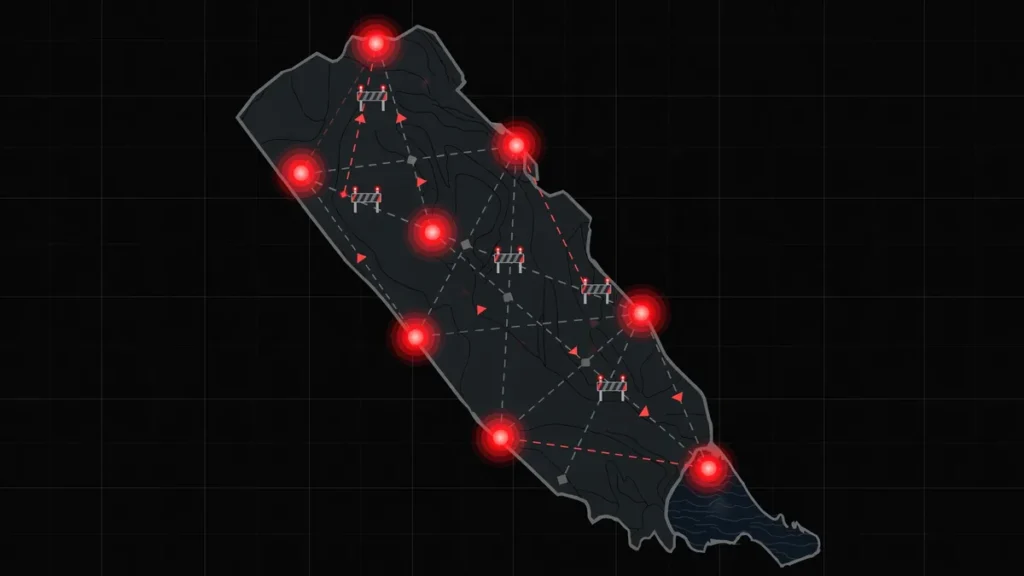
In the West Bank, tensions have been climbing through the olive harvest season. Al Jazeera reported that Israeli forces arrested 36 Palestinians in raids across the territory on October 22, while a Palestinian commission documented 17 attacks by Israeli forces and settlers against farmers and their land that day. Al Jazeera’s live coverage described settler and soldier violence sweeping the territory ahead of the election. The West Bank already contains more than 900 Israeli military checkpoints, gates and barriers, and closures between Palestinian cities are routine — especially around elections and Jewish holidays — though CNN noted that Israel lacks the forces to shut down every crossing and impose a truly complete closure.
The broader regional backdrop matters too. The same week saw a US-Russia diesel supply arrangement that has strained Washington’s relationship with Kyiv, an Israeli strike in Beirut that killed a Hezbollah commander on October 21, and a reported US veto of an Israeli October offensive against Iran. Each flashpoint is feeding the others ahead of the Israeli vote.
What the Hebron shooting and West Bank lockdown mean for US/UK/EU readers
For most readers in the US, UK and EU, the direct effects are limited — but three channels matter. First, travel: Western foreign ministries already advise against travel to the West Bank, and a full closure means checkpoints seal, Palestinian workers with Israeli permits cannot cross, and movement between cities freezes. Anyone with travel plans in Israel and the Palestinian territories in the coming week should expect disruption and check their government’s current advisory before moving.
Second, the October 27 election outcome. Netanyahu is campaigning on security credentials in the tightest race of his career; an attack four days out — and his response to it — could move late-deciding voters. The result will shape everything from Gaza ceasefire diplomacy to settlement policy and Israel’s posture toward Iran, all of which directly affect US and European foreign policy. Our conflict zones hub tracks how these threads connect.
Third, humanitarian and diplomatic pressure. A full West Bank lockdown plus continued Gaza strikes will intensify scrutiny from European capitals and from parts of Washington, particularly over aid access and the stalled reconstruction of Gaza. Markets are unlikely to move on this story alone — but it adds to a regional risk premium already elevated by the Iran war and the Hormuz shipping disruptions we have been covering this week.
What to watch next in the West Bank and Gaza
The immediate question is how far the lockdown actually goes. Netanyahu ordered preparations for a “full lockdown,” but as CNN noted, Israel does not have the manpower to seal every one of the 900-plus checkpoints and barriers — the practical test over the weekend will be how many crossings close, for how long, and whether the closure extends past the October 27 vote. A second test is retaliation risk: Hamas praised the Hebron attack and called for more, while Ben-Gvir’s call to dismantle the Palestinian Authority raises the political temperature ahead of polling day.
In Gaza, watch whether the daily strikes continue through the weekend and whether the ceasefire’s guarantors — the US and the Arab mediators — issue any new statements. With the Israeli election on Tuesday, any major escalation in either theater now carries direct electoral consequences, which makes the next 96 hours the most volatile stretch of an already volatile year.
Frequently asked questions
Why did Israel order a full West Bank lockdown?
Prime Minister Benjamin Netanyahu ordered an immediate cordon around Hebron and preparations for a full West Bank lockdown on October 23, 2026, after two Palestinian gunmen opened fire at the Farsh al-Hawa checkpoint near Hebron, wounding five people. Netanyahu said the military had prevented “what could have been a major attack.” The order came four days before Israel’s October 27 national election.
Who were the Hebron shooters?
Palestinian media named the two dead men as Mohammad Jaaba and Firas Jaaba, both 27 and from Hebron, describing them as relatives. Israeli authorities had not confirmed their identities at publication time, and the IDF said it did not elaborate on the target of the alleged attack. Hamas praised the shooting without claiming responsibility.
How long will the West Bank lockdown last?
That is not yet clear. Netanyahu’s order took effect on October 23, and the IDF imposed what it called a “full siege” on Hebron. The West Bank and Gaza were already expected to be locked down on October 26–27 as a routine election-security measure, so at minimum the restrictions are likely to run through polling day — and possibly beyond, depending on the security situation.
Is the Gaza ceasefire still holding?
Barely. The US-brokered ceasefire took effect on October 10, 2025, but both sides accuse each other of violations. On October 23 alone, Israeli strikes and gunfire killed at least four Palestinians in Gaza, according to Reuters. Gaza health officials say at least 1,500 Palestinians have been killed since the truce began — a figure that has not been independently verified.
What does the Hebron attack mean for Israel’s October 27 election?
It puts security at the center of the campaign’s final days. Netanyahu, facing a tight race in Israel’s first election since October 7, 2023, cancelled Likud political events and is leaning into his security-hardliner image. How voters judge his response — and whether further violence follows — could decide the outcome.
Sources
- Associated Press: Israel orders soldiers to close off the West Bank following an attack in the Palestinian territory
- CNN: Netanyahu orders West Bank lockdown after Hebron attack
- Al Jazeera: Live coverage — Netanyahu announces ‘full lockdown’ of West Bank following shooting
- The National: Netanyahu orders West Bank lockdown after Hebron checkpoint shooting
- The Times of Israel: 5 injured, 2 critically, in West Bank shooting; IDF believes gunmen planned larger attack
- The Hindu: Netanyahu orders West Bank closure as attack wounds Israelis before election
- Reuters (via Tribune): Israeli strikes, gunfire kill four in Gaza
- Daily Sabah: Israeli strikes kill at least 4 Palestinians in Gaza despite ceasefire

Discussion 0
Share analysis, corrections, or context. Be civil — comments are moderated.