
WarBrief Live | October 9, 2026 | Naval Warfare
The USS Abraham Lincoln steamed into San Diego Bay on October 8, 2026, ending a 322-day deployment that included a record 265 consecutive days at sea — the longest unbroken stretch at sea in the history of the US Navy. The Nimitz-class carrier and its strike group had been held on station in the Middle East to enforce the American naval blockade during the war with Iran, a mission that pushed the crew to its limits and turned the ship into a symbol of a grinding, unpopular war.
Key Takeaways
- The USS Abraham Lincoln docked at Naval Air Station North Island, San Diego, on October 8 after 322 days away, setting a Navy record of 265 consecutive days at sea.
- The deployment was extended over the summer to enforce the US naval blockade during the Iran war; the strike group flew thousands of combat missions and launched 450 Tomahawk cruise missiles, according to its unit citation.
- The Navy told lawmakers that eight sailors attempted suicide during the deployment, and food shortages drew Congressional scrutiny after an Iranian attack destroyed the Navy’s Bahrain logistics hub.
- Defense Secretary Pete Hegseth visited the ship on October 7 and awarded the strike group the Presidential Unit Citation, the highest US unit honor, while pushing back against critical media coverage.
What happened when the USS Lincoln came home?
Thousands of sailors poured off the carrier on Thursday to cheers, tears and embraces at the San Diego naval base, in a homecoming thick with emotion after more than ten months away. Among the first down the gangway were 64 fathers meeting their babies for the first time; counting the air wing, 122 new dads came home, the Navy said, according to the Associated Press.
For many families, the reunion closed months of worry. Relatives described crying and losing sleep after news reports of supply shortages and deteriorating mental health on board, with contact limited to the occasional email or rare WhatsApp call. Sailor Kathy Monterrosa, holding her six-month-old daughter Sarahi, said her husband had told her conditions were “pretty bad” — but that she now felt blessed to have her family home.
Twenty-year-old Abel Ramirez, finishing his first deployment, said it felt amazing to be back, adding that at one point he never thought he would come off the ship. His parents had driven from Texas to meet him. Fourteen-year-old Cassity Garduque waved to her mother on the top deck, saying she was happy her mom would no longer be eating ramen almost every day, and that she had missed most of her seventh grade and her birthday.
The craving for real food was a running theme. Alma Solano Velez said her husband sent an extensive list of foods he had been dreaming about over ten months — oxtail, barbecue chicken, broccoli and shrimp empanadas — and spoke of the lack of food and showers on board, Al Jazeera reported.
Why was the Lincoln deployed for 322 days?
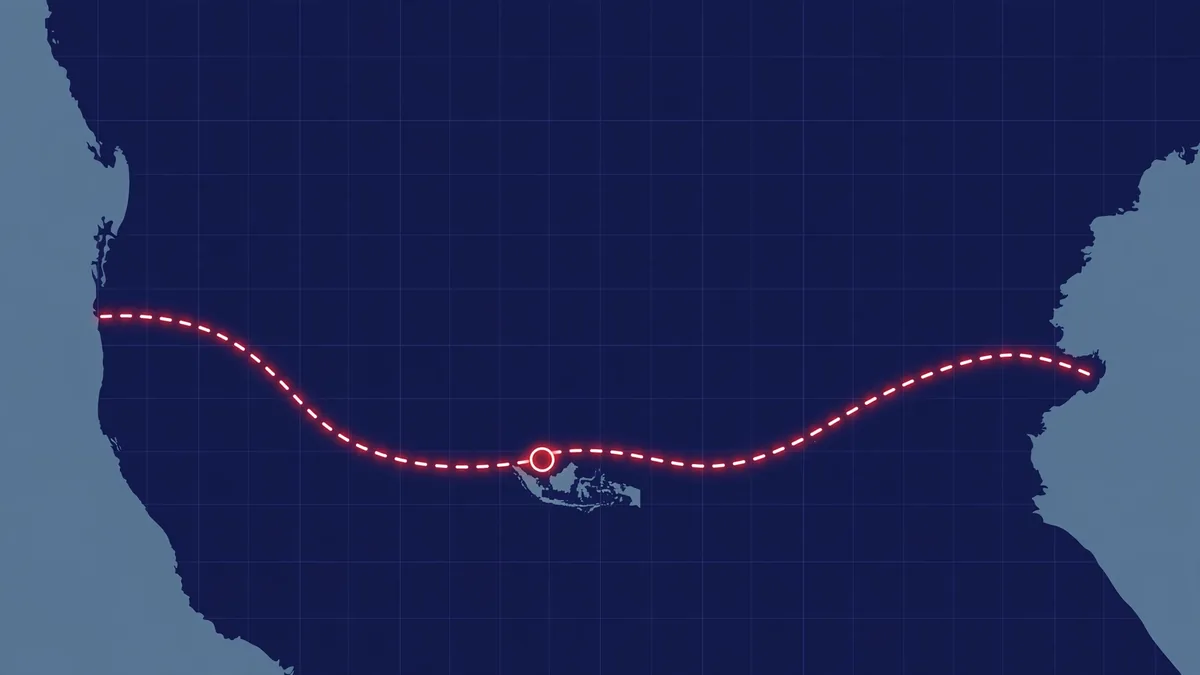
The Lincoln left San Diego in November and arrived in the Middle East in January. When US and Israeli forces launched strikes against Iran on February 28, the carrier became one of the central instruments of the American campaign — conducting airstrikes against Iranian targets and enforcing the United States blockade of the Strait of Hormuz, spending more than 200 days in the war zone, according to USA Today.
The deployment was originally meant to end in the summer. Instead, the ship was kept on station to help enforce the naval blockade in the Arabian Sea, part of the broader American effort to choke off Iranian oil exports and pressure Tehran, Times Now reported, citing The Hill. The USS George Washington relieved the Lincoln in August, but the ship remained at sea until a brief port stop in Pattaya, Thailand, in early September — its first in months.
Blockade duty is only one part of what a carrier strike group does; our explainer on what a carrier strike group actually does breaks down the full mission set. The fighting around the waterway it was blockading is tracked in our Hormuz Kill Box coverage.
By the numbers: a record deployment
| Metric | Figure | Source |
|---|---|---|
| Total deployment length | 322 days | AP, Al Jazeera — CONFIRMED |
| Consecutive days at sea | 265 (Navy record) | AP, Al Jazeera — CONFIRMED |
| Sailors aboard | ~5,000 | The Hill via Times Now; NY Post — CONFIRMED |
| Suicide attempts | 8, none fatal | AP; USA Today — CONFIRMED |
| USS Gerald R. Ford deployment (ended May 2026) | 326 days | AP — CONFIRMED |
| Combat sorties | 3,693 | Unit citation via Times Now — REPORTED |
| Ordnance delivered | 1.37 million pounds | Unit citation via Times Now — REPORTED |
| Tomahawk missiles launched | 450 | Unit citation via AP/Times Now — REPORTED |
| Iranian one-way attack drones shot down | 77 | Unit citation via AP/Times Now — REPORTED |
| Iranian warships sunk | 64 | Unit citation via AP/Times Now — REPORTED |
| Anti-ship cruise missiles destroyed | 21 | Unit citation via AP/Times Now — REPORTED |
Figures marked CONFIRMED are corroborated by two or more outlets. Combat figures marked REPORTED come from the Presidential Unit Citation text read aloud by Defense Secretary Hegseth and reported second-hand; independent verification of Iranian losses is unavailable.
What went wrong on board?
Part of the supply trouble traces back to Bahrain. An Iranian missile and drone attack destroyed the Navy’s base there — home to the US 5th Fleet and the Navy’s main logistics hub in the region — leaving the Lincoln struggling to resupply during combat operations, according to USA Today. Times Now reported that the Iranian strikes badly damaged Naval Support Activity Bahrain, forcing the ship to stretch its stores.
In August, acting Navy Secretary Hung Cao said the Lincoln maintained adequate food supplies but that combat operations limited resupply opportunities, so meal options were reduced for a short time. In a September 22 reply to Senator Kirsten Gillibrand, who had pressed Navy leadership for answers, Cao revealed that eight sailors had attempted suicide, one sailor had gone overboard and was quickly recovered, and another had attempted to go overboard. The Navy also acknowledged cutting the number of main entrée options from two to one to “optimize endurance,” while insisting four meals were served daily and all were nutritionally balanced.
The ship’s commander, Captain Daniel Keeler, said most of the crew was on its first deployment and that the issues they faced were normal for such a long deployment, adding that everyone had access to four meals a day. “It’s a floating city as you can see and at any moment there might be a clogged toilet,” he said. Experts cited by the AP noted that eight attempts, while serious, is a low number for a strike group of 6,000 sailors over ten months.
Still, the conditions made the Lincoln a political story. The deployment became a symbol of the wider strain the war has placed on the US military, with news reports of deteriorating conditions drawing sustained Congressional scrutiny — and the ship’s troubles arriving just weeks before the November midterm elections.
Why did Hegseth award the Presidential Unit Citation?
On October 7, the day before the homecoming, Defense Secretary Pete Hegseth flew out to the Lincoln and spoke to the crew for 16 minutes, presenting the carrier strike group with the Presidential Unit Citation — the highest unit-level military decoration, typically reserved for significant achievement in combat. The Lincoln is the second carrier to endure an unusually long Iran-war deployment and receive the award afterward; the USS Gerald R. Ford’s crew got the same honor after returning in May from a 326-day deployment, the longest for an aircraft carrier in the past 50 years.
Hegseth told the sailors that what sets the US military apart is that “you adapt and that you’re resilient and you overcome — you finish the mission nonetheless,” and said the crew had “changed the arc of history” by keeping Iran from obtaining a nuclear weapon. He acknowledged the tough environment but pushed back hard against the coverage, accusing the media of trying to turn the Lincoln into “a symbol of dysfunction or a symbol of low morale or a symbol of a failed mission.”
President Trump had taken the same line for months. At an Oval Office meeting on August 17 he called the reporting about the ship “fake news,” saying people he knew on the Lincoln described it as beautifully maintained and taken care of — and when confronted with how long the ship had gone without a port stop, he quipped that its deployment was “not nearly long enough.”
The political backdrop is a war that has grown deeply unpopular at home. A Pew Research Center poll released October 8 found 65 percent of Americans disapproved of Trump’s handling of the war, against 33 percent who approved, Al Jazeera reported. On the same day, Trump pledged no strikes on Iran before the November 3 midterm elections, citing “productive” talks with Tehran.
What this means for US/UK/EU readers
Two record-breaking carrier deployments within five months — the Ford’s 326 days in May and the Lincoln’s 322 now — are a flashing warning light for US naval readiness. Carriers are finite: every extra month at sea is borrowed from maintenance, training and the next deployment. A fleet stretched this thin in the Middle East has less slack for a crisis in the Indo-Pacific, which matters directly to UK and European security planners who rely on American naval power as the backstop of the Western alliance.
For household budgets, the channel is energy. The blockade the Lincoln was enforcing is the same one that has driven shipping battles in the Strait of Hormuz and pushed fuel costs higher across the US and Europe — war-risk insurance and rerouted tankers show up at the pump and in heating bills. Our broader conflict zones coverage tracks how these pressures are evolving.
For American readers, the crew-hardship story lands weeks before the midterms, with 65 percent disapproval of the war’s handling and a defense establishment openly debating how long sailors can be kept at sea. Whatever the next phase of the war looks like, the Lincoln’s deployment will be the case study Congress reaches for.
Different perspectives
Navy leadership frames the deployment as a success story of endurance: the mission was completed, the blockade held, and the strike group’s combat record speaks for itself. Captain Keeler’s view — that the hardships were normal for a deployment of this length — is the institutional line: long deployments are hard, and the crew adapted.
The crew’s families tell a different story, of months with almost no contact and genuine fear about conditions on board. Their accounts of food shortages and poor living conditions are what turned a routine carrier rotation into a national controversy.
Critics in Congress and the press see the Lincoln as evidence that the war effort is straining the force faster than the Pentagon admits — a view sharpened by the Bahrain base attack, which showed how exposed American logistics in the region can be.
The administration sees vindication: a record deployment, a decorated crew, and — in Hegseth’s telling — a historic mission that changed the course of events. The truth, as usual, sits between the citation’s triumphant numbers and the sailors’ reunion tears.
What to watch next
The Lincoln now enters an extended maintenance period in San Diego while its crew reunites with families — and while the USS George Washington holds its station in the Middle East. Whether the Pentagon can avoid repeating the 322-day experiment depends on the wider force posture: a third US carrier is reportedly heading to the region as Trump weighs strikes after the midterms, which could either relieve the pressure or deepen the commitment.
Watch for the Congressional response. The Gillibrand inquiry forced the Navy to disclose the suicide attempts; further hearings on crew conditions and deployment lengths are likely, and their findings could reshape how long the Navy is allowed to keep ships at sea.
And watch the diplomacy. Trump’s no-strikes-before-November-3 pledge freezes the military picture for now — but what happens after the midterms will decide whether carriers like the Lincoln are heading back out, and for how long.
Frequently asked questions
Why was the USS Abraham Lincoln at sea for 322 days?
The deployment was repeatedly extended after the US-Israel war with Iran began on February 28, 2026. The carrier was kept on station to conduct airstrikes against Iranian targets and enforce the US naval blockade of the Strait of Hormuz. The USS George Washington relieved it in August, but the Lincoln stayed at sea until a brief port stop in Pattaya, Thailand, in early September — its first in months.
Did any sailors die during the deployment?
No deaths were reported. The Navy told lawmakers that eight sailors attempted suicide during the deployment, and acting Navy Secretary Hung Cao confirmed that one sailor went overboard and was quickly recovered, while another attempted to go overboard. Experts cited by the AP noted the figure is low relative to a strike group of 6,000 sailors over ten months.
What is the Presidential Unit Citation?
It is the highest unit-level military decoration in the US armed forces, awarded for extraordinary heroism in action. Defense Secretary Pete Hegseth presented it to the Lincoln carrier strike group on October 7, 2026, the day before the ship’s homecoming. The USS Gerald R. Ford’s crew received the same award after its record deployment ended in May.
Is the Lincoln’s deployment a Navy record?
Its 265 consecutive days at sea is a Navy record for uninterrupted time at sea. The total 322-day deployment is just short of the USS Gerald R. Ford’s 326-day deployment that ended in May 2026 — the longest for an aircraft carrier in the past 50 years.
What happens to the USS Lincoln now?
The ship is back at Naval Air Station North Island in San Diego, where it will undergo maintenance while the crew reunites with families after more than ten months away. The USS George Washington has taken over its mission in the Middle East.
Sources
- Al Jazeera: USS Lincoln returns to US after long deployment supporting war on Iran
- Associated Press (via NPR): The long-deployed USS Lincoln returns home to San Diego Bay
- Times Now: USS Abraham Lincoln Returns to San Diego After Record-Long Iran War Deployment
- USA Today: The USS Lincoln is returning home as lengthy deployment ends



Discussion 0
Share analysis, corrections, or context. Be civil — comments are moderated.