
WarBrief Live | October 18, 2026 | Explainer
Last updated: October 18, 2026. We update this guide when major AI-military developments break.
AI autonomous weapons — systems that can select and engage targets without further human intervention once activated — sit at the center of the most consequential debate in modern military technology. How close are we to machines fighting without humans? The honest answer is layered: AI-assisted weapons are everywhere on today’s battlefields, semi-autonomous systems already select and engage targets under human supervision, and the international community is racing to decide whether truly autonomous killing machines should be banned, regulated, or left to the market of military competition.
Key Takeaways
- AI autonomous weapons span a spectrum: AI-assisted (human decides), semi-autonomous (system acts, human can intervene), and fully autonomous (no human in the engagement decision).
- U.S. policy — DoD Directive 3000.09, updated January 2023 — does not ban autonomous weapons; it requires senior review and “appropriate levels of human judgment” by design.
- The UN’s Group of Governmental Experts on lethal autonomous weapons met twice in 2026 and produced a draft framework; a November 2026 review conference will decide next steps. Whether any of it becomes binding is unresolved.
- Real systems exist across the spectrum: loitering munitions, sentry guns, automatic air-defense modes, and naval drones — but most fielded systems remain remotely piloted or human-supervised.
- Accountability is the unresolved question: the law holds humans responsible, but determining which human is the hard part.
What counts as an autonomous weapon?
Confusion starts with definitions, so it helps to be precise. The U.S. Department of Defense defines a lethal autonomous weapon system (LAWS) as a weapon that, once activated, can select and engage targets without further intervention by a human operator. That “without further intervention” clause is the load-bearing phrase: the machine, not a person, makes the engagement decision. (For the big picture of AI across all military uses, see our AI warfare overview.)
Most experts describe three tiers of control. Human-in-the-loop means a person selects the target and authorizes each strike — the classic model for a guided-missile launch, and in practice for remotely piloted drones. Human-on-the-loop means the system selects and engages targets on its own while a human monitors and can halt it — think automated sentry guns or air-defense systems operating in automatic modes against fast incoming threats. Human-out-of-the-loop means the system is activated and then finds and attacks targets with no real-time human involvement at all — this is what DoD Directive 3000.09 calls a lethal autonomous weapon system, and it is where the fiercest controversy lives.
An important nuance: autonomy is a spectrum within a single system, not a binary label. A drone can be remotely piloted during approach, AI-assisted in target recognition, and autonomous only in terminal guidance — the final seconds after a human has already designated the target. As our AI drone warfare explainer details, that function-level autonomy is already widespread in Ukraine. The useful question is never “is it autonomous?” but “which decisions did the machine make?”
What weapon systems already use autonomy?
At the AI-assisted end sit precision missiles and loitering munitions with onboard target recognition: the operator designates a target area and the system homes in. Israel’s Harop loitering munition, Russia’s Lancet, and U.S. Switchblade-family systems operate in this space — reported to include AI-assisted terminal functions, though manufacturers and militaries rarely disclose exactly what the software decides.
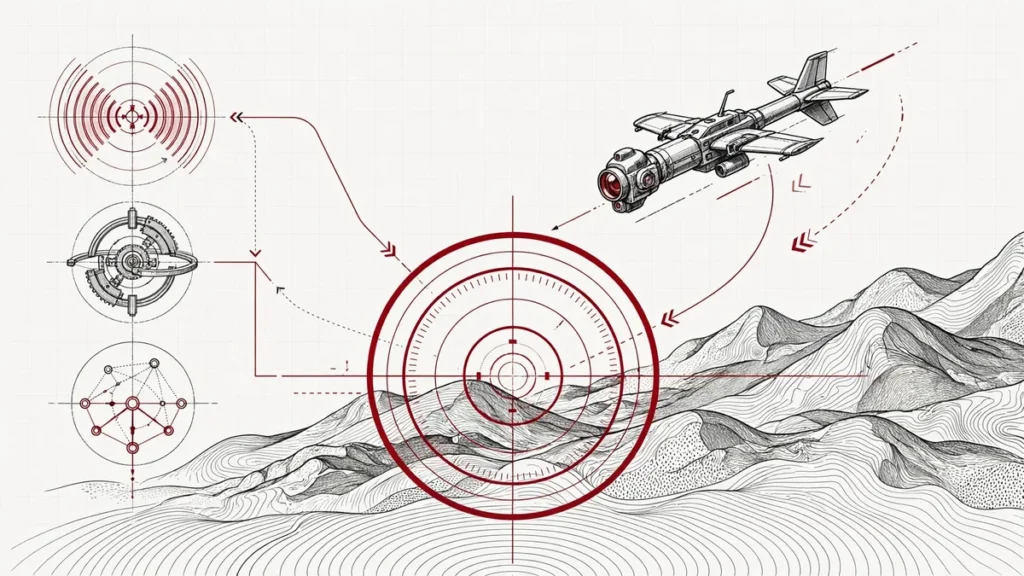
Further along: defensive autonomy. Air-defense systems have operated in automatic modes for decades because human reaction times are too slow for incoming rockets and missiles — a human-on-the-loop arrangement. South Korea’s SGR-A1 sentry gun, deployed along the demilitarized zone, is widely reported as capable of autonomous engagement of detected threats, though its operational rules of engagement are not public.
Then the murkier middle: systems reported to combine AI target recognition with autonomous engagement in contested environments, such as certain loitering munitions. Claims about specific systems’ autonomy are contested — manufacturers have commercial incentives to sound advanced, militaries have reasons to stay vague, and “AI-assisted targeting” is easy to blur into “autonomous targeting” in a press release. A useful counterweight: Ukraine’s naval drones (Sea Baby, MAGURA), which have achieved major successes while being overwhelmingly remotely piloted — a reminder that the most effective drone weapons of the current war are not autonomous at all.
True human-out-of-the-loop weapons — machines deployed with standing authorization to select and engage human targets without any human involvement — are the category activists warn about and the category for which public evidence of fielded deployment remains disputed. No major military openly fields such a system for offensive operations against people. (The doctrine-level view — how autonomy changes warfare itself — is the subject of our cluster piece on autonomous warfare; this article focuses on the weapons and the rules.)
What does U.S. military policy say?
The anchor document is DoD Directive 3000.09, “Autonomy in Weapon Systems,” updated on January 25, 2023 (replacing the 2012 version). Its key facts are frequently misreported, so they are worth stating precisely:
- It does not ban lethal autonomous weapons, and it does not require a human-in-the-loop for every engagement. The phrase “human in the loop” does not appear in it.
- It requires that autonomous and semi-autonomous weapons be designed so commanders and operators can exercise “appropriate levels of human judgment over the use of force” — a deliberately flexible standard that shifts compliance from the moment of firing to the design of the system.
- It requires senior-level review — by senior officials including the chairman of the Joint Chiefs of Staff and senior acquisition officials — before developing and deploying autonomous weapons that do not meet specific exemptions.
- It applies only to the Department of Defense: not to the CIA, not to law enforcement, not to the U.S. government as a whole.
Critics, including Human Rights Watch and the Harvard Law School International Human Rights Clinic, argued in 2023 that the directive was inadequate — that by creating a compliance pathway it could facilitate autonomous weapons development rather than restrain it. Supporters counter that the senior-review requirement and design-level safeguards are the strongest existing national guardrails.
Where does the world stand on banning “killer robots”?
At the multilateral level, the action is in Geneva, under the Convention on Certain Conventional Weapons (CCW). The CCW’s Group of Governmental Experts on lethal autonomous weapons met for two sessions in 2026 — March 2–6 and August 31–September 4 — working toward the elements of a possible international instrument. According to a September 10, 2026 communiqué from France’s foreign ministry, the draft lays foundations for defining the systems concerned, setting out common principles, establishing prohibitions for certain systems, and allocating responsibilities — with human beings required to “exercise control” over weapons with autonomous functions.

What happens next is the test. A CCW review conference in Geneva in November 2026 is expected to decide on next steps — potentially a negotiating mandate for a future international instrument. France’s stated goal is an instrument that bans fully autonomous weapons and regulates systems with autonomous functions. Whether that survives the interests of the major military AI powers is the open question.
Not all reporting on the process is encouraging. One account of the closing September session — attributed to Washington Post reporting — described U.S. and Russian diplomats stripping three provisions from the draft text: human review of AI-generated targets, a predictability requirement, and an ethics clause. That account comes via a single outlet and should be treated as reported, not confirmed — but it captures the structural reality: the states most advanced in military AI have the most incentive to keep any instrument soft.
Why do the ethics matter, and who is accountable?
The ethical arguments against autonomous weapons run through distinction and proportionality — the core principles of international humanitarian law. A machine that cannot reliably distinguish a combatant from a civilian, or weigh military advantage against civilian harm, cannot satisfy the law as humans must. The “black box” problem — no one, including the system’s builders, can fully explain why a model made a particular call — compounds this.
The accountability gap is the sharpest point. International law holds humans, not machines, responsible: if an autonomous system unlawfully attacked civilians, the people who authorized, programmed, or commanded its use could face liability under existing war-crimes law. The legal question is never about putting the algorithm on trial — it is about which human, in a chain of designers, commanders, and operators, bears responsibility for a machine’s lethal mistake. The faster the kill chain runs (see our AI battlefield intelligence explainer), the less room there is for a human to be a meaningful check.
Why this matters beyond the battlefield
This is not an abstract technology debate; it is a procurement and policy debate happening now. Programs like the Pentagon’s Project Meridian — the advisory effort co-led by Elon Musk on future warfare — are pushing AI deeper into defense planning, and every major military AI power is investing in the same spectrum of systems. The November 2026 Geneva review conference will reveal whether the world can agree on binding rules before the technology’s deployment outruns the diplomacy.
For the public, the stakes are in normalization. Autonomy creep is gradual: each system delegates slightly more, each review cycle accepts slightly more machine judgment. The line between “AI-assisted” and “AI-decided” is not a cliff but a slope, and societies are walking down it while the legal guardrails are still being negotiated.
By the numbers: AI autonomous weapons
| Metric | Figure | Source |
|---|---|---|
| DoD Directive 3000.09 (current version) | January 25, 2023 (CONFIRMED) | U.S. Department of Defense |
| Human-in-the-loop requirement in 3000.09 | None — directive requires “appropriate levels of human judgment” by design (CONFIRMED) | ICRC casebook; CRS Defense Primer |
| CCW GGE on LAWS, 2026 | Two sessions: March 2–6 and Aug 31–Sept 4, Geneva (CONFIRMED) | UNODA |
| States party to the CCW | 128 (CONFIRMED) | France foreign ministry communiqué, Sept 10, 2026 |
| Next decision point | CCW review conference, Geneva, November 2026 (CONFIRMED) | France foreign ministry; UNODA |
| Draft provisions reportedly removed in final session | Human review of AI targets; predictability requirement; ethics clause (REPORTED — attributed to Washington Post) | Single-outlet report, Sept 2026 |
Caveat: the reported draft changes rest on one outlet’s account of closed-door sessions; the November 2026 review conference will show what the CCW’s states parties actually accept.
Frequently asked questions
What are AI autonomous weapons?
Weapons that use AI for functions — target recognition, navigation, or engagement — with limited or no human involvement. A lethal autonomous weapon system, per U.S. defense policy, can select and engage targets without further human intervention once activated.
What is the difference between human-in-the-loop, on-the-loop, and out-of-the-loop?
In-the-loop: a person selects the target and authorizes each strike. On-the-loop: the system selects and engages while a person monitors and can halt it. Out-of-the-loop: the machine selects and engages with no real-time human involvement — the definition of a lethal autonomous weapon system under U.S. policy.
Does the U.S. ban autonomous weapons?
No. DoD Directive 3000.09 (January 2023) does not ban them and does not require human-in-the-loop for every engagement. It requires senior review before development and deployment, and systems designed for “appropriate levels of human judgment.”
Is there an international treaty on killer robots?
Not yet. The UN’s Convention on Certain Conventional Weapons has a Group of Governmental Experts working on the issue; it met twice in 2026 and produced a draft framework. A review conference in Geneva in November 2026 will decide whether to begin negotiating a binding instrument.
Read next: Lethal Autonomous Weapons: What the Geneva Talks Will Decide — the CCW review conference opened in Geneva on November 16, 2026, to decide whether to launch negotiations on binding rules for these systems.
Sources
- U.S. DoD Directive 3000.09, “Autonomy in Weapon Systems” (summary, January 25, 2023)
- ICRC Casebook: Autonomous Weapon Systems (definitions and IHL analysis)
- UNODA: GGE on LAWS, 2nd 2026 session (31 Aug–4 Sept 2026, Geneva)
- France, Ministry for Europe and Foreign Affairs: Communiqué on the GGE draft report (Sept 10, 2026)
- Harvard Law School International Human Rights Clinic / Human Rights Watch: Critique of Directive 3000.09
- Digital Watch Observatory: GGE on LAWS 2nd 2026 session
- Servola: Report on the September 2026 GGE final session (single-outlet account)



Discussion 0
Share analysis, corrections, or context. Be civil — comments are moderated.