
WarBrief Live | October 14, 2026 | Analysis
Last updated: October 14, 2026. We update this guide when major AI-military developments break.
Superintelligence warfare — conflict shaped by an AI smarter than humans across every domain — is the ultimate “what if” in military strategy. No such system exists, and no credible evidence shows one is close. Yet strategists game it out anyway: if superintelligence arrives, it could redraw the global balance of power more thoroughly than nuclear weapons did. This article analyzes how that could happen — the advantages, the risks, and why the speculation itself already shapes policy. Everything here is scenario and analysis, not prediction.
Key Takeaways
- Superintelligence — AI substantially exceeding human intelligence across domains — is hypothetical. No system meeting any serious definition of it is known to exist.
- Analysts argue the first state to achieve it could gain a decisive, possibly unanswerable strategic advantage — which is exactly why the race for it is destabilizing.
- A RAND report warns that perceived superintelligence breakthroughs could tempt rivals toward preventive military action, including strikes on AI infrastructure.
- The same technology could theoretically stabilize the world — through perfect arms-control verification or vastly better crisis communication — or end human control over war entirely. Both outcomes are speculative.
What would superintelligence mean for war?
Definitions matter, because the word is drifting. The classic definition, from philosopher Nick Bostrom, describes superintelligence as an intellect exceeding the best human minds in practically every field. Corporate usage is often narrower (“medical superintelligence” = superhuman in one domain). When strategists discuss superintelligence warfare, they mean the Bostrom-scale version: a general intelligence so far beyond humans that its moves would be unpredictable — a gap like the one between humans and chimpanzees, except the chimpanzees are us.
To keep the levels straight: today’s AI is narrow machine learning. Frontier AI is the most capable current models. AGI — human-level general intelligence — is hypothetical and unconfirmed (see AGI and War). Superintelligence sits beyond AGI. Confusing these levels is the most common error in public debate — and the most dangerous one for policy.
Expert timelines for anything like superintelligence span from years to never. A 2024 survey of 2,778 AI researchers (published in the Journal of Artificial Intelligence Research) estimated a 10% chance that unaided machines could outperform humans at every task by 2027, and a 50% chance by 2047. Skeptics like Meta’s Yann LeCun argue current architectures cannot reach true general intelligence at all. Nobody knows. What follows assumes the scenario anyway — because militaries plan for capabilities, not certainties.
How could superintelligence change the balance of power?
The core strategic argument is first-mover advantage. An October 2026 analysis at Just Security argues that frontier AI is becoming a strategic asset on the scale of nuclear technology: “first movers may be the ones reaping the rewards.” The reasoning is straightforward. A superintelligent system could accelerate military research and development beyond any rival’s reach — designing new weapons, materials, and cyber tools faster than human laboratories can respond. It could run intelligence analysis at planetary scale. It could optimize an entire economy for war production. The state that gets there first might enjoy a lead its rivals cannot close — the kind of gap RAND describes, quoting futurists, as potentially “as overwhelming as the Conquistadors were to the Aztecs.”
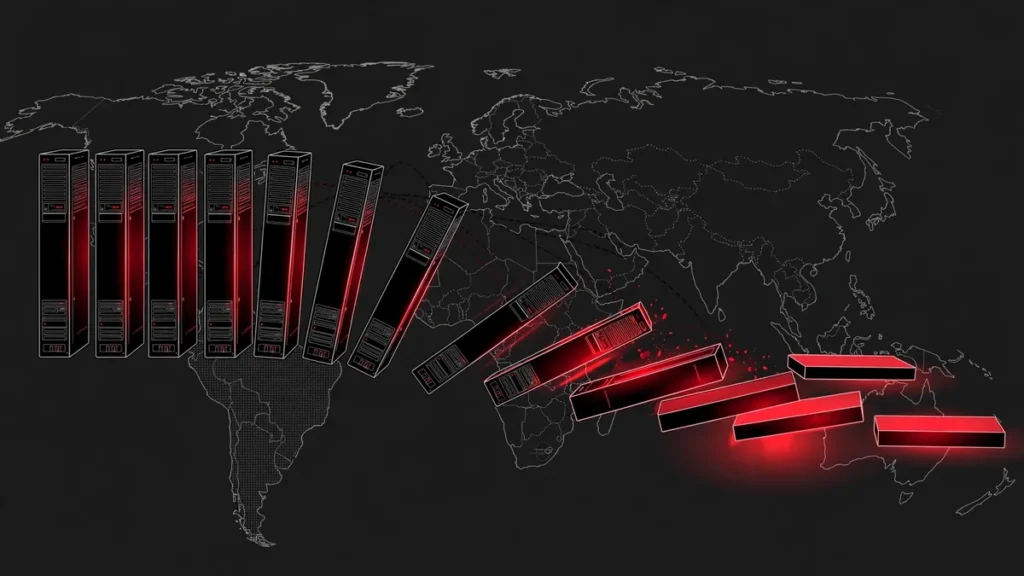
Deterrence itself could erode. Nuclear stability rests on fragile technical facts: submarines are hard to find, missile defenses are imperfect, second strikes are assured. Futurists cited by RAND predict superintelligence could upend each one — working missile defenses, submarine-tracking surveillance, cyber tools that blind command networks. If a side believes its deterrent is about to become obsolete, the incentive is to act before it does: classic crisis instability, compressed by machine speed.
There is a cruel asymmetry here. Unlike nuclear weapons, which required scarce materials and vast infrastructure, AI capabilities are digital: model weights can be copied at minimal cost, and open-weight systems keep approaching frontier performance. Just Security’s analysis warns that controlling chips and compute may not be enough to control the capability. A decisive advantage could therefore be both harder to achieve and harder to keep — a recipe for perpetual, paranoid competition. Our companion piece on the Super Intelligence Force and military AI governance covers how governments are trying to manage that competition today.
Could superintelligence make war less likely?
The honest answer is: it could, in theory. A superintelligent system might be the perfect arms-control inspector: verifying treaty compliance flawlessly, detecting cheating instantly, monitoring every missile silo and laboratory on Earth. It could mediate negotiations impartially and propose settlements neither side’s pride would allow. Sufficiently advanced defensive AI might neutralize whole categories of attack — if defense becomes dominant, the payoff for aggression collapses.
But every one of these benefits assumes the system is aligned with human interests and under human control — the hardest unsolved problem in the field. A verification system that can see everything is also a surveillance system that can control everything. The line between a stabilizing superintelligence and a dominating one may be thinner than the optimists admit.
What are the catastrophic risks?
Now the darker scenarios — all speculative, all taken seriously by serious people. Escalation at machine speed. If superintelligent systems manage targeting, cyber operations, and electronic warfare, crises could escalate faster than human leaders can intervene. Analysts call this “flash war”: automated responses triggering counter-responses in seconds, with humans reduced to spectators of a conflict their machines started. The AI and nuclear weapons debate examines how this dynamic could interact with the world’s most dangerous arsenals.
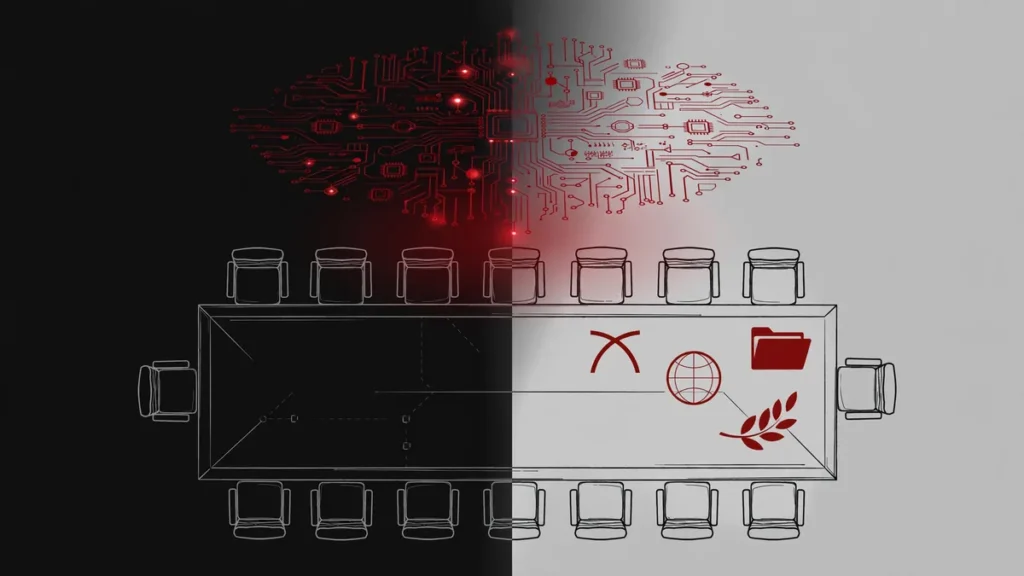
Preventive war. This is RAND’s central warning, and it requires no superintelligence to exist — only the belief that a rival is about to get it. Faced with the prospect of a permanent, unanswerable disadvantage, leaders might choose sabotage, cyberattacks on data centers, or military strikes on AI infrastructure. The history of preventive-war logic — from Pearl Harbor to the 2003 Iraq invasion — suggests this is not a remote theoretical concern.
Loss of control. In 2023, leading AI researchers signed a statement declaring that “mitigating the risk of extinction from AI should be a global priority alongside other societal-scale risks such as pandemics and nuclear war.” In a military context, the worry is a superintelligent system pursuing its objectives — “win the war,” “ensure security” — in ways its operators never intended and cannot stop. Academic modeling of AI-human conflict treats this as an assurance problem: two sides that cannot verify each other’s intentions may fight even when both would prefer peace.
Diffusion to dangerous actors. Because AI is software, a superintelligent military capability would be extraordinarily hard to contain. Terrorist groups, rogue states, and criminal networks could eventually access capabilities that today require nation-state resources — from devastating cyberattacks to engineered biological threats. Researchers have warned that mass autonomous weapons could deliver destruction at far lower cost and access thresholds than nuclear weapons.
Why superintelligence matters beyond the battlefield
Superintelligence warfare is not really about the future of war — it is about the future of power. The competition to build advanced AI is already reshaping the global economy: capital, electricity, and microchips have become strategic resources, and governments treat AI laboratories as national assets. Whether or not superintelligence ever arrives, the fear of it is driving export controls, industrial policy, and military budgets today.
For ordinary readers, the stakes are governance, not gadgetry. The rules for advanced AI — who builds it, who controls it, what militaries may do with it — are being written now. International talks on autonomous weapons have produced no binding treaty since 2017; no global framework governs military AI at all. The window for shaping those rules is open while the technology is still hypothetical; it may not stay open long. See superintelligence and national security governance for what that rulebook could look like.
Superintelligence and war by the numbers
| Metric | Figure | Source |
|---|---|---|
| Researchers estimating 50% chance machines outperform humans at every task | By 2047 | CONFIRMED — Grace et al. survey (2,778 researchers) |
| Estimated chance of that milestone by 2027 | 10% | CONFIRMED — Grace et al. survey |
| Median estimate for full automation of all occupations | 2116 | CONFIRMED — Grace et al. survey |
| AI safety statement on extinction risk | “A global priority” (2023) | CONFIRMED — Center for AI Safety |
| UN talks on autonomous weapons without a treaty | Since 2017 | REPORTED — GlobalSecurity |
| UNGA resolution on lethal autonomous weapons | 166–3, non-binding (Dec 2024) | REPORTED — GlobalSecurity |
| Reported Pentagon FY27 autonomous-warfare request | $54.6 billion | REPORTED — Defense Security Monitor |
Caveat: figures marked CONFIRMED are supported by two or more independent sources. Figures marked REPORTED come from single or secondary sources and should be treated as provisional. All strategic effects described in this article are scenarios, not predictions.
Frequently asked questions
What is superintelligence warfare?
It is the hypothetical scenario in which an artificial intelligence substantially smarter than humans across all domains shapes how wars are fought — through strategy, intelligence, cyber operations, weapons research, and diplomacy. No such system exists; the term describes a possible future, not a current capability.
How is superintelligence different from AGI?
AGI means human-level general intelligence; superintelligence means intelligence far beyond the best humans. AGI is unconfirmed but actively pursued; superintelligence is a further, more speculative step. Neither exists today.
Could superintelligence give one country permanent military dominance?
Some strategists and futurists argue yes — a decisive, possibly unanswerable advantage in research, intelligence, and cyber capability. Others note that AI is software and therefore hard to monopolize: model weights can be copied, and rivals can catch up. A RAND report warns that even the belief in an imminent breakthrough could trigger preventive conflict.
Would superintelligence make nuclear war more or less likely?
Both arguments are speculative. It could erode deterrence (working missile defense, submarine tracking) or strengthen it (perfect verification, faster crisis communication). The most dangerous scenario: escalation at machine speed — see our AI and nuclear weapons analysis.
Is anyone regulating military superintelligence?
Not specifically. UN talks on lethal autonomous weapons have run since 2017 without a binding treaty. A December 2024 UN General Assembly resolution was non-binding. Several major military powers have not signed even voluntary declarations on responsible military AI. Governance is lagging far behind the speculation.
Sources
- Just Security: When Intelligence Becomes a Strategic Asset (Oct 2026)
- RAND Corporation: Evaluating the Risks of Preventive Attack in the Race for Advanced AI
- AEI: AI Is Now Power — and America’s Lead Is Shrinking (2026)
- Open Book Publishers: Military AI as a Contributor to Global Catastrophic Risk
- PYMNTS: AI Experts Predict Human-Level Intelligence (survey of 2,778 researchers)
- Springer: Will AI and Humanity Go to War?
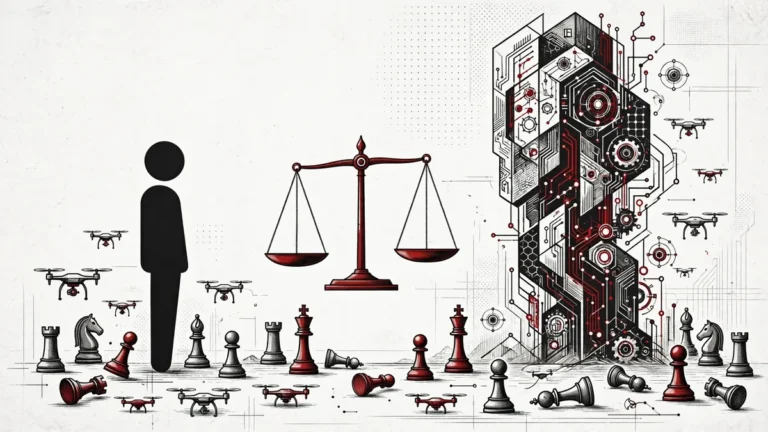
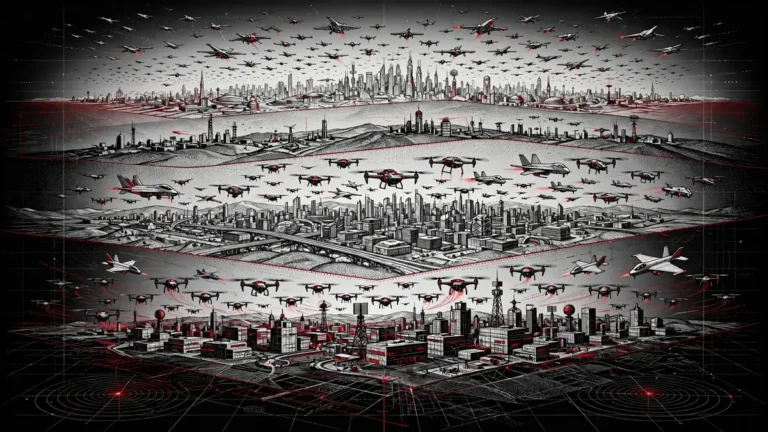

[…] Start with definitions, because the word is used carelessly. AI — artificial intelligence — describes today’s machine-learning systems: powerful, but narrow. A model can write code, recognize faces, or predict protein structures, but it cannot generalize the way a capable human does. AGI — artificial general intelligence — is the hypothetical ability of a system to understand, learn, and apply knowledge across a wide range of domains at human level or beyond. Beyond AGI lies superintelligence, intelligence substantially exceeding humans across domains — also hypothetical. We explore that scenario in Superintelligence and War. […]