
WarBrief Live | November 2, 2026 | Cyber Warfare
Hours after the six-day Oleshky truce expired on November 1, 2026, hackers broke into the emergency alert apps of both Ukraine and Russia and pushed out false warnings of radiation, chemical and nuclear attacks. There was no radiation threat, both countries’ wider warning systems kept working, and the apps were restored — but the twin hacks showed how quickly a warning system itself can become a weapon.
Key Takeaways
- Ukraine’s Air Alert app sent false radiation, chemical and street-fighting warnings from just before 2100 GMT on November 1, 2026; air force spokesman Yuriy Ignat confirmed to AFP that the app had been hacked.
- Russia’s emergencies ministry said early on November 2, 2026 that its own app suffered a “massive cyberattack” that let attackers send false information to the public; Moscow did not name an attacker.
- Ukraine’s Center for Strategic Communications, SPRAVDI, blamed Russia for the Ukrainian hack; that attribution is a claim, not a confirmed finding.
- Both countries stressed that their wider alert systems — sirens, SMS, broadcasts and regional channels — kept functioning, which is exactly why layered warning systems matter.
- The hacks landed within hours of the Oleshky ceasefire expiring, turning a moment of already-high tension into a live test of civilian trust in official warnings.
| Metric | Figure | Source |
|---|---|---|
| Emergency apps hacked in one night | 2 (Ukraine, Russia) | AFP via The Hindu; TASS via Al Arabiya |
| Time false Ukrainian alerts began | Just before 2100 GMT, November 1, 2026 | Al Arabiya (Reuters reporting) |
| Confirmed radiation threat in Ukraine | None — “There is no radiation threat” | Ukrainian Air Force |
| Length of the Oleshky truce that had just expired | 6 days (October 27 – November 1, 2026) | The Hindu; Al Arabiya |
| Attacker named by Moscow for the Russian app hack | None named | Russian emergencies ministry |
Figures marked CONFIRMED below are carried by two or more reputable outlets or by the official body itself. Attribution claims are labelled REPORTED and are not treated as fact.
What happened to Ukraine’s air raid alert app?
Ukraine’s public Air Alert app began sending false alerts just before 2100 GMT on Sunday, November 1, 2026 — the same hour the Oleshky ceasefire expired. According to Al Arabiya’s account of the incident, the fake warnings covered Kyiv and other areas and claimed radiation and chemical attacks as well as the risk of street combat. One fabricated alarm said Russia had launched a hypersonic Oreshnik missile, which is capable of carrying a nuclear warhead, and that a nuclear alert had been declared across Ukraine.
Ukraine’s air force said shortly afterwards on Telegram that the alert system appeared to have been hacked by Russia, noting that the alerts were broadcast in the Russian language. Ukrainian is compulsory for all official communications in Ukraine, which made the Russian-language messages an immediate tell. “The air alert app appears to have been subjected to enemy influence,” the air force statement said. “There is no radiation threat! Stay calm and follow our updates on our channel!” Air force spokesman Yuriy Ignat later confirmed to AFP that the app had been hacked, as The Hindu reported.
The Associated Press account adds texture that matters for judging the hack: the false alerts were written in English with spelling and grammatical errors as well as in a mix of Russian and Ukrainian, and one of the false posts mentioned a hacking group called Hitcore. A Russian Telegram channel, Mash, said it had spoken to representatives of Hitcore and that they had claimed responsibility — a claim that could not be independently verified, and which WarBrief treats as REPORTED, not confirmed. Ukraine’s state-run Centre for Countering Disinformation reported the breach and urged users to monitor emergency channels on social media and rely on physical alerts while the attack was addressed.
All-clear messages followed shortly for each of the false alerts. Ukraine’s Ministry for Digital Transformation said the emergency app had been temporarily suspended but that other means of alerting the public were functioning, as were air raid sirens. Authorities said the app was restored overnight. The ministry later said the nationwide alert system was operating normally, with threat signals continuing to be transmitted to regional administrations and street alert systems, and Kyiv city authorities said a separate app dedicated to alerts in the capital was operating normally. Gulf News, citing Fox News, also reported that Kyiv’s loudspeaker alert system was compromised and broadcast similar messages on the streets — that detail is single-sourced and is treated here as REPORTED.
On the streets of Kyiv, residents played down the impact. Artem Pyndyk, a 37-year-old businessman, told reporters he was briefly surprised but then realised what had happened, adding: “This did not trigger the kind of reaction in society that they expected.” Oksana Vostrykova, a 48-year-old pizzeria employee, said she immediately suspected a false message. The calm reaction matters: after nearly five years of war, Ukrainians cross-check alerts against sirens, official channels and each other — and that habit blunted the hack’s effect.
What happened to Russia’s emergency app?
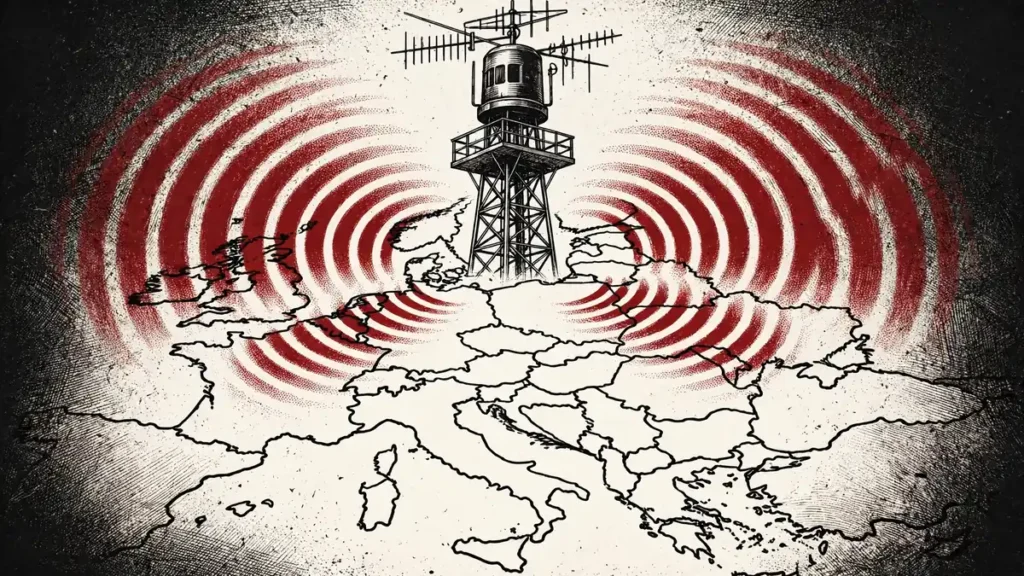
Hours later, early on Monday, November 2, 2026, Russia’s Ministry of Emergency Situations said its own mobile app had been hit by what it called a “massive cyberattack”. The Hindu’s report quotes the ministry saying its teams were working to fix an attack that was “enabling attackers to send false information to the public”. Russian state news agency TASS carried the same account.
The fake message posted by the hackers, seen by Reuters, did not attempt to mimic an official communication. It was laced with colloquialisms, profanities and derogatory language about Russia, calling its regions “swamps”, and told Russians that nuclear warheads had been launched against all Russian regions, advising people to stock up on three weeks of food and take shelter in their cellars. The crudeness of the message is itself informative: unlike a carefully forged official alert, it read as vandalism designed to be noticed rather than believed.
Atesh, a pro-Ukrainian hacking group, posted a screenshot of the alert message on its Telegram channel early on November 2, 2026, with the message: “The Ministry of Emergency Situations app has been hacked!” That is a claim of involvement by an interested party, not an independently verified attribution, and WarBrief reports it as such. Moscow did not name an attacker, and the ministry played down the impact, saying the app was not one of its main public warning channels but a supplementary source of information. It reassured Russians that the wider public alert system was working normally, with the mobile app sitting alongside SMS alerts, media broadcasts and municipal sirens and loudspeakers, and urged the public to trust only its website and official social media accounts. Kremlin spokesman Dmitry Peskov said all of Russia’s state agencies were under constant cyberattack threat, including a growing number that use artificial intelligence.
One asymmetry is worth noting. Ukraine’s air force spokesman Yurii Ihnat said the cyberattack had no impact on Ukraine’s security and defence operations because the public alert app is separate from military command systems. Both governments, in other words, were keen to draw the same line: the hacked apps are civilian notification tools, not the military warning chain. That distinction limits the direct military significance of the hacks — but not their psychological one.
Why are warning apps such tempting cyber targets?
Emergency alert systems are attractive targets for a simple reason: they are the one channel citizens are trained to obey without checking. A missile warning, a radiation alert or a chemical-threat notice is designed to short-circuit scepticism and trigger immediate action — shelter, evacuation, panic buying. Compromising that channel lets an attacker borrow the state’s own authority and aim it at the state’s own population.
That makes warning-system hacks different from ordinary data theft or website defacement. The payoff is not information but behaviour: people flooding shelters, jamming roads, ignoring the next real alert, or losing faith in official warnings altogether. Security researchers call the second effect the “cry wolf” problem — every false alarm spends a little of the trust the next genuine alarm will need. In a war where air raid alerts sound daily, that trust is a strategic asset, and degrading it costs the attacker almost nothing compared with a missile strike.
The timing sharpened the effect. The hacks began within hours of the Oleshky ceasefire expiring on the evening of November 1, 2026, after Russia refused an extension, according to Kyiv. Kherson regional governor Oleksandr Prokudin had warned residents to be particularly vigilant as the truce ended and to “respond immediately to warnings about Russian attacks”. A population told to watch its alerts extra closely was then fed fake alerts — the worst possible combination for trust, and the best possible moment for an attacker seeking confusion.
There is also a symmetry both sides will have noticed. Each country suffered a hack to its civilian alert app on the same night, each blamed or implied the other side’s ecosystem, and each insisted its real warning chain was unaffected. Whether the two hacks were coordinated retaliation or opportunistic copycats is unconfirmed, and WarBrief does not assert a link. But the pairing itself sends a message that both capitals will read: civilian warning infrastructure is now part of the contested space, not a protected utility above the conflict.
What is confirmed — and what is still unverified?
CONFIRMED: Ukraine’s Air Alert app was hacked and sent false radiation, chemical and street-combat warnings from just before 2100 GMT on November 1, 2026 (Ukrainian Air Force; spokesman Yuriy Ignat to AFP). There was no radiation threat (Ukrainian Air Force). The app was temporarily suspended and later restored, with sirens and regional channels functioning throughout (Ministry for Digital Transformation). Russia’s emergencies ministry app suffered a “massive cyberattack” enabling false public information on November 2, 2026 (ministry statement via TASS). The Oleshky truce ran from October 27 to November 1, 2026, and expired after Russia refused an extension (Kyiv; Dmytro Lubinets).
REPORTED, NOT CONFIRMED: Ukraine’s SPRAVDI blamed Russia for the Ukrainian hack; the air force said the system “appeared to have been hacked by Russia” — attribution by the victim, not an independently verified finding. The Hitcore responsibility claim, relayed by the Mash Telegram channel, could not be independently verified. Atesh’s claim over the Russian app hack is a self-published claim by an interested party. Gulf News’ report that Kyiv’s street loudspeakers were also compromised rests on a single cited source. Any claim that the two hacks were coordinated retaliation is speculation, not evidence.
This split matters for readers. In fast-moving cyber incidents, the first attribution is often political as much as technical, and the technical evidence — logs, malware samples, infrastructure fingerprints — typically takes days or weeks to surface, if it is ever published. Treat early blame as a statement of position, not a verdict.
What the alert-app hacks mean for US/UK/EU readers
For readers in the US, UK and EU, the direct risk from these two hacks is low — but the lesson travels. Every Western country now runs a phone-based emergency alert system alongside sirens and broadcasts: the US Wireless Emergency Alerts system, the UK Emergency Alerts service, and their equivalents across the EU. They share the same design trade-off as Ukraine’s and Russia’s apps: a single trusted channel that must reach millions instantly, which makes it a high-value target and a single point of failure if it is the only channel people trust.
The practical takeaway is redundancy. Both Kyiv and Moscow contained the damage by falling back on layers — sirens, SMS, television and radio, regional administrations, street loudspeakers — and by telling the public quickly and plainly that the app messages were false. Households that rely on one app for warnings are more exposed than households that also listen for sirens and follow an official local channel. If a warning ever looks wrong — wrong language, spelling errors, claims wildly out of step with official broadcasts — the Ukrainian experience on November 1, 2026 suggests cross-checking before acting, while still treating any alert that could be real with caution.
For markets and policymakers, the hacks are a signal rather than a shock. Cyber operations against civilian infrastructure have been a running feature of this war, and the alert-app incidents show the contest moving closer to the civilian information environment just as US-mediated talks are set to resume in November. Expect cyber incidents to feature in those talks’ background noise, and expect both countries to harden — and publicly showcase the hardening of — their warning systems in the coming weeks.
What to watch next in the Russia-Ukraine cyber conflict
Three things will show whether November 1–2, 2026 was a one-night stunt or a new pattern. First, technical attribution: whether either government publishes evidence — indicators, infrastructure, malware — backing its blame, or whether the claims stay at the level of political statement. Second, repetition: whether alert apps, sirens or broadcast channels are hit again in the coming days, which would indicate a campaign rather than an opportunistic pair of intrusions. Third, the response: whether either side answers in kind against the other’s civilian systems, or treats warning infrastructure as a line not to cross even while the kinetic war resumes after the truce.
The wider context has also shifted. The Oleshky truce is over, Ukraine’s General Staff said on November 2, 2026 that Russian forces used the pause to reinforce positions around Oleshky, and fighting in Kherson resumed within hours of the expiry. The alert hacks are therefore best read as the cyber overture to a harsher phase of the war, not as an isolated prank. The next real air raid warning in Kyiv or the next drone alert in a Russian border region will now arrive in a climate where citizens have one more reason to hesitate — and that hesitation is precisely what the attackers were buying.
Read next: our Conflict Zones hub tracks the war theatre by theatre; What the Oleshky Ceasefire Expiry Means for Kherson Civilians covers the truce’s end; Oleshky Ceasefire: What the Localised Ukraine-Russia Truce Covers explains the deal itself; Kyiv’s Southern Bridge Hit as the Oleshky Truce Holds covers the truce period; and EU’s Emergency Security Protocol: Answering Hybrid Attacks explains how Europe is organising against hybrid threats.
Frequently asked questions
Was Ukraine’s air raid alert app really hacked?
Yes. Ukraine’s air force said the Air Alert app appeared to have been subjected to hostile interference after false radiation-threat alerts appeared late on November 1, 2026, and air force spokesman Yuriy Ignat confirmed to AFP that the app had been hacked. The app was temporarily suspended and restored overnight.
Was there a real radiation or chemical threat in Ukraine?
No. The Ukrainian Air Force stated plainly: “There is no radiation threat!” The radiation, chemical and street-combat warnings were fabricated, and all-clear messages were sent shortly afterwards for each false alert.
What happened to Russia’s emergency app?
Early on November 2, 2026, Russia’s Ministry of Emergency Situations said its mobile app suffered a “massive cyberattack” that let attackers send false information to the public, including a crude fake message claiming nuclear warheads had been launched against all Russian regions. Moscow did not name an attacker, and said the app is a supplementary channel while the wider warning system kept working.
Who hacked the two apps?
That is not confirmed for either hack. Ukraine’s SPRAVDI blamed Russia for the Ukrainian hack, and the pro-Ukrainian group Atesh claimed the Russian app hack, but neither claim has been independently verified. Moscow named no attacker for its app. Treat all current attribution as claims, not findings.
Why does hacking a warning app matter if nobody was hurt?
Because warning systems run on trust. A false alarm that people obey wastes shelters and roads; a false alarm that people learn to ignore makes the next real alert less effective. Attackers target alert apps precisely because citizens are trained to act on them without checking — and because degrading that trust is cheap compared with kinetic strikes.
Sources
- The Hindu: Cyber attacks hit Russia, Ukraine after truce ends
- Al Arabiya: Ukraine and Russia say emergency alert apps were hit by hacks
- The Week (AP): Ukraine, Russia report fake emergency alerts after cyberattack targets apps
- Gulf News: Ukraine reports cyberattack on air raid alert system; Russia’s emergency ministry app also compromised
- Philstar: Cyber attacks hit Russia, Ukraine after truce ends
Discussion 0
Share analysis, corrections, or context. Be civil — comments are moderated.