
WarBrief Live | October 27, 2026 | Energy & Oil
Diesel prices hit record highs across the United States and Europe in early October 2026, and two emergency responses followed within a fortnight: the G7 agreed to release up to 100 million barrels of fuel from emergency reserves, and US President Donald Trump announced a deal for Russian diesel supplies while waiving new Russia sanctions. The question for drivers, hauliers and households is blunt: does any of this actually lower what you pay at the pump, or does it only cap how much worse the spike gets?
Key Takeaways
- The G7 agreed on October 2, 2026, to release up to 100 million barrels of diesel and crude from emergency stockpiles over four months, coordinated by the International Energy Agency.
- US retail diesel peaked at $6.529 a gallon in late September 2026, against $3.754 a year earlier, according to the US Energy Information Administration.
- The EIA now expects Brent crude to average $105 a barrel in the fourth quarter of 2026, but US diesel prices to ease to around $4.50 a gallon on average in 2027.
- Trump’s Russian diesel arrangement and his October 16 waiver of new Graham Act sanctions drew bipartisan criticism, and analysts quoted in market coverage doubt it will move near-term prices significantly.
What pushed diesel to record highs?
The spike was a compound supply shock, not a single event. The war involving Iran disrupted flows through the Strait of Hormuz, which carried about 20% of global oil supplies before the war, according to Reuters. Ukrainian strikes damaged Russian refineries, prompting Moscow to restrict diesel exports to protect domestic supply, while China curbed fuel exports and the harvest season lifted demand for farm and freight diesel at the same time.
Refining capacity, rather than crude supply, was the binding constraint. The G7 members themselves noted that diesel and related fuels make up roughly 28% of world oil demand, and that strikes on energy infrastructure in the Middle East and Russia had severely damaged refineries, cutting the world’s ability to turn crude into usable fuel. The EIA’s October Short-Term Energy Outlook put it the same way: exceptionally tight diesel supplies are pushing refiners to maximise diesel output, which in turn raises demand for crude.
Inventories told the same story. US East Coast distillate fuel inventories fell 32% below their five-year seasonal average in September 2026, the EIA reported, and the agency expects them to remain around 20% below the 2021–2025 average through the coming winter. US retail diesel averaged $6.29 a gallon in September, and the EIA’s weekly national average peaked at $6.529 a gallon late in the month before easing to $6.382 on September 28.
What did the G7 actually agree to release?
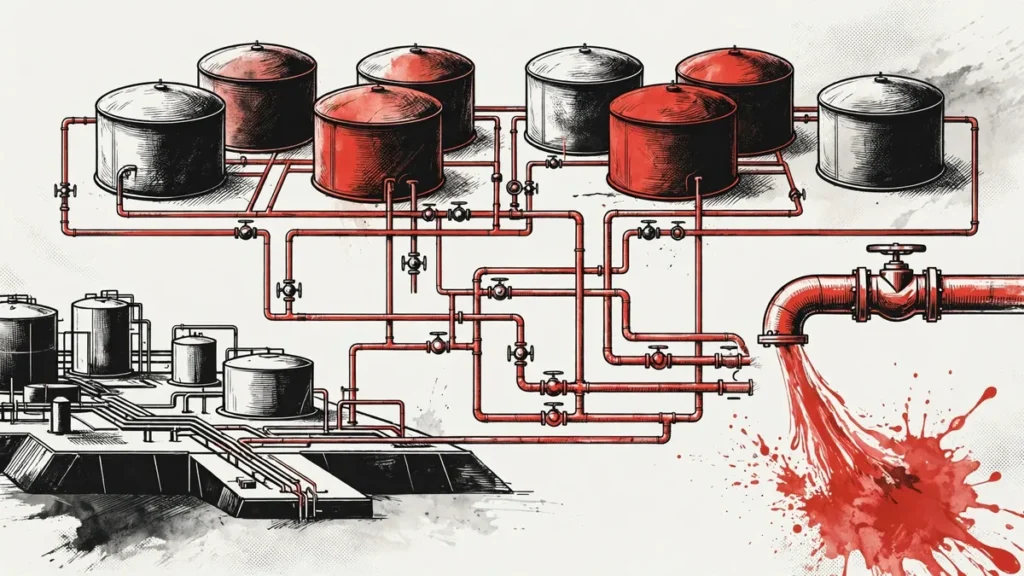
On October 2, 2026, the G7 nations — the United States, France, Italy, Germany, Japan, Britain and Canada — agreed to release up to 100 million barrels of diesel and crude from strategic stockpiles over four months. The effort is coordinated by the International Energy Agency. The group said it would make a “substantial” release of diesel within 20 days, though it did not specify how much of the total would be diesel and how much unrefined crude.
Context matters for judging the size of the move. One hundred million barrels is roughly one day’s worth of global oil demand, so the release is best understood as a bridge over a refining bottleneck rather than a lasting addition to supply. The United States approved an additional 40 million barrels from its Strategic Petroleum Reserve in the same week to complete its share of the G7 commitment. The G7 statement described the step as “decisive, coordinated measures to stabilise immediate energy supplies” and curb price spikes.
For background on how such releases work, see our explainer on the Strategic Petroleum Reserve release, and for the market backdrop, why oil above $100 did not calm down after the no-strike Sunday.
By the numbers: diesel prices and the emergency release
| Metric | Figure | Source |
|---|---|---|
| G7 emergency release (CONFIRMED) | Up to 100 million barrels over four months | G7 statement, via Business Times |
| US diesel peak, late September 2026 (CONFIRMED) | $6.529 per gallon | EIA weekly average |
| US diesel average, September 2026 (CONFIRMED) | $6.29 per gallon | EIA Short-Term Energy Outlook |
| US diesel a year earlier (CONFIRMED) | $3.754 per gallon | EIA weekly average |
| Brent forecast, Q4 2026 (CONFIRMED) | $105 per barrel | EIA Short-Term Energy Outlook |
| Brent forecast, 2027 average (CONFIRMED) | $84 per barrel | EIA Short-Term Energy Outlook |
| East Coast distillate inventories, September (CONFIRMED) | 32% below five-year seasonal average | EIA Short-Term Energy Outlook |
| Russian diesel, first tranche (REPORTED) | 300,000 tons immediately | Trump announcement, via Xinhua |
| Russian diesel, further tranches (REPORTED) | 500,000 tons in November, then 1 million tons | Trump announcement, via Xinhua |
Caveat: figures marked CONFIRMED appear in two or more reputable sources or in the primary source itself; figures marked REPORTED rest on a single announcement and have not been independently confirmed as delivered volumes.
What is in the Russian diesel deal — and what did Trump waive?
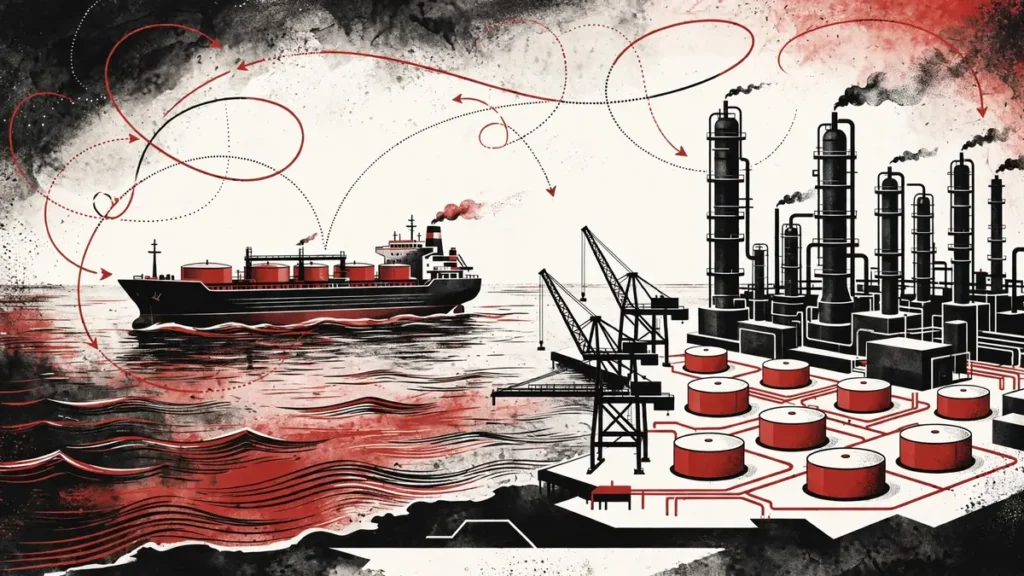
Days after the G7 announcement, Trump said he had agreed with Russian President Vladimir Putin that Russia would supply diesel to global markets. According to Xinhua’s account of the announcement, Russia could “immediately” begin supplying 300,000 tons of diesel, with an additional 500,000 tons in November and 1 million tons “immediately thereafter”, while Washington agreed to purchase Russian diesel to help lower global prices. The US Treasury Department’s October 9 General License 135 authorises transactions related to the sale, delivery, offloading or importation of Russian-origin diesel, including imports into the United States.
On October 16, Trump signed an executive order waiving major energy tariffs and sanctions mandated by the Lindsey O. Graham Sanctioning Russia and Iran Act of 2026, a law he had signed on September 18. The waived measures included tariffs of up to 100% on goods from the top five importers of Russian crude oil and gas, and restrictions aimed at Russia’s “shadow fleet” of tankers. The waiver has no fixed end date, but sanctions imposed on Russia under earlier executive orders remain in force, and everyone designated under them stays designated.
The move drew bipartisan criticism. Republican Senator Thom Tillis and Democratic Senate leader Chuck Schumer both criticised the waiver, and Representative Gregory Meeks introduced a bipartisan bill aimed at blocking the diesel arrangement — though none of those measures has become law. For the full background, see our earlier explainer on the Trump-Putin diesel deal and why oil hit $117 on the Iran strike threat.
Will any of this actually lower what you pay at the pump?
On the evidence so far, the honest answer is: probably not quickly, and not by much. The EIA expects US retail diesel prices to remain above $6 a gallon in October 2026 before gradually easing, reaching an average of around $4.50 a gallon in 2027. That is relief on a months-long horizon, not a rapid return to pre-crisis prices. Market analysts quoted in coverage of the Russian deal said it was unlikely to move near-term prices significantly — a view consistent with the scale of the volumes involved, which are small against a global diesel market running at tens of millions of barrels a day.
What the two interventions can plausibly do is cap the spike. Emergency releases add physical barrels at the margin, and the Russian volumes, if delivered, add diesel directly rather than crude that still needs refining. But neither adds refining capacity, neither reopens Hormuz flows on its own, and neither resolves the inventory deficit the EIA expects to persist through winter. OPEC producers, meanwhile, agreed to keep November output targets steady, removing one source of additional crude but also removing any hope of a sudden supply surge from that quarter.
The distinction matters for expectations. A policy that prevents diesel from rising further is valuable to hauliers and farmers facing $6-plus fuel, but it is not the same as a policy that brings prices back down. Readers should treat claims of rapid price falls with scepticism until weekly EIA retail data shows a sustained decline.
What the diesel shock means for US/UK/EU readers
For US readers, diesel is the price of everything that moves: trucking, farm machinery, construction and heating all run on it, so a near-doubling in the pump price feeds into food, goods and housing costs. For UK and EU readers, the shock arrives through heating oil, freight and industrial energy — European diesel prices also reached records in early October, and governments have responded with relief measures rather than price controls. For all three audiences, the practical implication is the same: budget for elevated fuel costs through winter, and watch weekly inventory and retail-price data rather than announcements for the real turning point.
This article is educational and explains energy-market developments; it is not financial advice.
What to watch next in the diesel market
- Weekly EIA retail diesel data: a sustained fall below $6 a gallon in the US would be the first hard evidence the spike is easing.
- Delivery of the announced volumes: whether the G7’s front-loaded diesel tranche and Russia’s promised November tonnage actually reach markets, and in what quantities.
- Winter inventory levels: East Coast distillate stocks are forecast to stay about 20% below the recent average through winter — any deeper draw would renew upward pressure.
- The US midterms on November 3, 2026: fuel prices are a campaign issue, and the waiver debate shows how energy policy and electoral politics are now intertwined.
- OPEC’s next output decision: with November targets held steady, the next meeting will signal whether producers see room to add supply.
Frequently asked questions
Why is diesel so expensive right now?
A combination of war-related supply disruption through the Strait of Hormuz, strikes on Russian refineries that cut diesel exports, Chinese export curbs, and thin inventories. The constraint is refining capacity — turning crude into diesel — more than crude supply itself.
What is the G7 emergency release?
On October 2, 2026, the G7 agreed to release up to 100 million barrels of diesel and crude from emergency stockpiles over four months, coordinated by the International Energy Agency, with a substantial diesel tranche within 20 days.
Does the Russian diesel deal mean sanctions on Russia are lifted?
No. Trump’s October 16 executive order waived only the new measures created by the Graham Act before they took effect. Sanctions imposed under earlier executive orders remain in force, and designated individuals and entities stay designated.
Will diesel prices fall before winter?
The EIA expects US retail diesel to stay above $6 a gallon in October 2026 before gradually easing, averaging around $4.50 a gallon in 2027. A rapid fall before winter is not forecast.
Why does diesel matter more than petrol for the economy?
Diesel powers trucking, farming, construction, shipping and heating. When diesel prices rise, the cost increase spreads through food, goods and services, which is why diesel spikes feed inflation faster than petrol spikes.
Sources
- US Energy Information Administration: Short-Term Energy Outlook, October 2026
- Business Times: G7 to release 100 million barrels of diesel and other reserves as prices soar
- Xinhua: Trump waives some Russia-related sanctions, tariffs
- Economic Times (Reuters): EIA raises oil price forecasts as Iran war tightens global markets
- Morningstar / PR Newswire: G7 Releases 100 Million Barrels as Diesel Tops $6 a Gallon
- Business Times: OPEC agrees to keep November oil output targets steady



Discussion 0
Share analysis, corrections, or context. Be civil — comments are moderated.