
WarBrief Live | November 17, 2026 | Geopolitics
| 2 years | 4 leaders | 3:45 pm IST | $700-800M |
|---|---|---|---|
| since the last Quad leaders’ summit | Modi, Trump, Takaichi and Albanese in Manila | scheduled start of the Manila meeting | reported value of the Philippines’ follow-on BrahMos deal |
The leaders of India, the United States, Japan and Australia meet in Manila on November 17, 2026, for the first Quad summit in two years. Here is the Quad summit in Manila in November 2026, explained: the agenda, the Modi-Trump bilateral, and what comes next in Shenzhen.
The meeting, held on the sidelines of the 49th ASEAN Summit, brings Prime Minister Narendra Modi, US President Donald Trump, Japanese Prime Minister Sanae Takaichi and Australian Prime Minister Anthony Albanese to the same table for the first time since September 2024. It is the first Quad leaders’ meeting of Mr Trump’s second term, the first attended by Ms Takaichi as Japan’s prime minister, and the first Quad summit ever hosted in a country that is not itself a Quad member. With our October preview of the planned Manila meeting now overtaken by events, this is the event-day picture: what is confirmed, what is reported, and what to watch.
Key Takeaways
- The Quad’s leaders meet in Manila on November 17, 2026, for the first time since Wilmington in September 2024, and the first time of Donald Trump’s second term.
- The agenda centres on critical mineral supply chains, safeguarding energy shipping routes, semiconductors, AI cooperation and undersea cables.
- Modi and Trump hold their first bilateral in nearly five months, with trade, Russian oil purchases and long-term US LNG supply on the table.
- The meeting comes two days before Mr Trump joins Xi Jinping and Vladimir Putin for the first-ever trilateral summit in Shenzhen on November 19.
What happened at the Quad summit in Manila?
The four Quad leaders are scheduled to meet in Manila at 3:45 pm IST on Tuesday, November 17, 2026, on the sidelines of the 23rd ASEAN-India Summit and the 21st East Asia Summit, according to the Press Trust of India, cited by India TV. The gathering is the grouping’s first leaders-level meeting in two years; the last was chaired by then US President Joe Biden in Wilmington, Delaware, on September 21, 2024.
The White House confirmed Mr Trump’s participation. Assistant Press Secretary Olivia Wales said on Friday that on Tuesday evening in Manila “the president will participate in a multilateral meeting with Quad leaders to discuss shared interests of peace, prosperity, and security in the Indo-Pacific region”, India TV reported. Mr Trump was due to arrive in Manila late in the afternoon, skipping the East Asia Summit, before joining a US-ASEAN Special Summit and meeting Philippine President Ferdinand Marcos Jr on Wednesday, November 18, Reuters reported via BusinessWorld.
India holds the Quad chair in 2026, and the Manila meeting reflects the difficulty New Delhi has faced in hosting a leaders’ summit since the grouping was revived in 2017 and elevated to leaders’ level in 2021, The Hindu reported. India has not been able to host a Quad leaders’ summit, largely because of scheduling constraints involving the US president, and sources indicated that a meeting in Delhi next year remains a possibility. Mr Modi is in Manila for the 49th ASEAN Summit on November 16-17, and is also due to hold a bilateral meeting with Mr Marcos on the evening of November 17.
Why is the Manila meeting happening now?
The timing is driven by shipping, supply chains and the calendar. Reuters, quoted by The Hindu, reported that securing critical mineral supply chains and safeguarding commercial shipping routes for energy supplies would feature prominently on the agenda. “The issue of attacks on commercial ships is very likely to be taken up,” an official was quoted as saying. The Hindu reported that at least 30 Indian seafarers aboard vessels operating in the Strait of Hormuz, the Sea of Oman and the Black Sea have been killed in attacks linked to the conflicts involving Iran and Ukraine. That figure is reported by The Hindu and has not been independently confirmed by WarBrief.
The meeting also carries a strategic signal. India TV reported that the gathering comes amid tensions between China and the Philippines over Beijing’s growing assertiveness in the South China Sea, and that the presence of Quad leaders in Manila is being seen as a significant strategic signal to China. Beijing has previously objected to the Quad as an effort to encircle China; Quad members have said the grouping is not directed against any one country, Reuters reported.
There is also an internal story. Former US Deputy Secretary of State Kurt Campbell credited Secretary of State Marco Rubio with the timing and reconvening of the Quad, which he said had lost ambition under Mr Trump. “Part of what he (Rubio) is thinking is that this is probably the best possible signal if you’re going to go into a trilateral meeting,” Mr Campbell said, referring to the November 19 meeting with China and Russia, Reuters reported via BusinessWorld.
The wider ASEAN backdrop matters too. At the ASEAN summit on Monday, Chinese Premier Li Qiang hailed what he called “truly extraordinary” economic achievements of China and ASEAN in the face of global trade restrictions. China is ASEAN’s largest trading partner, but the biggest economies of the 11-member bloc, which has a combined GDP of more than $3.9 trillion, want to deepen ties with the US despite protracted trade and diplomatic uncertainty under the Trump administration, Reuters reported. Protests were also expected in Manila against Mr Trump’s visit, after days of demonstrations that included the burning of effigies of the president and calls for an end to the Middle East war and for scrapping the US-led Pax Silica supply chain initiative.
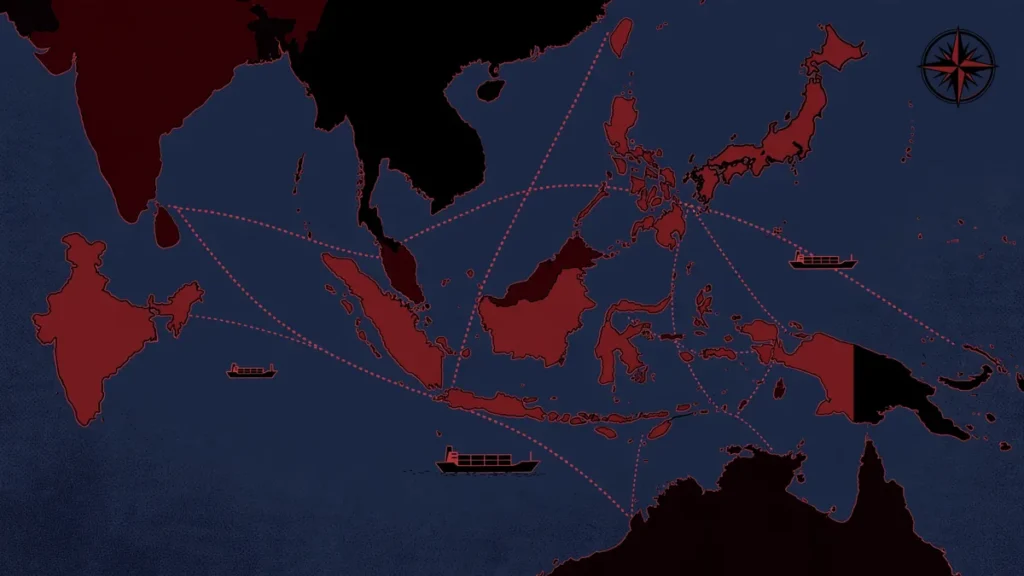
What is the Quad, and what does it actually do?
The Quadrilateral Security Dialogue, or Quad, brings together India, Australia, Japan and the United States. The grouping describes itself as a force for global good and is committed to promoting a free, open, inclusive, prosperous and resilient Indo-Pacific region, The Hindu reported. Its origins lie in cooperation among the four countries after the 2004 Indian Ocean tsunami, when they coordinated relief and assistance. It was revived in Manila in November 2017 at officials’ level, on the sidelines of an ASEAN summit, and elevated to leaders’ level in 2021.
The Quad is not a military alliance, and its members stress that it is not directed at any single country. Its practical agenda covers health security, climate change, critical and emerging technologies, infrastructure and debt sustainability, cyber security, humanitarian assistance and disaster relief, and strengthening maritime domain awareness across the region. Australia’s role in the grouping sits alongside its AUKUS partnership with the US and the UK; see our profile of Australia’s military capabilities.
- December 2004: the four countries coordinate tsunami relief efforts, the grouping’s origin.
- November 2017: the Quad is revived in Manila at officials’ level, on the ASEAN margins.
- March 2021: the first Quad leaders’ summit is held, virtually.
- September 21, 2024: the last leaders’ summit, in Wilmington, Delaware, chaired by Joe Biden.
- May 26, 2026: Quad foreign ministers meet and reaffirm a commitment to “a free and open Indo-Pacific that allows countries to develop resilience and strengthen capacity to determine their own paths”.
- November 17, 2026: the leaders meet in Manila, the first summit in more than two years.
What is on the agenda in Manila?
Critical minerals top the list. The leaders are expected to discuss reducing dependence on China for critical minerals and semiconductor supplies, enhancing cooperation in artificial intelligence, and advancing projects related to infrastructure, climate change and health security across the Indo-Pacific, India TV reported. A Japanese foreign ministry official said the leaders would try to show unity, with maritime security, export restrictions, critical-minerals supply-chain diversification and AI among the potential discussion points, Reuters reported.
Shipping security is the other pillar. With attacks on commercial vessels in the Strait of Hormuz, the Red Sea and the Black Sea continuing through 2026, the safety of ships and seafarers is a matter of particular concern for India, given the Indian seafarers reported killed in those waters. Undersea cables, emerging technology and disaster relief were also likely to be covered, a source familiar with the matter told Reuters. Earlier reports had also suggested the leaders could announce a Quad Business Forum mechanism during the summit, The Hindu reported; that remains reported rather than confirmed.
| Metric | Figure | Source |
|---|---|---|
| Last Quad leaders’ summit | September 21, 2024, Wilmington, Delaware | CONFIRMED – The Hindu, India TV |
| Scheduled start, Manila meeting | 3:45 pm IST, November 17, 2026 | CONFIRMED – PTI via India TV |
| Indian seafarers killed in ship attacks | At least 30 (Hormuz, Sea of Oman, Black Sea) | REPORTED – The Hindu |
| Philippines follow-on BrahMos order | About 5 systems, nearly 60 missiles, $700-800 million | REPORTED – Reuters, November 5, 2026 |
| Original BrahMos deal (2022) | $375 million, 3 batteries; deliveries completed April 2025 | CONFIRMED – Reuters, Firstpost |
| Trilateral summit, Shenzhen | November 19, 2026, 2:30 pm local, Kylin Villa | CONFIRMED – China’s Foreign Ministry, White House schedule |
Figures marked REPORTED come from a single reputable source or unnamed sources and have not been independently confirmed by WarBrief. Figures marked CONFIRMED are corroborated by two or more sources.

What will Modi and Trump discuss in their bilateral?
The two leaders meet for the first time in nearly five months. Their last bilateral meeting took place on June 17, 2026, on the sidelines of the G7 Summit in Evian, France, India TV reported. The talks are expected to cover trade tensions over Washington’s tariffs on Indian exports, barriers to market access and the proposed interim trade agreement, Times Now reported.
Energy is likely to dominate. The two leaders are expected to discuss US concerns over India’s purchases of Russian crude oil, the possibility of long-term US liquefied natural gas (LNG) supply agreements, and differences over AI data governance, Times Now reported. Before departing for Asia, Mr Trump indicated that discussions would cover Iran and Ukraine, and said he intended to raise the Russia-Ukraine war directly when the three leaders convene in Shenzhen on November 19. “Ukraine is losing. Ukraine and Russia are losing 25,000 souls per month,” he told reporters, according to India TV. That casualty figure is Mr Trump’s own characterisation, not a verified figure, and WarBrief does not present it as fact.
The bilateral also matters because of what follows it. Mr Trump flies from Manila to Shenzhen for the APEC summit, where he is scheduled to meet Chinese President Xi Jinping. The Modi meeting is therefore the last substantive bilateral before the most consequential encounter of the trip, and both sides will want a public show of alignment on Indo-Pacific security before Mr Trump sits down with Mr Xi.
Why does the BrahMos deal matter for the South China Sea?
The Philippines is in final-stage talks with India to expand its purchase of BrahMos supersonic cruise missiles, Reuters reported on November 5, citing three sources with direct knowledge of the matter. Manila is expected to buy about five BrahMos systems, nearly 60 missiles in total, in a deal potentially worth $700 million to $800 million. Philippine Defence Secretary Gilberto Teodoro said Manila hoped to secure more BrahMos units and had shared a wish list with Indian authorities to tailor the system to Philippine conditions. A Philippine defence ministry spokesperson confirmed that President Ferdinand Marcos Jr had expressed his desire to acquire additional BrahMos missiles.
The context is the original contract. Manila signed a $375-million deal in January 2022 for three shore-based anti-ship missile batteries, becoming the first foreign customer for the weapon system. Deliveries began in April 2024 and were completed by April 2025, Firstpost reported. The proposed follow-on order would be roughly double the value of the first and would give the Philippines a substantially larger coastal-defence capability as it modernises its military amid tensions in the disputed South China Sea. The two sides are also discussing air-defence capabilities, including the possible acquisition of India’s Akash missile system, as well as rocket artillery, defence technology and joint production, the Deccan Herald reported.
BrahMos, developed jointly by India and Russia, is among the world’s fastest cruise missiles and can be launched from land, sea and air platforms. For background on how such weapons work, see our explainer on anti-ship missiles. Mr Modi is due to hold a bilateral meeting with Mr Marcos on the evening of November 17, where defence cooperation is expected to feature alongside the wider ASEAN agenda.
What the Manila Quad summit means for US/UK/EU readers
Prices. Critical minerals sit inside batteries, electric vehicles, phones and wind turbines. If the Quad makes real progress on diversifying mineral supply chains away from a single dominant supplier, the long-run effect is steadier input prices for manufacturers in the US, the UK and the EU. Shipping security has a more immediate channel: attacks on commercial vessels push up war-risk insurance and freight rates, and those costs feed into fuel and goods prices. Any credible Quad commitment to safer sea lanes is, in effect, a small downward pressure on energy and import costs.
Travel and trade. There is no direct change to civilian travel from this meeting, but the South China Sea and the Strait of Hormuz carry a large share of the world’s traded goods, including energy bound for Europe. Stability in those lanes keeps supply chains predictable; escalation does the opposite. The Quad’s maritime domain awareness work, including tracking so-called dark shipping, is aimed at that stability.
Markets. A Quad Business Forum, if announced, would create a new channel for contracts in infrastructure, minerals processing and technology across four large economies. The BrahMos follow-on, at a reported $700-800 million, is also a signal: Indo-Pacific defence exports are becoming a serious market, and European suppliers will be watching the competition. The bigger market event this week, though, is the Shenzhen trilateral on November 19, where nuclear arms control and the Iran conflict are expected to feature.
Security. The Quad is not a military alliance, and it would be a mistake to read it as one. Its value for Western readers is as a coordination mechanism among four democracies that together can fund infrastructure, share maritime surveillance and set technology standards, without the treaty obligations of an alliance. The test in Manila is whether the grouping can move from statements to deliverables after two years without a leaders’ meeting.
What to watch next in Manila and Shenzhen
First, the joint statement. Watch whether the leaders announce a Quad Business Forum, specific critical-minerals projects, or new maritime security initiatives, and whether the language on shipping attacks names any actor. A thin statement would confirm the sceptics who say the grouping has lost ambition; concrete deliverables would answer them.
Second, the Trump-Marcos meeting on November 18 and the US-ASEAN Special Summit, which will show how far Washington is willing to go in backing the Philippines in the South China Sea. Third, the APEC summit in Shenzhen on November 18-19, and the trilateral meeting on November 19 at 2:30 pm local time at Kylin Villa, where Mr Xi will host Mr Trump and Mr Putin for the first-ever meeting of the three leaders. China confirmed the trilateral on November 16, after the White House announced it on November 13 and the Kremlin confirmed it on November 14. Nuclear arms control is expected to feature, with the New START treaty between Washington and Moscow having expired on February 5, 2026, and the Iran conflict also on the agenda, according to US officials cited by the Korea Times. Ukraine is not expected to be discussed at the trilateral, US officials said. Mr Trump is also expected to hold bilateral talks and a working lunch with Mr Xi on November 19, while Washington has confirmed there are no plans for a separate meeting between Mr Trump and Mr Putin. For full background on that meeting, see our APEC Shenzhen preview.
Finally, watch whether a Delhi Quad summit is confirmed for next year. India has chaired the grouping in 2026 without hosting a leaders’ summit, and a Delhi date would be the clearest sign that the Manila meeting has put the Quad back on a regular footing. Follow WarBrief’s intelligence coverage for updates as the outcomes land.
Frequently asked questions
When is the Quad summit in Manila and who is attending?
The leaders meet in Manila on November 17, 2026, scheduled for 3:45 pm IST, on the sidelines of the ASEAN summits. Attending are India’s Narendra Modi, US President Donald Trump, Japan’s Sanae Takaichi and Australia’s Anthony Albanese. It is the first Quad leaders’ meeting since September 2024.
Why is it the first Quad leaders’ meeting in two years?
The last leaders’ summit was held in Wilmington, Delaware, on September 21, 2024, under then President Joe Biden. Scheduling constraints, above all around the US president’s calendar, prevented a further meeting, and India, which chairs the grouping in 2026, has not yet hosted a leaders’ summit. Former US Deputy Secretary of State Kurt Campbell said the grouping had lost ambition under Mr Trump, and credited Secretary of State Marco Rubio with reconvening it.
What is the Quad?
The Quadrilateral Security Dialogue brings together India, Australia, Japan and the United States. It traces its origins to cooperation after the 2004 Indian Ocean tsunami, was revived in Manila in 2017 and elevated to leaders’ level in 2021. It is not a military alliance; it describes itself as a force for global good, working on maritime security, critical minerals, technology, health and disaster relief in the Indo-Pacific.
What will Modi and Trump discuss in their bilateral meeting?
Their first bilateral in nearly five months is expected to cover trade tensions over US tariffs on Indian exports, market access and an interim trade agreement, US concerns over India’s purchases of Russian crude oil, long-term US LNG supply, and differences over AI data governance. Their last bilateral was on June 17, 2026, on the sidelines of the G7 Summit in France.
What happens after the Manila summit?
Mr Trump travels to Shenzhen for the APEC summit on November 18-19, where he will join Chinese President Xi Jinping and Russian President Vladimir Putin for the first-ever trilateral summit on November 19. Nuclear arms control and the Iran conflict are expected to be discussed. A Delhi Quad summit next year remains a possibility.
Sources
- The Hindu: What is Quad, what is on the Manila agenda, and why does the 2026 summit matter?
- India TV News: PM Modi, Trump to meet at Quad leaders’ meeting in Manila today
- BusinessWorld / Reuters: Trump to kick off Asia trip with Quad talks in Manila ahead of China visit
- Moneycontrol: PM Modi to meet Donald Trump in Manila: What’s on the agenda at Quad leaders’ meeting?
- Reuters via BusinessWorld: India in final-stage talks to expand missile sale to Philippines, sources say
- Firstpost: As PM Modi heads to the Philippines, can India turn Southeast Asia into a defence export market?
- Korea Times: China confirms first Xi-Trump-Putin summit on Thursday
- Outlook India: Xi-Trump-Putin Summit: Treaty Expiry Raises Stakes For Nuclear Arms Talks



Discussion 0
Share analysis, corrections, or context. Be civil — comments are moderated.