
WarBrief Live | November 16, 2026 | Black Sea Shipping
3
ships hit by drones on November 14
0
casualties reported in any of the strikes
2
times Romanian fighter jets were scrambled
4
ships hit in two nights, counting the November 13 strike
Three commercial ships were hit by drones in the Black Sea near Romania’s Sulina canal late on Saturday, November 14, 2026, in the latest attack on merchant shipping off a NATO member’s coast. Romanian Prime Minister Luca Niculescu confirmed the strikes on Sunday, November 15, saying his armed forces had scrambled fighter jets twice. No one was hurt, and the crews of all three vessels put out the fires on board. What is confirmed is the scale and the location of the attacks; what is not confirmed is who launched the drones, because Romanian officials have not identified their origin.
The strikes matter because of where they happened. The Sulina canal is the shipping lane that links the Danube river to the Black Sea, and it is one of Ukraine’s main export routes for grain and other goods. A growing series of attacks on ships anchored near the canal or sailing to and from it has turned a narrow stretch of water off Romania’s coast into one of the most dangerous shipping lanes in Europe. Romania has now asked its NATO allies for surveillance aircraft and counter-drone equipment, and its defence minister is taking the case to Brussels this week.
Key Takeaways
- Three commercial ships – the tanker Evia Petrol V, the bulk carrier Marsol and the tanker Ali Najafov – were hit by drones near the Sulina canal on the evening of November 14, 2026. A fourth ship, the cargo vessel Larissa 1, was hit the night before.
- Two of the three ships were struck inside Romanian territorial waters, four and five nautical miles south-east of the canal. No casualties were reported in any of the four incidents.
- Romanian officials have not identified who launched the drones, but Prime Minister Niculescu said the attacks were a direct consequence of Russia’s war against Ukraine and a violation of international law.
- Defence Minister Stefan-Radu Oprea will ask fellow defence ministers in Brussels on November 17-18 for surveillance-aircraft patrols and counter-drone equipment. France has already temporarily moved a maritime patrol aircraft to Romania.
- The Sulina canal is a key outlet for Ukrainian grain exports. Ukrainian grain shipped through Romania’s port of Constanta more than tripled in the first nine months of 2026, to 1.03 million tonnes, before the October attacks on shipping began.
What happened near the Sulina canal on November 14?
According to Reuters, drones struck three commercial ships in the Black Sea near Romania’s Sulina canal late on Saturday, November 14. Prime Minister Luca Niculescu confirmed the attacks on Sunday, November 15, and said Romanian fighter jets had been scrambled twice in response. Defence Minister Stefan-Radu Oprea said there were no casualties and that the ships’ crews had managed to control the fires on board after the strikes.
Romanian officials described the attacks as a direct consequence of Russia’s war in Ukraine, but they did not identify the origin of the drones. Russia has denied targeting Ukraine’s neighbours with drones. That denial, and the absence of an official Romanian attribution, is why this article separates what is confirmed from what is only reported throughout.
The timing is part of a wider pattern. Reuters reported that many of the ships hit in October and November were anchored near the Sulina canal or sailing to or from it. The canal, which connects the Danube to the Black Sea, has become a focal point for attacks on commercial shipping – not because of any single incident, but because so much traffic bound for Ukraine’s Danube ports and Romania’s port of Constanta passes through it.
Which ships were hit – and where exactly?
Defence Minister Oprea named the three vessels struck on November 14 as the Greek-flagged oil and chemical tanker Evia Petrol V, the bulk carrier Marsol and the oil products tanker Ali Najafov, the last two sailing under the flag of Saint Kitts and Nevis. The defence ministry said Evia Petrol V and Marsol were struck four and five nautical miles south-east of the Sulina canal, inside Romanian territorial waters.

Militarnyi, citing Romania’s defence ministry, reported more precise timings: the Evia Petrol V was hit at about 9:10 p.m., about four nautical miles east-south-east of Sulina, and the Marsol at about 9:45 p.m., five nautical miles south-east of the channel. Both fires were extinguished by their crews. The Ali Najafov was hit overnight near the mouth of the Danube, and its crew also put out the resulting fire. The exact strike times are reported by a single outlet and are marked as reported, not confirmed, in the table below.
A fourth ship was hit the night before. Oprea said a separate general cargo ship was struck by a drone late on Friday, November 13, also with no casualties. Romanian television station Digi24 identified the vessel as the Palau-flagged general cargo ship Larissa 1. Brussels Signal reported that the drone damaged the ship’s cargo crane about 12 kilometres off Sfantu Gheorghe as it headed for Sulina en route to Ukraine. Four ships in two nights, all in the same stretch of water, is the clearest sign yet that the attacks are a campaign against the Sulina route rather than isolated incidents.
By the numbers: what is confirmed and what is only reported
| Metric | Figure | Source |
|---|---|---|
| Ships hit, November 14 | 3 (Evia Petrol V, Marsol, Ali Najafov) | CONFIRMED – Reuters, Romanian PM and defence minister |
| Casualties | 0 in all four incidents | CONFIRMED – Reuters, Romanian defence ministry |
| Distance from Sulina canal | 4 and 5 nautical miles south-east | CONFIRMED – Reuters, Romanian defence ministry |
| Romanian jet scrambles | 2 | CONFIRMED – Reuters, Prime Minister Niculescu |
| Ships hit, November 13 | 1 (Larissa 1, Palau-flagged) | CONFIRMED – Reuters; name via Digi24 |
| Strike times, November 14 | About 9:10 p.m. and 9:45 p.m. | REPORTED – Militarnyi, single outlet |
| Larissa 1 damage | Cargo crane damaged, 12 km off Sfantu Gheorghe | REPORTED – Brussels Signal, single outlet |
| Ships hit near Romania and Bulgaria, three weeks to late October | At least 8, with about 34 sailors reported dead or missing | REPORTED – trade-press reporting, single source |
| Ukrainian grain via Constanta, Jan-Sep 2026 | 1.03 million tonnes, vs 321,000 tonnes a year earlier | CONFIRMED – Constanta port data via MarineLink/Ukrinform |
One-line caveat: figures marked CONFIRMED appear in at least two reputable sources or in official Romanian statements carried by Reuters; figures marked REPORTED come from a single outlet and should be treated as provisional until officially corroborated.
Why the Sulina canal matters for Ukraine’s grain exports
The Sulina canal is the only deep-water channel through the Danube delta that large seagoing vessels can use to reach the Black Sea, and it is the outlet for Ukraine’s Danube ports at Izmail and Reni as well as for Romania’s own shipping. When Russia’s full-scale invasion closed or threatened Ukraine’s deep-water ports, the Danube route became the fallback that kept Ukrainian grain moving. It is a narrower, slower route than the Black Sea corridor from Odesa – draft limits, pilot shortages and waiting times all cap throughput – but it is the route that still works when the big ports are under attack.
The numbers show how important it has become. Ukrainian grain shipped through Romania’s Black Sea port of Constanta more than tripled in the first nine months of 2026, reaching 1.03 million tonnes against 321,000 tonnes in the same period of 2025, according to Constanta port figures reported by MarineLink and Ukrinform. Those figures predate the October attacks on commercial vessels, and the port administration was due to publish October cargo figures in November – the first indication of how the attacks may have affected shipments.
Attacks on the Sulina route therefore hit Ukraine’s export earnings twice over: directly, by damaging ships and scaring off owners and crews, and indirectly, through higher war-risk insurance and freight costs that make every tonne more expensive to move. The same dynamic is visible in the Red Sea shipping corridor, where Houthi attacks forced rerouting and raised costs for months, and in the Strait of Hormuz, where mine strikes on tankers pushed war-risk premiums up. The Black Sea version is smaller in scale but follows the same logic: make the waterway expensive and frightening enough that trade thins out on its own.
Who launched the drones?
That is the central unanswered question, and it should not be filled in by guesswork. Romanian officials have not identified the origin of the drones. Prime Minister Niculescu said the incidents were “unacceptable and constitute a violation of international law” and that they “reflect the deteriorating security situation caused by Russia’s ongoing war against Ukraine”, according to Reuters. That is a statement about the context of the war, not a formal attribution of these specific strikes to Russia.
Russia has denied targeting Ukraine’s neighbours with drones. No wreckage, launch-point evidence or official forensic finding about these four strikes has been published so far. WarBrief has covered a similar attribution gap before: the October 7 drone attack on a ship off Bulgaria raised the same questions about who was behind strikes in NATO waters, and the answer there also remained officially unconfirmed.
What is known is the pattern. The ships hit in October and November were mostly anchored near the Sulina canal or sailing to and from it, and the strikes fit a campaign against the shipping that serves Ukraine’s Danube exports. That pattern is consistent with Russian pressure on Ukraine’s export logistics, but consistency is not proof, and this article does not present it as such. Until Romanian or allied authorities publish evidence, the origin of the drones remains unconfirmed.
How Romania and NATO are responding
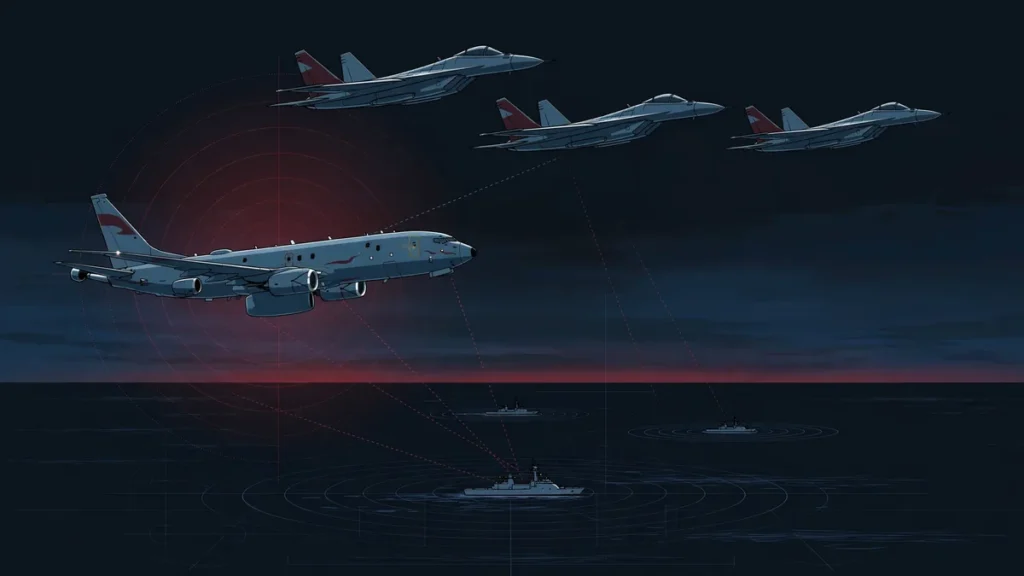
Romania’s response has two tracks: immediate military readiness and a diplomatic push inside NATO. The fighter jets scrambled twice on November 14 show the first track in action. The second track is Defence Minister Oprea’s trip to Brussels on November 17-18, where he will meet fellow defence ministers and ask for what he spelled out to Reuters: “We need the solidarity of our allies, shown through patrols with surveillance aircraft and through equipment for counter-drone warfare.”
Some of that help is already arriving. Reuters reported that France temporarily relocated an Atlantique 2 maritime patrol aircraft to Romania after Bucharest asked for reinforcement. That is the kind of visible, practical support Romania is asking for more of – aircraft that can watch the sea approaches and sensors that can spot small, low-flying drones before they reach a ship.
The wider NATO picture is already moving in the same direction. WarBrief reported in October on why NATO is rushing aircraft, drones and radars to the Black Sea, and the Sulina strikes give that deployment a sharper justification. The question for the Brussels meeting is whether allies will turn a series of national contributions into a standing Black Sea maritime surveillance effort, and whether counter-drone systems – the short-range guns, jammers and interceptors that can protect a slow-moving tanker – will be sent to Romania in meaningful numbers.
There is also a legal dimension. A drone strike on a merchant ship inside a NATO member’s territorial waters is a different matter from a strike in international waters, and Niculescu’s invocation of international law points in that direction. The law of the sea sets out what states may and may not do to shipping, and WarBrief’s explainer on how naval blockades work sets out the rules that govern attacks on merchant vessels. What the Sulina strikes do not do, on the facts published so far, is trigger NATO’s collective-defence clause: no casualties, no state attribution, and no request for that step from Bucharest.
What the Sulina strikes mean for US/UK/EU readers
For readers in the United States, Britain and the European Union, the direct effects are modest but real. Ukrainian grain reaches world markets through routes like Sulina, and disruption there feeds into global food prices – most directly for wheat and corn buyers in the Middle East and Africa, and indirectly for European consumers through feed and food costs. The Constanta figures show the route was carrying more Ukrainian grain than ever before the attacks began; if shipping thins out, some of that grain stays in Ukraine or moves by far more expensive rail and road routes.
For European readers, the security effect is closer to home. The strikes happened inside the territorial waters of an EU and NATO member, a few miles from the Romanian coast. That is why Romania is asking for surveillance aircraft and counter-drone equipment, and why the Brussels defence ministers’ meeting on November 17-18 matters: the decisions taken there will shape how quickly NATO can watch and defend the Black Sea approaches. Travellers are not directly affected – the strikes targeted merchant shipping, not ferries or flights – but the episode is a reminder that the war in Ukraine now regularly touches NATO territory, from drone debris in Poland and Romania to sabotage attempts in the Baltic states.
For markets, the signal is about insurance and freight rather than oil. The three ships hit were carrying oil products and bulk cargo, not crude on the scale of a Hormuz tanker, and no oil spill has been reported. The cost shows up in war-risk premiums for Black Sea shipping and in freight rates for Danube routes – the same kind of creeping cost that the shadow fleet trades in the opposite direction, by hiding sanctioned cargoes behind spoofed identities. If attacks on the Sulina route continue, expect insurers to price the risk higher and some owners to demand it before their ships sail there.
What to watch next in the Black Sea
The first thing to watch is the Brussels meeting on November 17-18. If Oprea leaves with concrete commitments – named aircraft, named counter-drone systems, a timetable – the Sulina route gets harder to attack. If he leaves with general expressions of solidarity, the pattern of strikes is likely to continue, because the attackers so far have paid no visible price.
The second is whether a fifth ship is hit. Four ships in two nights is already a campaign; a further strike this week would confirm that the attackers intend to keep the pressure on through the winter, when grain shipments and fuel cargoes through the Danube are at their most important. Watch also for any official Romanian statement identifying the origin of the drones, or publishing wreckage or radar evidence – that would change the story from an unattributed attack to a named accusation.
The third is the wider escalation picture. Overnight into November 16, Russia said its air defences had intercepted 1,336 Ukrainian drones, the largest overnight figure Moscow has claimed in the war, and traffic across the Crimea bridge was restricted after a strike. Those figures are Russian claims, not independently verified, and the damage from the barrage remains unclear – but they show the drone war on both sides is intensifying at the same time as the shipping attacks. The Black Sea, the Danube and the refineries of western Russia are now three fronts of the same campaign, and the Sulina canal sits where two of them meet.
Frequently asked questions
What happened near the Sulina canal on November 14, 2026?
Three commercial ships – the tanker Evia Petrol V, the bulk carrier Marsol and the tanker Ali Najafov – were hit by drones in the Black Sea near Romania’s Sulina canal late on November 14. A fourth ship, the cargo vessel Larissa 1, was hit the night before. There were no casualties, and the crews put out the fires on board.
Where exactly were the ships struck?
Evia Petrol V and Marsol were struck four and five nautical miles south-east of the Sulina canal, inside Romanian territorial waters, according to Romania’s defence ministry. The Ali Najafov was hit near the mouth of the Danube overnight, and the Larissa 1 about 12 kilometres off Sfantu Gheorghe.
Who launched the drones that hit the ships?
Romanian officials have not identified the origin of the drones. Prime Minister Niculescu said the attacks were a direct consequence of Russia’s war against Ukraine, and Russia has denied targeting Ukraine’s neighbours with drones. The origin remains officially unconfirmed.
Why is the Sulina canal important?
The Sulina canal links the Danube river to the Black Sea and is a key export route for Ukrainian grain and other goods, via Ukraine’s Danube ports and Romania’s port of Constanta. Ukrainian grain shipped through Constanta more than tripled in the first nine months of 2026, to 1.03 million tonnes.
What is Romania asking NATO for?
Defence Minister Stefan-Radu Oprea is asking allies for surveillance-aircraft patrols and counter-drone equipment, and will raise the issue with fellow defence ministers in Brussels on November 17-18. France has already temporarily moved an Atlantique 2 maritime patrol aircraft to Romania.
Sources
- Reuters: Three ships struck by drones in Black Sea near Romanian shipping canal, PM says
- Militarnyi: Drones Strike Three Civilian Vessels Off Romania’s Coast
- Brussels Signal: Romanian Government condemns ‘unacceptable’ drone strikes on Black Sea ships
- The Gaze: Ukrainian Grain Exports via Romania Triple as Black Sea Shipping Risks Mount
Read next: Bulgaria Ship Drone Attack Explained: NATO Waters Hit (2026) | Why NATO Is Rushing Aircraft, Drones and Radars to the Black Sea | Conflict Zones hub

Discussion 0
Share analysis, corrections, or context. Be civil — comments are moderated.