
WarBrief Live | November 16, 2026 | International Security
3
border crossings closing on December 1
8
people detained over the Threod arson attempt
2
sabotage attempts on Estonian defence firms in three months
0
injuries in the November 14 attack
Estonia will close all three of its border crossings with Russia from December 1, 2026, after security police said a foiled arson attack on drone maker Threod Systems had been ordered by Russia’s GRU military intelligence service. It is the first time a NATO state has shut its entire land border with Russia in response to a sabotage attempt.
Key Takeaways
- Foreign Minister Margus Tsahkna announced on November 15 that Estonia will close the Narva, Luhamaa and Koidula crossings from December 1. No end date has been given.
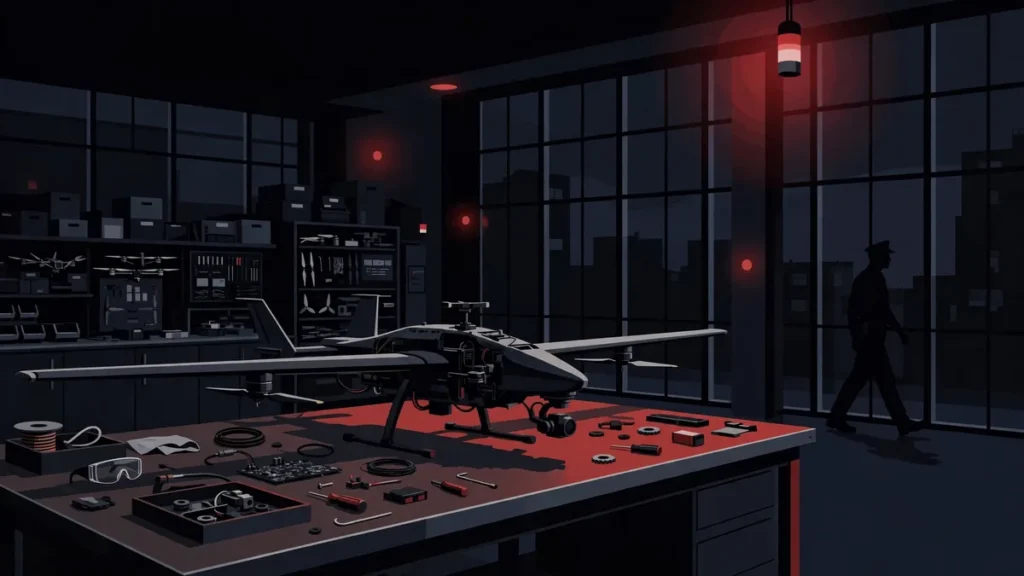
- Eight people were detained after an attempted arson attack on Threod Systems, a maker of long-range reconnaissance and attack drones, in the early hours of November 14. The company’s own security staff stopped the attack; nobody was hurt.
- Estonia’s Internal Security Service, known as Kapo, says intelligence gathered during its investigation indicates the attack was commissioned by Russia’s GRU. Moscow denies involvement in sabotage operations in Europe.
- The incident follows an August arson attack on Milrem Robotics in Tallinn that Estonia formally attributed to Russian intelligence on September 29.
- Tallinn frames the closure as both a security measure and a sanctions-enforcement step; it will also cut the last legal road and pedestrian routes between Estonia and Russia.
What happened at Threod Systems?
The attack was recorded at 3:06 a.m. on November 14 at the premises of Threod Systems in Viimsi, just outside Tallinn, according to Estonia’s Internal Security Service. RBC-Ukraine, citing Kapo, reported that the attackers aimed to cause an explosion and set the building on fire. The company’s in-house security staff intervened, and Prosecutor General Astrid Asi said the attack was stopped before it could cause significant damage. The building suffered only minor damage, nobody was injured, and the company’s production capacity was unaffected.
Eight people were detained overnight in connection with the attempt. Latvia’s Interior Minister Janis Dombrava thanked Kapo on X, saying several “Latvian citizens and non-citizens” were among those arrested. The suspects are residents of Latvia; their full identities have not been made public.
Threod Systems develops and manufactures unmanned aerial systems for reconnaissance, surveillance and target detection, as well as pneumatic launchers for drones. Its long-range reconnaissance and attack drones are supplied to Ukraine and other countries, which is why Estonian officials treat the company as part of the defence supply chain for Ukraine rather than as a purely commercial target.
Why is Estonia closing its border with Russia?
Foreign Minister Margus Tsahkna announced the decision on X on November 15, hours after the arrests. Al Jazeera quoted his post: “Following clear evidence that Russia’s military intelligence service GRU, ordered a sabotage attack against an Estonian defence industry company, Estonia will close all Estonian-Russian border crossing points as of 1 December.”
Tsahkna added: “Russia must understand that hostile actions against Estonia come with consequences. Attempts to intimidate, destabilise, or undermine our security will not go unanswered.” He said the closure “will reduce Russia’s ability to conduct hostile activities in Estonia and strengthen our efforts to prevent sanctions circumvention.”
Prime Minister Kristen Michal said the closure was needed to reduce the risk of further attacks and to “send a clear message that attacks on Estonia’s defence industry and defence capabilities” were unacceptable. He instructed officials to prepare the necessary measures, and Interior Minister Igor Taro is due to submit a formal closure proposal to the government, which will debate it next week. Tsahkna said he had informed his Finnish, Latvian and Lithuanian counterparts of the decision.
What is confirmed is the closure itself, the date, the three crossings affected, and the arrests. What remains an official attribution rather than independently verified fact is the GRU’s role: Kapo says its intelligence points to the GRU, but the underlying evidence has not been published, and Moscow denies the claim. That distinction matters, because the border closure is a political response to an attribution, not a finding of a court.
What the December 1 closure covers
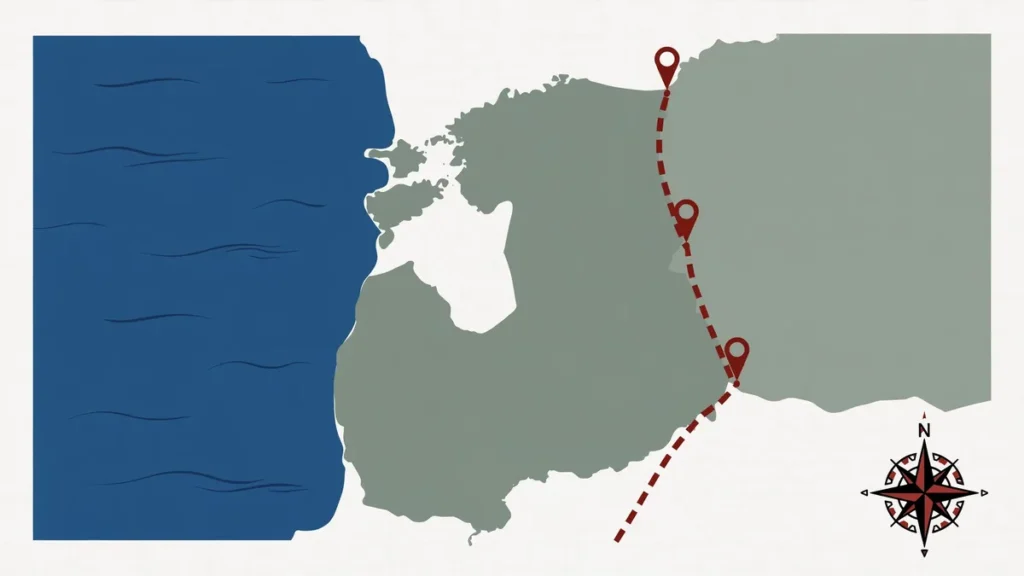
Estonia currently has three open border crossings with Russia: Narva in the north, and Luhamaa and Koidula in the south. All three admit pedestrians and freight. From December 1, all three will close, ending the current arrangements for cross-border passage at those points. Reuters reported that Tsahkna did not specify how long the closure would last or whether an end date had been set.
| Metric | Figure | Source |
|---|---|---|
| Border crossings closing | 3 — Narva, Luhamaa, Koidula | Reuters / ERR |
| Closure start date | December 1, 2026 | Tsahkna / Reuters |
| People detained | 8 | Kapo / Reuters |
| Attack recorded | 3:06 a.m., November 14, 2026 | Kapo via RBC-Ukraine |
| Injuries | 0 | Estonian authorities |
| Closure duration | Not stated — no end date given | Reuters |
| GRU ordered the attack | Estonian official attribution; denied by Moscow | Kapo / TASS |
Caveat: figures marked as official attribution rest on statements by Estonian authorities, not on published evidence. A “15 days” duration figure circulating on social media has not been confirmed by any official source and should not be treated as fact.
A pattern, not a one-off: the Milrem Robotics arson
The Threod attempt is the second attack on an Estonian defence manufacturer in three months, and the parallels are striking. On the night of August 14–15, a fire broke out at a building used by Milrem Robotics in Tallinn’s Lasnamäe district. Emergency services brought the fire under control and no injuries were reported. Three Latvian citizens were detained in connection with the incident and later extradited to Estonia.
On September 29, Kapo publicly concluded that the Milrem arson had been commissioned by Russian special services. Milrem Robotics makes the THeMIS unmanned ground vehicle, which has been supplied to Ukraine, and the company said the fire did not affect its obligations to customers, including a goal of delivering more than 150 units to Ukraine by the end of 2026.
Interior Minister Igor Taro sharpened Tallinn’s language further in an interview with the Financial Times published on November 9, calling Russian sabotage operations state-sponsored terrorism and arguing that describing them merely as hybrid warfare understates their seriousness. The Threod attempt, five days later, gave that argument a fresh case.
The pattern extends beyond Estonia. On October 26, Romania’s domestic intelligence service and organised-crime prosecutors said a September 14 fire at the Carfil industrial platform in Brașov had been set by a sabotage network coordinated from Russia. That attribution, like Estonia’s, rests on the asserting state’s intelligence rather than a court verdict — a gap that shapes how far NATO allies can go in a collective response.
What the Estonia-Russia border closure means for US/UK/EU readers
For travellers, the practical effect is narrow but real: the three crossings are the only legal road and pedestrian routes between Estonia and Russia, used by dual nationals, cross-border families and freight hauliers. Anyone planning travel through Narva, Luhamaa or Koidula after December 1 will need an alternative route, most likely through Latvia or Finland, and should expect longer journeys and tighter checks.
For markets, the direct effect is small. Estonia–Russia freight volumes have already fallen sharply since 2022, and the crossings handle a fraction of EU–Russia trade. The signal matters more than the tonnage: Tallinn is willing to absorb economic cost to deny Russia a channel it says is used for hostile activity and sanctions circumvention. If Latvia and Lithuania follow with their own measures, the Baltic land border with Russia and Belarus would be effectively sealed, with knock-on effects for regional logistics and for the small number of EU hauliers still running the route.
For security watchers in the US and UK, the closure is a test case for a new kind of NATO response. Estonia has not invoked NATO’s Article 4 consultation clause over the incident, but the move fits a pattern of asymmetric national responses to sabotage that allies have so far handled case by case — Finland’s full border closure in late 2023 over an asylum-seeker influx Moscow was accused of orchestrating, and now Estonia’s closure over an arson attempt. Whether the two become a template depends on what Latvia, Lithuania and Finland do next.
Different perspectives
Tallinn’s view: the closure is a proportionate, defensive response to a state-directed attack on NATO territory. Marko Mihkelson, chairman of the Estonian parliament’s Foreign Affairs Committee, told Al Jazeera that “Russia is waging a shadow war to divide Europe and undermine support for Ukraine. European countries must respond with asymmetric measures of their own. Closing borders with Russia is one such measure.” In this framing, the border is not just a line on a map but a vulnerability that hostile services exploit.
Moscow’s view: the Russian foreign ministry rejected both the accusation and the response. Spokeswoman Maria Zakharova told state news agency TASS that the closure plans were “yet another bout of aggressive and unrestrained Russophobia.” Moscow has regularly denied accusations by European authorities of involvement in sabotage operations, and has offered no alternative explanation for the Threod attempt.
The allies’ view: Latvia’s government publicly backed Estonia — its interior minister thanked Kapo and noted that Latvian citizens and non-citizens were among those arrested, a reminder that the alleged recruitment network runs through third countries. Finland, which closed its own 1,340-kilometre border with Russia in late 2023 after about 900 asylum seekers arrived in a single month, has been informed of the decision, as have Latvia and Lithuania. None has yet announced a matching closure, and the question of whether the Baltic states act together or alone is now the key diplomatic variable.
The incident also sits inside a wider escalation. On the same weekend, Iran said it had targeted a US radar in Bahrain and Saudi-backed forces pulled back from the Bab el-Mandeb strait — a reminder that the hybrid pressure on Europe’s eastern flank is unfolding alongside open conflict in the Gulf. Read our coverage of Iran’s second drone attack on a US radar in Bahrain.
What to watch next in the Baltic
Four things will decide whether this closure is a one-off or a turning point. First, the Estonian government’s formal debate next week: the proposal from Interior Minister Taro will show whether the closure is open-ended or time-limited, and whether exemptions are made for dual nationals or humanitarian cases. Second, the criminal case: charges against the eight detainees, and whether prosecutors publish any evidence linking them to Russian handlers, will determine how far the GRU attribution travels beyond Tallinn’s word.
Third, the neighbours. If Latvia or Lithuania announce matching measures, the closure becomes a regional policy; if they do not, Estonia stands alone and the practical effect on cross-border movement is partly offset by rerouting. Finland’s experience in 2023–24 — a full closure, a brief two-crossing reopening in December 2023, then another month-long closure — is the closest precedent, and Helsinki’s reaction will be watched closely. Our Finland country profile sets out why the northern flank matters.
Fourth, the sabotage campaign itself. Two attacks on Estonian defence firms in three months, both allegedly using Latvian nationals, suggest a repeatable model. If a third attempt surfaces — in Estonia or elsewhere in Europe — the debate will shift from whether to respond to how NATO as an alliance responds to sabotage that stops short of armed attack. The undersea-cable incidents of recent years show the same problem in a different domain; see how undersea cable sabotage works. For the full picture of the region’s flashpoints, see our Conflict Zones hub.
Frequently asked questions
Why is Estonia closing its border with Russia?
Estonia says the closure is a response to a foiled arson attack on drone maker Threod Systems on November 14, which its security police attribute to Russia’s GRU. Foreign Minister Margus Tsahkna said it will reduce Russia’s ability to conduct hostile activities in Estonia and help prevent sanctions circumvention.
When does the Estonia-Russia border close?
All three crossings — Narva, Luhamaa and Koidula — close from December 1, 2026. The government has not announced an end date, and no official source has confirmed a duration. A “15 days” figure circulating on social media is unverified.
What is Threod Systems?
Threod Systems is an Estonian defence company based in Viimsi, near Tallinn. It develops and manufactures long-range reconnaissance and attack drones, as well as pneumatic drone launchers, and supplies Ukraine and other countries.
What is the GRU?
The GRU is Russia’s military intelligence service, formally the Main Directorate of the General Staff. Western governments have linked it to sabotage, cyber operations and assassinations in Europe, including the 2018 Salisbury poisoning. Estonia’s Kapo says intelligence indicates the GRU commissioned the Threod attack; Moscow denies involvement.
Has Estonia closed its border with Russia before?
Not in this form. Estonia has tightened crossings before, but a full closure of all three is unprecedented. The closest precedent is Finland, which closed all eight of its Russia crossings in late November 2023 after an influx of asylum seekers it blamed on Moscow, briefly reopened two in December 2023, then closed them again for a month.
Sources
- Reuters: Estonia to close Russian border crossings after attempted arson attack
- Al Jazeera: Estonia to close border crossings with Russia after attack on drone maker
- CNN: Estonia to close all border crossings with Russia after attack on drone maker
- The Hindu: Estonia to close Russian border crossings after attempted arson attack
- RBC-Ukraine: Estonia reports attempted arson attack on drone manufacturer Threod Systems
- Irish Times: Estonia to close all border crossings with Russia after attack on drone maker

Discussion 0
Share analysis, corrections, or context. Be civil — comments are moderated.