
WarBrief Live | November 14, 2026 | Shipping & Logistics
| 650 km from the expanded mission area to the Strait of Hormuz | +75 extra personnel in the expansion, including an explosives team | ~300 service members in the Cheonghae Unit today | 2009 the year the Cheonghae Unit first deployed to the Gulf of Aden |
Iran has warned South Korea that expanding its Cheonghae naval mission toward the Strait of Hormuz would count as joining the US war against Iran — a warning Seoul insists is aimed at an anti-piracy mission, not a war. Tehran delivered the message in a pointed social media post on November 12, using a Korean proverb to tell Seoul not to overreach. Two days earlier, South Korea’s cabinet had approved the expansion, and the plan now sits before the National Assembly, where critics are already calling it a backdoor deployment to the strait.
The row matters beyond Seoul and Tehran. It is the clearest test yet of how far Washington’s allies can go in supporting the campaign to keep Hormuz open without being treated by Iran as participants in the war — and the answer will shape what other navies do, what insurers charge, and how much risk Korean-flagged shipping carries in the world’s most important oil waterway.
Key Takeaways
- Iran’s foreign ministry warned on November 12 that any Korean naval deployment or logistical support near Hormuz would be treated as “a hostile and unlawful act of participation in US aggression” — its second warning in four days.
- Seoul’s cabinet approved the expansion on November 10: the Cheonghae Unit’s area grows from the Gulf of Aden to waters south of Oman, adding a P-8A patrol aircraft, an explosives disposal team and unmanned mine-clearing equipment, plus 75 personnel.
- The Strait of Hormuz itself is NOT in the mission area, and Seoul says the mission is strictly non-combat, under Korean command and aimed at piracy — but Tehran says that justification changes nothing.
- The National Assembly must still approve the plan, ruling-camp critics call it a “backdoor troop deployment”, and analysts warn the perception gap itself raises the risk of an accidental clash.
What did Iran actually say to South Korea?
Esmaeil Baghaei, spokesman for Iran’s Foreign Ministry, posted on X on November 12, pairing a Korean proverb with an illustration that appears to show the Strait of Hormuz: warships and cargo vessels at sea, a stork bearing the US flag plunging from the sky, a small bird watching from a rock, and an Iranian flag planted on a cliff across the water. The proverb, as Baghaei rendered it, reads: “A sparrow that tries to fly after a stork will eventually break its legs.” The Korean original refers to a crow-tit, a tiny bird, and warns against overreaching by trying to keep up with someone far bigger. The choice of a Korean saying, in Korean, was deliberate — Tehran was speaking directly to a Seoul audience, not to Washington.
The text left no room for doubt about the message. Baghaei wrote that “any direct or indirect involvement in acts of aggression or in inhumane economic terrorism against Iran — including the deployment of naval forces, military and logistical support equipment, and personnel — will be regarded as a hostile and unlawful act amounting to participation in the US aggression against Iran.” He added that “invoking seemingly legitimate pretexts such as ‘protecting freedom of navigation’ or ‘countering piracy’ does not alter the unlawful and hostile nature of such actions,” and that “no bilateral agreement or commitment with the United States can constitute legitimate grounds for violating a state’s obligations under international law or for participating in the US-Israeli military aggression against Iran.” He cited Article 2(4) of the United Nations Charter, which bans the use of force, and UN General Assembly Resolution 3314, which defines aggression.
This was the second warning in four days. At a regular briefing on November 9, Baghaei had urged South Korea to “refrain from deploying military forces to the region under the pretext of helping reopen the Strait of Hormuz” and to “avoid becoming involved in an already sufficiently complicated situation.” He noted then that Tehran and Seoul had maintained friendly relations for more than 60 years, and said the greatest help Korea could offer was to keep its distance. The November 12 post was sharper in tone and in law: it moved from advice to a legal claim — that participation would make Korea responsible for the consequences.
What is the Cheonghae Unit, and what is Seoul changing?
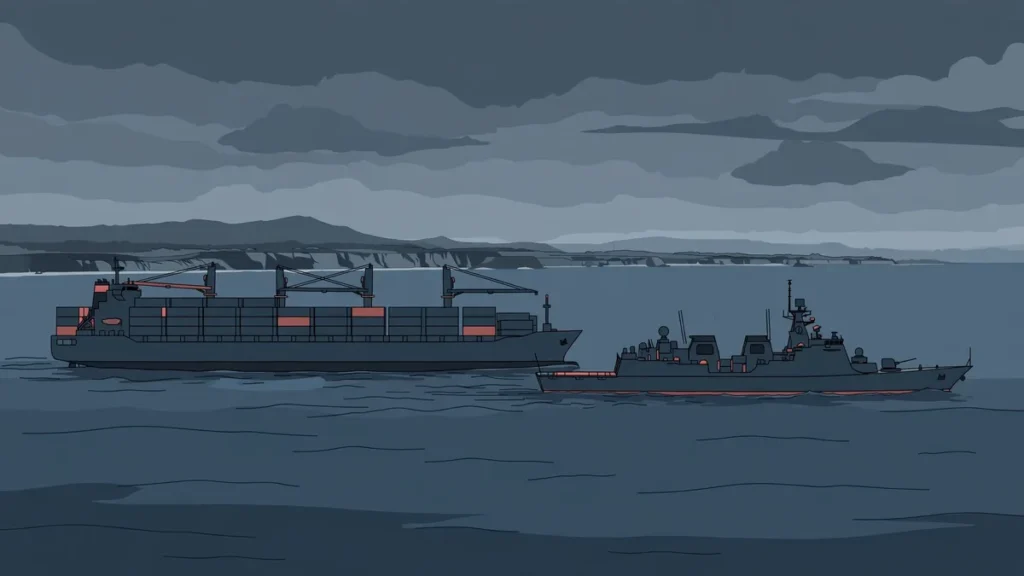
The Cheonghae Unit is South Korea’s anti-piracy naval task force, launched on March 13, 2009 as Seoul’s first overseas naval deployment. It has patrolled the Gulf of Aden off Somalia ever since, protecting commercial shipping — Korean and foreign — from piracy. The unit is built around a 4,400-ton destroyer with a maritime helicopter and up to three rigid-hull inflatable boats, crewed by around 300 service members on six-month rotations. Its 49th rotation sailed from Busan on October 2, 2026. By early 2019 the unit had travelled some 1.95 million kilometres, escorted or supported more than 21,800 vessels and countered 21 pirate attacks, according to the South Korean Navy.
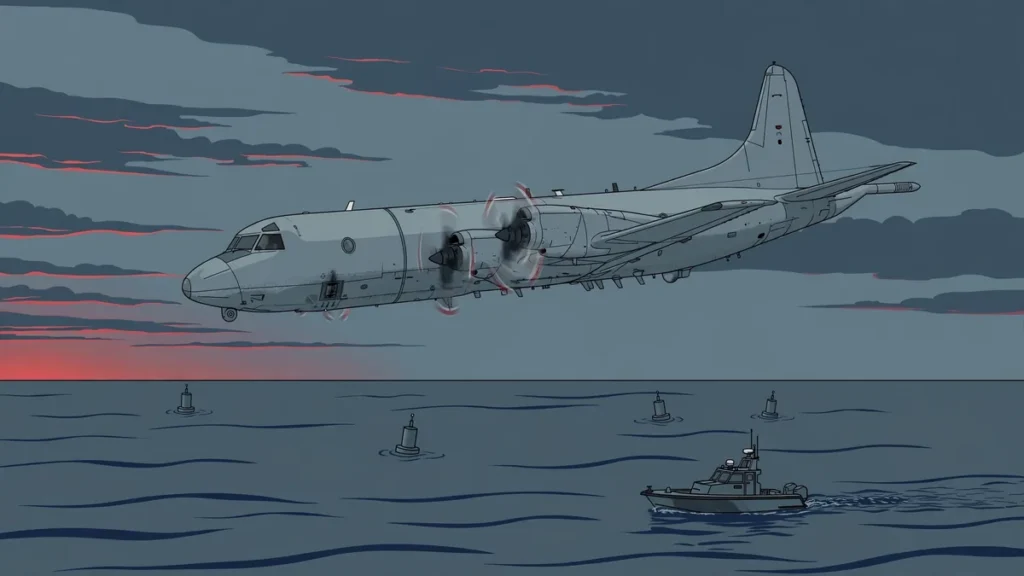
What Seoul approved on November 10, at a cabinet meeting chaired by President Lee Jae-myung, is the biggest change to that mission in its 17-year history. The unit’s area of operations would expand from the Gulf of Aden to waters south of Oman, near the port of Duqm — about 650 kilometres (403 miles) from the Strait of Hormuz — roughly doubling its operating radius to around 1,930 kilometres. The reinforcement adds 75 personnel, including an explosives ordnance disposal team, a P-8A maritime patrol aircraft and unmanned mine-clearing equipment. The unit’s existing mandate expires on December 31, 2026, and the expansion is bundled into the annual extension motion that now needs National Assembly consent.
Seoul has been emphatic about what the expansion is not. The government says the Strait of Hormuz is not included in the mission area, the mission is strictly non-combat, the unit stays under South Korean command and operates independently of allied forces, and the patrol aircraft will be barred from targeting or monitoring Iranian territory, its territorial waters or the interior of the strait. The patrol aircraft will carry defensive armaments, including flares, and the government says the expanded area remains far enough from Iran not to pose a threat. The stated reason is piracy: the government cites a more than threefold increase in pirate activity near the Gulf of Aden, and says the mission exists to protect Korean nationals, Korean vessels and Korean economic interests. WarBrief reported the cabinet approval on November 10, and the South Korea country profile sets out the wider context of Seoul’s naval posture.
By the numbers: the Cheonghae expansion
| Metric | Figure | Source | Status |
|---|---|---|---|
| Distance from expanded area (Duqm, Oman) to the Strait of Hormuz | ~650 km (403 miles) | Reuters / Al Jazeera | CONFIRMED |
| Expanded operating radius | ~1,930 km (1,200 miles), roughly double the current radius | Yonhap / Al Jazeera | REPORTED |
| Additional personnel | 75, including an explosives ordnance disposal team | Korea Herald / Al Jazeera | CONFIRMED |
| Current unit strength | ~300 service members, one destroyer, one helicopter, up to three boats | YTN / Al Jazeera | CONFIRMED |
| Increase in piracy near the Gulf of Aden | More than threefold (no baseline figure published) | South Korean government / Korea JoongAng Daily | CONFIRMED |
| Current rotation | 49th; sailed from Busan on October 2, 2026 | Yonhap / Korea Times | CONFIRMED |
| Existing mandate expiry | December 31, 2026 | South Korean government / Al Jazeera | CONFIRMED |
Figures marked CONFIRMED appear in two or more independent reports. Figures marked REPORTED come from a single wire or outlet and should be treated as provisional.
Why Tehran reads a patrol mission as taking sides
The dispute is not really about pirates. It is about whether a naval deployment near a war zone can be neutral when the war is being fought over the waterway next door. The United States and Iran are at war over maritime control of the Strait of Hormuz, and tankers were attacked near the strait on November 10, the same day Seoul’s cabinet approved the expansion. President Donald Trump has pressed allies, including South Korea, to help reopen the strait, saying in March that countries relying on it would “have to get involved a little bit” and that the United States was “helping South Korea a lot.” From Tehran’s side, a Korean destroyer and a P-8A moving 650 kilometres closer to the strait, at Washington’s urging, looks like a contribution to the US war effort whatever Seoul calls it — and Baghaei’s warning is designed to make that cost explicit before the deployment happens rather than after.
Seoul’s reassurance has not landed, and the reason matters. Analysts quoted in the Korean press say it is unclear whether the government explained the expanded mission to Tehran before announcing it; the foreign ministry would say only that it is “continuously communicating with relevant countries, including Iran.” Kwak Jin-o, a research professor at Pai Chai University, warned that Seoul must “make sure Iran understands that Korea is staying out of the war” and that “activities such as supporting other countries’ operations could send a different message to Tehran and increase the risk of an accidental clash.” Defence Minister Kang Shin-chul told the National Assembly’s National Defence Committee on November 9 that the expansion was not a backdoor to the strait, that Korea would retain its own command structure, and that the purpose was to protect Korean service members, nationals and vessels. But the gap between what Seoul intends and what Tehran perceives is itself the risk: a misunderstanding at sea, in a war zone, between a Korean warship and Iranian forces, is exactly the kind of incident both sides say they want to avoid.
What the Cheonghae warning means for US, UK and EU readers
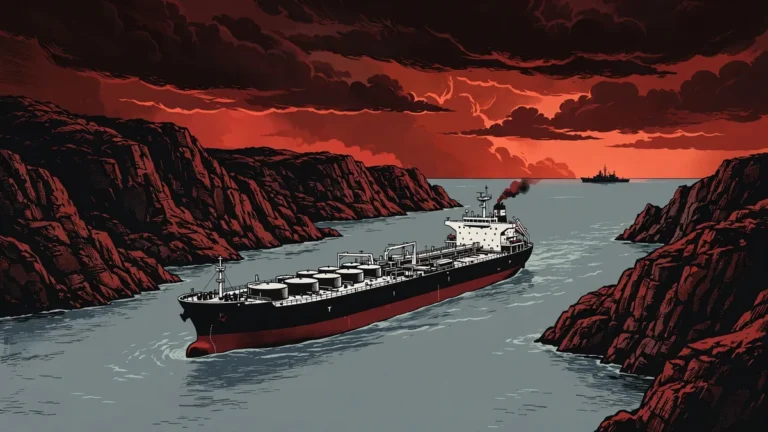
For shipping, the warning raises the perceived risk for Korean-flagged vessels and for any vessel operating under a Korean naval umbrella near the Arabian Sea. Insurers price war risk by proximity to conflict and by the flag and escort arrangements of the ships they cover; a public Iranian warning that Korean naval support counts as participation in the war is the kind of statement underwriters read closely. The direct cost channel runs through war-risk premiums, rerouting and delays for Hormuz shipping, which have already been climbing since the tanker attacks — and a Korean-flagged vessel that loses its naval cover, or is seen to have it, faces a different risk calculation either way.
For the United States, the episode tests the limits of burden-sharing. Washington wants allies to contribute ships, aircraft and mine-clearing gear to the Hormuz effort; Tehran’s answer is that contributors will be treated as belligerents. If Seoul backs down or waters down the deployment, other allies will notice — and if it proceeds and Iran follows through on its warning, the US will own the consequences of a policy it pushed. For the UK and the EU, the stakes are energy and precedent: Hormuz carries a large share of Europe’s seaborne oil and liquefied natural gas, so any widening of the conflict zone raises prices at the pump and on heating bills, while a precedent that third-country navies can be labelled participants would complicate every future European deployment in the Gulf. The WarBrief conflict zones hub tracks the wider Hormuz situation, and the mechanics of how a strait can be closed are covered in our explainer on how naval blockades work.
What happens next: the National Assembly vote
The motion to extend the Cheonghae deployment and expand its area must clear the National Assembly, where it faces review by the National Defence Committee before a plenary vote. Pan-ruling-camp parties, including the Rebuilding Korea Party and the Progressive Party, have called the plan a “backdoor troop deployment to Hormuz” and are pressing for guarantees that would block any drift into the strait — so friction is expected during the approval process, even though the governing Democratic Party holds a majority. Defence Minister Kang has already signalled that the debate will also cover drone defences and countermeasures for the deployed force.
Diplomatically, the next moves are a meeting and a message. Foreign Minister Cho Hyun held talks with US Secretary of State Marco Rubio in Paris on November 10, the day the cabinet approved the plan, and Seoul says it is continuing consultations with Iran and other countries concerned. What to watch: the committee timetable in the Assembly; whether Tehran escalates from words to a specific warning against Korean shipping or a named vessel; whether the P-8A deployment is timed to the vote or held back until after it; and whether any other US ally planning a Hormuz-adjacent deployment cites Seoul’s experience as a reason to pause. The warning is on the record now. The deployment is not yet approved. The space between those two facts is where this story will be decided.
Read next: South Korea Approves Cheonghae Expansion Toward the Strait of Hormuz — the November 10 cabinet decision this warning answers. What the Tanker War Costs: Hormuz Shipping, Insurance, Rerouting — what the conflict is doing to premiums and freight.
Frequently asked questions
What is the Cheonghae Unit?
South Korea’s anti-piracy naval task force, launched in March 2009 as Seoul’s first overseas naval deployment. It patrols the Gulf of Aden off Somalia to protect commercial shipping, built around a 4,400-ton destroyer, a maritime helicopter and up to three inflatable boats, with around 300 service members on six-month rotations.
What exactly did Iran warn South Korea about?
On November 12, Iranian Foreign Ministry spokesman Esmaeil Baghaei posted on X that any Korean naval deployment or logistical support near the Strait of Hormuz would be regarded as “a hostile and unlawful act amounting to participation in the US aggression against Iran”. It was Tehran’s second warning in four days, after a briefing on November 9 urged Seoul not to deploy forces “under the pretext of helping reopen the Strait of Hormuz”.
Is South Korea sending warships into the Strait of Hormuz?
No. The expanded mission area is waters south of Oman, about 650 kilometres from the strait, and Seoul says the strait itself is not included. The government describes the mission as strictly non-combat, under Korean command, aimed at piracy — though Tehran says that justification does not change the nature of the deployment.
Does the expansion need parliamentary approval?
Yes. The cabinet approved the plan on November 10, but the Cheonghae Unit’s mandate expires on December 31, 2026, and the extension and expansion require National Assembly consent. The motion faces review by the National Defence Committee and a plenary vote, with some ruling-camp parties opposing it as a “backdoor troop deployment”.
Why does this matter for shipping?
The Strait of Hormuz is the world’s most important oil waterway, and Iran’s warning raises the perceived risk for Korean-flagged vessels and for shipping operating near the expanded mission area. Insurers price war risk by proximity to conflict and by escort arrangements, so a public Iranian warning can feed directly into war-risk premiums, rerouting decisions and freight costs.
Sources
- Dong-A Ilbo: Iran warns South Korea over expanded naval mission
- Korea JoongAng Daily: Tehran invokes Korean proverb as warning over Cheonghae Unit deployment near Strait of Hormuz
- Korea Times: Iran sees Cheonghae expansion as backing US war effort
- Korea Herald: Seoul reiterates noninvolvement in Iran war as Tehran warns against naval deployment
- SBS: Cabinet Approves Expanding Cheonghae Unit’s Operational Area; Iran Warns Against Becoming “Accomplice”
- Al Jazeera: South Korea plans to expand anti-piracy operations closer to Hormuz Strait

Discussion 0
Share analysis, corrections, or context. Be civil — comments are moderated.