
WarBrief Live | November 12, 2026 | Breaking Analysis
| ~4m bpd crude rerouted via the pipeline to Yanbu | 7m bpd pipeline design capacity | 1,200 km Abqaiq to Yanbu, across the kingdom | 4 attacks claimed by the Houthis on November 12 |
Yemen’s Houthis said on Thursday, November 12, 2026, that they struck a pumping station on Saudi Arabia’s East-West oil pipeline and an oil facility at the Red Sea port of Yanbu. Saudi Arabia has not confirmed either attack, and no independent damage assessment exists yet.
Key Takeaways
- Houthi military spokesman Yahya Saree said a drone hit Pumping Station No. 7 on the East-West Pipeline and a ballistic missile hit the Yanbu oil facility. He also claimed two further attacks, on a Saudi airport and an airbase near the Yemeni border, and said all four were successful.
- Saudi Arabia did not immediately respond to the claims, and the Houthis did not say on which day the attacks were carried out — so whether anything was actually damaged remains unconfirmed.
- The pipeline is Saudi Arabia’s Hormuz bypass: about 4 million barrels a day of crude now flow through it to Yanbu, roughly 4% of global supply, because the Strait of Hormuz is effectively closed.
- The claim caps a week of strikes and counter-claims that has already seen missiles over Mecca, a hit on the pipeline near Medina, and damage to Riyadh’s Aramco Tower.
What did the Houthis claim on November 12?
Houthi military spokesman Yahya Saree said in a post on X that his forces had carried out two attacks on Saudi energy infrastructure: one operation “targeted Pumping Station No. 7 on the East-West Pipeline using a drone”, while a second “targeted the Yanbu oil facility using a ballistic missile”. He claimed both attacks — as well as two others, against a Saudi airport and an airbase not far from the Yemeni border — had been successful. Reuters reported that Saudi Arabia did not immediately respond to a request for comment, and that the Houthis did not specify which day they had carried out the attacks.
Saree also used the same statement to deny the Saudi claim that two Houthi ballistic missiles had been aimed at Mecca the day before, calling it a “grave falsehood”. The Houthis have repeatedly denied targeting Mecca and Medina, saying their operations are directed at military and strategic targets elsewhere in Saudi Arabia.
The claim fits a pattern that has run for weeks. As Reuters notes, the group has been firing ballistic missiles and drones at Saudi airports, ports and oil installations, turning the kingdom into a pressure point in a war that began when the United States and Israel attacked Iran in February 2026.
What is confirmed and what is still only reported?
On a story built from rival claims, the line between what is known and what is merely asserted matters more than usual. What is confirmed is that the Houthis made the claim, that Saudi Arabia has not yet answered it, and that the pipeline carries a large share of the world’s oil. What is not confirmed is whether the drone or the missile hit anything at all. No Saudi statement, no Aramco statement, no independent damage assessment and no satellite imagery of the November 12 attacks had been published at the time of writing.
| Metric | Figure | Source | Status |
|---|---|---|---|
| Crude rerouted via the East-West Pipeline to Yanbu | ~4 million barrels per day | Reuters | CONFIRMED |
| Share of global oil supply | ~4% | Reuters | CONFIRMED |
| Pipeline design capacity | 7 million barrels per day | Reuters; Aramco reporting | CONFIRMED |
| Pipeline length, Abqaiq to Yanbu | ~1,200 km | Multiple trade reports | CONFIRMED |
| Attacks claimed on November 12 | 4 | Houthi spokesman, via Reuters and Al Jazeera | CONFIRMED as a claim |
| Damage to Pumping Station No. 7 | Not verified | Houthi claim only | REPORTED |
| Damage to the Yanbu oil facility | Not verified | Houthi claim only | REPORTED |
| Toll of the October 10 airport strike | 13 killed, 300+ wounded | AP; Reuters | CONFIRMED |
Figures marked REPORTED rest on one party’s account and have not been independently verified. Treat them as claims, not facts.
What is the East-West pipeline and why does it matter?
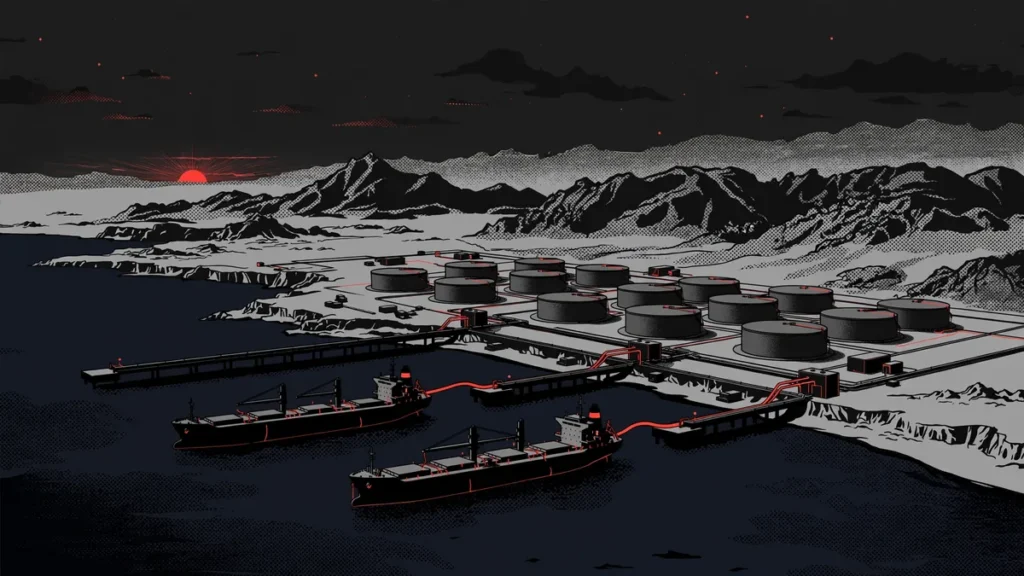
The East-West Crude Oil Pipeline, known as the Petroline, runs about 1,200 kilometres from the Abqaiq processing complex in Saudi Arabia’s Eastern Province to the export terminals at Yanbu on the Red Sea. It was built in the 1980s for exactly the situation the kingdom now faces: a closure of the Strait of Hormuz. Its capacity was raised to 7 million barrels a day in 2026, when Aramco converted a second line to carry crude, and with Hormuz effectively closed since the war began on February 28, the pipeline has carried the bulk of Saudi exports ever since.
That makes it the single most valuable target in the Houthi campaign. Reuters reports that Riyadh has rerouted about 4 million barrels a day through the line to Yanbu — roughly 4% of global supply — and that the pipeline “has spared Saudi Arabia, the world’s biggest exporter, from the brunt of the impact of the wartime shutdown of the Strait of Hormuz”. The bottleneck sits at the far end: cargo trackers put Yanbu’s loading capacity at roughly 4.5 million barrels a day, so every barrel the pipeline cannot deliver is a barrel that cannot be loaded at all. Our earlier analysis of what the tanker war costs shippers explains why the rerouting has already pushed insurance and freight rates sharply higher.
Pumping stations are the weak point. A stretch of buried pipe can be patched quickly; a pumping station is the most complex equipment on the route, and it is the target the Houthis have named again and again. In September, a drone strike on a pumping station caused a fire and forced the line to shut for repairs, according to trade-press reporting at the time. The Houthis also claimed an attack on pumping station No. 8 on November 7, and reporting on November 10 said satellite images dated November 8 appeared to show damage there. Whether the November 12 claim concerns the same station or a different one is not yet clear — the Houthis named station No. 7 this time, and no independent imagery has been published.
A week of claims and counter-claims: the November timeline
The November 12 claim does not stand alone. It is the latest move in a fast-moving exchange in which each side’s account of the same night often contradicts the other’s:
- October 10: A Houthi strike on Riyadh’s King Khalid International Airport kills 13 people and wounds more than 300, according to AP and Reuters. The airport shuts and does not resume flights until October 25.
- November 7: The Houthis claim an attack on pumping station No. 8 of the East-West Pipeline. Reporting two days later says satellite images dated November 8 appeared to show damage at the station.
- November 8: The Houthis claim a strike on Riyadh’s business district. Debris from intercepted missiles damages the Aramco Tower in the King Abdullah Financial District. No casualties are reported. Our report on the Riyadh cruise-missile strikes has the full picture.
- November 9: Saudi Arabia’s Energy Ministry says the East-West Pipeline was targeted in the Medina region, causing a limited fire that was extinguished, with no injuries and operations unaffected. The Houthis later deny the Medina account, calling it “a blatant lie” and saying the operation hit the pipeline near Riyadh instead.
- November 10: Saree claims strikes on King Khalid International Airport, Riyadh-area pumping stations, an Aramco facility at Abqaiq and the Riyadh financial district. The Saudi-led coalition reports only interceptions, and says it destroyed three Houthi facilities in Sanaa, including a missile factory and a solid-propellant plant.
- November 11: The coalition says it intercepted three cruise missiles heading towards Riyadh, two drones and two ballistic missiles over western Saudi Arabia. Saudi civil defence says debris from two intercepted ballistic missiles fell in the Mecca region, including Sabuhah village, about 35 km northeast of the Grand Mosque. The Houthis deny aiming at Mecca. Our analysis of the Mecca claim and denial separates what each side actually said.
- November 12: Saree claims a drone strike on Pumping Station No. 7 and a ballistic-missile strike on the Yanbu oil facility, plus two further attacks. Saudi Arabia has yet to comment.
The pattern is worth noting for readers trying to judge the next claim: the Houthis announce attacks quickly and in detail, Riyadh confirms interceptions and damage selectively, and verification — through satellite imagery or cargo data — usually takes days. The Medina dispute is the clearest example: two irreconcilable accounts of where the same pipeline was hit, with neither side producing evidence the other accepts.

What the pipeline attack claim means for US, UK and EU readers
Fuel prices. The pipeline carries about 4% of the world’s oil supply around a closed strait. If a pumping station were knocked out for days rather than hours, more Saudi crude would be trapped behind Hormuz, and the cost would show up in petrol, diesel and heating bills. A claim alone does not move supply — a confirmed outage would. Watch cargo-tracker data on Yanbu loadings over the next few days rather than the next statement from either side.
Travel. Riyadh’s main airport was shut for two weeks after the October 10 strike, and European aviation safety authorities widened a warning for Saudi airspace the same month. Airlines have repeatedly cancelled or rerouted services during the escalation, so travellers should check their carrier’s status before flying to or through the kingdom. Our explainer on war risk insurance sets out how the same disruption is priced into shipping and aviation.
Diplomacy. Saudi Arabia is pressing the European Union to designate the Houthis as a terrorist organisation, according to six European officials cited by FirstPost. The EU already maintains an arms embargo and asset freezes on 12 Houthi commanders, and EU foreign ministers meet in Brussels on November 16 with the Middle East on the agenda. The pipeline claim will strengthen Riyadh’s case — and the bloc’s reluctance, driven by fears for humanitarian operations and for peace efforts in Yemen, will be tested in the same meeting.
Security. The Houthis have turned Saudi Arabia into a pressure point in the wider war, and the targets are moving steadily up the value chain: airports, then the financial district, now the oil lifeline itself. French troops deployed to Yanbu in October to guard that lifeline, as we reported in our analysis of the French deployment — a sign of how seriously allied governments already take the threat to the Red Sea export route. For the full background on the Yemen–Saudi front, see our Yemen–Saudi escalation profile and our Saudi Arabia country profile.
What to watch next in the Saudi–Houthi escalation
First, whether Saudi Arabia or Aramco comments at all. Silence so far is consistent with Riyadh’s handling of the November 10 claims, but a damage assessment — or satellite imagery from independent analysts — would settle the question within days. Second, whether loadings at Yanbu change: cargo trackers will show any drop in Red Sea crude exports before any official statement does. Third, the coalition’s response: airstrikes on Sanaa facilities followed the November 9–10 claims, and a similar response is likely if the November 12 attacks are confirmed.
Two separate threads are worth watching alongside the pipeline claim. In the Strait of Hormuz, Iran’s armed forces said on November 12 that four tankers had caught fire, while the Revolutionary Guards said two tankers carrying more than four million barrels of oil caught fire after an “accident” — contradictory accounts that remain unverified, and which our Hormuz tanker campaign assessment puts in context. And the wider threat picture is darkening: Iran’s armed forces warned that a response to any new US attack would be “10 times” more severe, after President Trump threatened that any future attack on Iran would be five times stronger. Finally, the EU foreign ministers’ meeting on November 16 is now the nearest diplomatic test — of the sanctions package, of the Houthi designation question, and of Europe’s appetite for a harder line. The conflict zones hub will carry updates as they are verified.
Frequently asked questions
Did the Houthis attack Saudi Arabia’s East-West pipeline?
The Houthis say they did: their spokesman Yahya Saree said a drone hit Pumping Station No. 7 on November 12, 2026. Saudi Arabia has not confirmed the attack, no damage assessment has been published, and the Houthis did not say on which day the attack was carried out. The attack itself is therefore reported, not confirmed — only the claim is verified.
What is the East-West pipeline?
It is Saudi Aramco’s East-West Crude Oil Pipeline, known as the Petroline, running about 1,200 kilometres from Abqaiq in the Eastern Province to the export terminals at Yanbu on the Red Sea. Its capacity is 7 million barrels a day, and it is the kingdom’s only large route for crude that avoids the Strait of Hormuz.
How much oil flows through the pipeline?
About 4 million barrels a day are currently rerouted through the line to Yanbu, according to Reuters — roughly 4% of global supply. The pipeline’s full capacity is 7 million barrels a day, but Yanbu’s loading terminals, at roughly 4.5 million barrels a day, are the bottleneck.
Has Saudi Arabia confirmed the attack?
No. Saudi Arabia did not immediately respond to a request for comment on November 12, and neither the government nor Aramco had issued a statement on the claim at the time of writing. Riyadh did confirm a separate, earlier incident: a hit on the pipeline near Medina on November 9 that caused a limited fire, with no injuries and no effect on operations.
Why are the Houthis attacking Saudi Arabia now?
The truce in Yemen’s war collapsed in July 2026, and the Houthis have since fired missiles and drones at Saudi airports, ports and oil installations almost daily. The attacks make Saudi Arabia a pressure point in the wider war that began when the US and Israel attacked Iran in February, and they coincide with a Yemeni government offensive, backed by coalition air support, to retake Houthi-held territory.
Sources
- Reuters: Yemen’s Houthis say they attacked pumping station on Saudi Arabia’s East-West oil pipeline
- Al Jazeera: Iran war live: Houthis say attacked Saudi energy, military infrastructure
- Gulf News: US-Israel-Iran Tensions Escalate: Tehran Threatens US Bases, Houthi Missiles Intercepted in Makkah
- Malay Mail: Saudi Arabia says East-West pipeline targeted amid escalating Houthi strikes, operations unaffected
- FirstPost: Saudi Arabia pushes EU to declare Houthis a terrorist group amid escalating attacks on kingdom


Discussion 0
Share analysis, corrections, or context. Be civil — comments are moderated.