
WarBrief Live | November 10, 2026 | Geopolitics
$47B+
US military cost of the Iran war as of October 16, 2026 (Pentagon)
38
bridges Trump says the US could knock down “in literally one hour”
~50,000
US troops deployed across US Central Command’s area of responsibility
−16%
Brent crude’s fall last week — its steepest weekly drop since COVID began
Donald Trump says the war on Iran is “effectively over” militarily — but no ceasefire has been signed, the naval blockade continues, and Iran has dismissed his remarks as “fake news”. Here is what the status quo actually means.
The declaration came on November 9, 2026, at a surprise White House briefing, hours after a closed-door meeting with Vice President JD Vance and Qatar’s Prime Minister Sheikh Mohammed bin Abdulrahman Al Thani, who has been mediating between Washington and Tehran. “Iran militarily is effectively over,” Trump said. “We’re just keeping it the status quo, and we’re doing that really at the behest of countries that are their neighbours.” The words matter because they describe a third path — neither a new offensive nor a peace deal — and because almost every element of the war machine that produced the conflict is still in place.
Key Takeaways
- Trump declared the Iran war “militarily… effectively over” on November 9, 2026, after meeting Qatar’s prime minister — but framed it as a status quo, not a peace deal.
- The US naval blockade of Iranian ports continues, now paired with Task Force Iron Gate, which targets weapons flows across Iran’s land borders and the Caspian Sea.
- Iran rejected the framing outright: security chief Mohsen Rezaei demanded Washington “surrender” to seven Iranian conditions and called the talks “imaginary”.
- Markets moved fast: Brent crude fell about 4% on November 9 to roughly $94 a barrel, extending a 16% slide the week before.
What did Trump actually say on November 9, 2026?
Trump’s remarks came in two settings on November 9: the surprise briefing in the White House briefing room, and a written post on Truth Social afterwards. In the briefing room he said the war was “effectively over”, that further military action “doesn’t seem to be a very necessary thing”, and that the United States was “locked and loaded, ready to go for any reason that changes”. He added that he saw momentum towards an end to the conflict: “I think it’s going to be ending fairly soon.” Al Jazeera reported the briefing in full, including Trump’s claim that Iran had been “very much decapitated” as a military power.
On Truth Social, Trump named the Gulf states he said preferred the arrangement — “Qatar, Saudi Arabia, UAE, Bahrain, Kuwait, and others” — and restated the blockade and the new land interdiction effort as one policy: “a continuation of the Greatest Naval Blockade in History, and the new Operation Iron Gate — Therefore, Land and Sea. All have agreed that Iran cannot have a Nuclear Weapon — That is non-negotiable!”
The tone was set the day before, in a 20-minute phone interview with CNN on November 8, in which Trump said renewed strikes were “highly unlikely” if negotiations over Iran’s nuclear programme and the reopening of the Strait of Hormuz made progress — provided Tehran signed what he called a “very strong agreement”. In the same interview he said the United States had identified infrastructure targets inside Iran, including power plants and bridges: “We have 38 bridges in our site that we can knock down in literally one hour. They’ll all be down.” He also claimed Iran retained only 10 per cent of its missile capacity and 15 per cent of its drone capabilities — figures that are his own claims, not independently verified assessments.
Hours later, in a separate phone interview with C-SPAN, Trump raised the stakes again, saying a renewed US attack could be “approximately five times bigger than the first hit”, while insisting the Gulf states would rather keep the current approach. “We won Venezuela, and we won Iran. We wiped out their Navy, we wiped out their Air Force, we wiped out everything,” he said — claims that, again, are his own characterisation of the campaign, not confirmed military assessments.
Qatar’s prime minister struck a different note after the meeting, posting that the two sides had discussed “the situation in the region and ways to progress the US-Iran talks” and thanking Trump for “the positive discussions on reaching a deal and bringing peace to the region”. Al Jazeera reported that he had presented Trump with a two-day proposal from Iran to end the war — a claim that has not been confirmed by Washington or Tehran.
It is not the first Iranian proposal Trump has weighed: he had already rejected a seven-day roadmap from Tehran — see Iran’s Seven-Day Roadmap: What Trump Rejected and What Happens Next.
What is the “status quo” Trump is keeping?
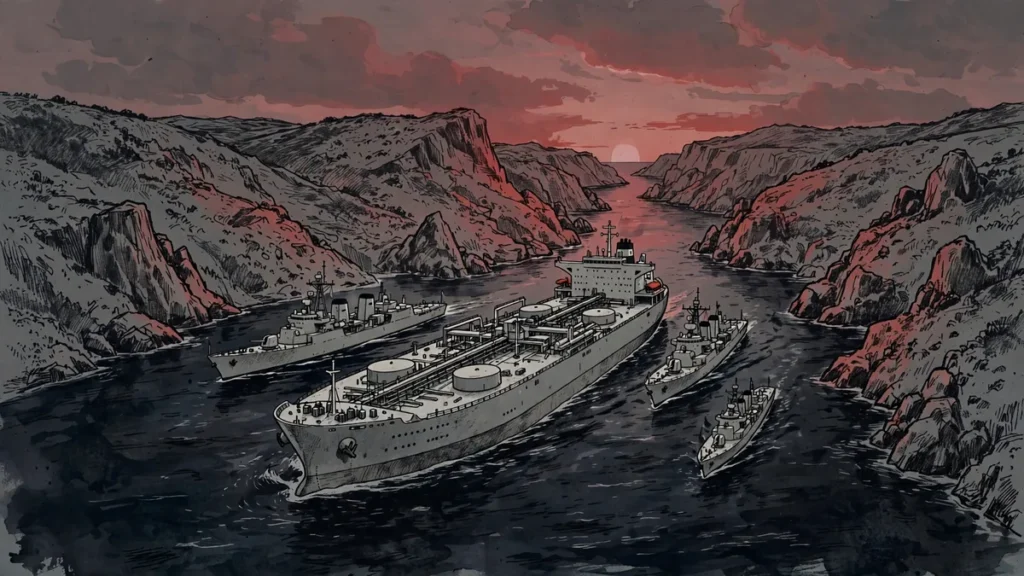
The status quo has three moving parts, and none of them has stopped. First, the naval blockade: Trump described it as “the greatest naval blockade in the history of our country. Probably in the history of the world”, and US forces continue escorting ships through the Strait of Hormuz. Iran shut the strait when the war began on February 28, 2026, and the waterway — which carried about a fifth of the world’s oil before the conflict — remains the central pressure point. For how blockades of this kind actually work, see our explainer on naval blockades, quarantines and the law of the sea.
Second, Task Force Iron Gate, announced by US Central Command on November 8, which aims to cut off the movement of advanced weapons, dual-use technologies and sanctioned materials across Iran’s land borders and the Caspian Sea. Trump presents it as the land half of the blockade. Analysts are sceptical about its reach: Andreas Krieg, an associate professor at King’s College London, told Al Jazeera the small unit would largely operate as an intelligence coordination centre rather than physically policing Iran’s borders — “Twenty people cannot police thousands of kilometres of frontiers.” Our full assessment is in Task Force Iron Gate: Choking Iran’s Land and Caspian Routes.
Third, limited strikes continue. The Trump administration has described its recent attacks on Iran’s Qeshm Island as “minor strikes” aimed at preventing Iranian surface-to-air missiles from hitting US assets, and it has offered a $20 million reward for information about Iran’s nuclear programme. Our report on the island is Trump Confirms New US Strikes on Qeshm Island in 2026.
The cost of holding this position is steep. The war has cost the US military more than $47 billion as of October 16, 2026, according to the latest Pentagon estimate cited by USA Today — a figure that does not include billions in damage to US bases and facilities in the Middle East. Roughly 50,000 troops have been deployed to US Central Command’s area of responsibility. At least 23 US service members have died in the Middle East and another 865 have been wounded since the fighting began, according to the US military’s official casualty database.
One sign that the pressure is easing, at least at sea: shipping data seen by Reuters showed 31 liquefied natural gas tankers passed through the Strait of Hormuz in October — the highest monthly tally since the war began — with the United Arab Emirates back to pre-war transit levels and Qatar at more than 30 per cent of its pre-war volumes.
By the numbers: what is confirmed and what is only claimed
| Metric | Figure | Source | Status |
|---|---|---|---|
| US military cost of the Iran war (to October 16, 2026) | $47 billion+ | Pentagon, via USA Today | CONFIRMED |
| US troops deployed in CENTCOM’s area | ~50,000 | Pentagon, via USA Today | CONFIRMED |
| US service members killed / wounded | 23 / 865 | US military casualty database | CONFIRMED |
| Brent crude, November 9, 2026 | −4.2% to $94.23 a barrel | Reuters, via Khaleej Times | CONFIRMED |
| Brent crude’s fall the previous week | −16% | Reuters | CONFIRMED |
| LNG tankers through Hormuz, October 2026 | 31 — highest since the war began | S&P Global Energy, via Reuters | CONFIRMED |
| Bridges Trump says the US could destroy in an hour | 38 | Trump to CNN, November 8 | CLAIM — Trump’s statement |
| Iran’s remaining missile / drone capacity | 10% / 15% | Trump to CNN, November 8 | CLAIM — Trump’s statement |
| US prepared to let Iran enrich uranium to 3.67% | Reported, not confirmed | Haaretz, citing sources | REPORTED |
Figures marked CLAIM are statements by President Trump, not independently verified assessments. REPORTED figures come from a single outlet citing unnamed sources and should be treated with caution.
Why did Trump change course now?
Politics at home is the clearest driver. The midterm elections were a crushing defeat for the Republicans, who lost their Senate majority, and the White House has publicly blamed the war. “The reason we lost is the war,” Vice President JD Vance wrote on November 4. Polls in the days before the vote repeatedly showed the cost of living as voters’ top concern, and the war had pushed fuel prices sharply higher. Esfandyar Batmanghelidj of the Bourse & Bazaar Foundation told USA Today that “a lot of the momentum behind further military conflict, at least of a significant scale, has been lost” — it would look extraordinary, he said, for officials to acknowledge losing an election over the war and then double down on it.
The war has also put Trump’s Pentagon chief in the crosshairs. Outgoing Republican Representative Thomas Massie has introduced eight articles of impeachment against Defence Secretary Pete Hegseth, accusing him of waging war on Iran without congressional approval, and a House vote is expected. Hegseth is due to hold a news conference on November 10 to defend himself. Trump has called Massie “a total loser” and said he would stand by Hegseth “even if he is impeached”.
Abroad, Trump’s war partner is under strain too: Israeli Prime Minister Benjamin Netanyahu is at risk of losing power amid negotiations over forming a new government. And Trump himself had promised the war would end “immediately after the election” — a pledge he has since walked back, while Vance has said the White House has set no deadlines for a decision.
His own Secretary of State is notably less upbeat than the president. Marco Rubio told reporters on November 8 that negotiators were not on the verge of a diplomatic breakthrough, describing Iran’s demands as “outrageous and ridiculous and really not realistic”. Rubio also stressed that US action was defensive: “If there’s a threat to our forces in the region, we will act against those.”
One account from inside the closed-door meeting suggests Trump is keeping his options open. Axios reporter Barak Ravid, citing a diplomat briefed on the talks, reported that Trump told Qatar’s prime minister privately that he wants a deal and intends to give the negotiations a chance — but warned he could reverse course if Tehran does not treat the talks seriously. That account rests on a single unnamed diplomat and has not been confirmed by the White House.
What are Iran’s seven conditions to end the war?
Tehran’s answer to Trump’s declaration was a demand of its own. Iran’s security chief, Mohsen Rezaei, told Al Jazeera that Iran has set seven conditions before peace talks can begin:
- An end to military and hostile actions on all fronts, especially in Lebanon
- The release of Iranian frozen funds that run into billions of US dollars
- An end to the US naval blockade on Iranian ports
- An end to US interference in Iran’s internal affairs
- An end to US cooperation with “the opponents of our revolution”
- An end to all US attacks on Iranian territory
- An end to economic sanctions
Rezaei’s language left little room for compromise. “Time to SURRENDER to the seven conditions Iran has repeatedly set out,” he wrote on social media, adding: “FOLD YOUR HAND. STOP manufacturing FAKE NEWS about imaginary talks.” President Masoud Pezeshkian said Supreme Leader Mojtaba Khamenei had called for an end to the situation, which he described as “neither war nor peace”, and that Iran was open to further negotiations but would not be coerced: “We will not surrender to force and bullying.”
The gap between the two sides is the story. Trump’s status quo keeps the blockade and the sanctions that Iran’s conditions demand be lifted, while Iran’s conditions would require Washington to surrender the leverage the blockade provides. Trump says the talks are “going very well” and the war could end “fairly soon”. Rezaei says the talks are imaginary. Rubio says they are nowhere near a breakthrough. Until one side moves, the war sits where it has sat for months: neither ended nor escalated, with the blockade doing the work that bombing used to do.
What the status quo means for US/UK/EU readers
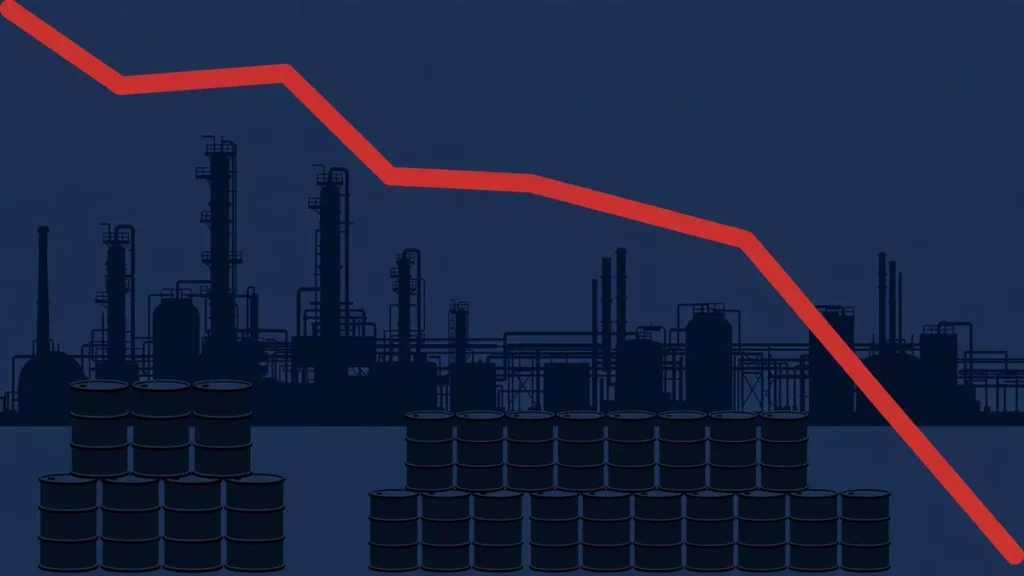
Fuel prices are the most immediate effect. Brent crude fell about 4% on November 9 to roughly $94 a barrel, after a 16% plunge the week before — its steepest weekly fall since the start of the COVID-19 pandemic. If the lull holds, pump prices in the US, UK and EU should ease over the coming weeks. But the relief is fragile: any resumed strike, any tanker incident in the Strait of Hormuz, or any collapse of the talks would send prices back up fast. Goldman Sachs has even raised its December Brent forecast to $105 a barrel, citing the supply risks that remain. Our earlier analysis of the same pattern is Oil Plunges 7% on Iran Deal Hopes: What It Means for Fuel Prices.
Shipping is recovering but not safe. The October LNG figures show tankers returning to Hormuz, yet US warships are still escorting vessels through the strait, and Iran has attacked tankers in and near the waterway in recent weeks. Freight and insurance costs on Gulf routes remain elevated, and that feeds into the price of energy, fertiliser and goods across Europe.
For UK readers specifically, the war has reached British soil in a quieter way: the Wall Street Journal reported on November 10 that the US military had evacuated aircraft from a second UK airbase, RAF Mildenhall, after a threat from Iran, diverting refuelling tankers to Germany. It follows a suspected Iran-linked security incident at RAF Fairford weeks earlier that led to the withdrawal of US bombers. A UK Defence Ministry spokesperson said aircraft “move regularly according to operational requirements” and declined to comment on other nations’ activity.
For travellers, the advice is unchanged: the Gulf remains a region where advisories can change overnight, and the blockade means any flare-up can close airspace or shipping lanes with little warning. For markets, Wall Street rallied on November 9 on hopes of a diplomatic end to the war — a reminder that the status quo is priced as good news only for as long as it lasts.
What to watch next in the Iran war
Five things will show whether “effectively over” becomes a real end or just a pause. First, Hegseth’s news conference on November 10 and the House impeachment vote — a vote against the Pentagon chief would be read in Tehran as a vote against the war itself. Second, whether Qatar’s two-day proposal from Iran advances into a formal channel, and whether Tehran publicly engages with it. Third, the IAEA Board of Governors meeting on November 16–20, 2026, where Iran’s nuclear programme returns to the centre of the argument — see our preview, IAEA Board of Governors, November 16–20, 2026: What to Expect on Iran. Fourth, the APEC summit in Shenzhen on November 18–19, where Trump meets Xi Jinping with Ukraine — and the Iran question — in the background. And fifth, the threat Trump keeps repeating: a renewed attack “five times bigger” than the first, with 38 bridges on the list. The status quo holds only while both sides prefer it to the alternative. Follow the wider war in our conflict zones hub.
Frequently asked questions
Is the Iran war over?
No. Donald Trump said on November 9, 2026, that the war is “effectively over” militarily, but no ceasefire or peace agreement has been signed. The US naval blockade of Iranian ports continues, Task Force Iron Gate is interdicting land and Caspian routes, and limited strikes have continued. Iran has rejected Trump’s characterisation of the situation.
What did Trump say about Iran on November 9, 2026?
After meeting Qatar’s prime minister at the White House, Trump told reporters that “Iran militarily is effectively over” and that the US would “just keep it the status quo” at the request of Gulf neighbours. He said further military action “doesn’t seem to be a very necessary thing” but that the US was “locked and loaded, ready to go”. He also said the war could end “fairly soon” and that talks were “going very well”.
What is Operation Iron Gate?
Task Force Iron Gate is a US military task force announced by US Central Command on November 8, 2026, aimed at disrupting the movement of advanced weapons, dual-use technologies and sanctioned materials into Iran across its land borders and the Caspian Sea. It works alongside the naval blockade of Iranian ports. Analysts have questioned its effectiveness, noting that a small coordination unit cannot physically police thousands of kilometres of frontier.
What are Iran’s seven conditions to end the war?
According to Iran’s security chief Mohsen Rezaei, speaking to Al Jazeera, the conditions are: an end to military and hostile actions on all fronts, especially in Lebanon; the release of billions of dollars in frozen Iranian funds; an end to the US naval blockade; an end to US interference in Iran’s internal affairs; an end to US cooperation with “the opponents of our revolution”; an end to all US attacks on Iranian territory; and an end to economic sanctions.
Why did oil prices fall on November 9, 2026?
Brent crude fell about 4% to roughly $94 a barrel after Trump said fresh US strikes on Iran were highly unlikely while talks made progress, easing fears of supply disruption. The fall extended a 16% slide the previous week — Brent’s steepest weekly drop since the start of the COVID-19 pandemic — which had already pushed prices to a two-month low of $93.22.
Sources
- Al Jazeera: After meeting Qatar PM, Trump calls Iran war ‘effectively over’ militarily
- Al Jazeera: Iran war live — Iran demands US ‘surrender’ to its conditions
- USA Today: Military strikes? A peace agreement? Trump opts for status quo in Iran
- The Hindu: Trump says U.S. military action against Iran not necessary ‘at this point’
- CNN: Trump says renewed attacks on Iran ‘highly unlikely’ if talks show progress
- Khaleej Times: Oil falls almost 5% as Trump signals restraint on Iran
Discussion 0
Share analysis, corrections, or context. Be civil — comments are moderated.