
WarBrief Live | November 8, 2026 | Breaking Analysis
| $12bn Frozen Iranian assets Tehran wants released | Day 6 Hormuz reopens under Iran’s plan | $25bn+ Crude exports CENTCOM says its blockade has stopped | 20% Of the world’s traded oil and gas passed through Hormuz before the war |
Iran’s seven-day roadmap to end the war with the United States is, for now, a rejected offer. Tehran formally submitted the plan on Friday, November 6, and within hours The Wall Street Journal reported that President Donald Trump had turned it down — and that he expects a renewed bombing campaign after the November US midterm elections. What investigators have confirmed is the submission itself and the terms Tehran published; the rejection rests on the Journal’s reporting from unnamed US officials, which Reuters said it could not immediately confirm.
Key Takeaways
- Iran formally submitted a seven-day plan on November 6: fighting stops, the US lifts its naval blockade and waives oil sanctions, about $12bn in frozen assets is released, and the Strait of Hormuz reopens on day six, with nuclear talks starting on day seven.
- The Wall Street Journal reported on Friday that Trump rejected the proposal, citing unnamed US officials. He is said to be privately sceptical that Iran would meet his demands and to expect bombing to resume after the US midterm elections.
- The rejection has not been confirmed by the White House, and Reuters reported that Tehran had not been formally notified. Iranian officials were still awaiting an official US response as of Saturday.
- While diplomacy stalled, the pressure campaign escalated on November 7: US Central Command announced Task Force Iron Gate to police Iran’s land and Caspian supply routes, disabled a cargo vessel in the Gulf of Oman, and Iran’s Revolutionary Guard lifted its self-imposed 2,000km limit on ballistic missile ranges.
What is Iran’s seven-day roadmap?
Foreign Minister Abbas Araghchi detailed the plan to reporters outside the United Nations Security Council on Friday, November 6, saying it had been conveyed to Washington through Qatar. “The seven-day timeline will start as soon as the United States accepts this plan,” he said.
The sequence, as Araghchi laid it out, runs like this. The initial steps would take four to five days. The Strait of Hormuz would reopen on the sixth day. “On day seven, the talks with the US will be started for the final deal on mutually agreed subjects,” he said, referring to Iran’s nuclear programme.
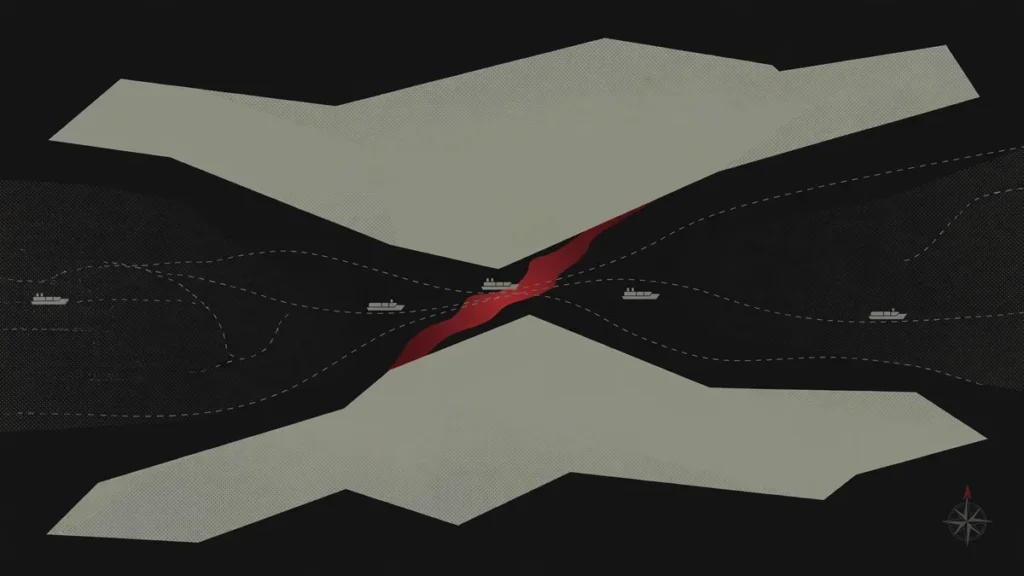
In exchange for that timetable, Washington would lift its naval blockade of Iranian ports, waive sanctions on Iranian oil sales, release an estimated $12bn in frozen Iranian assets and observe a ceasefire covering the region, including Lebanon and Yemen. In return, Iran would reopen the Strait of Hormuz, through which a fifth of the world’s traded oil and gas passed before the war, and which has become Tehran’s main point of leverage.
“The choice now rests with the United States,” Araghchi said. “Iran does not accept coercion, threats or intimidation, and Iran will not surrender its sovereign rights under pressure. I can tell you if there is seriousness on the US side to come to a deal and reopen the Strait of Hormuz, everything is now prepared.”
The proposal closely mirrors a memorandum of understanding signed between Tehran and Washington on June 17, after Qatari and Pakistani mediation, which set a 60-day window for talks but collapsed within weeks. Technical and vague terms over control of shipping through Hormuz led to disputes, as Iran began firing on vessels it accused of ignoring its authorisation rules, prompting Trump to declare the deal “over” in July. The US has since sporadically struck Iranian territory and coastal areas in response.
Why did Trump reject Iran’s seven-day plan?
Later on Friday, The Wall Street Journal reported that Trump had rejected the proposal, citing US officials familiar with the matter. The report said the 80-year-old president was sceptical that Tehran would meet his demands and believed a renewed bombing campaign was likely after the November midterm elections. Reuters separately reported that it could not immediately confirm the Journal’s account.
The sequencing is the core of Washington’s objection. Under Tehran’s plan, the United States gives up its leverage first — lifting the blockade, waiving oil sanctions, releasing frozen funds and halting military operations across multiple theatres — and only then, on day seven, does Iran agree to sit down and discuss its nuclear programme. The strait reopens on day six, after the concessions have already been delivered. From the White House’s perspective, that order asks the United States to pay before it can verify anything.
Trump’s public posture has been uncompromising. He has vowed that Iran will never acquire a nuclear bomb, and on Friday he posted an image on his Truth Social platform showing a map of the Strait of Hormuz with the waterway circled and labelled “Trump Strait”. The message was unmistakable: Washington intends to control the strait’s terms, not accept Tehran’s.
There is also a credibility gap. The June memorandum collapsed within weeks, and the two sides have spent the months since trading strikes, seizures and threats rather than building trust. Cyrus Schayegh of the Geneva Graduate Institute put it bluntly: “Basically nothing has really changed,” arguing that Iran wants to keep the leverage it gained during the war, while Washington resists returning to the June framework.
Yet the door is not fully closed. A White House official told CNN that the Trump administration was having “positive and constructive discussions through the mediators”, and Qatar — a key mediator in the conflict — said its foreign minister spoke with Iranian President Masoud Pezeshkian on Friday about de-escalation and the conditions for renewed dialogue. Araghchi himself had met Trump’s envoy Steve Witkoff on the sidelines of the UN General Assembly; Witkoff described that meeting as “lengthy” and said he hoped the talks would “prove constructive and promising”. Pezeshkian told Fox News this week that ending the war was now up to Washington: “It’s America that must choose whether it wants to end this or not.”
How the US pressure campaign escalated on November 7
While the roadmap was being rejected, the military and economic pressure on Tehran was visibly tightening. On Saturday, November 7, US Central Command announced the creation of Task Force Iron Gate, a new unit aimed at disrupting Iran’s movement of advanced weapons, dual-use technologies, sanctioned materials and illegal revenue across its land borders and the Caspian Sea.
Reuters first reported the task force, which will be based in Tampa, Florida, with a staff of about 20 civilian and military personnel coordinating with other US government agencies. “Strengthening CENTCOM’s collaboration with US interagency partners will further constrain Iran’s ability to finance terrorism, rebuild weapons factories, and replenish their military,” CENTCOM commander Admiral Brad Cooper said in a statement. CENTCOM estimates that its naval blockade has prevented Iran from exporting more than $25bn in crude oil — the command’s own figure, which has not been independently verified.
The same day, CENTCOM forces disabled the St Kitts-flagged commercial vessel M/V Huda in the Gulf of Oman after it allegedly attempted to breach the naval blockade. The UAE National Guard rescued 22 crew members after a fire broke out aboard a cargo ship in the same waters. Saudi Arabia’s air defences intercepted and destroyed a ballistic missile launched by Yemen’s Houthi militia towards the Kingdom’s Eastern Region.
Tehran answered with its own escalation. The Revolutionary Guard announced it had lifted its self-imposed limit of 2,000km on ballistic missile ranges, and warned that any renewed attack would trigger retaliation without geographical limits. Two oil tankers caught fire in the Strait of Hormuz after hitting mines, Iran’s Revolutionary Guard said on Sunday, according to state news agency IRNA — a claim reported by Iranian state media that has not been independently verified. Iran’s Supreme Leader, Ayatollah Ali Khamenei, declared that the results of the US midterm elections would not alter Iran’s defensive strategy.
By the numbers: the roadmap and the pressure campaign
| Metric | Figure | Source |
|---|---|---|
| Frozen Iranian assets Tehran wants released | ~$12bn (estimated) | Al Jazeera (confirmed) |
| Day the Strait of Hormuz reopens under the plan | Day 6 | Al Jazeera (confirmed) |
| Day nuclear talks would start under the plan | Day 7 | Al Jazeera (confirmed) |
| Share of world traded oil and gas through Hormuz before the war | ~20% (a fifth) | Al Jazeera (confirmed) |
| Crude exports CENTCOM says its blockade has stopped | More than $25bn | CENTCOM via Reuters (CENTCOM estimate, not independently verified) |
| Task Force Iron Gate staff | ~20 civilian and military personnel | CENTCOM via Reuters (confirmed) |
| IRGC ballistic missile range limit, now lifted | 2,000km | Gulf News (confirmed) |
| Crew rescued by UAE National Guard in the Gulf of Oman | 22 | Gulf News (confirmed) |
| Trump’s reported expectation of renewed bombing | After the November midterm elections | WSJ via Al Jazeera (reported, unnamed officials) |
Caveat: figures marked “confirmed” are supported by two or more sources. Figures marked “reported” rest on a single outlet’s sourcing — in the rejection’s case, unnamed US officials cited by The Wall Street Journal — and should be treated as unconfirmed until the White House or Tehran speaks on the record.
How did we get here? The collapsed June deal and seven months of war
The war between the United States, Israel and Iran began on February 28, 2026, with joint US-Israeli strikes on Iran. A ceasefire has been in place since April 8, but the Strait of Hormuz has remained closed, with Iran insisting vessels use routes it authorises, and the United States enforcing a naval blockade on Iranian ports in response.
The June 17 memorandum was the closest the two sides came to a settlement. Signed after Qatari and Pakistani mediation, it set a 60-day window for talks and was meant to end the war, reopen Hormuz and launch negotiations on Iran’s nuclear programme. It collapsed within weeks over disputes about who controls shipping through the strait, and Trump declared it “over” in July.
Since then the pattern has been familiar: sporadic US strikes on Iranian territory, Iranian attacks on shipping, and diplomacy conducted through intermediaries. On November 2, US forces struck Qeshm Island — an episode WarBrief examined in detail, including what the strike was not. Our October 29 intelligence report traced the diplomacy that produced the seven-day plan, from the Vance letter to the Qatar draft. The roadmap’s formal submission on November 6 was the next step in that diplomacy — and its reported rejection is the latest setback.
What the roadmap rejection means for US/UK/EU readers
For readers in the United States, Britain and Europe, the rejection matters most through energy prices, shipping and the risk of a wider war. The Strait of Hormuz carries about a fifth of the world’s traded oil and gas, and its continued closure is the single largest war premium on global energy markets. Our analysis of why oil prices fell in November 2026 explains how the war premium has moved — and a renewed bombing campaign after the midterms would push it back up, feeding through to petrol and diesel prices, heating costs and inflation in the months ahead.
Shipping is the second channel. With the strait closed and mines reported in its waters, insurers and tanker operators are rerouting or refusing Gulf cargoes, which raises freight rates and delivery times for goods moving between Asia and Europe. Travellers should expect continued disruption to Gulf airspace and flight routes, and governments in London and Brussels are likely to keep travel advisories for the region in place.
The third channel is security. A renewed bombing campaign would raise the risk of Iranian retaliation against US positions across the Gulf — Tehran has already promised “long and painful” strikes if Washington renews its attacks — and of further Houthi missile fire towards Saudi Arabia and shipping. For European readers, the war’s trajectory also shapes energy security decisions heading into winter. None of this is investment advice: energy markets move on rumour as well as fact, and the figures in this article are the verified reporting available as of publication.
Different perspectives
Tehran’s view: Iran presents the roadmap as a serious, concrete offer and the ball as firmly in Washington’s court. Araghchi’s message was that “everything is now prepared” if the US side is serious, and that Iran will not surrender its sovereign rights under pressure. From Tehran’s perspective, the plan trades its strongest card — control of Hormuz — for the lifting of a blockade it regards as illegal and the release of its own frozen money.
Washington’s view: The reported US position is that the plan asks for sanctions relief and a military drawdown before Iran has demonstrated anything. Trump’s scepticism, as reported by the Journal, is that Tehran would pocket the concessions and stall on the nuclear file — the same failure mode as the June memorandum. The administration’s parallel moves — Task Force Iron Gate, the vessel disablement, the $20m rewards offered for information on Iran’s nuclear programme — signal a preference for pressure over a deal on Tehran’s terms.
The mediators’ view: Qatar and Pakistan, which brokered the June memorandum, are still working the phones. Qatar said its foreign minister spoke with Pezeshkian on Friday about de-escalation. The mediators’ problem is structural: each side wants the other to move first, and the June collapse gave both reason to doubt the other’s follow-through.
The analysts’ view: Scepticism is widespread. Schayegh’s assessment that “basically nothing has really changed” captures the consensus that the plan repackages the June framework without resolving the sequencing dispute that killed it. The difference now is the calendar: with the midterm elections as the hinge, the window for a deal before renewed fighting is measured in days, not months.
What to watch next after the midterm elections
Several markers will show which way this goes. First, the War Powers clock: Friday was the deadline for Congress to approve the war, and without that — or a 30-day extension — the United States would have to scale back its offensive significantly under the 1973 War Powers Resolution. A senior administration official said late on Thursday that, for the purposes of the resolution, hostilities had ceased with the start of the April ceasefire, effectively resetting the clock — a reading Congress may dispute.
Second, the military signals. Trump confirmed on Friday that American forces had carried out what he described as “minor strikes” on Iran, and Axios reported that he received a briefing on Thursday on plans for a series of further military strikes to pressure Iran to negotiate. CENTCOM has also offered rewards of up to $20m for information related to Iran’s nuclear programme. Watch whether the “minor strikes” pattern continues or stops, and whether Task Force Iron Gate produces its first interdictions on land or in the Caspian.
Third, the strait itself. If the two tankers reported to have hit mines in Hormuz are confirmed, and if further mine incidents follow, commercial shipping through the waterway could stop entirely — raising the stakes for any US decision to reopen it by force. And fourth, the diplomatic track: whether Tehran receives a formal US response, whether Qatar or Pakistan can revive the June framework in a new form, and whether either side signals flexibility on the sequencing that sank this plan. WarBrief will update this story as those markers move. For the wider picture, see our conflict zones hub and our earlier examination of the November 2 Qeshm Island strike.
Frequently asked questions
What is Iran’s seven-day roadmap?
It is a plan formally submitted by Iran on November 6, 2026, to end the war with the United States. The initial steps would take four to five days, the Strait of Hormuz would reopen on day six, and nuclear talks would start on day seven. In exchange, the US would lift its naval blockade, waive oil sanctions, release about $12bn in frozen Iranian assets and observe a regional ceasefire including Lebanon and Yemen.
Did Trump reject Iran’s seven-day plan?
According to The Wall Street Journal, yes — the paper reported on Friday, November 6, that Trump had rejected the proposal, citing unnamed US officials. The rejection has not been confirmed by the White House, Reuters said it could not immediately confirm the report, and Tehran had not been formally notified as of Saturday. Treat the rejection as reported, not confirmed.
Why would the US reject a plan to reopen the Strait of Hormuz?
The reported objection is sequencing: under Tehran’s plan the US lifts its blockade, waives oil sanctions and releases frozen funds before Iran agrees to discuss its nuclear programme. Washington is said to doubt Iran would follow through, pointing to the June memorandum that collapsed within weeks. Trump is also reported to expect a renewed bombing campaign after the November midterm elections.
What is Task Force Iron Gate?
A new US Central Command unit announced on November 7, 2026, to disrupt Iran’s movement of advanced weapons, dual-use technologies, sanctioned materials and illegal revenue across its land borders and the Caspian Sea. It has about 20 civilian and military staff based in Tampa, Florida, and extends the existing naval blockade to overland and Caspian routes.
Is the Strait of Hormuz still closed?
Yes. The strait has been closed since the war began, with Iran insisting vessels use routes it authorises and the US enforcing a naval blockade on Iranian ports. About a fifth of the world’s traded oil and gas passed through the strait before the war. Two tankers were reported to have caught fire after hitting mines in the strait on November 8, according to Iranian state media — a claim that has not been independently verified.
Sources
- Al Jazeera: Iran says it awaits US response on seven-day roadmap to end war
- Reuters via Haaretz: US military launches task force to restrict Iran’s land-based arms trade
- Gulf News: UAE rescues 22 as US tightens Iran blockade and Tehran lifts missile limits
- Caliber: WSJ: Trump rejects Iran’s seven-day truce as new strikes loom
- Khaleej Times: US to set up task force to prevent Iran from ground transit of weapons, other materials
- ET Now: US expands naval blockade with new task force to disrupt Iran’s ground trade routes; vessel disabled in Gulf of Oman


Discussion 0
Share analysis, corrections, or context. Be civil — comments are moderated.