
WarBrief Live | November 7, 2026 | Breaking Analysis
2
Projectiles reported hitting Qeshm Island on November 7, in the Suza area
15 min
Time Trump said the strike took to knock out an Iranian air-defence device — “maybe five”
$20m
Reward CENTCOM offered late on November 6 for information on Iran’s nuclear programme
10
Middle Eastern countries covered by the new US State Department security warning
President Donald Trump confirmed on November 6, 2026 that US forces carried out limited strikes against Iranian air defences on Qeshm Island, hours after Iranian media reported two projectiles hitting the island’s Suza area. What investigators have confirmed, and what remains unverified, is sharply divided: the US strike is confirmed by the president himself, while Iran’s claims that it shot down two American drones are reported only by Tehran and have not been confirmed by Washington.
The confirmation came as the United States and Iran were, in Trump’s own words, making “a lot of progress” in talks — a contradiction that defines this round of the war. Strikes and negotiations are running in parallel, and Qeshm Island, the largest island in the Strait of Hormuz, is where the two tracks keep colliding. The November 2 strikes on the same island were described by US officials as defensive. This new round, confirmed on November 6, is the first since the US midterm elections on November 3, in which Trump’s Republican Party lost both chambers of Congress — a result Trump has blamed on the Iran war.
Key Takeaways
- Trump confirmed on November 6 that US forces carried out “minor strikes” on Iranian air defences on Qeshm Island, saying an anti-aircraft device was knocked out in about 15 minutes, “maybe five”.
- Iranian media reported two projectiles striking the Suza area of Qeshm early on November 7, with no official damage assessment and no confirmed casualties.
- Iran claims its air defences shot down a US MQ-1 drone on November 6 and a US MQ-9 drone on November 7 — both claims are REPORTED, not confirmed; the US has not commented on them.
- US Central Command described the situation around Qeshm as “relatively calm”, and late on November 6 offered up to $20 million for information on Iran’s nuclear programme.
- The US State Department issued a security warning covering 10 Middle Eastern countries, citing Houthi threats and Iranian efforts to target US officials, with flight cancellations and airspace closures possible.
- Qatar says mediation continues and dismissed reports that US-Iran talks have failed, while mediators have reportedly put forward a two-day “bridge deal” to lower tensions.
What happened on Qeshm Island on November 7, 2026?
Early on Saturday, November 7, Iran’s semi-official Tasnim news agency reported that two missiles had struck Qeshm Island, adding that there was no official information on possible damage. The state news agency IRNA, citing local witnesses, reported that two projectiles had hit the Suza area of the island in southern Iran after the sound of an aircraft was heard overhead. Explosions were also reported near Bandar Khamir, close to the Strait of Hormuz, according to Siasat’s account of the Iranian reports.
Neither Iranian report identified who fired the projectiles or what, if anything, was hit, and there was no immediate confirmation from the United States that it was responsible for the specific impacts reported on November 7. The precise relationship between the reported missile impacts and the US operation Trump confirmed has not been independently established — a distinction that matters, because the two events are close in time but have not been formally linked by either side.
Hours after the reported explosions, Iranian state media reported that the country’s air defences had shot down a US MQ-9 drone over Qeshm Island on November 7. A day earlier, Iranian media, citing the Islamic Revolutionary Guard Corps (IRGC), reported that Iranian air defences had destroyed a US MQ-1 drone over the island on November 6. IRNA described the MQ-1 as the 16th of its kind to be destroyed there, according to Reuters’ report carried by The Jerusalem Post. The United States has not confirmed either claim, and no wreckage or imagery has been published that would allow independent verification.
What did Trump actually confirm?
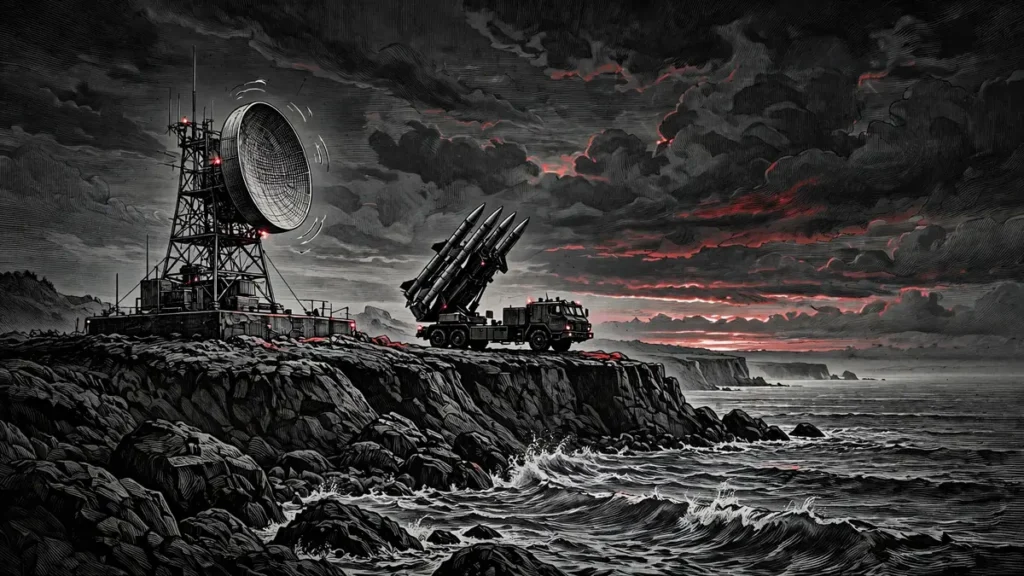
Speaking to reporters in West Palm Beach, Florida, on Friday evening, November 6, Trump said US forces had carried out what he described as minor strikes against Iranian air defence systems. “We do minor strikes,” he said. “They knocked out – they built a little bit of an anti-aircraft device, and we knocked it out in about 15 minutes, maybe five.” He did not offer further details about the target, and the Associated Press reported that he declined to elaborate, according to Al Jazeera’s report of his remarks.
The wording is important. Trump framed the operation as limited and fast, and he repeated the point several times on Friday that his administration was talking to representatives from Tehran. “We’re dealing with them now. They want to make a deal,” he said. “We’ve made a lot of progress with Iran,” he added, without providing details. The same day, he had shifted between threatening Iran and suggesting a resolution was near: on Thursday, November 5, he said the US may have to “destroy” the rest of Iran, adding that people would “know soon enough” if he acted.
Unnamed Pentagon officials and military commanders told The New York Times on November 4 that thousands of US air and naval forces on more than a dozen ships and at bases around the Middle East and in the US are poised to resume major combat operations against Iran on Trump’s orders. That reporting, cited by Al Jazeera, is the backdrop against which the “minor strikes” language should be read: a small operation, confirmed in public, with a much larger force held in reserve.
By the numbers: what is confirmed and what is only reported
| Metric | Figure | Source |
|---|---|---|
| Projectiles reported hitting Qeshm, November 7 | 2 (Suza area) | Tasnim / IRNA, via Reuters and Siasat — CONFIRMED as reported; damage unconfirmed |
| Time Trump said the strike took | About 15 minutes, “maybe five” | Trump to reporters, November 6 — CONFIRMED (president’s own words) |
| US drones Iran claims to have shot down | MQ-1 on November 6; MQ-9 on November 7 | IRGC / Iranian army via IRNA and IRIB — REPORTED only; US has not confirmed |
| CENTCOM reward for Iran nuclear-programme information | Up to $20 million, plus possible relocation | CENTCOM post on X, November 6 — CONFIRMED |
| Countries in the US security warning | 10 | US State Department, November 6 — CONFIRMED |
| Damage or casualties from the November 7 impacts | None confirmed | Iranian authorities have released no official assessment — UNCONFIRMED |
| Days since the previous Qeshm strikes | 5 (November 2 to November 7) | US officials / Iranian media — CONFIRMED |
Caveat: figures marked REPORTED rest on a single side’s account and have not been independently verified. Do not treat Iranian drone shootdown claims or damage claims as confirmed until the US comments or independent evidence appears.
Background and timeline: how Qeshm became the flashpoint
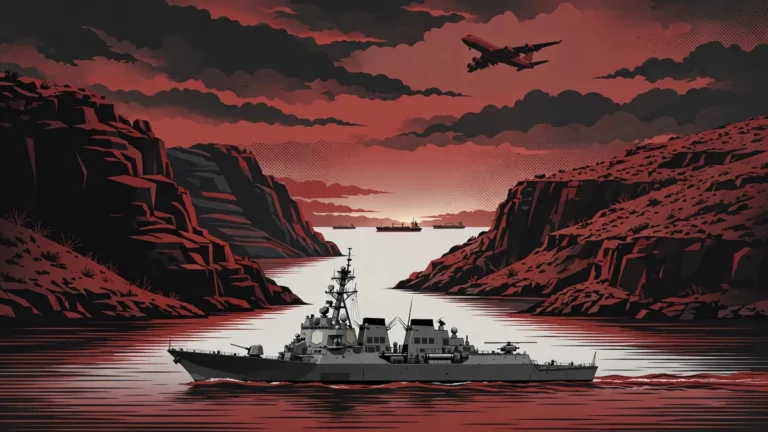
Qeshm is Iran’s largest island, in Hormozgan province near the northern approaches to the Strait of Hormuz, the waterway through which a large share of the world’s seaborne oil passes. Its position is why a small air-defence installation there matters out of proportion to its size: whoever controls the airspace over Qeshm can watch, and threaten, the shipping lane below. That is also why South Korea has expanded its Cheonghae naval mission toward Hormuz, and why oil prices jumped after the first Qeshm strikes even though no confirmed supply was lost.
- Late February 2026: The United States and Israel carry out a massive wave of strikes on Iran, opening the war. The conflict has been deadlocked for months since, with fighting punctuated by mediation efforts.
- November 2, 2026: US officials confirm what they call defensive strikes in the Strait of Hormuz. Explosions are reported on Qeshm and Hengam islands and near Bandar Abbas on the mainland.
- November 3, 2026: US midterm elections. Republicans lose both chambers of Congress. Trump later blames the result on the Iran war.
- November 4, 2026: Unnamed Pentagon officials tell The New York Times that thousands of US forces on more than a dozen ships and regional bases are poised to resume major combat operations on Trump’s orders.
- November 5, 2026: Trump says the US may have to “destroy” the rest of Iran and that people will “know soon enough” whether he acts.
- November 6, 2026: Iranian media, citing the IRGC, report a US MQ-1 drone shot down over Qeshm. The US State Department issues a security warning for Americans in 10 Middle Eastern countries. CENTCOM posts the $20 million nuclear-programme reward. Trump confirms the “minor strikes” in West Palm Beach that evening.
- November 7, 2026: Tasnim and IRNA report two projectiles striking the Suza area of Qeshm early in the morning. Iranian state media report a US MQ-9 drone shot down over the island. Iran’s army spokesman says the military is “stronger” now than at the start of the war. Qatar dismisses reports that US-Iran talks have failed.
Did Iran shoot down a US MQ-9 drone?
The honest answer is that nobody outside Tehran has confirmed it. State broadcaster IRIB reported an Iranian army statement saying the country’s air defence forces intercepted and destroyed an American MQ-9 drone over Qeshm Island, and the IRGC made a similar claim about an MQ-1 the day before. The US has not commented on either claim. A CENTCOM official told Al Jazeera only that the command was aware of the reports of explosions on Qeshm and had no further comment.
That silence is not proof in either direction. The US has in past rounds neither confirmed nor denied drone losses promptly, and Iran has repeatedly reported intercepting US drones over Qeshm and nearby waters during this war. What can be said with confidence is narrower: Iran claims two shootdowns in two days, the claims are internally consistent with the pattern of Iranian reporting, and they remain unverified. Readers should treat the “16th MQ-1” figure the same way — it is IRNA’s count, not an independently audited tally.
The claims matter even unverified, because they are the other half of the story Tehran is telling its own public: that its air defences are not passive targets but active and effective. Army spokesman Mohammad Akraminia, quoted by IRNA, said on November 7 that Iran’s armed forces are “stronger” and more motivated than when the war began in February, having “gained experience from direct confrontation with the United States and the Israeli regime”. He also said Tehran retained control over the Strait of Hormuz and that it would remain closed until its demands were met by the US, according to the Malay Mail’s report of the IRNA account. The Hormuz claim is a political statement, not a verified fact about shipping: the waterway’s status is contested and commercial traffic continues under severe disruption, and the spokesman’s words should be read as a negotiating position, not a shipping bulletin.
Why the Qeshm strikes matter for the talks
The most striking feature of November 6–7 is that the strikes and the diplomacy are the same story. Trump confirmed a military operation and, in the same breath, claimed “a lot of progress” in negotiations. Qatar’s prime minister, Sheikh Mohammed bin Abdulrahman bin Jassim Al Thani, said at Oxford University on November 6 that mediation efforts remain active to prevent a major regional escalation, warning that the crisis “cannot be left unresolved”. He said Qatar had worked for weeks with US colleagues who had “very genuine intentions to find a way to contain the situation and de-escalate it”, and that “thanks also to some wise voices in Tehran, we have prevented that from getting out of control”.
On November 7, Qatar dismissed reports claiming negotiations between the US and Iran have failed, warning that such claims benefit “only those seeking to prolong the war”. Mediators have also, according to reports carried by ETV Bharat, presented a proposal for a two-day “bridge deal” intended to reduce tensions and open the way for wider nuclear talks. That proposal has not been confirmed by either Washington or Tehran, and its terms have not been published — but its existence, as reported, explains the choreography: limited strikes that signal resolve without closing the door, and public claims of progress that keep the door open.
The pattern is familiar from earlier in this war. Trump has repeatedly alternated between threats of escalation and suggestions that a deal is near, and only days ago he was publicly ruling out an immediate strike. The November 6 confirmation breaks that pause, but the operation’s scale — one air-defence device, minutes long, described by the president himself as “minor” — suggests it was calibrated to be noticed without forcing a wider exchange. Iran’s response so far has been rhetorical and claim-based rather than retaliatory in kind, which is consistent with both sides wanting the mediation track to survive.
What the Qeshm strikes mean for US/UK/EU readers
For readers in the United States, Britain and Europe, the direct effects are travel, energy prices and the risk of a wider war — in that order. The State Department’s November 6 warning covers Americans in Israel, Saudi Arabia, Iran, Iraq, Qatar, Oman, Jordan, Bahrain, Kuwait and Lebanon, urging heightened vigilance over an increased threat of armed attacks by Iranian-supported Houthi forces and Iranian efforts to target US government officials. It warns of potential flight cancellations, airspace closures and travel disruptions. Anyone travelling in the region should check their airline and the latest embassy alert before flying, and enrol in the State Department’s Smart Traveler Enrollment Program if they have not already.
On energy, the market signal so far is contained but fragile. Oil prices rose after the November 2 strikes as the war-risk premium returned, and each new round around Hormuz re-prices that risk. A single air-defence strike does not disrupt supply by itself, but the strait’s status is the market’s central anxiety: any credible threat to shipping through it moves crude prices, and through them petrol and diesel prices in the US, UK and EU within days. Readers should expect volatility rather than a single direction — deal hopes push prices down, strikes push them up, and both are arriving in the same news cycle.
On security, the CENTCOM reward — up to $20 million and possible relocation for information about Iran’s nuclear programme, its facilities, equipment and associated personnel — is a reminder that the nuclear question sits underneath the shooting. The reward was posted late on November 6, the same day as the strikes, and it signals that Washington is pursuing the nuclear file through intelligence channels at the same time as it negotiates. For European readers, the practical consequence is that the diplomatic track, not the battlefield, remains where their governments have the most leverage: the EU has no combat role here, but it has a direct interest in both the nuclear negotiations and the shipping lane.
Different perspectives
From Washington’s perspective, the strikes are a low-cost demonstration: a rebuilt air-defence device is destroyed quickly, the president announces it himself, and the message to Tehran is that reconstituting defences will be met with force. The “minor” framing is deliberate — it denies Iran a pretext for a major response while showing domestic audiences, days after a midterm defeat, that the administration is still acting.
From Tehran’s perspective, the same events are presented as evidence of resilience: the air defences engaged, American drones were (it claims) shot down, and the military is stronger than at the war’s start. The Hormuz closure threat is the leverage in that telling — a reminder that Iran can impose costs on the world economy if the war resumes in full.
From the mediators’ perspective — Qatar above all, with Pakistan, Saudi Arabia and Türkiye also engaged in parallel diplomacy — the danger is that a misread strike or an unverified claim tips the cycle into escalation before a bridge deal can be agreed. Qatar’s public dismissal of “failed talks” reports on November 7 was aimed squarely at that risk: it was telling both capitals, and the market, that the channel is still open.
What to watch next in the Qeshm Island standoff
First, whether the United States confirms or denies the drone claims. A confirmation would change the military picture materially; a denial would undercut Tehran’s narrative; continued silence leaves both claims in the reported column and the uncertainty itself becomes a pressure point.
Second, whether any official damage assessment emerges from the Suza impacts. Tasnim said further details would be released once the relevant authorities confirmed the incident. Until then, there is no verified basis for saying what was hit, and any claim about the target should be treated as speculation.
Third, the Qatari “bridge deal” and whether either side acknowledges it. A two-day de-escalation window, if agreed, would be the first concrete product of the mediation in weeks and would test whether the parallel tracks of strikes and talks can converge.
Fourth, the Strait of Hormuz itself. Watch for shipping advisories, insurance surcharges and any change in tanker traffic through the strait — those are the hard indicators of whether the waterway is actually tightening, as opposed to being described as closed in a statement.
Finally, the US domestic clock. The strikes are the first since the midterms, and Trump has linked the election result to the war in public. How the administration balances the political pressure to show resolve against the diplomatic pressure to close a deal will shape whether November 7 was a one-off demonstration or the start of a new round.
Frequently asked questions
What happened on Qeshm Island on November 7, 2026?
Iranian media reported that two projectiles struck the Suza area of Qeshm Island early on November 7, after aircraft were heard overhead. There is no official damage assessment and no confirmed casualty figure, and the United States has not confirmed responsibility for those specific impacts.
Did Iran shoot down a US MQ-9 drone?
Iran claims its air defences shot down a US MQ-9 drone over Qeshm on November 7, and a US MQ-1 drone on November 6. Both claims are reported by Iranian state media and the IRGC, and the United States has not confirmed either one, so they should be treated as unverified.
What did Trump confirm about the Qeshm strikes?
On November 6, Trump confirmed that US forces carried out “minor strikes” on Iranian air defence systems on Qeshm Island, saying an anti-aircraft device was knocked out in about 15 minutes, “maybe five”. He also said Washington had made “a lot of progress” in talks with Iran.
Is the Strait of Hormuz closed?
Iran’s army spokesman said on November 7 that Tehran retained control over the strait and that it would remain closed until its demands were met. That is a political statement, not a verified shipping fact: the waterway is severely disrupted by the war, but its status is contested and commercial traffic continues under risk.
Why is Qeshm Island strategically important?
Qeshm is Iran’s largest island, sitting near the northern approaches to the Strait of Hormuz, the narrow waterway through which much of the world’s seaborne oil passes. Air defences on the island can watch and threaten that shipping lane, which is why the island has been struck twice in five days.
Sources
- Al Jazeera: Trump confirms new US strikes on Iran’s Qeshm Island
- The Jerusalem Post (Reuters): Two missiles struck Iran’s Qeshm Island after aircraft heard above
- Siasat: Two projectiles hit Iran’s Qeshm Island, Trump confirms
- Malay Mail (AFP): Iran says its military is ‘stronger’ now than when the war began in February
- Gulf News (AP): US military carries out new targeted strikes on Iran as Tehran’s leaders weigh mediators’ proposals
- Mathrubhumi: US issues Middle East security alert amid Iran tensions, warns of flight disruptions
Read next: Qeshm Island Strike: What Happened on November 2, and What It Was Not · South Korea Expands Cheonghae Mission Toward Hormuz · Oil’s Bounce After the 7% Plunge: Hormuz Risk Premium Explained · Conflict Zones hub
Discussion 0
Share analysis, corrections, or context. Be civil — comments are moderated.