
WarBrief Live | November 4, 2026 | Conflict Zones
Yemen’s internationally recognised government claims that 21 experts from Iran’s Islamic Revolutionary Guard Corps (IRGC) and Lebanon’s Hezbollah now plan and direct Houthi military operations, including choosing commercial ships as targets in the Red Sea. The claim, made on November 3, 2026, is unverified: the ministry named none of the 21 and published no evidence. What is confirmed is the claim itself, the government’s call for tougher international action, and the fighting on the ground that makes the allegation matter for shipping.
Key Takeaways
- Yemen’s Interior Minister Ibrahim Haidan says 21 foreign experts — 14 from the IRGC and 7 from Hezbollah — direct Houthi operations, calling it “a fully fledged general staff” rather than a training mission.
- The ministry published no names and no evidence, so the claim itself is confirmed while its substance remains alleged — a distinction that matters for every conclusion drawn from it.
- Haidan says the experts’ work includes selecting commercial ships as targets, developing explosive boats and autonomous underwater vessels, and training fighters in mine-laying.
- The allegation lands as Houthi forces have advanced to within 80 kilometres of Aden and seized ground near the Bab al-Mandeb strait, one of the world’s busiest shipping chokepoints.
- Yemen’s president separately accused IRGC networks of directly managing the Houthi war, and the government is pressing for a terrorist designation and enforcement of the UN arms embargo.
What did Yemen’s government claim on November 3?
Interior Minister Major-General Ibrahim Haidan said in a statement on November 3 that 14 IRGC experts and seven Hezbollah specialists were working with the Houthi militia on ballistic missiles, drones, maritime attacks and electronic warfare, according to Al Jazeera’s report of the statement. The ministry said foreign involvement had moved beyond financing, arming and training to “direct supervision and participation in planning and managing operations and building military capabilities”.
Haidan described the group as led by an IRGC military officer, and said its members included an operations supervisor, a strategic adviser, the head of a joint operations room, and specialists in missiles, drones, radar and communications, The National reported. “This is not a training mission, but a fully fledged general staff,” Haidan said.
The ministry placed the 21 across six governorates: eight in Hodeidah, four in Sanaa, four in Saada, two in Hajjah, two in Amran and one in the coastal city of Khokha. Their listed specialities, as reported by Al Jazeera, included command and control, coordinating naval operations, choosing commercial ships as targets, developing explosive-laden boats and autonomous submarines, smuggling military components, and training fighters in mine-laying and siege tactics.
Haidan also linked the alleged experts to political and media work intended to entrench Iranian influence, and to the Houthi siege of Taiz. “Decisions are written in Tehran, announced in Sanaa, and paid for in Taiz, Hodeidah and other conflict-stricken governorates,” he said, according to Arab News.
What is confirmed and what is still only alleged?
Three things are confirmed. First, the claim was made: three outlets independently reported the Interior Ministry statement on November 3, with matching figures and locations. Second, the government has made the underlying accusation for years — that the IRGC supports the Houthis — while Tehran insists the Houthis act independently and the Houthis deny being an Iranian proxy. Third, the fighting the claim describes is real: Houthi forces have advanced to within 80 kilometres of Aden, closer than at any point since the early months of the war in 2015, according to four military sources cited by Reuters and reported by The National.
Everything else in the claim is alleged, not established. The National notes explicitly that the ministry did not identify the 21 suspects or provide evidence to substantiate the allegations. No photographs, documents, captured personnel or intercepted communications were published with the statement. Until such evidence appears, the presence of 21 named-role experts — as opposed to the long-documented pattern of Iranian weapons and training support — should be treated as a government allegation, not a verified fact.
That distinction also applies to the claim’s sharpest detail: that foreign experts select commercial ships as targets. It is the part of the statement with the most direct consequences for shipping, and the part with the least public evidence behind it.
| Metric | Figure | Source |
|---|---|---|
| Foreign experts alleged to direct Houthi operations | 21 (14 IRGC, 7 Hezbollah) | Yemen Interior Ministry statement, Nov 3 — REPORTED (no names or evidence published) |
| Alleged distribution by governorate | Hodeidah 8; Sanaa 4; Saada 4; Hajjah 2; Amran 2; Khokha 1 | Yemen Interior Ministry statement, Nov 3 — REPORTED |
| Houthi distance from Aden | Within 80 km | Four military sources cited by Reuters, via The National — REPORTED |
| War began / Saudi-led coalition entered / 2022 ceasefire | 2014 / 2015 / 2022 | Al Jazeera, The National — CONFIRMED background |
| UN resolutions cited for arms embargo enforcement | 2216 and 2624 | Yemen Interior Ministry statement, Nov 3 — CONFIRMED as cited |
Caveat: figures marked REPORTED come from a single government source or unnamed military sources and have not been independently verified; figures marked CONFIRMED are established background or the text of the claim itself.
Why does the claim matter for Red Sea shipping?
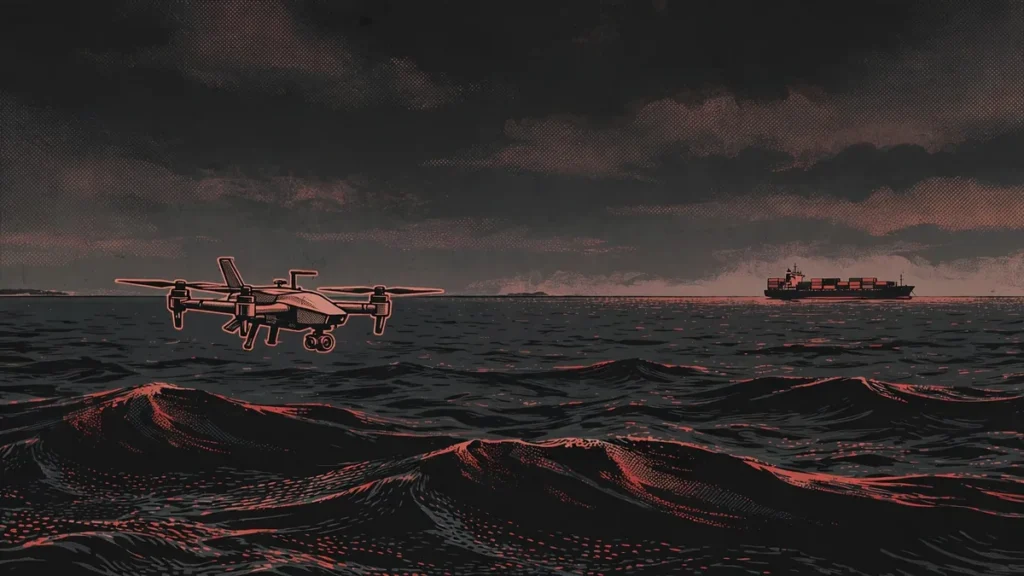
The Bab al-Mandeb strait, between Yemen and Djibouti, is the southern gateway to the Red Sea and the Suez Canal route linking Europe and Asia. Whoever can threaten shipping there can raise costs for everyone who uses it: war-risk insurance, rerouting around the Cape of Good Hope, longer voyages and higher fuel bills. Haidan’s warning was explicit — the alleged activities “threaten shipping in the Bab al-Mandeb strait and the Red Sea” and could transfer military expertise to other armed groups.
The timing is what gives the claim its edge. In September, Houthi forces moved down Yemen’s Red Sea coast and seized territory near the strait, and the latest push threatens positions along the main road linking Aden with the besieged city of Taiz. A force that controls ground overlooking the strait does not need a navy to menace shipping; shore-based missiles, drones, explosive boats and mines — exactly the capabilities Haidan attributes to the alleged experts — are enough. That is why the claim, even unverified, is read closely by shippers and insurers: it describes a targeting capability, not just a political alignment.
The wider regional picture sharpens the stakes. Saudi Arabia’s airports and oil facilities have come under Houthi attack in recent weeks, and Riyadh has accused Iran of encouraging the escalation. At the same time, oil markets have been whipsawed by the parallel US-Iran standoff at Hormuz — Brent fell more than 7% on November 2 on hopes of a mediated deal, then bounced back the next day, as covered in WarBrief’s analysis of the oil rebound. Two chokepoints under pressure at once is the scenario freight and energy markets fear most. For how the two straits compare, see Bab el-Mandeb vs Strait of Hormuz, explained, and for the government’s own air campaign, see Operation Dawn of Yemen: Inside the Government’s 780-Strike Air Campaign Claim.
What Yemen’s 21-experts claim means for US/UK/EU readers
For readers in the United States, Britain and Europe, the claim matters through prices and supply chains rather than through the battlefield itself. If Red Sea risk rises, container lines reroute or pay higher war-risk premiums, and those costs filter into imported goods — electronics, clothing and food from Asia — with a lag of weeks. Energy is the faster channel: the strait carries Saudi oil exports to Asia, and any disruption narrative pushes crude prices up, which feeds into petrol and heating costs in Europe and the US. The November 2-3 oil swing showed how quickly that transmission works.
There is also a policy channel. Haidan called on the international community to designate the Houthis a terrorist organisation, dismantle their financing and arms networks, and enforce the arms embargo under UN Security Council resolutions 2216 and 2624. Designation decisions in Washington, London and Brussels would change how banks, insurers and shipping firms can legally deal with Houthi-linked entities — and would deepen the diplomatic confrontation with Tehran, which denies directing the group. The claim is therefore also a lobbying document: it asks Western governments to treat the Houthis not as a local Yemeni faction but as an Iranian-directed threat to international shipping.
None of this requires accepting the claim at face value. The practical question is narrower: does the allegation change the risk calculus of the people who move ships through the strait? Insurers and navies price allegations from a government fighting on the ground differently from rumours — but Western governments have not publicly endorsed the figure of 21 experts, and verification remains outstanding.

What Tehran, the Houthis and Riyadh say
Tehran’s position, as reported by Al Jazeera, is that the Houthis act independently; Iran has long acknowledged political support for the group while denying operational control. The Houthis acknowledge their alliance with Iran but have long denied being an Iranian proxy, and Hezbollah has previously rejected having a role in Yemen’s war. None of the three has, at the time of writing, issued a detailed rebuttal of the specific 21-expert claim.
Riyadh’s stance is closer to Sanaa’s: Saudi Arabia, whose airports and oil facilities have come under Houthi attack in recent weeks, has accused Iran of encouraging the escalation. The Saudi-led coalition backs the government militarily, including through the Operation Dawn of Yemen counteroffensive, which Haidan said would continue until state institutions are restored and Sanaa is reclaimed.
Yemen’s president added his own voice on November 3. Rashad al-Alimi told a German foreign ministry official that IRGC networks, including dozens of experts, were involved in the operational planning and development of Houthi missile and drone capabilities, and that Tehran was exploiting Yemen’s location near international trade routes to rebuild regional influence, Arab News reported. Al-Alimi’s “dozens” is a broader formulation than Haidan’s precise 21, and the two statements should not be conflated: one is a presidential assessment, the other a ministerial claim with a headcount.
What to watch next in the Red Sea and Yemen
First, whether any evidence follows the claim: names, photographs, captured material or a second government corroborating the 21 figure would move it from allegation toward fact, while silence would leave it as a wartime claim. Second, whether Western governments endorse, ignore or quietly dispute the figure — their response will signal how much weight the claim carries outside Yemen. Third, the battlefield: whether the Houthi advance toward Aden continues or stalls, and whether shipping incidents near Bab al-Mandeb increase in the coming weeks. Fourth, the diplomatic track: whether the claim hardens positions in the wider US-Iran confrontation or is treated as a separate Yemeni file. And fifth, the insurance market: any rise in Red Sea war-risk premiums or rerouting announcements would show the claim biting in the real economy before it is ever proven.
For the broader pattern of Saudi accusations against Iran over the Houthi escalation, see Why Saudi Arabia Is Publicly Blaming Iran for the Houthi Escalation, and for all active fronts, the Conflict Zones hub.
Frequently asked questions
Who are the 21 experts Yemen says are directing Houthi operations?
According to Yemen’s Interior Ministry, 14 experts from Iran’s Islamic Revolutionary Guard Corps and 7 from Lebanon’s Hezbollah. The ministry did not name any of them, and no evidence was published with the claim, so their identities remain unverified.
What does Yemen claim the experts actually do?
Haidan says they plan and direct operations rather than merely train fighters: command and control, ballistic missiles and drones, electronic warfare, naval coordination, choosing commercial ships as targets, explosive boats, autonomous underwater vessels, mine-laying and siege tactics.
Has anyone verified the claim?
No. Three outlets reported the ministry’s statement, but none independently verified the presence of the 21 experts. Iran says the Houthis act independently, the Houthis deny being a proxy, and Hezbollah has previously rejected a role in Yemen.
Why does this matter for shipping?
The Bab al-Mandeb strait is the southern entrance to the Red Sea and the Suez route. Shore-based missiles, drones, explosive boats and mines can threaten commercial vessels there, raising insurance costs and freight rates and pushing oil prices higher for US, UK and EU consumers.
What is Yemen’s government asking the world to do?
Designate the Houthis a terrorist organisation, dismantle their financing and arms networks, and enforce the arms embargo under UN Security Council resolutions 2216 and 2624.
Sources
- Al Jazeera: Yemen gov’t accuses IRGC, Hezbollah of sending 21 experts to back Houthis
- The National: Hidden hands behind the Houthis: Yemen claims 21 IRGC and Hezbollah agents are supporting rebels
- Arab News: Yemen says Iranian, Hezbollah experts directing Houthi military operations
- Arab News: Iran is expanding its support for Houthis to offset regional losses, says Yemen’s leader


Discussion 0
Share analysis, corrections, or context. Be civil — comments are moderated.