WarBrief Live | October 23, 2026 | Conflict Zones
Yemen’s internationally recognized government says its forces carried out 780 strikes against Houthi positions in a single 24-hour window, the latest in a rolling series of daily battle-damage claims accompanying Operation Dawn of Yemen, the Saudi-backed offensive launched on October 5, 2026. The figure — announced on October 22 by Yemeni Armed Forces spokesperson Colonel Majed Al-Nuzaili — is the third such daily claim in a week, and like the others it comes from a single official source with no independent verification so far.
Key Takeaways
- Yemen’s government claims 780 strikes in 24 hours under Operation Dawn of Yemen, “neutralizing” about 512 Houthi fighters and destroying over 330 vehicles — government claims, not independently verified.
- The operation, launched October 5, 2026 with Saudi-led coalition air support, aims to retake Sanaa and end Houthi control of northern Yemen.
- Daily strike claims vary widely by 24-hour window (744 to 1,164), underlining that they describe rolling offensive activity rather than confirmed battle damage.
- Houthi retaliation has widened the war into Saudi Arabia: an October 21 attack on Dammam’s airport killed two people and injured eight, and about 3,000 stranded Umrah pilgrims have returned to India.
Overview: what Operation Dawn of Yemen is
Operation Dawn of Yemen is the Yemeni government’s name for its counteroffensive against the Houthis, formally announced on October 4 and launched on October 5, 2026 by Rashad al-Alimi, chairman of the country’s Presidential Leadership Council (PLC). The stated objectives are to restore state institutions, liberate the capital Sanaa, and end Houthi control over the parts of the country the group has held since it seized the capital in 2014. The operation is backed by the Saudi-led coalition, which provides air support over the combat zones and around the Bab el-Mandab Strait, according to reporting by Arab News and the Foundation for Defense of Democracies.
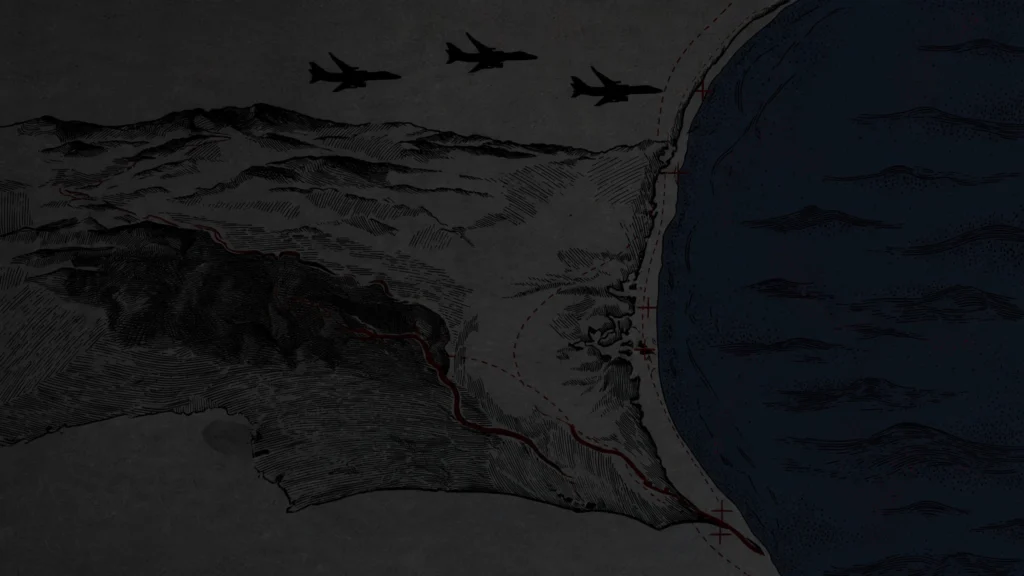
The offensive followed a Houthi advance down Yemen’s Red Sea coast that began in early August 2026. By September 11 the Houthis had seized roughly 150 kilometers of coastline — including Mokha, Dhubab and Mayyun Island — placing them beside one of the world’s most important shipping chokepoints. On September 15, Saudi Crown Prince Mohammed bin Salman met Egyptian President Abdel Fattah el-Sisi in Cairo to coordinate on securing Red Sea and Bab el-Mandab navigation. The government counteroffensive began less than three weeks later.
Key actors in the Dawn of Yemen campaign
The Yemeni government and the PLC. The internationally recognized government, headquartered in Aden, commands the Yemeni Armed Forces under the PLC led by Rashad al-Alimi. Colonel Majed Al-Nuzaili serves as the military’s chief public spokesman, publishing the daily strike claims on social media.
The Saudi-led coalition. Saudi Arabia provides the air arm of the campaign — reporting puts roughly 100 coalition aircraft over the combat zones — while coalition spokesman Major General Turki al Maliki has stated the coalition continues to provide “full operational support” to Yemeni forces and that the Kingdom reserves the right to defend itself against Houthi attacks on Saudi territory.
The Houthis (Ansar Allah). The Iran-backed group controls Sanaa and much of northern and western Yemen, plus — since September — a large stretch of the southern Red Sea coast. The Houthis have denied key government claims of territorial gains, including the reported recapture of Mokha, and continue missile and drone attacks against Saudi airports and energy infrastructure.
External parties. Pakistan and Turkey have pledged to mobilize troops in Saudi Arabia to defend the Kingdom from further Houthi attacks, according to reporting summarized in the October 2026 Yemen offensives timeline. The UN special envoy for Yemen, Hans Grundberg, warned the UN Security Council on October 11 that fighting had reignited after the 2022 UN-brokered truce collapsed in July.

Recent developments
- October 4–5, 2026: Alimi announces Operation Dawn of Yemen from Riyadh, declaring the start of military operations to retake all remaining Houthi-held territory. The Saudi-led coalition pledges full operational support; roughly 100 aircraft back the opening phase.
- October 11, 2026: UN special envoy Hans Grundberg tells the Security Council that Yemen has descended back into full-scale war, ending four years of relative calm that followed the 2022 truce.
- October 20, 2026: The Yemeni military claims 1,164 strikes in 24 hours, concentrated on the southwestern province of Taiz, claiming 558 Houthi fighters killed and 135 military vehicles destroyed. The claim is reported by NationWire citing Arab News. Separately, the same outlet reports three Houthi ballistic missiles struck a military training camp in Shabwah, killing at least 58 soldiers — a claim from the military’s side of the war.
- October 21, 2026: The Yemeni army claims 835 strikes in the preceding 24 hours, “neutralizing” around 285 fighters and destroying or damaging 190 military vehicles, in reporting by Turkey’s anews. The same day, Houthi missiles strike the King Fahd International Airport in Dammam, Saudi Arabia: Saudi civil aviation authorities report two people killed — one Saudi citizen and one Indian resident — and eight injured, including two Indians, two Yemenis, two Bangladeshis and one Nepalese. The Houthis also claim responsibility for a ballistic missile attack on the Badr Camp military facility in Aden.
- October 22, 2026: Colonel Al-Nuzaili claims 780 strikes in the preceding 24 hours as part of Operation Dawn of Yemen, “neutralizing” about 512 Houthi fighters and commanders and destroying or disabling more than 330 military vehicles and personnel carriers. Arab News, Al Arabiya, Yemen Monitor and Turkey’s Anadolu agency all report the claim. Al-Nuzaili says operations spanned Al-Jawf, areas west of Marib, Al-Bayda and the northern, southern and western fronts, and that heavy weapons and reinforcements heading toward Taiz were destroyed. He adds that operations comply with international humanitarian law with precautions for civilians.
Current status of the offensive
As of October 23, 2026, Operation Dawn of Yemen is in its third week and government forces say the pressure is compounding: daily claims describe disrupted Houthi troop formations, prevented reinforcements and expanding government-held ground on several fronts. The Houthis, however, dispute that picture. They have denied the government’s most prominent territorial claims — including the recapture of Mokha — and their continued ability to strike Saudi territory suggests their long-range strike apparatus remains functional.
What can be treated as confirmed is the war’s widening geography, not its daily scoreboard. Houthi attacks have hit Saudi airports in Dammam, Najran and Jizan, killing civilians including foreign residents. India’s Ministry of External Affairs confirmed an Indian national among the two dead in the Dammam attack and two more Indians injured; about 3,000 stranded Umrah pilgrims have returned to India over the past week with the help of 24-hour embassy control rooms. On October 10, an Indian national from Hyderabad died after a Houthi drone and missile attack on Riyadh’s King Khalid International Airport. Washington has ordered diplomats out of Saudi Arabia amid the Houthi strikes — a sign of how seriously outside powers now treat the escalation risk.
The numbers themselves deserve the critical framing the operation’s claims require: the “780 strikes in 24 hours” figure sits between a claimed 744-strike day and a claimed 1,164-strike day within the same week. These are rolling claims from a single belligerent’s spokesperson, not independently verified battle-damage assessments, and the shifting figures track the military’s daily messaging rhythm as much as ground reality. No independent observers have corroborated the “neutralized” fighter counts.
What to watch in the Yemen conflict
Whether the Sanaa push materializes. The operation’s declared objective — retaking the capital — is the decisive test. Watch for verified reporting (not single-source claims) of ground movements toward Hodeidah and the highlands west of Sanaa.
Houthi retaliation on Saudi infrastructure. The pattern since September is symmetric escalation: government gains draw Houthi missile and drone strikes on Saudi airports and the Shaybah oil field. Another high-casualty strike on Saudi civilian infrastructure would widen the war further and test the reported Pakistan and Turkey commitments.
The Red Sea corridor. The Houthis’ September seizure of the southern Red Sea coast is what triggered this offensive. Shipping rates and insurer behavior around Bab el-Mandab are the economic pressure gauge; a sustained government push north along the coast would aim to roll back that gain.
Diplomatic off-ramps. UN envoy Grundberg’s October 11 warning raised the stakes for Geneva-linked talks. Any ceasefire proposal will now have to contend with a government that believes it is winning and a Houthi movement that believes it is not losing.
For the broader picture of how the war crossed the border into Saudi Arabia, see our companion conflict profile on the Yemen–Saudi escalation and the October 2026 Houthi offensive, and the Conflict Zones hub. The civilian fallout inside the Kingdom — including the US diplomatic pullback — is tracked in US Orders Diplomats Out of Saudi Arabia Amid Houthi Strikes.
Frequently asked questions
What is Operation Dawn of Yemen?
It is the Yemeni internationally recognized government’s counteroffensive against the Houthis, announced October 4 and launched October 5, 2026. Led by Presidential Leadership Council chairman Rashad al-Alimi with Saudi-led coalition air support, its stated goals are to restore state institutions, liberate Sanaa and end Houthi control of the country.
Who claimed the 780 strikes, and are the figures verified?
Colonel Majed Al-Nuzaili, spokesman for the Yemeni Armed Forces, announced the figure on October 22, 2026 — 780 strikes in 24 hours with about 512 Houthi fighters “neutralized” and 330+ vehicles destroyed or disabled. Multiple outlets (Arab News, Al Arabiya, Yemen Monitor, Anadolu) reported his statement. The figures themselves are government claims with no independent verification, and the Houthis have denied major government gains.
Why did the operation start now?
The Houthis launched a major western-coast advance in early August 2026 and by September 11 had seized roughly 150 kilometers of Red Sea coastline, including Mokha, Dhubab and Mayyun Island — placing them beside the Bab el-Mandab Strait. The government’s counteroffensive began about three weeks later, after the September 15 Saudi-Egyptian coordination meeting on Red Sea navigation.
How has the war affected Saudi Arabia?
Houthi missile and drone attacks have struck Saudi airports and energy sites, including the October 21 attack on Dammam’s King Fahd International Airport that killed two people and injured eight, and an October 10 attack on Riyadh’s King Khalid International Airport that killed an Indian national. The US has ordered diplomats out of Saudi Arabia, and thousands of Umrah pilgrims have been repatriated.
What is the international response?
UN special envoy Hans Grundberg warned the Security Council on October 11 that Yemen had returned to full-scale war. The Saudi-led coalition provides air support to the operation; Pakistan and Turkey have reportedly pledged troops to help defend Saudi Arabia; India has condemned the attacks on Saudi civilian infrastructure and is evacuating its pilgrims.
Sources
- Arab News: Yemen military reports 780 strikes against Houthi targets in 24 hours
- Al Arabiya: Yemeni military says 512 Houthis ‘neutralized’ in 780 strikes over 24 hours
- Yemen Monitor: Yemeni Army Says 512 Houthis Killed or Wounded and 330 Military Vehicles Destroyed or Damaged in One Day
- Foundation for Defense of Democracies: Yemeni government forces launch Saudi-backed counteroffensive against Houthis
- Indian Express: Indian national among two killed in Saudi Arabia’s Dammam airport attack
- The Statesman: India condemns attacks on Saudi Arabia’s airport, oil field; Indian national killed
- The Overseas Brief: What pushed Yemen back into full-scale war?