WarBrief Live | October 20, 2026 | Conflict Zone
A three-day wave of drone strikes across Sudan killed a reported 160+ people between October 18 and 20, 2026 – one of the deadliest aerial episodes of the country’s civil war since it began in April 2023. The strikes hit crowded markets, a family home near Khartoum’s airport, gatherings of displaced people, and drew army air-defense fire over two eastern dams. On October 19, the United Nations condemned the wave, with spokesperson Stéphane Dujarric saying the UN was “alarmed by the continued deadly drone strikes across the country that are killing civilians, including children.” Both the Sudanese army and the Rapid Support Forces were blamed for different strikes; none of those blame assignments has been independently verified.
The wave confirms what the UN warned about days earlier: drones are now the leading cause of civilian deaths in Sudan’s war. More than 1,100 people were killed in drone attacks across the country in the first half of 2026 alone, according to UN data cited by AFP. See WarBrief’s conflict zones hub for profiles of the world’s other active wars.
Key actors
- Sudanese Armed Forces (SAF) – led by Gen. Abdel Fattah al-Burhan. The SAF holds Khartoum and most of the east, north and center of the country. RSF-linked groups blamed the army for the Al-Dibab and Amiet Market strikes; the military had not commented on those claims.
- Rapid Support Forces (RSF) – led by Mohamed Hamdan Dagalo, known as Hemedti. The RSF controls nearly all of Darfur and has pushed east into Kordofan. Army-aligned sources blamed the RSF for the Khartoum and dam-targeting strikes; the RSF did not comment.
- United Nations – spokesperson Stéphane Dujarric condemned the strike wave on October 19; Under-Secretary-General Rosemary DiCarlo briefed the Security Council on October 16, urging an immediate halt to drone use or strict regulation of it.
- Emergency Lawyers – a Sudanese rights group whose medics and monitors supplied much of the casualty reporting; it blamed the army for several of the strikes.
- External suppliers – UN investigators have found that foreign suppliers strengthened drone capabilities on both sides, according to AFP reporting.
Recent developments
- October 16: Rosemary DiCarlo briefed the UN Security Council on Sudan, warning that drone and air strikes keep civilians at risk, saying neither side showed credible commitment to compromise, and urging external actors to stop fueling the violence. The United States pushed for a humanitarian truce and a wider arms embargo; China and Russia opposed, The National reported.
- October 17: An RSF drone strike hit a displaced-persons gathering in Blue Nile state near the Ethiopian border, killing 41 people, Emergency Lawyers said, calling it “a humanitarian tragedy.”
- October 18 (evening): A drone struck a transport hub where villagers had gathered after market day in Al-Dibab, in RSF-controlled West Kordofan. Residents and medical workers told AFP that 80 people were killed; 47 wounded were taken to Al-Mujlad, where 30 later died. Witnesses described two strikes about ten minutes apart. The RSF’s Tasis administration and Emergency Lawyers blamed the army.
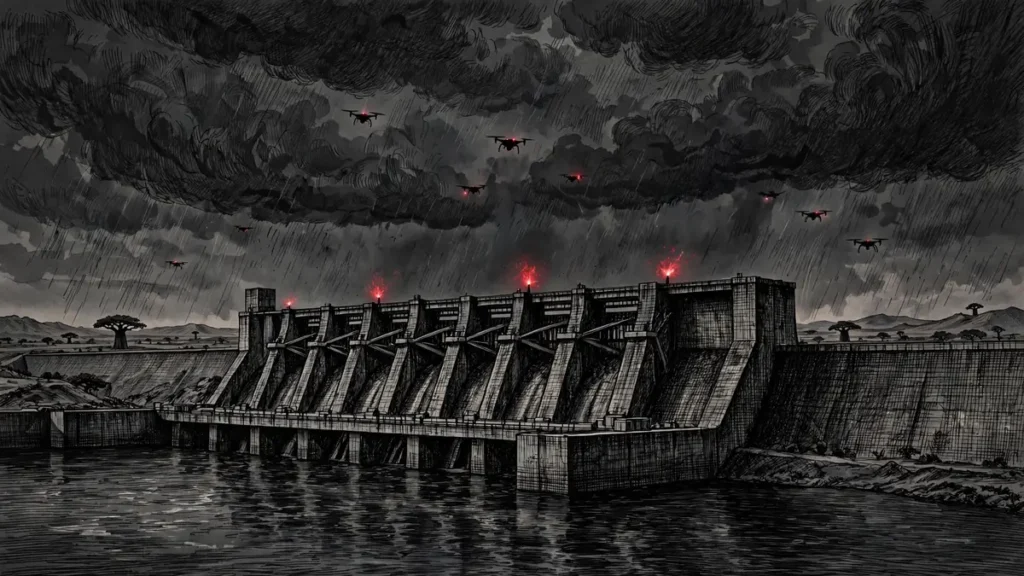
- October 18: A military source said army air defenses intercepted several RSF drones targeting the Atbara and Setit dams in Gadaref state, about 420 km east of Khartoum. There was no RSF comment. (Note: earlier reporting also linked the Merowe dam to strikes, but no source ties Merowe to this wave.)
- October 19 (morning): A drone hit a house in the Imtidad Nasser neighborhood east of Khartoum airport, killing four people – three children aged 2 to 6 and one adult man, an AFP medical source said. Emergency Lawyers reported the children’s deaths; one side blamed the RSF, while an army official said air defenses had intercepted RSF drones near the airport.
- October 19 (around 11:30 a.m.): Drones struck Amiet Market in the disputed Abyei region, killing at least 73 people and wounding 19, Reuters reported. The area’s caretaker information minister accused the Sudanese army without providing evidence; South Sudan summoned Sudan’s ambassador in protest. MSF said more than 20 wounded arrived at its supported Ameth Bek Hospital.
- October 19 (early): A drone attack on Nyala in South Darfur – an RSF stronghold – killed 17 people, including seven RSF officers, and wounded 23, medical and RSF sources said.
- October 19: Dujarric told the daily briefing: “We condemn all of these attacks unequivocally.” He noted that weekend strikes had killed at least 19 people, including 10 children, in Darfur and Kordofan, and that a Sudanese Red Crescent volunteer was also killed.
Current status
Sudan’s war is a grinding stalemate. El Fasher, the last major Darfur city outside RSF control, fell to the paramilitary in late October 2025 after an 18-month siege; the RSF now holds nearly all of Darfur and has pushed east into Kordofan, while the SAF holds Khartoum and most of the east, north and center. Neither side is close to a military decision, and analysts describe a conflict sustained by outside backing. WarBrief’s earlier Sudan conflict profile covers the war’s origins and earlier phases.
Drones have become the war’s signature weapon – and its main civilian killer. The October 18-20 wave is the latest evidence that both sides can strike deep behind each other’s lines, hitting markets and infrastructure as well as military targets. Reported tolls should be treated with caution: medics and rights monitors, not independent observers, supplied most counts, and the 160+ figure is not a consolidated national total. What is confirmed is the pattern: the UN, AFP, Reuters and Al Jazeera all documented strikes on civilian sites across the same three days.
What to watch
- UN Security Council action: the US push for a humanitarian truce and a wider arms embargo faces opposition from China and Russia. Watch whether the October wave moves the Council from statements to measures.
- Foreign drone pipelines: UN investigators say foreign suppliers have strengthened both sides’ drone fleets. Any sanctions or interdictions targeting those networks would reshape the air war.
- Abyei spillover: South Sudan’s protest over the Amiet Market strike puts the disputed region – and Juba’s role – back in play.
- Infrastructure strikes: the attempted dam strikes in Gadaref show critical infrastructure is in the crosshairs; how autonomous drones are changing modern battlefields explains why such targets are increasingly hit.
- Kordofan and Blue Nile: the front line has shifted east; Al-Dibab and Blue Nile suggest the next phase of fighting will center on Kordofan.
Frequently asked questions
Is there a ceasefire in Sudan right now?
No verified nationwide ceasefire is in force. The United States has pushed for a humanitarian truce at the Security Council, but UN briefings say neither side has shown a credible commitment to compromise.
Who is winning the Sudan war?
Neither side. The RSF controls nearly all of Darfur and has advanced into Kordofan, while the army holds Khartoum and most of the east, north and center. Analysts describe a grinding stalemate sustained by external backing.
Why are drone strikes killing so many civilians in Sudan?
Both sides now rely heavily on drones, which have become the leading cause of civilian casualties in 2026. The UN says more than 1,100 people were killed in drone attacks in the first half of the year, with strikes repeatedly hitting markets, homes and gatherings.
Sources
- Al Jazeera: 160 reported killed in escalating drone attacks across Sudan
- Reuters: Drone strike in disputed Abyei area kills at least 73
- Anadolu Agency: UN condemns deadly drone strikes across Sudan
- The National: UN demands immediate end to drone attacks in Sudan
- Dawn (AFP): Drone strikes across Sudan kill more than 100
- UN WebTV: Rosemary DiCarlo briefs the Security Council on Sudan (October 16)