
WarBrief Live | November 1, 2026 | Security Explained
Strategic petroleum reserves are government-held emergency stocks of crude oil and refined products, built up in calm times and released when a war, embargo, hurricane or refinery outage suddenly cuts supply. They are a shock absorber, not a solution: they buy weeks of breathing room while production, shipping and refining adjust.
The idea was born from the 1973 oil embargo, when Arab exporters cut shipments to countries backing Israel in the Yom Kippur War and prices quadrupled. The lesson, drawn by the importing countries that founded the International Energy Agency (IEA) in 1974, was blunt: a country with no stored oil has no leverage and no time. Within two years the United States had created its Strategic Petroleum Reserve (SPR) under the Energy Policy and Conservation Act of 1975, and the IEA system of mutual stockholding obligations took shape around it.
Key Takeaways
- IEA members must hold oil stocks equal to at least 90 days of net imports, and be ready to release them together in a severe disruption.
- The United States holds the world’s largest government emergency stockpile, in salt caverns on the Gulf Coast, releasable at up to 4.4 million barrels a day.
- A release is not one thing: emergency sales, temporary exchanges (loans) and congressionally mandated sales work differently, and only some return oil to the stockpile.
- Released crude still has to be refined and delivered, so pump prices move with a lag, and a release cannot by itself set the price of petrol or diesel.
- Europe’s 42.6-million-barrel release, due by the end of January 2027, is an accelerated delivery of an existing IEA action, not a new stockpile.
What is a strategic petroleum reserve?
A strategic petroleum reserve is oil held specifically for emergencies, separate from the commercial inventories that refiners and traders hold for everyday business. The distinction matters: commercial stocks rise and fall with prices and profit, while emergency stocks are governed by law and released only under defined triggers. Some countries hold the oil themselves, some require industry to hold it, and some use a dedicated stockholding agency; the IEA’s oil security policy allows all three models, provided the total meets the obligation.
The oil itself is mostly crude, not petrol or diesel. That is deliberate: crude is flexible, it stores for decades without degrading, and it can be refined into whatever product is scarcest. The trade-off is time. Crude from a reserve must travel by pipeline or tanker to a refinery, be processed, then move through the product distribution chain. A government can announce a release in an afternoon; drivers will not see it at the pump the next morning.
Storage technology varies by geography. The United States uses solution-mined caverns in salt domes along the Texas and Louisiana Gulf Coast: brine is pumped out, oil is pumped in, and the impermeable salt seals the cavern. The Department of Energy describes the SPR as the world’s largest supply of emergency crude oil, held in some 60 caverns at four sites, with an authorised capacity of about 713.5 million barrels. Other countries rely more on above-ground tanks, including for refined products, which are costlier per barrel but can be drawn down as finished fuel.
Who decides when oil is released, and what triggers it?
There are two different decisions, and confusing them is the most common misunderstanding in coverage of releases. The first is national: a government decides to use its own stocks. The second is collective: the IEA coordinates a joint release by its members when a disruption is severe enough to move global markets.
Under the Agreement on an International Energy Programme, each IEA country must hold stocks equivalent to at least 90 days of net oil imports and be ready to respond collectively to severe disruptions, according to the IEA’s emergency response framework. Net exporters such as Canada, Mexico and Norway carry no such obligation. When a disruption looms, the IEA Secretariat assesses the size of the supply loss, available commercial stocks and spare production capacity, consulting producer governments and industry experts, before recommending collective action. The IEA is explicit that the system is not a price-management tool: it is designed to cushion sudden shortages, not to steer prices over months.
In the European Union, the same logic is written into law. Council Directive 2009/119/EC requires each member state to hold emergency stocks equal to at least 90 days of average daily net imports or 61 days of inland consumption, whichever is higher, as the European Commission’s oil supply security pages set out. There is no single EU reserve in Brussels: stocks are held nationally, by governments, stockholding agencies or obligated industry, and reported monthly to the Commission.
In the United States, the legal routes are set out in the Energy Policy and Conservation Act. A full emergency drawdown requires a presidential finding of a severe energy supply interruption. The Secretary of Energy may authorise limited test sales of up to 5 million barrels and exchanges, which need no emergency finding. Congress may also direct sales by law, usually to raise revenue, in which case the oil does not come back unless Congress later funds repurchases. The Department of Energy’s SPR guidance puts the reserve on permanent drawdown readiness: oil can enter the market about 13 days after a presidential direction, the time needed to run the sale, award contracts and arrange transport.
How does an emergency oil release actually work?
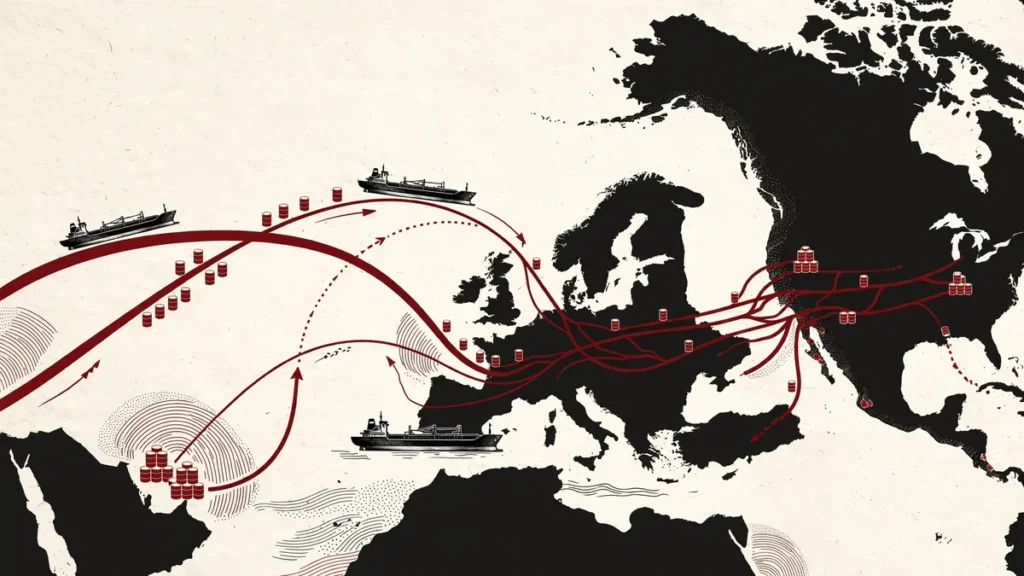
Once a release is ordered, the mechanics are commercial, not military. For a US emergency sale, the Department of Energy runs a competitive auction; barrels go to the highest bidders, typically refiners and trading companies, and the revenue is held for future oil purchases. Oil is pushed out of the salt caverns by pumping brine into the bottom: because oil floats, it rises through withdrawal piping to the surface, then moves by pipeline and marine terminal to refineries, many of them along the Gulf Coast.
An exchange works differently, and the difference mattered in 2026. In an exchange, a refiner borrows crude from the reserve and contractually returns it later, plus a premium in barrels to cover the reserve’s cost. Exchanges can be completed within days of a request, which makes them useful for localised shocks such as a hurricane shutting Gulf production, and they are designed to refill the stockpile rather than deplete it. The 2026 US release, the American share of the IEA collective action, was executed as emergency exchanges rather than outright sales, a choice that shapes how fast the reserve recovers.
A mandated sale is the third route, and the least reversible. Congress has directed sales repeatedly since 2017 to offset unrelated spending. The proceeds count as budget receipts, and the barrels leave the system permanently unless new money is appropriated to buy oil back. Analysts tracking the reserve therefore distinguish carefully between a headline release figure and the net change in stocks: an exchange that returns oil is not the same as a sale that does not.
By the numbers: emergency oil stocks
| Metric | Figure | Source |
|---|---|---|
| IEA stockholding obligation | 90 days of net imports | IEA — CONFIRMED |
| EU emergency stock obligation | 90 days of net imports or 61 days of consumption, whichever is higher | EU Directive 2009/119/EC — CONFIRMED |
| US SPR authorised capacity | About 713.5 million barrels | US Department of Energy — CONFIRMED |
| US SPR maximum drawdown rate | 4.4 million barrels per day | US Department of Energy — CONFIRMED |
| Time from US presidential order to market | About 13 days | US Department of Energy — CONFIRMED |
| 2026 IEA collective action, total | 400 million barrels | IEA action, reported by Atlantic Council and CNN — CONFIRMED |
| US share of the 2026 action | 172 million barrels | US DOE announcement, reported by CNN — CONFIRMED |
| European release due by end of January 2027 | 42.6 million barrels, including 20.5 million barrels of diesel | AFP reporting via WarBrief, October 30, 2026 — CONFIRMED |
| US SPR level, late October 2026 | About 283 million barrels | EIA weekly data via secondary reporting — REPORTED |
Caveat: CONFIRMED figures are stated by the named official source or by two or more reputable outlets; the late-October SPR level is REPORTED from EIA weekly data via secondary reporting and moves week to week.
Background and timeline: when reserves have actually been used
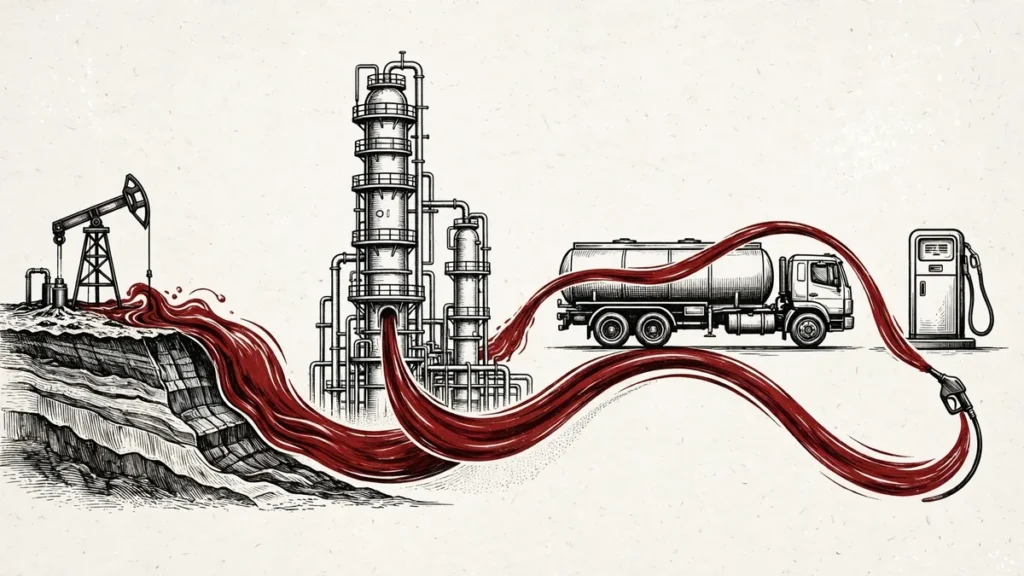
Collective IEA action is rare, which is part of its signalling power. The agency’s emergency system has been used for the Gulf War build-up in 1991, after Hurricanes Katrina and Rita damaged Gulf infrastructure in 2005, during the Libyan civil war’s supply disruption in 2011, and twice in 2022 after Russia’s invasion of Ukraine. The 2022 releases, including a US release of about 180 million barrels, were the largest coordinated drawdown until the 2026 action surpassed them.
- 1973–1974: The Arab oil embargo quadruples prices and exposes importers’ lack of stored oil.
- 1974–1975: The IEA is founded; the United States creates the SPR under the Energy Policy and Conservation Act, with first deliveries in 1977.
- 1991: The IEA’s first collective action, ahead of the Gulf War.
- 2005: Collective action after Hurricanes Katrina and Rita damage Gulf production and refining.
- 2011: Collective release of about 60 million barrels during the Libyan supply disruption.
- 2022: Two collective actions after Russia’s invasion of Ukraine; the US releases about 180 million barrels.
- March 2026: A 400-million-barrel IEA collective action begins as Middle East supply is disrupted; the US commits 172 million barrels.
- October 29, 2026: EU energy ministers in Luxembourg reaffirm the accelerated European delivery: 42.6 million barrels by the end of January 2027.
The 2026 case shows both the strength and the limit of the tool. The volumes are enormous by historical standards, yet the US stockpile fell to its lowest level since 1982 during the drawdown, and diesel, not crude, remained the tightest market in Europe. That is why about half the European release is diesel: releasing crude helps only if refineries can turn it into the fuel that is actually short.
Why the mechanism matters more than the headline number
Headline release figures mislead in three predictable ways. First, they mix sales and exchanges: an exchange returns oil, so the net drain is smaller than the gross figure. Second, they mix crude and products: a crude release does not automatically become diesel at a filling station, because refining capacity, product specifications and distribution all sit in between. Third, they ignore timing: the IEA itself stresses that its system addresses short-term shortages, not long-term supply management, so a release that arrives over months cannot fix a refinery outage measured in days.
The market effect is therefore mostly about expectations. A credible, coordinated release tells traders and refiners that a physical shortfall will be cushioned, which can calm futures markets and discourage precautionary hoarding. What it cannot do is replace lost production indefinitely, repair a damaged refinery, or reopen a blocked strait. When commentators treat a release as a price cap, they overpromise; when governments treat it as a substitute for supply policy, they waste the one tool designed for genuine emergencies.
What emergency oil releases mean for US/UK/EU readers
For households, the practical effect of a release is indirect and delayed. Crude must be refined, and refined fuel must be transported, before it reaches a pump; taxes, exchange rates, refinery margins and local competition all shape the final price alongside the crude cost. A release may therefore moderate a price spike without ever producing a visible price cut, and its absence from a bill does not mean it failed.
For the United Kingdom, which is not an IEA member in its own right but participates in the wider stockholding system through its own obligations and commercial stocks, the channel is the same: global product markets, especially diesel, transmit a disruption from the Gulf or from Russian refining to British forecourts within weeks. For the EU, the effect is more direct, because member-state stocks are a legal obligation and releases are coordinated through the Commission’s Oil Coordination Group. For the United States, the SPR’s Gulf Coast location means released barrels reach domestic refineries quickly by pipeline, but the price effect is still global, because crude is traded worldwide.
The honest test of a release is not the pump price the following week. It is whether physical shortages, queues and rationing were avoided, and whether the stockpile is rebuilt afterwards. A release that prevents a shortage but leaves the reserve empty has traded one vulnerability for another, which is why refill policy, exchange premiums and the pace of repurchases deserve as much attention as the announcement.
Different perspectives
Supporters of large releases argue that emergency stocks exist precisely for moments when markets panic, and that a coordinated announcement is cheaper than the recession a supply shock can cause. They point to 2022 and 2026 as cases where joint action prevented worse outcomes, and note that exchanges, which return oil with a premium, make releases nearly self-financing.
Sceptics argue that releases have drifted from emergency use toward price management, especially when mandated sales are used for revenue, and that repeated drawdowns leave importers exposed to the next shock. They also note that a crude-heavy stockpile is a poor answer to a diesel shortage, and that holding crude does nothing for countries whose binding constraint is refining capacity rather than feedstock.
A third view, common among energy-security analysts, treats stocks as one layer among several: diversified supply, refining resilience, demand restraint and, in a severe crisis, fuel-switching and rationing plans. On that view, the 90-day rule is a floor, not a guarantee: 90 days of net imports is not 90 days of normal life if refineries, ports or pipelines are themselves damaged.
What to watch next in emergency oil policy
Three developments will test the system in the coming months. First, the European delivery timetable: whether the 42.6 million barrels, including 20.5 million barrels of diesel, are actually delivered by the end of January 2027, and whether progress is reviewed at the December Energy Council as planned. Second, the US refill path: whether exchange returns restore the SPR from its four-decade low, and at what pace, since refilling is far slower than drawing down. Third, the EU’s planned overhaul of its emergency-stock rules, with a proposal expected before the end of 2026, which early signals suggest will keep the 90-day headline obligation while changing how it is applied.
Longer term, the question is whether a system designed for crude shocks in the 1970s still fits a market where the scarcest product is often diesel, where refining capacity is concentrated, and where disruptions arrive as attacks on refineries and shipping rather than embargo declarations. The mechanism has survived five decades because it is simple: hold oil, release it together, rebuild. Its future depends on whether governments keep the second half of that bargain.
Frequently asked questions
What is a strategic petroleum reserve?
It is a government-held emergency stockpile of crude oil and refined products, kept apart from commercial inventories and released only under defined legal triggers when supply is severely disrupted.
Who can order oil out of the US Strategic Petroleum Reserve?
A full emergency drawdown requires a presidential finding of a severe energy supply interruption. The Secretary of Energy may authorise limited test sales and exchanges, and Congress may direct sales by law.
How fast can released oil reach the market?
The US Department of Energy says oil can enter the market about 13 days after a presidential direction, allowing time for the sale, contract awards and transport logistics. Exchanges with refiners can be completed within days.
What is the difference between a sale and an exchange?
In a sale, the oil is sold and does not return unless the government buys more. In an exchange, a company borrows crude and returns it later plus a premium in barrels, so the stockpile is replenished.
Does an emergency release cut petrol prices immediately?
No. Released crude must be refined, transported and distributed, and pump prices also reflect taxes, refinery margins and exchange rates, so any effect arrives with a lag and may only moderate a spike rather than produce a cut.
Why 90 days?
Ninety days of net imports is the IEA’s minimum stockholding obligation, chosen as a buffer long enough for alternative supplies, shipping reroutes and demand measures to take effect during a severe disruption.
Read next
- Europe to Release 42.6 Million Barrels of Oil by January 2027 — the news behind this explainer’s case study.
- Strategic Petroleum Reserve Release Explained — WarBrief’s news coverage of the 2026 releases.
- Diesel at Record Highs: Will G7 Release and Russian Deal Cut Prices? — why diesel, not crude, has been the tight market.
- Why Diesel Prices Rise During War: Explained — the refining and supply chain behind pump prices.
- Conflict Zones — WarBrief’s hub for ongoing conflicts affecting energy and shipping.
Sources
- IEA: Oil Security Policy
- IEA: Oil Security and Emergency Response
- US Department of Energy: Strategic Petroleum Reserve
- European Commission: Security of Oil Supply
- Atlantic Council: The Risks of the Strategic Petroleum Reserve’s Four-Decade Low
- Bipartisan Policy Center: How the US Strategic Petroleum Reserve Works


Discussion 0
Share analysis, corrections, or context. Be civil — comments are moderated.